Christian mysticism
Christian mysticism is the life of prayer in which a person comes to know God by experience and grows into union with God in Christ. Its roots are in Scripture, where Paul speaks of “Christ in you, the hope of glory” (Colossians 1:27). The Desert Fathers and Mothers, the Orthodox teachers of the Philokalia, Julian of Norwich, John of the Cross, and Protestant writers such as Evelyn Underhill all describe it.
God was pleased to make known what are the riches of the glory of this mystery among the Gentiles, which is Christ in you, the hope of glory.
Christian mysticism is the life of prayer in which a person comes to know God by experience and grows, little by little, into union with God in Christ. If you want more from faith than ideas about God, you are asking the question the mystics asked, and the church has two thousand years of teachers ready to help you. Their counsel is practical: pray every day, love your neighbor, stay close to the church, and find a wise guide.
What does “mystical” mean in Christianity?
The word comes from the Greek mystikos, “hidden” or “belonging to the mysteries.” Early Christians used it for three things: the hidden spiritual meaning of Scripture, the sacraments (the Orthodox churches still call them the Holy Mysteries), and the soul’s direct knowledge of God in prayer. Greek writers called that knowledge theoria, which means contemplation or beholding.
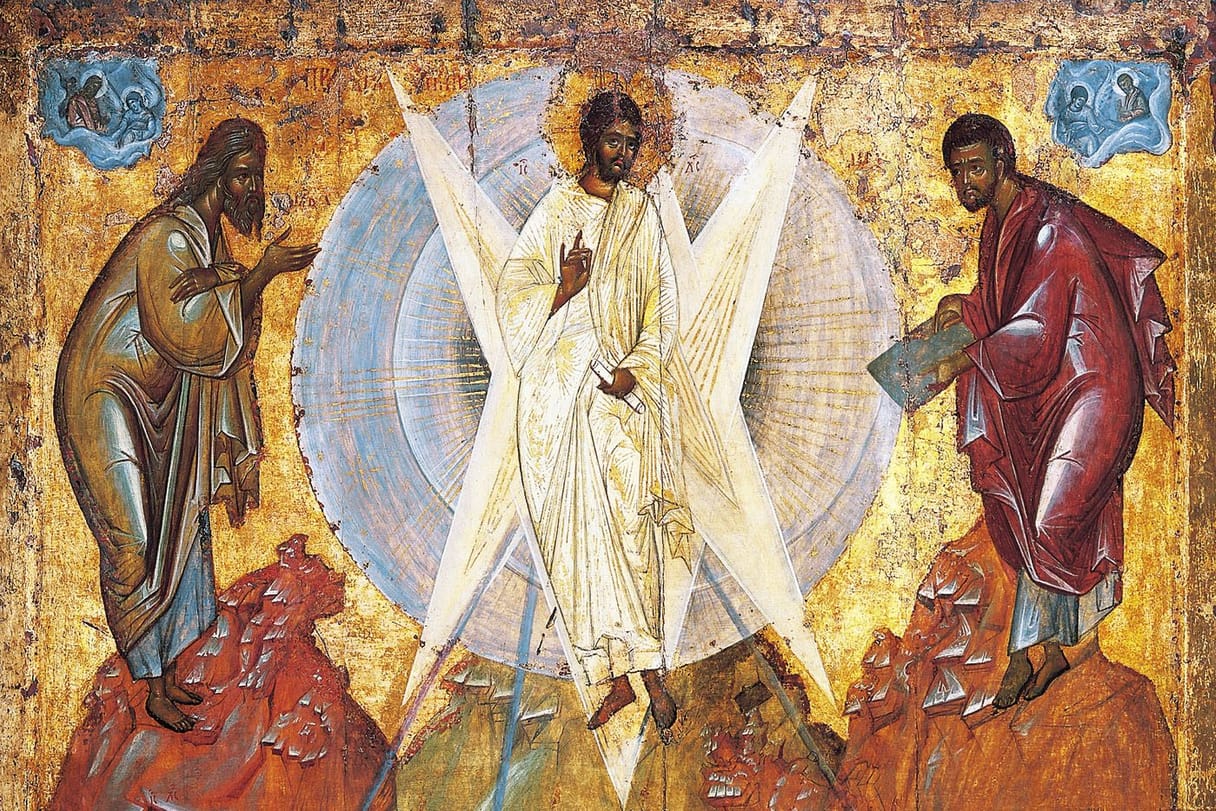
The New Testament uses “mystery” for God’s plan made known in Jesus. Paul calls it “the mystery which has been hidden for ages and generations” and names its center: “Christ in you, the hope of glory” (Colossians 1:26–27). Paul also wrote, “it is no longer I who live, but Christ lives in me” (Galatians 2:20). Jesus promised that “the pure in heart… shall see God” (Matthew 5:8), and 2 Peter says that believers “become partakers of the divine nature” (2 Peter 1:4). On the mountain of the Transfiguration, Peter, James, and John saw Jesus “changed into another form,” his clothing “glistening, exceedingly white” (Mark 9:2–3).
For the mystics, these verses describe the ordinary destiny of every Christian. Mysticism in this sense has little to do with visions. It names the growth of love and prayer until a person lives in God and God lives in them, as 1 John says: “he who remains in love remains in God, and God remains in him” (1 John 4:16).
What do Orthodox Christians teach about mystical prayer?
The Eastern Orthodox Church has kept the mystical life at the center of its teaching, and its vocabulary helps anyone who prays. Orthodox writers describe three stages, a pattern that goes back to Evagrius Ponticus in the fourth century and to the writer known as Pseudo-Dionysius around 500. Katharsis is purification of the heart from selfishness. Theoria is illumination, the beholding of God. Theosis is union with God, also called deification (see what is theosis?).
The Fathers called the faculty that knows God the nous, the spiritual intellect or “eye of the soul,” and they located it in the heart. Kallistos Ware, an English-born Orthodox bishop who taught at Oxford, wrote that “the heart, for Holy Scripture, is the spiritual center of the total person.” Theophan the Recluse, a nineteenth-century Russian bishop, taught people to descend with their attention into the heart and stand there before the Lord, and he described a whole day this way: “The hands at work, the mind and heart with God.”
Two more words guide the way. Nepsis means watchfulness, from the apostle’s command to “be sober and self-controlled. Be watchful” (1 Peter 5:8). Hesychia means stillness, and the hesychasts are the monks who pray the Jesus Prayer, “Lord Jesus Christ, Son of God, have mercy on me, a sinner,” until it becomes the prayer of the heart (see hesychasm and the Jesus Prayer). Their writings were gathered in the Philokalia (“love of the beautiful”), published in Venice in 1782.
What is the uncreated light?
Some Orthodox saints describe their meeting with God as light. Symeon the New Theologian (949–1022), abbot of a monastery in Constantinople, wrote hymns about the divine light he had seen in prayer. In the fourteenth century Gregory Palamas, a monk of Mount Athos who became archbishop of Thessalonica, defended the hesychasts against their critics. Palamas taught that the light the apostles saw at the Transfiguration was the uncreated light of God’s own glory, and that the saints may see it too.
Palamas distinguished God’s essence, which remains forever beyond every creature, from God’s energies, the divine activity and grace in which human beings truly share. The distinction holds two truths together: God is beyond every human idea, and God gives the divine life freely. The conviction that God is beyond every idea is the root of apophatic theology, which speaks of God by saying what God is not. Exodus pictures that mystery when Moses “came near to the thick darkness where God was” (Exodus 20:21).
What are the stages of the mystical life?
Western Christians took up the same pattern under the names purgative, illuminative, and unitive: repentance and the healing of habits, growth in prayer and virtue, and the life of love in which the soul rests in God. In sixteenth-century Spain, the Carmelites John of the Cross and Teresa of Ávila mapped the road in detail. John wrote of the “dark night,” a time when prayer feels dry and God seems absent, and taught that God often works most deeply in such seasons (see the dark night of the soul).
Many teachers add that the stages overlap, and that the whole road takes the shape of Christ, who “emptied himself, taking the form of a servant” (Philippians 2:7). The tradition calls that self-emptying kenosis.
Are there Protestant mystics?
Protestants have their own mystics, and the mainline churches have drawn on the older tradition. In a letter of 1749, John Wesley, the founder of Methodism, added “Macarius and Ephraim Syrus” to his list of writers who described true Christianity, and he printed extracts from Macarius, an early Eastern monk, in his Christian Library for Methodist readers. In Finland, Tuomo Mannermaa and his students at the University of Helsinki argued from the 1970s that Martin Luther taught Christ’s real presence in the believer through faith, a reading close to Orthodox theosis (Mannermaa’s book appeared in English as Christ Present in Faith).
Evelyn Underhill, an English laywoman, published Mysticism in 1911; she became the first woman to lead retreats officially for the Church of England, and Anglicans and Episcopalians remember her on June 15. The Quaker Thomas Kelly’s A Testament of Devotion (1941) invited busy people to keep a life of prayer beneath their work. Howard Thurman, a Black pastor who helped found the interracial Church for the Fellowship of All Peoples in San Francisco in 1944, joined mystical prayer to the struggle for justice, as does the Iona Community, founded in 1938 by George MacLeod, a Church of Scotland minister.
Is Christian mysticism safe?
The Orthodox tradition calls spiritual delusion prelest, a Russian word for a false and flattering charm: the pride of someone who believes they have reached great heights of prayer, or who trusts every vision and feeling. Paul warned that “even Satan masquerades as an angel of light” (2 Corinthians 11:14), and Orthodox teachers counsel beginners to set visions and lights aside and keep praying with humility. The test of every experience is love. Paul wrote that if he could “know all mysteries and all knowledge” and had no love, he would be nothing (1 Corinthians 13:2).
The tradition also asks anyone who gives much time to prayer to have a guide who can help them tell God’s voice from their own fears and wishes (see what is spiritual direction?). Care for the mind belongs here too. Long silence can stir up old pain, and anyone who begins hearing voices, goes days without sleep, or feels cut off from reality should talk with a doctor. Prayer and good medical care belong together, and both are gifts of God.
How can I begin?
The mystics began where every Christian begins, with daily prayer, the Scriptures, the sacraments, and love of neighbor. Isaac the Syrian, a seventh-century bishop of Nineveh, gave this counsel: “Be at peace with your own soul,” and “enter eagerly into the treasure house that is within you.” Start this week with ten minutes each morning: a psalm read slowly, the Jesus Prayer or silence, and the Lord’s Prayer. The guides to contemplative prayer and how to experience God give step-by-step help.
The mystics agree that God is the one who seeks first. Paul’s prayer for the Ephesians gathers up their whole hope:
That Christ may dwell in your hearts through faith, to the end that you, being rooted and grounded in love, may be strengthened to comprehend with all the saints what is the width and length and height and depth, and to know Christ’s love which surpasses knowledge, that you may be filled with all the fullness of God.
Common questions
Is Christian mysticism biblical?
Christian mysticism grows from Scripture. Paul speaks of “Christ in you, the hope of glory” (Colossians 1:27) and writes that “Christ lives in me” (Galatians 2:20), and Jesus promises that the pure in heart will see God (Matthew 5:8). The mystics read these verses as a description of the life God offers every believer.
Do you have to be a monk or a nun to be a mystic?
The mystical life is open to every Christian. Many of the great teachers were monks and nuns, but Evelyn Underhill was a married laywoman in London, and Thomas Kelly taught philosophy at a Quaker college. Theophan the Recluse wrote many of his letters on prayer to lay people raising families and working in the world.
What is prelest?
Prelest is the Orthodox name for spiritual delusion: the false confidence of someone who believes they have reached the heights of prayer, or who trusts every vision and feeling that comes to them. Orthodox teachers guard against it with humility, the counsel of a spiritual guide, and steady life in the church. Their usual advice is to pay little attention to unusual experiences and to keep praying.
How is Christian mysticism different from mysticism in other religions?
Christian mysticism is prayer to the God revealed in Jesus Christ, and its goal is communion with the Father, through the Son, in the Holy Spirit. Christian mystics teach that union with God by grace makes a person more fully themselves and more loving toward others. Many Christians respect the contemplative wisdom of other religions while praying within their own tradition.
Sources
- Colossians 1:26–27 (WEB)
- Galatians 2:20 (WEB)
- 2 Peter 1:4 (WEB)
- Mark 9:2–3 (WEB)
- 1 Corinthians 13:2 (WEB)
- Ephesians 3:17–19 (WEB)
- Christian mysticism (Wikipedia)
- Kallistos Ware, Discovering the Inner Kingdom (1997), “Prayer of the Heart” and “Word and Silence”
- Theophan the Recluse (OrthodoxWiki)
- Philokalia (Encyclopaedia Britannica)
- J. L. Wakefield, “Ephrem the Syrian and John Wesley,” Hugoye: Journal of Syriac Studies 1.2
- Theology of Martin Luther (Wikipedia), on the Finnish school of Tuomo Mannermaa
- Evelyn Underhill (Wikipedia)
- Iona Community (Encyclopaedia Britannica)
.jpeg)