Advent
Advent is the season of four Sundays before Christmas, when the church prepares to celebrate the birth of Jesus and looks ahead to his coming again. The name comes from the Latin adventus, “coming.” Advent begins on the fourth Sunday before December 25; in 2026 that is Sunday, November 29. Churches keep it with violet or blue hangings, an Advent wreath, and readings about watching, John the Baptist, and Mary.
Beware, keep alert, for you do not know when the time will come.
Mark 13:33, NRSVUE
Advent is the season of waiting before Christmas, and it belongs to everyone who is waiting for something: for light in a dark time, for healing, for a world set right. It is the first season of the church year. It begins on the fourth Sunday before Christmas and continues through the day before Christmas; in 2026, Advent begins on Sunday, November 29, and ends on the evening of Thursday, December 24. The Evangelical Lutheran Church in America (ELCA), the Presbyterian Church (U.S.A.), the United Methodist Church, and the Episcopal Church all keep it, as do most other Western churches.
What does Advent mean?
The word Advent comes from the Latin adventus, “coming” or “arrival.” In Advent the church prepares to celebrate the first coming of Christ, his birth at Bethlehem, and looks ahead to his coming again at the end of time. The Nicene Creed confesses that Christ “will come again in glory to judge the living and the dead,” and at Holy Communion in many mainline churches the congregation proclaims, “Christ has died. Christ is risen. Christ will come again.” Christians hold this hope in different ways. Some expect a literal return of Christ, and others understand it as God’s promise to set the world right at last, and both pray for the day when God’s kingdom comes in full. See Is the rapture real?
The Anglican collect for the First Sunday of Advent, written by Thomas Cranmer for the first Book of Common Prayer in 1549, holds both comings together: the birth of Christ in humility and his return in glory. It asks for grace to live now as people who belong to the coming day, in words drawn from Paul:
Besides this, you know what time it is, how it is already the moment for you to wake from sleep. For salvation is nearer to us now than when we became believers; the night is far gone; the day is near. Let us then throw off the works of darkness and put on the armor of light;
Romans 13:11–12, NRSVUE
Advent also makes room for people who find December hard. Grief and loneliness can feel sharper when the world around you is celebrating, and the Advent readings give words to that longing. They begin with people in darkness and with God’s promise to come to them: “The people who walked in darkness have seen a great light” (Isaiah 9:2).
When does Advent start?
Advent always includes the four Sundays before Christmas Day, whether Christmas falls on a Sunday or a weekday. In 2026 the four Sundays of Advent are November 29 and December 6, 13, and 20. Because Christmas moves through the week, Advent can be as short as twenty-two days or as long as twenty-eight.
The First Sunday of Advent is the church’s New Year. The Sunday readings start a new cycle that day; the year that begins in Advent 2026 is Year B of the Revised Common Lectionary, which reads mainly from the Gospel of Mark. See The church year for the full calendar.
Advent took several centuries to settle into its present shape. A council of bishops at Saragossa, Spain, in 380 called Christians to a time of preparation from December 17 to the Epiphany. Early prayer books of the church in Rome gave Advent five Sundays, and by the eleventh century the Western church had settled on four.
What are the Advent readings?
The Advent readings move from the end of time toward Bethlehem. On the First Sunday the readings speak of Christ’s coming in glory. In 2026 the Gospel is Mark 13:24–37, which ends with Jesus’ command to watch:
Therefore, keep awake, for you do not know when the master of the house will come, in the evening or at midnight or at cockcrow or at dawn, or else he may find you asleep when he comes suddenly. And what I say to you I say to all: Keep awake.
Mark 13:35–37, NRSVUE
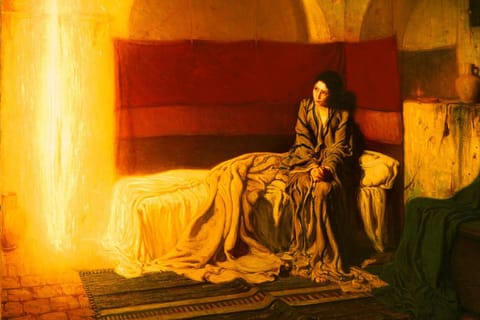
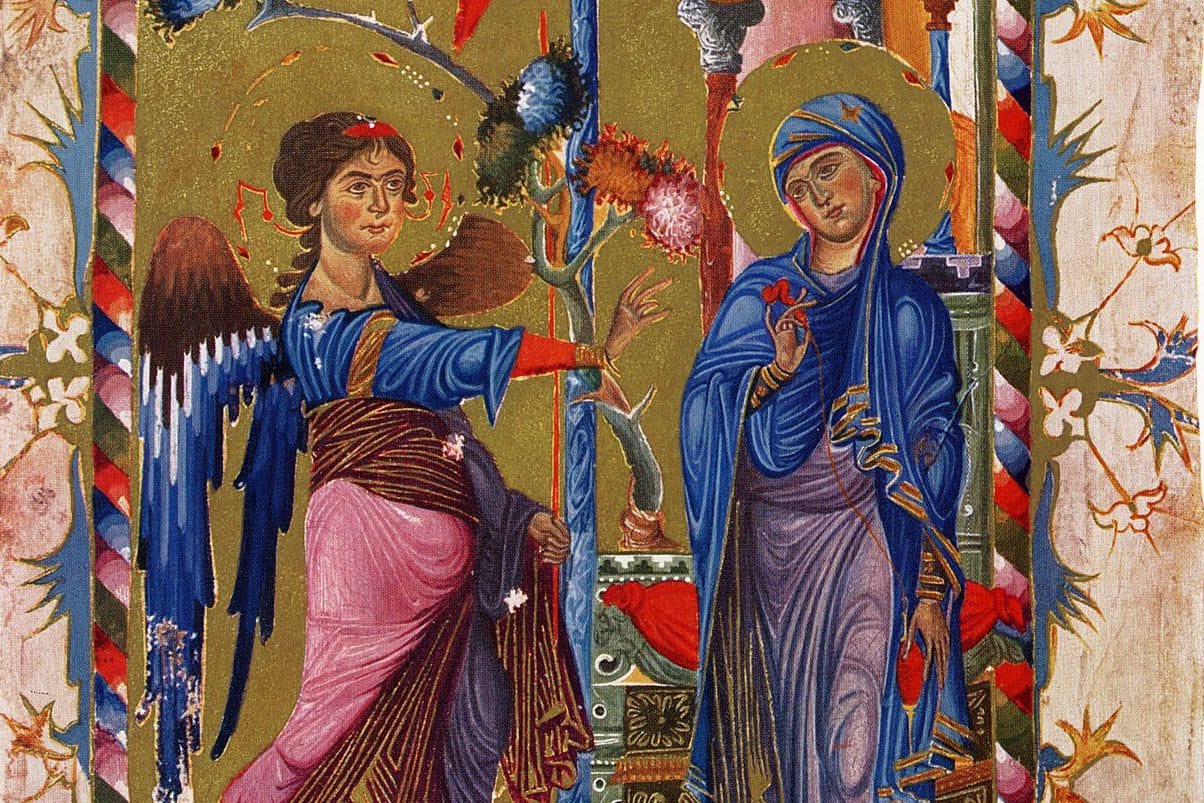
To keep awake, in the Advent sense, is to pay attention: to prayer, to the neighbor in need, and to the signs of God at work in ordinary days. On the Second and Third Sundays the Gospels turn to John the Baptist, who prepared the way for Jesus by calling people to repentance. The prophet Isaiah supplies his words: “Prepare the way of the LORD in the wilderness! Make a level highway in the desert for our God” (Isaiah 40:3). The same chapter of Isaiah opens with God’s tender command, “Comfort, comfort my people” (Isaiah 40:1). On the Fourth Sunday, December 20 in 2026, the Gospel is Luke 1:26–38, the angel Gabriel’s announcement to Mary that she will bear a son. See Was Jesus born of a virgin?
What is the Magnificat?
The Magnificat is the song Mary sings when she visits her relative Elizabeth, in Luke 1:46–55. Its name is the first word of the song in Latin: “My soul magnifies the Lord.” In the lectionary year that begins in 2026, it may be sung in place of the psalm on the Third and Fourth Sundays of Advent. It is also the traditional canticle of evening prayer in Anglican and Lutheran churches, and Orthodox Christians sing it at morning prayer. Its central verses praise God for turning the world’s order upside down:
He has shown strength with his arm; he has scattered the proud in the imagination of their hearts. He has brought down the powerful from their thrones and lifted up the lowly; he has filled the hungry with good things and sent the rich away empty.
Luke 1:51–53, NRSVUE
Because the Magnificat praises God for feeding the hungry, many churches make Advent a time of giving to the hungry and the poor. See What do Christians believe about Mary?
What are the O Antiphons?
An antiphon is a short verse sung before and after a psalm or canticle. The O Antiphons are seven antiphons traditionally sung with the Magnificat at evening prayer on the seven days from December 17 to December 23. Each one is a prayer of longing that calls on Christ by a title from the Hebrew Scriptures: O Wisdom, O Lord (Adonai, a Hebrew name of God), O Root of Jesse, O Key of David, O Dayspring (the dawn), O King of the nations, and O Emmanuel. Emmanuel means “God with us” (Matthew 1:23).
The antiphons date from the early Middle Ages; Amalarius of Metz wrote a commentary on them in the ninth century. Read backward, the first letters of their Latin titles spell ero cras, “Tomorrow I will be there.” The hymn “O come, O come, Emmanuel,” one of the best-loved Advent hymns, is a verse paraphrase of the antiphons.
Where does the Advent wreath come from?
The Advent wreath began in Germany. In 1839 Johann Hinrich Wichern, a Lutheran pastor who worked among the poor of Hamburg, made one for the children of his mission school, the Rauhes Haus, who kept asking whether Christmas had come. On a large wooden ring from an old cartwheel he set twenty-four small red candles, one lit on each weekday and Saturday of Advent, and four large white candles for the Sundays. The custom spread beyond Lutheran churches in the 1920s, and it reached North America in the 1930s.
Today most wreaths hold four candles, one for each Sunday, often around a white Christ candle lit at Christmas. Many churches name the four candles hope, peace, joy, and love.
Is Advent blue or purple?
Violet is the traditional Advent color in Western churches, and it was already in use for Advent by the end of the thirteenth century. Many Lutheran, Methodist, Presbyterian, and Episcopal churches now use blue. The ELCA’s worship office explains, “Blue is associated with Advent, suggesting hope.” Blue also sets Advent apart from Lent, which uses violet.
Some people call the color “Sarum blue,” after the medieval services of Salisbury Cathedral in England, though historians of worship such as J. Barrington Bates doubt that Salisbury used blue for Advent. Each congregation follows its own custom.
How is Advent different from Christmas?
Advent is a season of waiting, and Christmas is the feast the waiting is for. The Christmas season begins on December 25 and lasts twelve days, until the Epiphany on January 6; see Is Christmas a pagan holiday? Because the Christmas season follows December 25, many churches save Christmas carols for Christmas Eve and keep singing them into January.
Advent has some of the seriousness of Lent, because John the Baptist calls for repentance. Even so, the Western churches today do not make Advent a season of fasting. The Eastern Orthodox churches do: they keep a forty-day Nativity Fast before Christmas, beginning on November 15, when the faithful give up meat and dairy foods. Orthodox Christians also call it Saint Philip’s Fast, because it begins the day after the feast of the apostle Philip.
The mood of Advent is expectant hope, summed up in the prayer near the end of the Bible, “Come, Lord Jesus!” (Revelation 22:20). Cranmer’s collect for the First Sunday of Advent gathers that hope into a single prayer, and you can pray it on any day of the season:
Almighty God, give us grace to cast away the works of darkness, and put on the armor of light, now in the time of this mortal life in which your Son Jesus Christ came to visit us in great humility; that in the last day, when he shall come again in his glorious majesty to judge both the living and the dead, we may rise to the life immortal; through him who lives and reigns with you and the Holy Spirit, one God, now and for ever. Amen.
The Book of Common Prayer (1979), p. 211, collect for the First Sunday of Advent
Common questions
When does Advent start in 2026?
Advent 2026 begins on Sunday, November 29, the fourth Sunday before Christmas. Its other Sundays are December 6, 13, and 20, and it ends on the evening of Thursday, December 24. Because Christmas falls on a different weekday each year, Advent lasts between twenty-two and twenty-eight days.
What do the four Advent candles mean?
Most Advent wreaths hold four candles, one more lit on each Sunday of Advent, and many add a white Christ candle in the center that is lit at Christmas. Many churches name the four candles hope, peace, joy, and love, though the names vary. Where the candles are violet, the third is often rose-colored for the Third Sunday of Advent, called Gaudete Sunday, from the Latin word for “rejoice.”
Is Advent in the Bible?
The word Advent is not in the Bible, and the New Testament does not command the season. The church developed Advent over several centuries as a time to prepare for Christmas. Its readings all come from Scripture, among them the prophets’ promises, Jesus’ call to keep awake, John the Baptist’s preaching, and the angel’s announcement to Mary.
Can I put up Christmas decorations during Advent?
Families are free to put up a tree or lights in Advent. Many churches keep their own decorations spare until Christmas Eve, and some families add decorations week by week, saving the tree or the figure of the baby Jesus for Christmas. Families who wait in this way find that the waiting itself becomes a way of preparing their hearts.
Sources
- Book of Common Prayer (1979), Collects: Contemporary, Advent
- Revised Common Lectionary (Vanderbilt Divinity Library)
- Nativity Fast (Wikipedia)
- ELCA Worship, Liturgical colors
- “Advent,” Catholic Encyclopedia (1907), for the history of the season
- J. Barrington Bates, “Sarum Blue: The Great Untruth,” Pray Tell (2013)
- Advent wreath (Wikipedia)
- O Antiphons (Wikipedia)
- Luke 1:46–55 (WEB)
- Mark 13:33–37 (WEB)
- Isaiah 40:1–5 (WEB)
- Romans 13:11–12 (WEB)
- Revelation 22:20 (WEB)
- Matthew 1:23 (WEB)
- Isaiah 9:2 (WEB)