The dark night of the soul
The dark night of the soul is a season when prayer turns dry and God seems far away, even though you still long for God. The phrase comes from the sixteenth-century Spanish friar John of the Cross, who taught that God uses this darkness to loosen a person’s hold on lesser comforts and draw them into a simpler, deeper love. It can resemble depression, and the two sometimes come together.
He who walks in darkness and has no light, let him trust in the LORD’s name, and rely on his God.
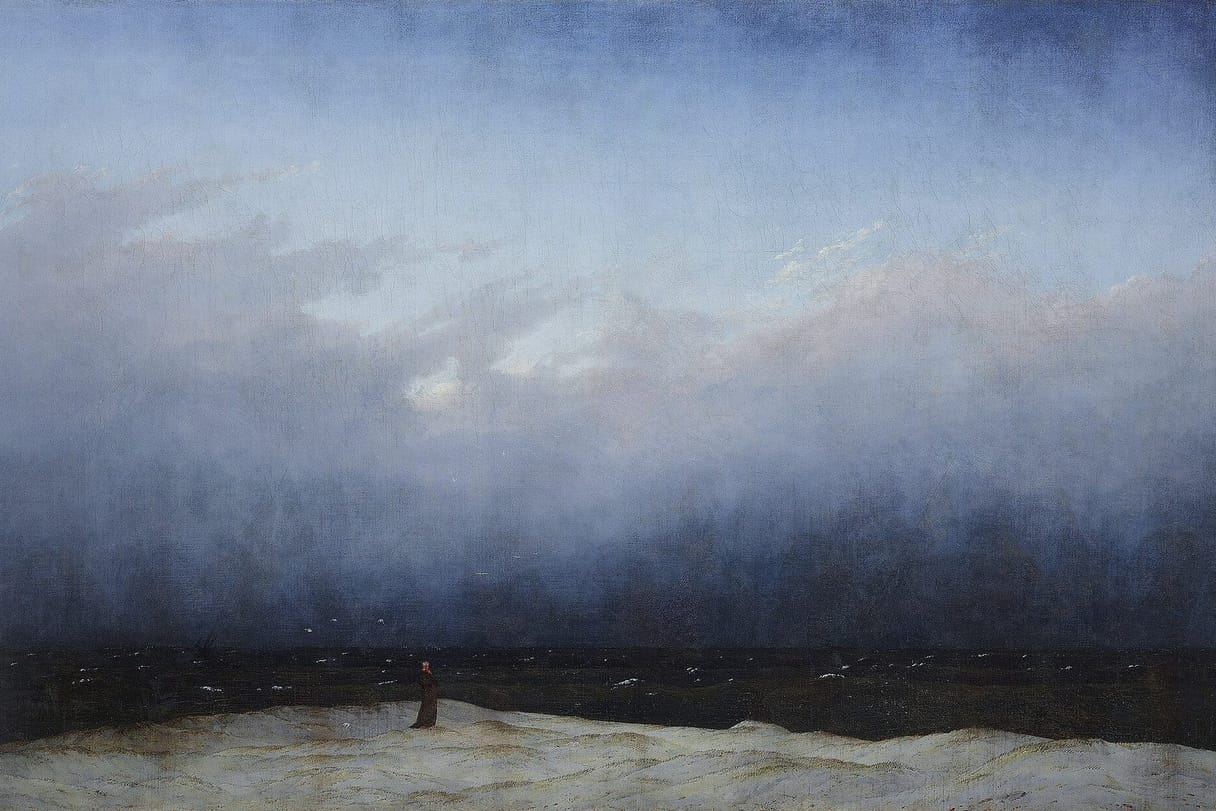
The dark night of the soul is a season when prayer turns dry and God seems absent, while the desire for God remains. Perhaps you once felt close to God, and now Scripture reads flat and your prayers seem to go nowhere. You may wonder whether you have lost your faith or done something wrong. The Christian tradition has a name for this experience and sees in it one of the ways God draws people closer. If your darkness also includes a heavy sadness that will not lift, please read the section below on depression.
Where does the phrase “dark night of the soul” come from?
The phrase comes from John of the Cross (1542–1591), a Spanish Carmelite friar who worked with Teresa of Ávila to reform their religious order. In 1577 friars who opposed the reform seized him and locked him for about nine months in a tiny cell. His greatest poetry grew out of that ordeal, including the poem that begins “On a dark night, Kindled in love with yearnings” (in E. Allison Peers’s translation). It tells of a soul slipping out of a sleeping house by night to meet her Beloved, and it calls the night a happy one.
John later wrote two commentaries on the poem, The Ascent of Mount Carmel and The Dark Night. He described two nights. In the night of sense, a person loses the sweetness they once found in prayer and can no longer meditate as before. In the deeper and rarer night of spirit, a person may feel that God has abandoned them altogether. For John both nights are God’s work, “the beginning of a contemplation that is dark and arid to the senses,” in which God teaches the soul directly. The night belongs to the old pattern of purgation, illumination, and union (see what is Christian mysticism?).
What does the dark night feel like?
In Book I, chapter 9 of The Dark Night, John gave three signs to help a person tell whether dryness in prayer comes from God’s work or from carelessness and sin:
- You find no delight in God, and none in anything else either. The dryness has not come from drifting toward other pleasures.
- Your mind keeps turning back to God. John describes it as returning to God “with painful care and solicitude, thinking that it is not serving God.” A careless person feels no such worry.
- You can no longer pray with thoughts and images as you once did, however hard you try.
John added that people in this night often feel “an inclination and desire to be alone and in quietness.” If they rest in that stillness without forcing anything, he wrote, they receive a delicate refreshment, which is “like the air which, if one would close one’s hand upon it, escapes.”
The Anglican writer Evelyn Underhill, in Mysticism (1911), described the dark night as “an equally intense sense of the Divine Absence” following a season of joy in God, and she called it a “growing pain.” Letters published in 2007, ten years after her death, showed that Teresa of Calcutta felt God’s absence for decades while she cared for the dying poor of Kolkata.
Does the Bible describe the dark night?
Scripture gives words for this darkness. A psalmist asks, “How long will you hide your face from me?” (Psalm 13:1). The woman in the Song of Songs, whose love poetry shaped John’s own, says, “By night on my bed, I sought him whom my soul loves. I sought him, but I didn’t find him” (Song of Songs 3:1). On the cross Jesus prayed the opening of Psalm 22, “My God, my God, why have you forsaken me?” (Mark 15:34). Christians have long seen in that cry that Christ shares even the experience of God’s absence.
The prophet Isaiah speaks to anyone walking through such a night:
Who among you fears the LORD and obeys the voice of his servant? He who walks in darkness and has no light, let him trust in the LORD’s name, and rely on his God.
The verse takes for granted that a faithful person may walk without light, and it asks only for trust.
What do Orthodox Christians say about spiritual darkness?
The Christian East knows the same experience. Silouan the Athonite (1866–1938), a Russian monk on Mount Athos, passed through long years in which he felt abandoned by God. In prayer he received a word that he later shared with others: “Keep thy mind in hell, and despair not.” The word joins deep humility with a hope that never gives up on God’s mercy. Orthodox elders also ask anyone in such darkness to open their heart to a spiritual father or mother.
Is it the dark night or depression?
The two can look alike, and the difference matters. John of the Cross himself noted that dryness can be increased by “melancholy or some other humour,” the old medical words for low mood and bodily illness, and he wrote that this happens frequently. Gerald May (1940–2005), a psychiatrist who also worked as a spiritual director, wrote in The Dark Night of the Soul (2004) that “the dark night and depression so often coexist,” and he urged readers “simply to identify depression where it exists and to treat it appropriately.” In his experience depression tends to shut down a person’s humor and their compassion for others, while people in a dark night usually keep both.
Talk with a doctor or counselor if, for two weeks or more, you feel sad, empty, or hopeless most of the day nearly every day, lose interest in things you used to enjoy, sleep or eat much more or less than usual, feel worthless, or have thoughts of death. The National Institute of Mental Health lists these as signs of depression. Depression is an illness like any other, and treating it takes nothing holy away from you (see anxiety, depression, and faith). When the prophet Elijah lay down under a juniper tree and asked to die, God’s first answer was sleep, bread, and water (1 Kings 19:4–8).
If you are thinking about ending your life, or you are afraid you might act on such thoughts, call or text 988 to reach the 988 Suicide & Crisis Lifeline in the United States, at any hour. Outside the United States, find a free helpline at findahelpline.com.
How can I get through a dark night?
You can take these steps this week:
- Keep a small, steady rule. Pray the Lord’s Prayer morning and evening, and read one psalm a day. Psalms 13, 42, and 88 give you words when you have none.
- Stop measuring prayer by feelings. Sit for ten minutes, offer God your emptiness, and stay (see contemplative prayer and why God sometimes seems silent).
- Let the church pray for you. Keep going to worship and Holy Communion even when they feel flat. The creeds and the liturgy carry you when your own words run dry.
- Find a guide. A pastor or a spiritual director can help you tell a dark night from depression and walk with you through either (see what is spiritual direction?).
- Care for your body. Sleep, eat well, get outside, and see a doctor if the signs above fit you.
- Love someone. Serve a neighbor this week. Teresa of Calcutta kept loving the poor through her darkness, and love can be practiced on days it cannot be felt.
John of the Cross called the night a happy one because God works in it unseen. The psalmist knew the same hope:
If I say, “Surely the darkness will overwhelm me. The light around me will be night,” even the darkness doesn’t hide from you, but the night shines as the day. The darkness is like light to you.
John Henry Newman, then a young Anglican priest, wrote this prayer in 1833 while his ship lay becalmed on the way home from Sicily:
Lead, kindly Light, amid th’ encircling gloom,
Lead Thou me on;
The night is dark, and I am far from home,
Lead Thou me on.
Keep Thou my feet; I do not ask to see
The distant scene; one step enough for me.John Henry Newman, “Lead, Kindly Light” (1833)
Common questions
How long does the dark night of the soul last?
John of the Cross gave no fixed length. For some people a dry season in prayer lasts weeks or months, and for others it lasts years; Teresa of Calcutta felt God’s absence for decades. If heavy sadness, hopelessness, or changes in sleep and appetite last two weeks or more, see a doctor as well as a pastor.
Is the dark night of the soul a punishment from God?
John of the Cross taught that the dark night is a work of God’s love. In his account God gently withdraws the comforts a person has leaned on so that they may come to love God for God’s own sake. He explained that the darkness comes from God’s own light, too bright at first for the soul to bear.
Is the dark night of the soul the same as depression?
They are different, and they often come together. In a dark night a person usually still longs for God and keeps their humor and their care for others, while depression tends to flatten all of life. Anyone with signs of depression should see a doctor or counselor, and treatment can go hand in hand with prayer and spiritual direction.
Did Jesus experience the dark night of the soul?
On the cross Jesus prayed the opening words of Psalm 22, “My God, my God, why have you forsaken me?” (Mark 15:34). Christians have long seen in that cry that Christ shares even the human experience of God’s absence. No darkness a believer passes through is a place Christ has not already been.
Sources
- Isaiah 50:10 (WEB)
- Psalm 139:11–12 (WEB)
- Mark 15:34 (WEB)
- 1 Kings 19:4–8 (WEB)
- John of the Cross, Dark Night of the Soul, trans. E. Allison Peers, Book I, chapter 9 (CCEL)
- Saint John of the Cross (Encyclopaedia Britannica)
- John of the Cross (Christianity Today, Christian History)
- Evelyn Underhill, Mysticism (1911) (CCEL)
- Therese J. Borchard, “Is It Depression or a Dark Night of the Soul?” (Psych Central, 2016), on Gerald May
- Depression (National Institute of Mental Health)
- 988 Suicide & Crisis Lifeline
- John Henry Newman, “Lead, Kindly Light” (Hymnary.org)