Taizé prayer
Taizé prayer is a form of meditative worship from the Taizé Community, an ecumenical monastic community in Burgundy, France, begun by Brother Roger in 1940. It joins short chants, sung over and over, with a psalm, a Bible reading, a long silence of five to ten minutes, and prayers for the church and the world. Congregations of many churches, including Lutheran, Presbyterian, Methodist, and Episcopal ones, hold Taizé services.
My soul rests in God alone. My salvation is from him.
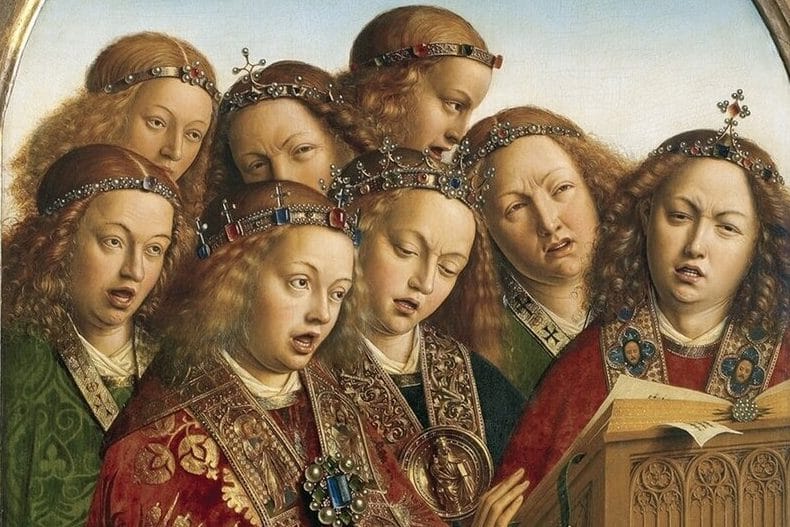
Taizé prayer is sung, meditative worship that comes from the Taizé Community in France. Its short chants are repeated again and again until the words settle into the heart, and its long silence gives God room to speak. More than a hundred thousand young people travel to Taizé each year to pray this way, and congregations of many churches now hold Taizé services by candlelight in their own sanctuaries.
What is the Taizé Community?
In 1940 a 25-year-old Swiss man named Roger Schutz, the son of a Reformed pastor, settled in the village of Taizé in Burgundy, near the line that divided occupied from unoccupied France. Roger sheltered refugees there, especially Jews fleeing the war, until he was denounced in 1942 and had to remain in Switzerland. After the war he returned with companions, and at Easter 1949 seven brothers committed themselves for life to celibacy, life in common, and great simplicity. The seven were the first men of Protestant background to make such a commitment since the Reformation.
Brother Roger wanted the community to be a sign of reconciliation among divided Christians and divided peoples. Catholic brothers began to join in 1969, and today about a hundred brothers from some thirty countries live there, Catholics and members of several Protestant churches together. Brother Roger was killed during evening prayer in August 2005, at the age of ninety. His successor, Brother Alois, led the community until 2023, when he handed it over to Brother Matthew, an Anglican from England who had joined the community in 1986.
Young adults come to Taizé for a week at a time to pray, study the Bible, and share the work, and each year around New Year the brothers lead a European meeting in a large city that draws tens of thousands. The community calls this whole movement a “pilgrimage of trust on earth.”
What happens at a Taizé prayer service?
A Taizé service usually takes place in a dimly lit space with candles, icons, and a cross at the front, and many people sit or kneel on the floor. The community’s own guide to preparing a prayer suggests this order:
- One or two songs of praise.
- A psalm, with verses read or sung by one or two voices and a sung Alleluia after each.
- A reading from Scripture, often with a song about the light of Christ, while young people bring candles forward to light a lamp.
- A song, then a single long silence of five to ten minutes.
- Intercessions, short prayers for the church and the world, each answered by a sung response.
- The Lord’s Prayer and a closing prayer.
- More songs, which may go on for a long time while people stay to pray.
No one preaches a sermon, and the guide advises that “it is better if no one directs the music.” The brothers write that “remaining in silence in God’s presence, open to the Holy Spirit, is already prayer.” The silence often surprises newcomers, and many come to love it most of all.
Why are Taizé songs repeated?
Each chant is short, often a single line from Scripture or a brief prayer, and it is sung many times, sometimes in canon. The community explains, “Short songs, repeated again and again, give it a meditative character,” and as the words are sung over and over, “this reality gradually penetrates the whole being.” The brothers also hope the songs will go on in the heart afterward, at work, in conversation, and at rest, much as the desert monks hoped to “pray without ceasing” (1 Thessalonians 5:17).
The songs are sung in many languages, often in Latin, so that people from many countries can pray with one voice. The French composer Jacques Berthier wrote many of the best-known chants for the community, and Joseph Gelineau later wrote many more. One of Berthier’s chants, “Jesus, Remember Me,” sets the plea of the thief crucified beside Jesus: “Lord, remember me when you come into your Kingdom” (Luke 23:42). The United Methodist Hymnal (1989) prints it as no. 488, and The Presbyterian Hymnal (1990) as no. 599.
Why do mainline churches pray this way?
Taizé began among Protestants. Brother Roger’s father was a pastor in the Swiss Reformed Church, the same family of churches as the Presbyterian Church (U.S.A.), and the first brothers came from Protestant backgrounds. The community has always welcomed Christians of every tradition, which suits the mainline churches’ long work for Christian unity. Jesus prayed for his followers “that they may all be one” (John 17:21), and at Taizé Catholics, Protestants, Anglicans, and Orthodox Christians pray side by side.
The United Methodist Church’s Discipleship Ministries publishes resources on Taizé song and prayer, and Lutheran, Presbyterian, Methodist, and Episcopal congregations across the country hold Taizé services. The style of prayer welcomes people who find long sermons or unfamiliar liturgy hard to enter. No one needs to know the words in advance or read music, and the silence makes room for people who are grieving, doubting, or worn out.
Taizé has a cousin in Scotland. The Iona Community, founded in 1938 by George MacLeod, a Church of Scotland minister in Glasgow, rebuilt the medieval abbey on the island of Iona, and its Wild Goose Publications has given churches many songs and prayers (see Celtic Christianity).
How can I pray with Taizé songs at home?
Taizé prayer is a form of contemplative prayer, and you can practice it alone or with a few friends. Choose one chant, such as “Bless the Lord, my soul,” which takes its words from the opening of Psalm 103, and find a recording from the community. Light a candle in front of a cross or an icon (see why Orthodox Christians pray with icons). Sing or listen to the chant several times, read a psalm and a short Gospel passage, and then stay silent for five minutes. Pray for the people and places on your heart, say the Lord’s Prayer, and end with the chant again.
If your mind wanders in the silence, let the words of the chant bring you back. Over a few weeks the chant may begin to rise in you on its own, on a bus or before an exam, as a prayer you did not have to think about. For more ways to make room for God, see how can I experience God? and Christian mysticism.
Taizé prayer often ends the way it began, with singing that goes on as long as anyone wants to stay. The psalm behind one of its best-loved chants gives words to that gratitude:
Praise the LORD, my soul! All that is within me, praise his holy name!
Common questions
Is Taizé Catholic or Protestant?
Taizé is an ecumenical community that includes both. Brother Roger was the son of a Swiss Reformed pastor, the first brothers came from Protestant backgrounds, Catholic brothers have joined since 1969, and the current prior, Brother Matthew, is an Anglican from England. The community welcomes Christians of every church to its prayer.
Is repeating the same words in prayer “vain repetition”?
Jesus warned against “vain repetitions” by people who think they will be heard “for their much speaking” (Matthew 6:7), that is, against piling up words to pressure God. The Bible itself repeats words in prayer: every verse of Psalm 136 ends with the refrain “for his loving kindness endures forever,” and in Revelation 4:8 the living creatures sing “Holy, holy, holy” day and night. Taizé chants repeat words of Scripture so that they can sink into the heart.
What are some well-known Taizé songs?
Among the best known are “Ubi caritas” (Where charity and love are, God is there), “Bless the Lord, my soul,” “Jesus, remember me,” “Laudate omnes gentes” (Praise the Lord, all you peoples), and “Wait for the Lord.” Many are in Latin or another widely known language so that people from different countries can sing them together.
Do I need to be able to sing?
Taizé chants are short and easy to learn by ear, and no musical training is needed. Many people listen for the first few repetitions and join in when the words become familiar. Others pray silently while the chant goes on around them, which is also a way of taking part.
Sources
- Psalm 62:1 (WEB)
- Psalm 103:1 (WEB)
- Luke 23:42 (WEB)
- John 17:21 (WEB)
- Matthew 6:7 (WEB)
- History of the Taizé Community (taize.fr)
- Brother Matthew (taize.fr)
- Preparing a time of prayer (taize.fr)
- Meditative singing (taize.fr)
- Taizé Community (Wikipedia)
- Taizé Song & Prayer (United Methodist Discipleship Ministries)
- Jesus, Remember Me, The United Methodist Hymnal no. 488 (Hymnary.org)
- Jesus, Remember Me, The Presbyterian Hymnal (1990) no. 599 (Hymnary.org)
- Iona Community (Encyclopaedia Britannica)
.jpg)