Theosis: sharing in the life of God
Theosis, also called deification, is the teaching that God became human in Jesus Christ so that human beings could share in the life of God. It takes its language from 2 Peter 1:4, which says believers may “become partakers of the divine nature.” The Eastern Orthodox Church calls theosis the goal of the Christian life: healing and union with God by grace, through prayer, the sacraments, and love, in which people remain creatures and God remains God.
that through these you may become partakers of the divine nature
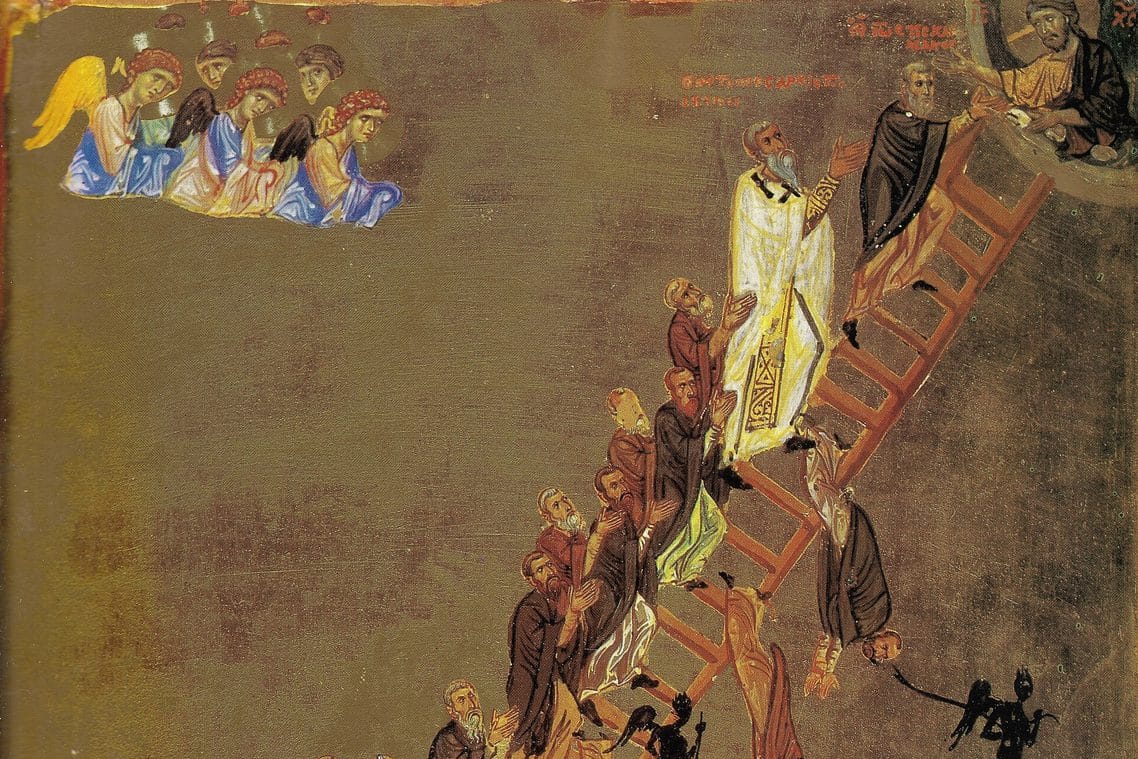
Theosis is the ancient Christian hope that God became human so that human beings could share in the life of God. The word is Greek for “becoming divine,” and English writers also call it deification. If you have longed for a faith that changes you from the inside, something deeper than ideas to agree with or rules to keep, theosis is the name the early church gave to that longing and to God’s answer to it. In the fourth century Athanasius of Alexandria put it in one line: “He was made man that we might be made God” (On the Incarnation 54).
In the Eastern Orthodox Church, theosis is the goal of the Christian life. Salvation there means forgiveness, and it also means healing: the slow restoring of God’s image in a person until that person shines with God’s love.
What does theosis mean?
The word comes from a promise in the Second Letter of Peter:
…he has granted to us his precious and exceedingly great promises; that through these you may become partakers of the divine nature, having escaped from the corruption that is in the world by lust.
Irenaeus of Lyon, writing around 180 CE, said that Christ “did, through His transcendent love, become what we are, that He might bring us to be even what He is Himself” (Against Heresies, Book 5, preface).
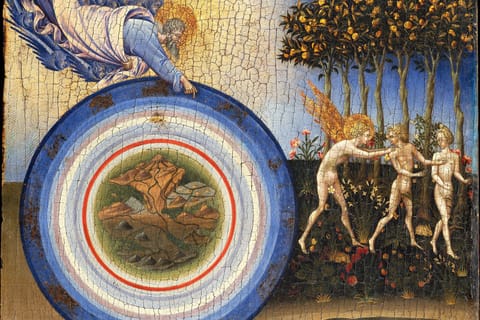
Genesis says God made humankind “in our image, after our likeness” (Genesis 1:26). Irenaeus and many Greek teachers after him read the image as the gift every person receives at creation, and the likeness as what a person grows into over a lifetime with God. Theosis is the name for that growth.
Does theosis mean we become God?
Orthodox teaching guards the difference between God and creatures with great care. A person who shares in God’s life remains a human being, and God remains God. Gregory Palamas (1296–1359), a monk of Mount Athos who became archbishop of Thessalonica, drew a distinction between God’s essence and God’s energies. God’s essence, what God is in himself, stays beyond every creature’s reach. God’s energies, the life, light, grace, and love that God pours out toward the world, are God himself at work, and human beings can truly share in them.
Orthodox teachers often use the image of an iron bar left in a fire: it glows with the fire’s heat and light, and it remains iron. A saint glows with God’s life in the same way and remains a creature. When Jesus quoted Psalm 82, “I said, you are gods” (John 10:34), the Fathers heard in it a glimpse of this gift, and they spoke of becoming gods by grace.
Is theosis in the Bible?
Several New Testament promises point toward theosis. Jesus prays for his disciples, “that they also may be one in us,” and tells the Father, “The glory which you have given me, I have given to them” (John 17:21–22). Paul writes that believers “are transformed into the same image from glory to glory” (2 Corinthians 3:18). The First Letter of John looks ahead: “we will be like him, for we will see him just as he is” (1 John 3:2).
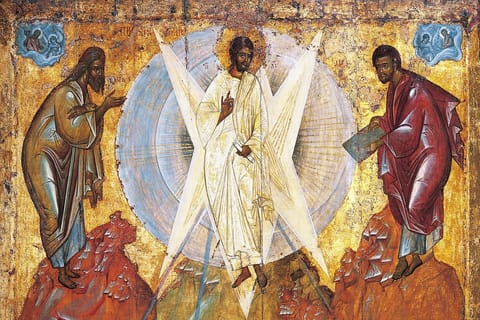
At the Transfiguration, Jesus “was changed before them. His face shone like the sun” (Matthew 17:2). Orthodox Christians call the light on that mountain the uncreated light, God’s own glory, which Christ wants to share with everyone who loves him. Symeon the New Theologian (949–1022) wrote of seeing God as light in prayer, and Palamas later defended the monks of Athos who said the same.
How does a person grow into the likeness of God?
Theosis is God’s work from first to last. The Orthodox tradition also speaks of synergy, a Greek word for “working together”: God gives grace, and a person answers with a free and willing heart.
Evagrius Ponticus in the fourth century and Dionysius the Areopagite around 500 described the way in three stages. Purification (katharsis) is turning from what harms the soul and letting God heal our desires. Illumination (theoria, contemplation) is learning to see God’s presence in prayer and Scripture. Union (theosis) is the life of love with God that the first two open. Western writers later called them the purgative, illuminative, and unitive ways, and they overlap through a whole life.
The means are ordinary ones. In Holy Communion, Christ gives his own life to be received into yours (see what is Holy Communion?). In prayer, especially the short, repeated prayers of the Orthodox East, the mind learns to rest in God (see hesychasm and the Jesus Prayer). Love of neighbor is the clearest sign of growth. The ladder of virtues in Second Peter climbs from faith through self-control and godliness to “brotherly affection; and in brotherly affection, love” (2 Peter 1:7).
Do Protestants and mainline churches believe in theosis?
The word theosis is most at home in the Orthodox churches, and the hope behind it has deep roots in the Reformation churches as well. John Calvin, whose teaching shaped the Presbyterian and Reformed churches, wrote on 2 Peter 1:4 that “the end of the gospel is, to render us eventually conformable to God, and, if we may so speak, to deify us.”
John Wesley was reading the Spiritual Homilies attributed to Macarius of Egypt in Georgia in 1736, and in 1749 he printed a long extract of them as the first volume of his Christian Library. His brother Charles wrote in a 1745 Christmas hymn that Christ came “to bring our vileness near, and make us all divine.” The United Methodist Church describes sanctifying grace as “the ongoing work of the Holy Spirit that changes us so that our lives are increasingly conformed to the mind of Christ.”
Conversations between Finnish Lutheran and Russian Orthodox theologians, begun in the mid-1970s, led Tuomo Mannermaa at the University of Helsinki to reread Martin Luther. They argued that for Luther, Christ himself is present in faith (in ipsa fide Christus adest, from his 1535 lectures on Galatians), so that justification already includes a real union with Christ close to theosis. Mannermaa’s Christ Present in Faith appeared in English in 2005 from Fortress Press, part of the ELCA’s publishing house. Other Lutheran scholars dispute parts of the Finnish reading.
C. S. Lewis, a lifelong Anglican, began a chapter of Mere Christianity with the sentence, “The Son of God became a man to enable men to become sons of God.” Across these churches the Eastern word names a hope they already share (see what does it mean to be saved?).
How can I practice theosis this week?
Five small steps for the coming week:
- Receive Communion with attention. Before you come to the table on Sunday, ask Christ to make the life you receive your own.
- Pray one short prayer every day. Give ten minutes to the Jesus Prayer or to a single verse of Scripture (see contemplative prayer).
- Climb Peter’s ladder. Read 2 Peter 1:3–8 each morning and practice one quality from the list.
- Do one hidden act of love. Jesus asks that “your merciful deeds may be in secret” (Matthew 6:4). Give, help, or forgive without telling anyone.
- Talk with a guide. A pastor or spiritual director can help you notice where God is already at work (see what is spiritual direction?).
What should I be careful about?
Theosis takes a lifetime, and Orthodox teachers warn against chasing extraordinary experiences, such as visions of light or feelings of warmth. The Russian word prelest (spiritual delusion) names the danger of mistaking one’s own imagination, pride, or excitement for a gift from God. The surest signs of God’s work are humble ones: patience, a kinder tongue, and more love for the people around you.
If prayer stirs up fear, compulsions, or despair, talk with a pastor and with a doctor or counselor; care for the mind belongs to God’s healing of the whole person. For the wider tradition, see what is Christian mysticism?.
Charles Wesley ended his hymn “Love Divine, All Loves Excelling” with the hope of being “changed from glory into glory,” words he drew from 2 Corinthians 3:18. The God who became human in Jesus wants to share his own life with you. Every prayer, every Communion, and every act of mercy is a small step into that glory, and God finishes the work.
Common questions
Who said God became man so that man might become God?
Athanasius of Alexandria wrote in On the Incarnation, in the fourth century, “He was made man that we might be made God.” Irenaeus of Lyon had said something similar around 180 CE: Christ became what we are so that he might bring us to be what he is. The saying sums up the Eastern Christian teaching of theosis.
Is theosis the same as sanctification?
The two words overlap. In Protestant teaching, sanctification is the Holy Spirit’s lifelong work of making a forgiven person holy. Theosis describes the same growth with a stronger accent on union, as the person is drawn into the life of the Trinity. John Wesley’s teaching on Christian perfection is often compared with the Eastern Fathers he read.
Is theosis the same as believing that everyone is already divine?
Christian theosis begins from the difference between Creator and creature. People are made in God’s image and are invited to share God’s life as a gift of grace, through Jesus Christ and the Holy Spirit. Orthodox writers stress that even the greatest saints receive everything from God, forever, and remain human beings.
What is the uncreated light?
Orthodox Christians use the phrase for the divine light that shone from Jesus at his Transfiguration, when “his face shone like the sun” (Matthew 17:2). Gregory Palamas taught in the fourteenth century that this light is God’s own glory, which some saints have seen in prayer. Orthodox teachers counsel believers to seek God himself and to let humility and love be the signs of growth.
Sources
- 2 Peter 1:3–7 (WEB)
- 2 Corinthians 3:18 (WEB)
- Matthew 17:1–2 (WEB)
- Athanasius, On the Incarnation of the Word, 54 (New Advent)
- Irenaeus, Against Heresies, Book V, preface (New Advent)
- John Calvin, Commentary on 2 Peter 1:4 (CCEL)
- Stephen Plant and Marcus Plested, “Macarius, St Gregory of Nyssa, and the Wesleys,” Epworth Review 33.1
- Charles Wesley, “Let earth and heaven combine” (1745)
- Charles Wesley, “Love divine, all loves excelling” (1747)
- What did John Wesley mean by ‘moving on to perfection?’ (UMC.org)
- Luther on Faith and Love, chapter 1, on Tuomo Mannermaa and the Finnish school (Fortress Press)
- C. S. Lewis Institute, Reflections, December 2021 (on Mere Christianity, “The Obstinate Toy Soldiers”)
- Christian mysticism (Wikipedia)