Julian of Norwich and “all shall be well”
Julian of Norwich was an English anchoress, a woman who lived enclosed in a cell beside St. Julian’s Church in Norwich, who received sixteen visions of Christ during a grave illness in May 1373. Her Revelations of Divine Love is the earliest known book written in English by a woman. Its best-known words, “all shall be well,” express her trust that God’s love will in the end make every wrong well.
Behold, I am making all things new.
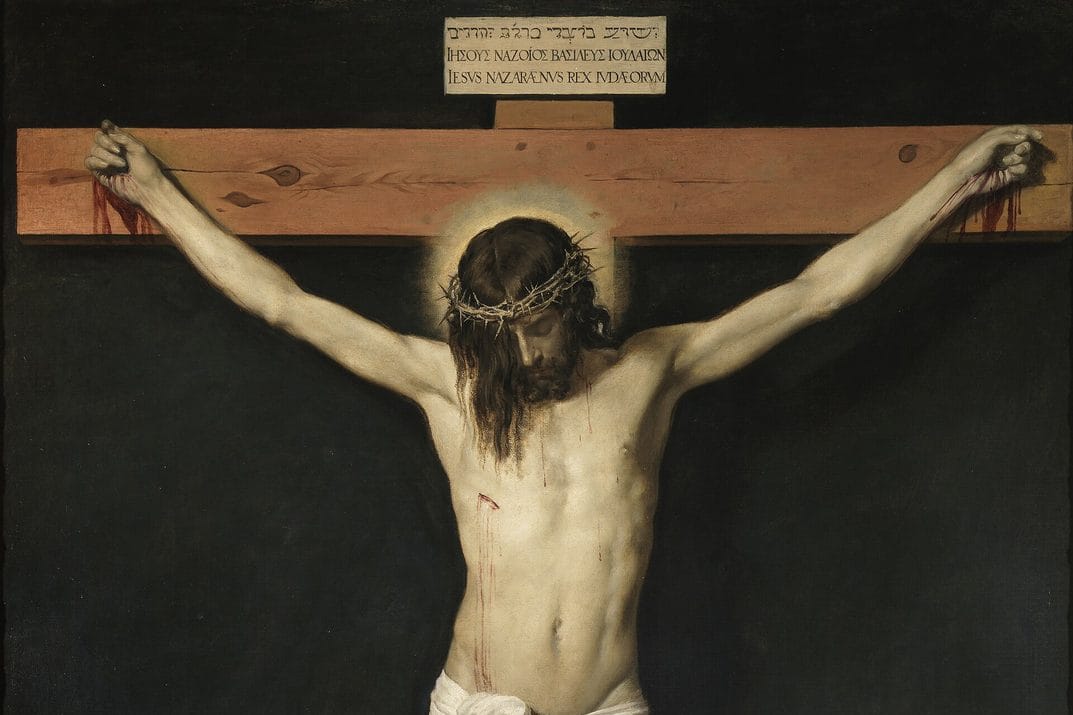
Julian of Norwich was an English woman of prayer whose words “all shall be well” have comforted Christians for more than six hundred years. She grew up in the years of the Black Death, which killed a great share of England’s people, and she knew grave illness firsthand. Out of that world she wrote one of the most hopeful books in Christian history. If you are anxious about your own life or about the state of the world, Julian is a good companion.
Who was Julian of Norwich?
Julian was born around 1343 and died sometime after 1416. Her real name is unknown; she is called after St. Julian’s Church in Norwich, a prosperous city in eastern England, where she later lived. In May 1373, when she was thirty and a half, she fell so ill that everyone expected her to die. A priest came and held a crucifix before her eyes, and she then received sixteen “showings,” visions of Christ’s suffering and of God’s love. She recovered.
Julian wrote a short account of the showings and then spent twenty years or more praying over them before she wrote a much longer one, known today as Revelations of Divine Love. The Julian Shrine in Norwich calls it “the earliest known book written in English by a woman.”
At some point Julian became an anchoress, a woman who vowed to live for the rest of her life in a small cell built against the wall of a church. One window opened into the church so she could see the altar, and another opened to the street so people could come to her for counsel. Around 1413 the mystic Margery Kempe visited her, and she later recorded Julian’s advice in The Book of Margery Kempe. St. Julian’s Church was destroyed by a bomb in the Second World War and later rebuilt, and pilgrims still pray in a reconstructed cell on the site of hers. The Church of England and the Episcopal Church keep her feast on May 8, and the ELCA’s calendar remembers her on the same day.
What does “all shall be well” mean?
The famous words come from the thirteenth showing. Julian had often wondered why God, in his wisdom, did not prevent sin from the beginning, since then, she thought, all would have been well. Jesus answered her (in Grace Warrack’s 1901 modern English):
It behoved that there should be sin; but all shall be well, and all shall be well, and all manner of thing shall be well.
Julian of Norwich, Revelations of Divine Love, chapter 27
“Behoved” means that sin had its place in the story and that God would bring good even from it. Julian adds that these words were said “full tenderly, showing no manner of blame to me nor to any that shall be saved.” The promise makes no light thing of sin or pain; in the same showings Julian saw Christ’s Passion in vivid detail. It means that God’s love is stronger than both and will have the last word.
In her last showing Julian heard Christ say, “Thou shalt not be overcome,” and she explained what that promise covers: “He said not: Thou shalt not be tempested, thou shalt not be travailed, thou shalt not be afflicted; but He said: Thou shalt not be overcome.” Jesus said the same to his disciples on the night before he died:
In the world you have trouble; but cheer up! I have overcome the world.
Did Julian believe everyone would be saved?
Julian was also shown that there is “a Deed the which the blessed Trinity shall do in the last Day,” a great deed by which God “shall make all things well.” She knew that the church of her day taught that many would be condemned forever, and she could not see how both could be true. The answer she received was this: “That which is impossible to thee is not impossible to me: I shall save my word in all things and I shall make all things well.” Julian held to the church’s teaching and left the how to God, trusting that it would stay hidden until it is done.
Her words have fed the hope, which a long line of Christian teachers from Origen and Gregory of Nyssa to Isaac the Syrian have shared, that God’s love will finally reach every creature, as Paul writes that through Christ God will “reconcile all things to himself” (Colossians 1:20). Many Christians believe in eternal punishment, and they hold that belief in good faith from Scripture; Julian’s example invites everyone to trust God with what they cannot yet see (see what the mainline churches teach about heaven and hell).
What is the hazelnut in Julian of Norwich?
In an early showing, God showed Julian “a little thing, the quantity of an hazel-nut, in the palm of my hand; and it was as round as a ball.” She asked what it was and was answered, “It is all that is made.” She marveled that something so small did not fall into nothing, and she was told, “It lasteth, and ever shall [last] for that God loveth it.” In the little thing she saw three truths: God made it, God loves it, and God keeps it. The Wisdom of Solomon, one of the books in Catholic and Orthodox Bibles, says the same: “For you love all things that are, and abhor none of the things which you made” (Wisdom 11:24).
Why did Julian call God our Mother?
Julian wrote, “As verily as God is our Father, so verily God is our Mother.” She spoke especially of Christ as our Mother, who gives us life, suffers to bring us to birth on the cross, and feeds us with himself. Scripture gave her warrant: God says, “As one whom his mother comforts, so I will comfort you” (Isaiah 66:13), and Jesus longs to gather Jerusalem’s children “as a hen gathers her chicks under her wings” (Matthew 23:37). Julian affirmed the Trinity of Father, Son, and Holy Spirit and found motherly tenderness at its heart (see does God have a gender?).
How can I pray with Julian this week?
Julian’s book is free online and short enough to read in a few weeks. You can also begin with small practices:
- Hold a hazelnut. Take an acorn, a nut, or a pebble in your palm. Say slowly: God made it, God loves it, God keeps it. Then say the same over your own life.
- Pray her prayer each morning. The prayer at the end of this page comes from her fifth chapter.
- Read three chapters. Start with chapter 5 (the hazelnut), chapter 27 (“all shall be well”), and chapter 86 (“Love was His meaning”).
- Turn worry into trust. When fear rises, pray Julian’s words as an act of faith in God, and then do the next loving thing in front of you.
- Keep a window open. Julian’s life of prayer made her a counselor to others. Let your prayer send you toward someone who needs a listener.
For other ways into prayer, see contemplative prayer and what is Christian mysticism?. If God feels far away right now, Julian would point you to the cross she saw, where love stayed through the dark (see the dark night of the soul).
For years Julian asked what her showings meant, and more than fifteen years later she received the answer that sums up her book: “Wouldst thou learn thy Lord’s meaning in this thing? Learn it well: Love was His meaning.” Her own prayer can be yours:
God, of Thy Goodness, give me Thyself: for Thou art enough to me, and I may nothing ask that is less that may be full worship to Thee; and if I ask anything that is less, ever me wanteth,—but only in Thee I have all.
Julian of Norwich, Revelations of Divine Love, chapter 5 (Warrack translation, 1901)
Common questions
Where does the quote “all shall be well” come from?
The words come from chapter 27 of Julian of Norwich’s Revelations of Divine Love. Julian had asked why God allowed sin at all, and Jesus answered her that sin had its place, “but all shall be well, and all shall be well, and all manner of thing shall be well.” T. S. Eliot later wove the line into his poem “Little Gidding” (1942).
Was Julian of Norwich a saint?
Julian has never been formally canonized, but Christians of many churches honor her as a saint. The Church of England and the Episcopal Church remember her on May 8, and the calendar in the ELCA’s Evangelical Lutheran Worship also lists her on that day as a renewer of the church.
Was Julian of Norwich a man or a woman?
Julian was a woman. Julian was used as a woman’s name in medieval England, and she may also have taken it from St. Julian’s Church in Norwich, where her cell stood. Her real name is unknown.
What did Julian of Norwich mean by the hazelnut?
In a vision Julian saw something as small as a hazelnut in the palm of her hand and was told, “It is all that is made.” She marveled that it did not fall into nothing, and understood that it lasts because God loves it. She saw that God made it, God loves it, and God keeps it, and she trusted the same of every creature.
Sources
- Julian of Norwich, Revelations of Divine Love, trans. Grace Warrack (1901) (CCEL)
- Julian of Norwich (Encyclopaedia Britannica)
- Visiting the Shrine (The Julian Shrine, Norwich)
- Julian of Norwich at 650 (Diocese of Norwich)
- Julian of Norwich (An Episcopal Dictionary of the Church)
- Calendar of saints (Lutheran) (Wikipedia)
- Revelation 21:5 (WEB)
- John 16:33 (WEB)
- Wisdom 11:24 (WEB)
- Isaiah 66:13 (WEB)
- Colossians 1:20 (WEB)