Discerning God's will
Christians usually come to know God’s will slowly, in prayer and together with others. God spoke to Elijah in “a still small voice” (1 Kings 19:12), and the boy Samuel needed the priest Eli to help him recognize God’s call. Christians test what they sense against Scripture, prayer, and the counsel of other believers. God’s will for everyone is already known: “to act justly, to love mercy, and to walk humbly with your God” (Micah 6:8).
After the earthquake a fire passed; but the LORD was not in the fire. After the fire, there was a still small voice.
God does guide people, and you do not have to find your way alone. You may be facing a choice that feels too heavy to carry, or longing to know that God sees you and cares which way you go. Christian tradition teaches that discernment, the work of recognizing God’s guidance, is usually slow, tested, and shared with others.
The New Testament offers a gentle first test. Paul wrote that no one can say “Jesus is Lord” except “by the Holy Spirit” (1 Corinthians 12:3). A leading that draws you toward Christ, agrees with Scripture, and deepens your love for God and your neighbor bears the marks of the Spirit. The churches expect God to speak most often through Scripture, prayer, conscience, circumstances, and the counsel of other Christians.
How did God speak to Elijah?
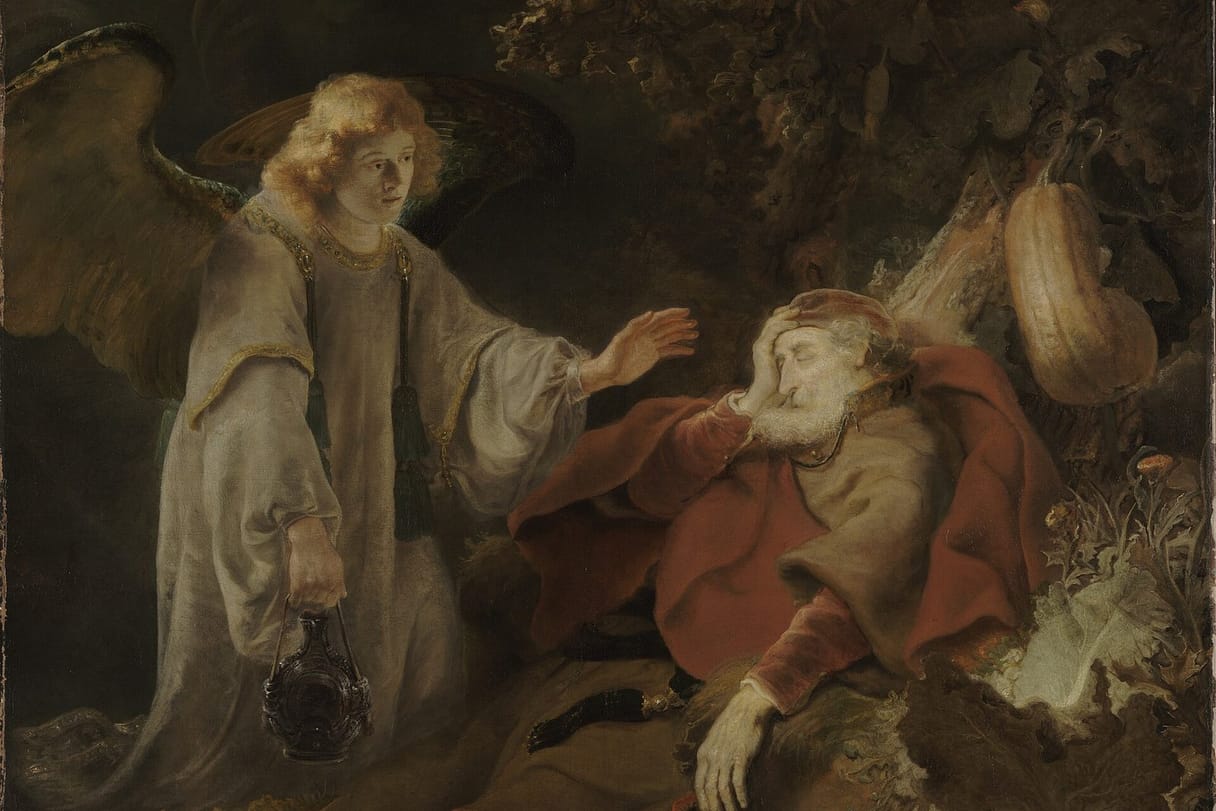
The prophet Elijah heard God at one of the lowest moments of his life. After a dramatic contest with the prophets of Baal, he fled for his life from Queen Jezebel, sat down under a tree in the wilderness, and asked to die (1 Kings 19:4). God cared for his body first. An angel gave him bread and water and let him sleep. Then, at Mount Horeb, God passed by:
Behold, the LORD passed by, and a great and strong wind tore the mountains and broke in pieces the rocks before the LORD; but the LORD was not in the wind. After the wind there was an earthquake; but the LORD was not in the earthquake. After the earthquake a fire passed; but the LORD was not in the fire. After the fire, there was a still small voice.
The Hebrew phrase behind “a still small voice” can also be translated “a sound of thin silence.” When Elijah heard it, he covered his face and went out, and the voice asked him, “What are you doing here, Elijah?” (1 Kings 19:13). God then gave him work to do and told him that he was not alone, because seven thousand in Israel had stayed faithful (1 Kings 19:18).
For anyone worn out and unsure, the story is a comfort. God’s guidance came to Elijah after rest and food; it came softly, began with a question, and sent him back to other people.
What can we learn from Samuel’s call?
The story of Samuel’s call begins by admitting that such experiences were uncommon: “The LORD’s word was rare in those days” (1 Samuel 3:1). The boy Samuel, who served in the sanctuary at Shiloh, heard someone call his name in the night and ran three times to the old priest Eli, thinking Eli had called him. The third time, Eli understood:
Eli perceived that the LORD had called the child. Therefore Eli said to Samuel, “Go, lie down. It shall be, if he calls you, that you shall say, ‘Speak, LORD; for your servant hears.’”
Samuel could not recognize God’s call by himself; an older believer helped him. The words Eli taught him, “Speak; for your servant hears” (1 Samuel 3:10), remain a good prayer for anyone trying to listen. You can pray them tonight, before you know what the answer will be.
What is Ignatian discernment?
Ignatius of Loyola (1491–1556), the founder of the Jesuits, wrote rules for discernment in his Spiritual Exercises, and Christians of many churches use them today. He taught people to notice, over time, two kinds of movement in the heart. He called “consolation” “every increase of hope, faith and charity, and all interior joy which calls and attracts to heavenly things.” He called “desolation” its opposite, “darkness of soul, disturbance in it,” the state in which a person feels “as if separated from his Creator and Lord.”
Ignatius’s best-known rule is a kind one: “In time of desolation never to make a change.” If you are in the grip of despair, panic, or exhaustion, you may hold to the decisions you made in calmer times and wait. Many people practice Ignatian discernment through the daily examen, a short prayer at the end of each day that looks back over the day for moments of consolation and desolation and offers both to God (see How to pray).
How do Christians discern God’s will together?
The early church settled its first great dispute, whether Gentile believers had to keep the law of Moses, in a council at Jerusalem. The apostles’ letter announced the result: “it seemed good to the Holy Spirit, and to us” (Acts 15:28). Proverbs says the same in more everyday terms: “Where there is no counsel, plans fail; but in a multitude of counselors they are established” (Proverbs 15:22).
Quakers, members of the Religious Society of Friends, have a practice called a clearness committee. A person facing a decision, such as a marriage, a move, or a change of work, can ask for one, and the meeting appoints three to six members to meet with them in silence and prayer. The members ask open questions, and the Illinois Yearly Meeting’s guide states that they “are expected to refrain from expressing judgments and imparting advice.” The hope is that the person will hear God more clearly for themselves.
The Orthodox churches have kept an older form of shared discernment: the spiritual father or mother, an experienced priest, monk, or nun who guides a person over years. The practice goes back to the desert monks of fourth-century Egypt, who would visit an elder to ask for “a word.” John Cassian, who learned from those monks, records Antony the Great teaching that discretion, the gift of judging rightly between good and evil impulses, is the virtue that keeps a person on the road to God (Conferences 2).
The mainline churches test a call to ordination with the same patience. A person who believes God is calling them to be a pastor, priest, or deacon does not decide alone. They talk with their own pastor, meet with committees of lay people and clergy, and are examined in stages by the wider church: a synod in the ELCA, a presbytery in the Presbyterian Church (U.S.A.), an annual conference in the United Methodist Church, or a diocese in the Episcopal Church. The process usually takes several years, because these churches hold that a call is confirmed when the community recognizes it too.
How can I tell when a message does not come from God?
The New Testament tells Christians to “test the spirits, whether they are of God” (1 John 4:1). The first sign to watch for is fear. John wrote, “There is no fear in love; but perfect love casts out fear” (1 John 4:18). A message that leaves you terrified, ashamed, or frantic does not sound like the God who is love, and Ignatius would advise you to wait before acting on it.
Be careful, too, when another person tells you that God has said what you must do, especially a partner, a parent, or a church leader who gains from your obedience. God does not need anyone to override your conscience. And a leading that asks for cruelty, deceit, or contempt for others cannot be squared with the test Jesus gave: “By their fruits you will know them” (Matthew 7:16). The fruit of the Spirit is “love, joy, peace, patience, kindness, goodness, faith, gentleness, and self-control” (Galatians 5:22–23).
If you hear voices telling you to hurt yourself or anyone else, please see a doctor right away. If you are in crisis, call or text 988 in the United States to reach the 988 Suicide & Crisis Lifeline.
What is God’s will for everyone?
Much of God’s will is already known to you. The prophet Micah answered the question directly:
He has shown you, O man, what is good. What does the LORD require of you, but to act justly, to love mercy, and to walk humbly with your God?
Jesus named the two greatest commandments as love of God and love of neighbor (Matthew 22:37–40; see What is the greatest commandment? and Micah 6:8 meaning). Paul urged Christians to “be transformed by the renewing of your mind, so that you may prove what is the good, well-pleasing, and perfect will of God” (Romans 12:2).
Many decisions people bring to prayer, such as which college to attend or which job to accept, have more than one faithful answer. God’s will for justice, mercy, and humility can be followed on any of those paths. You can choose with prayer, good counsel, and a clear look at your gifts, and trust God to meet you wherever you go.
If you have prayed and still feel no clear answer, you are in the company of many faithful people (see Why doesn’t God answer prayer?). James promises that God gives wisdom “to all liberally and without reproach” (James 1:5), and that wisdom often arrives through ordinary means: time, Scripture, and the people who love you. While you wait, the psalmist’s prayer can be yours:
Show me your ways, LORD. Teach me your paths. Guide me in your truth, and teach me, for you are the God of my salvation. I wait for you all day long.
Common questions
Does God speak out loud today?
Most Christians never hear an audible voice, and even in the Bible such experiences are rare: 1 Samuel says that in Samuel’s day “the LORD’s word was rare.” The churches do not rule out unusual experiences, but they test them by Scripture, by their fruit, and with the help of others. If you hear voices that frighten you or tell you to harm anyone, please see a doctor.
How can I tell whether a feeling comes from God or from me?
God works through your mind, your desires, and your conscience, so the two are rarely separate. Ask whether the feeling leads toward love, joy, peace, patience, and kindness, the fruit of the Spirit in Galatians 5:22–23, and whether it lasts when you pray about it over time. Talk it over with a priest, pastor, or wise friend who knows you.
What if I make the wrong decision?
God’s love goes with you through your mistakes as surely as through your good choices. Scripture is full of people who chose badly and were met by God again, and many decisions, such as which job to take, have more than one faithful answer. God’s will that you act justly, love mercy, and walk humbly can be followed on any path.
What is a spiritual director?
A spiritual director is a person trained to meet with you regularly, often once a month, and help you notice how God is present in your prayer and your life. Directors listen and ask questions more than they give instructions. Many congregations, retreat houses, and organizations such as Spiritual Directors International can help you find one. In the Orthodox churches the same role is often filled by a spiritual father or mother.
Sources
- 1 Kings 19:1–18 (WEB)
- 1 Samuel 3:1–10 (WEB)
- Acts 15:28 (WEB)
- Micah 6:8 (WEB)
- 1 John 4:1 and 4:18 (WEB)
- Galatians 5:22–23 (WEB)
- Ignatius of Loyola, Spiritual Exercises, Rules for the Discernment of Spirits (CCEL)
- Illinois Yearly Meeting of the Religious Society of Friends, Faith and Practice: Clearness and Support Committees
- 1 Corinthians 12:3 (WEB)
- John Cassian, Conferences, Conference 2: On Discretion (New Advent)
- Psalm 25:4–5 (WEB)