Contemplative prayer
Contemplative prayer is prayer that rests in God’s presence with few words or none. Christians have practiced it since the Desert Fathers and Mothers of fourth-century Egypt, and it takes many forms: lectio divina, the slow and prayerful reading of Scripture; centering prayer, built around one sacred word; the Jesus Prayer of the Orthodox East; and walking a labyrinth. Psalm 46:10 gives its invitation: “Be still, and know that I am God.”
Be still, and know that I am God.
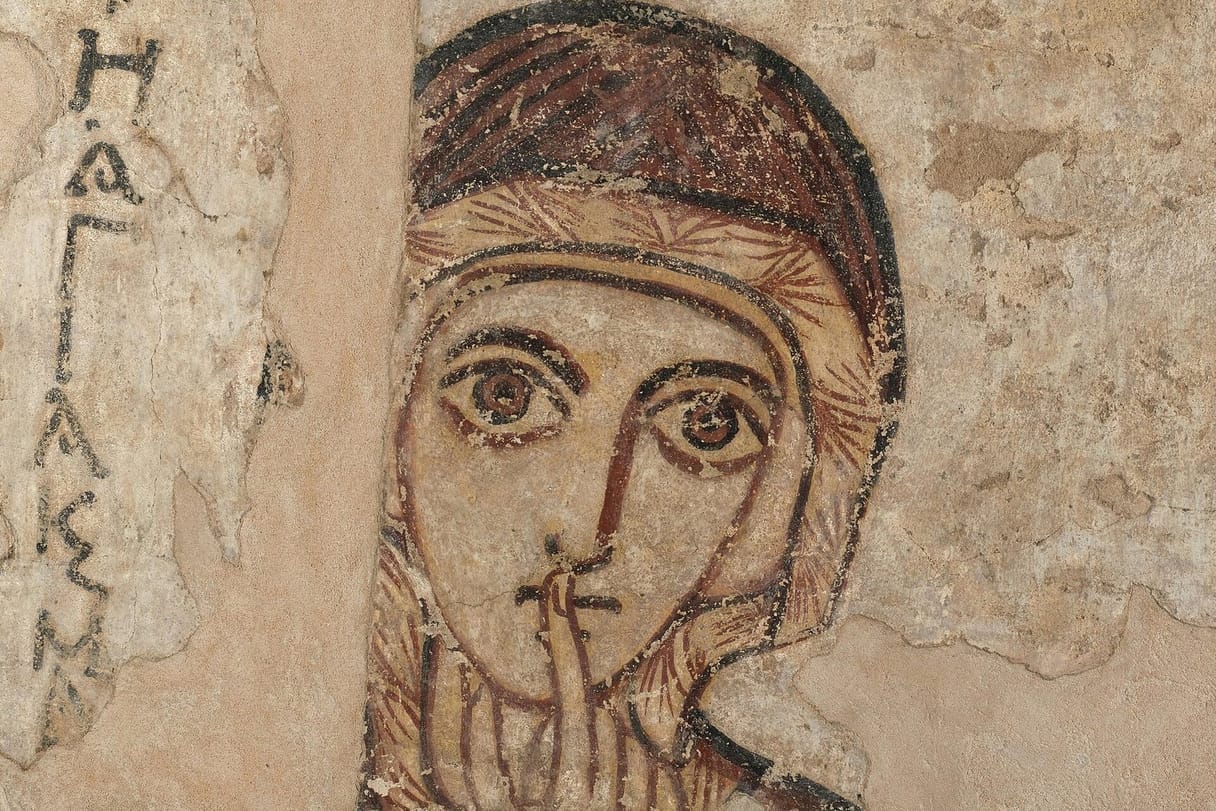
Contemplative prayer is prayer that rests in God’s presence with few words or none. If your prayers have begun to feel like a list of requests, the church has a long and gentle answer for you. For centuries Christians have prayed by being still before God, trusting that the Holy Spirit prays within them “with groanings which can’t be uttered” (Romans 8:26; see what is the Holy Spirit?).
What does the Bible say about being still before God?
Psalm 46 was sung in a time of war and upheaval, and in the middle of it God speaks:
Be still, and know that I am God. I will be exalted among the nations. I will be exalted on the earth.
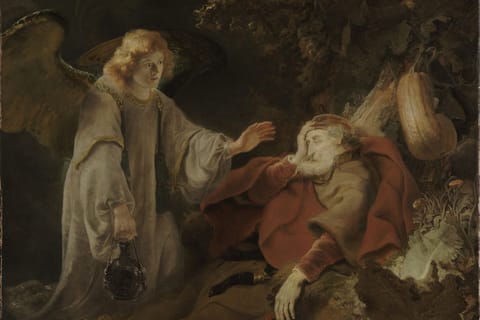
When the prophet Elijah fled to Mount Horeb, the LORD was in neither the wind nor the earthquake nor the fire, and after the fire came “a still small voice” (1 Kings 19:12). Another psalmist compares a settled soul to a small child resting with its mother: “I have stilled and quieted my soul, like a weaned child with his mother” (Psalm 131:2).
Jesus prayed this way himself. “Early in the morning, while it was still dark, he rose up and went out, and departed into a deserted place, and prayed there” (Mark 1:35). He taught his disciples to “enter into your inner room, and having shut your door, pray to your Father who is in secret” (Matthew 6:6). And when Martha was “anxious and troubled about many things,” Jesus said that her sister Mary, who sat at his feet and listened, “has chosen the good part” (Luke 10:41–42).
Where does contemplative prayer come from?
In the fourth century thousands of Christians went out into the deserts of Egypt, Palestine, and Syria to pray. Antony of Egypt, whose life Athanasius wrote, is the best known, and women such as Amma Syncletica were honored as teachers too. In one of the Sayings of the Desert Fathers, a brother asked Abba Moses for a word of counsel, and the old monk told him to go and stay in his cell, because his cell would teach him everything.
The desert teachers prayed the psalms, repeated short verses through the day, and tried to keep Paul’s command to “pray without ceasing” (1 Thessalonians 5:17).
Late in the fourteenth century an anonymous English writer composed The Cloud of Unknowing, a guide to contemplation addressed to a “ghostly friend,” that is, a spiritual friend. The author taught that God is beyond the reach of our ideas and close to our love: “By love may He be gotten and holden; but by thought never.” He advised taking “a little word of one syllable,” such as “God” or “love,” and fastening it to the heart as a way of turning back to God whenever other thoughts crowd in.
What is lectio divina?
Lectio divina, Latin for “divine reading,” is a slow and prayerful way of reading Scripture. Monks had practiced it for centuries when Guigo II, prior of the Grande Chartreuse, the mother house of the Carthusian monks in the French Alps, described it in the late twelfth century as a ladder with four rungs:
- Reading (lectio): read a short passage slowly, perhaps aloud.
- Meditation (meditatio): turn a word or phrase over in your mind and ask what it says to you.
- Prayer (oratio): answer God in your own words.
- Contemplation (contemplatio): rest in God’s presence beyond words.
In his letter known as The Ladder of Monks, Guigo compared the four rungs to eating. Reading puts food into the mouth, meditation chews it, prayer tastes its flavor, and contemplation is the sweetness that delights and strengthens. Any passage will do, though the psalms and the Gospels are good places to begin; see where to start reading the Bible.
What is centering prayer?
Centering prayer is a modern form of the prayer the Cloud describes. Three Trappist monks at St. Joseph’s Abbey in Spencer, Massachusetts, William Meninger, Basil Pennington, and Thomas Keating, developed it in the 1970s from The Cloud of Unknowing, monastic lectio divina, and Jesus’s words about praying in the inner room. Its name comes from Thomas Merton’s description of contemplative prayer as prayer “centered entirely on the presence of God.”
Contemplative Outreach, the network that grew from their work, teaches four guidelines. You choose a sacred word “as the symbol of your intention to consent to God’s presence and action within.” You sit comfortably with your eyes closed and introduce the word silently. When you find yourself caught up in thoughts, you “return ever-so-gently to the sacred word.” At the end you remain in silence for a couple of minutes. The prayer asks nothing of you except your consent to God, and every gentle return to the word is an act of love.
Congregations of many churches now teach centering prayer, and the United Methodist Church’s own website calls it “a relaxing way to find God’s presence in your life.” Some Christians are wary of wordless prayer because it can look like Eastern meditation; its teachers answer that it is addressed to the God of Jesus Christ and grows from Christian roots (see can Christians do yoga?).
What is the Jesus Prayer?
In the Orthodox churches of the East, the best-loved contemplative prayer is the Jesus Prayer: “Lord Jesus Christ, Son of God, have mercy on me, a sinner.” It joins the confession of Jesus as Lord and Son of God with the cry of the tax collector in Jesus’s parable, who “beat his chest, saying, ‘God, be merciful to me, a sinner!’” (Luke 18:13). Orthodox Christians repeat it slowly, often with a knotted prayer rope, until it becomes part of the heart.
The tradition around this prayer is called hesychasm, from the Greek hesychia (stillness). Its teachers sought a constant awareness of God and the ceaseless prayer Paul commended. In 1782 the monk Nikodimos of the Holy Mountain and Makarios, bishop of Corinth, published in Venice the Philokalia, a collection of their writings from Evagrius Ponticus to Gregory Palamas. A Slavonic translation appeared in 1793, and through it the Jesus Prayer spread across Russia and later to Christians in the West.
What is a prayer labyrinth?
A labyrinth is a single winding path that leads to a center and back out again, with no dead ends. The most famous one was laid into the stone floor of the nave of Chartres Cathedral in France in the early 1200s, and it pictured the long, winding road toward salvation. Pilgrims still walk it in prayer. Many churches and retreat centers in the United States have laid out labyrinths modeled on the one at Chartres, on floors, canvas, and lawns.
Walking a labyrinth is prayer with the body. You walk in slowly, letting go of what weighs on you, rest in God at the center, and walk out ready to return to your life.
How do I begin contemplative prayer?
You can begin with ten minutes a day:
- Choose a time and a place. Early morning works for many people, as it did for Jesus.
- Read (two minutes). Read a short passage, such as Psalm 23 or Psalm 46, slowly, twice.
- Choose a word (one minute). Let one word from the passage, or a word such as “God,” “love,” or “Jesus,” become your prayer word.
- Rest in God (six minutes). Close your eyes and offer the word to God. When thoughts come, return to the word gently. You do not need to feel anything special.
- Close (one minute). Pray the Lord’s Prayer slowly, and wait a moment before you stand.
Teachers of contemplative prayer expect the mind to wander and count each gentle return as part of the prayer. If you live with anxiety, these minutes of stillness can be a place of rest alongside good medical care and counseling (see is anxiety a sin?). For other ways to pray, see how to pray.
Contemplative prayer begins with God’s own invitation to be still and know. God is present before you say a word, and the Spirit prays in you when you have no words at all. Each time you turn to God in stillness, you offer the same gift Mary gave at Jesus’s feet, “the good part, which will not be taken away from her” (Luke 10:42).
Common questions
Is contemplative prayer biblical?
Contemplative prayer grows from Scripture. Psalm 46:10 says, “Be still, and know that I am God,” Elijah met God in “a still small voice” (1 Kings 19:12), and Jesus rose before dawn to pray alone in a deserted place (Mark 1:35). Paul writes that when we do not know how to pray, the Spirit prays within us (Romans 8:26).
What is the difference between meditation and contemplation?
In the old Christian vocabulary, meditation means thinking prayerfully about a passage of Scripture, turning its words over in the mind. Contemplation means resting in God beyond thoughts and words. Guigo II, a twelfth-century Carthusian prior, placed meditation as the second rung of his ladder of prayer and contemplation as the fourth.
Is centering prayer the same as Eastern meditation?
Centering prayer is addressed to the God of Jesus Christ, and its sacred word is a sign of consent to God’s presence and action within. Its teachers drew it from Christian sources: Jesus’s teaching about praying in the inner room (Matthew 6:6), monastic lectio divina, and the fourteenth-century Cloud of Unknowing. Some Christians are cautious about any wordless prayer, and they are free to pray with Scripture and spoken words instead.
Can Protestants practice lectio divina?
Lectio divina belongs to the whole church, because it is a way of reading the Bible slowly and prayerfully. Lutherans, Presbyterians, Methodists, Episcopalians, and many others teach it in Bible studies and retreats. All it needs is a short passage, a little time, and a willingness to listen.
Sources
- Psalm 46:10 (WEB)
- 1 Kings 19:11–12 (WEB)
- Psalm 131:2 (WEB)
- Mark 1:35 (WEB)
- Matthew 6:6 (WEB)
- Luke 10:38–42 (WEB)
- Luke 18:13 (WEB)
- Romans 8:26 (WEB)
- The Cloud of Unknowing, ed. Evelyn Underhill (1922), chapters 6–7 (CCEL)
- Guigo II (Wikipedia)
- Guigo II, The Ladder of Four Rungs (Umiltà website)
- History of Centering Prayer (Contemplative Outreach)
- The Method of Centering Prayer (Contemplative Outreach)
- Centering prayer and meditation (UMC.org)
- Philokalia (Encyclopaedia Britannica)
- Chartres Cathedral (Wikipedia), on the labyrinth