Mainline Protestantism
A mainline Protestant church belongs to one of the older, historic Protestant denominations in the United States, such as the Evangelical Lutheran Church in America, the Presbyterian Church (USA), the United Methodist Church, and the Episcopal Church. Mainline churches confess the historic Christian faith, read the Bible with the help of modern scholarship, ordain women, work closely with other churches, and stress service to the poor. About 11 percent of American adults are mainline Protestants.
He has told you, O mortal, what is good, and what does the Lord require of you but to do justice and to love kindness and to walk humbly with your God?
Micah 6:8, NRSVUE
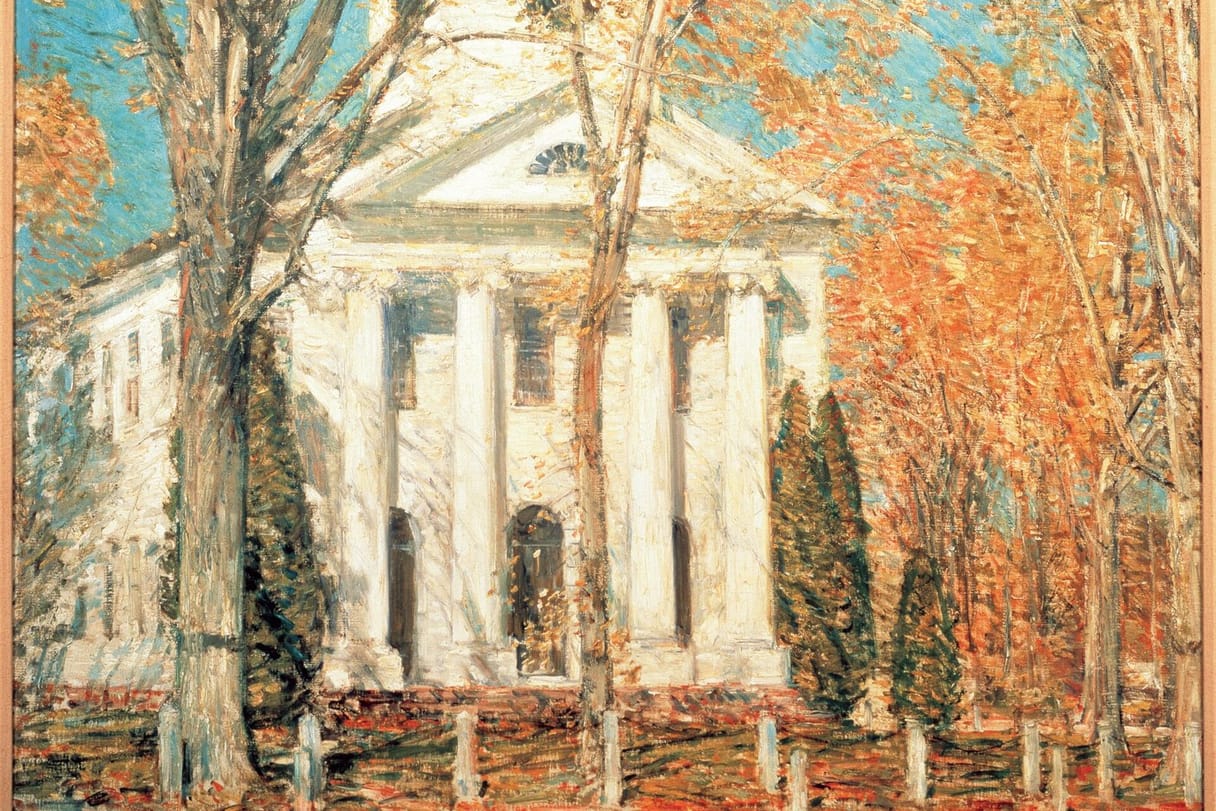
If you are looking for a church that confesses the ancient faith and welcomes your questions, you may have come across the word “mainline.” A mainline Protestant church belongs to one of the older, historic Protestant denominations in the United States, such as the Evangelical Lutheran Church in America, the Presbyterian Church (USA), the United Methodist Church, and the Episcopal Church. These churches pray the creeds, keep the sacraments and the church year, read the Bible with the help of modern scholarship, and try to love their neighbors in practical ways.
Which churches are mainline?
Seven denominations, sometimes called the “Seven Sisters” of American Protestantism, are usually counted as mainline. Each grew out of a different stream of the Reformation or of early American church life:
- The United Methodist Church is the largest mainline denomination and descends from the movement led by John Wesley, an Anglican priest. See what do Methodists believe?
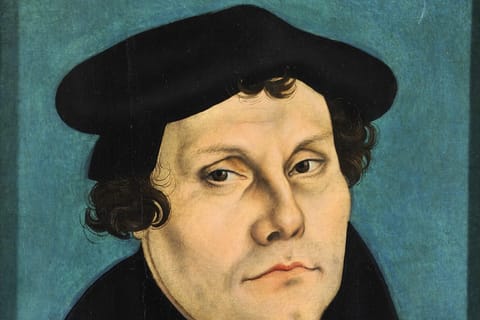
- The Evangelical Lutheran Church in America was formed on January 1, 1988, by the merger of three Lutheran church bodies, and traces its teaching to Martin Luther. See what do Lutherans believe?
- The Presbyterian Church (USA) was formed in 1983 and stands in the Reformed tradition of John Calvin. See what do Presbyterians believe?
- The Episcopal Church is the American member of the Anglican Communion, with roots in the Church of England. See what do Episcopalians believe?
- American Baptist Churches USA is the mainline Baptist body, and churches in its tradition have ordained women since the 1880s.
- The United Church of Christ brings together Congregational and Reformed churches.
- The Christian Church (Disciples of Christ) grew out of the American Stone-Campbell movement of the early nineteenth century.
The name “mainline” is often traced to the Main Line, a string of well-to-do suburbs of Philadelphia where many residents belonged to these churches. It came to mean the established Protestant churches that once stood at the center of American public life.
What do mainline churches believe?
Mainline churches hold the historic Christian faith in one God, Father, Son, and Holy Spirit, and in Jesus Christ as Lord and Savior. Many confess the Apostles’ and Nicene Creeds in worship, and many congregations say the Nicene Creed at Sunday Communion. All celebrate baptism and the Lord’s Supper. Many follow the church year and read Scripture on Sundays from the Revised Common Lectionary, a shared three-year cycle of readings, so that Christians in different denominations often hear the same Gospel on the same Sunday.
Mainline churches treat the Bible as the Word of God and read it with the tools of historical study, as their seminaries teach. They hold that careful scholarship and deep reverence belong together, and that understanding the Bible’s history can deepen love for it; the article should we read the Bible as literal fact? explains this way of reading.
The mainline churches ordain women as pastors and priests. The Methodist Church and the Presbyterian Church in the U.S.A., forerunners of today’s United Methodist Church and PC(USA), gave women full clergy rights in 1956; the Lutheran churches that formed the ELCA began ordaining women in 1970; and the Episcopal Church opened ordination as bishops, priests, and deacons to women in 1976. See can women be pastors?
The mainline churches have also worked for Christian unity. They helped found the National Council of Churches in 1950, which grew out of the Federal Council of Churches of 1908 and also includes several Orthodox churches, such as the Greek Orthodox Archdiocese of America. Many of them share full communion, meaning they recognize one another’s sacraments and clergy. The ELCA, for example, is in full communion with the Episcopal Church, the Presbyterian Church (USA), the United Church of Christ, and the United Methodist Church.
Mainline churches have long taught that faith shows itself in justice and mercy, following the words of Jesus: “as you did it to one of the least of these my brothers and sisters, you did it to me” (translated from the Greek1, Matthew 25:40). Many of their congregations run food pantries and other ministries to neighbors in need, in the spirit of the prophet Micah:
He has told you, O mortal, what is good,
and what does the Lord require of you
but to do justice and to love kindness
and to walk humbly with your God?Micah 6:8, NRSVUE
Where do mainline churches stand on LGBTQ people?
Most mainline churches now welcome gay, lesbian, and transgender people fully, including in ordained ministry and marriage, though they reached that point at different times and congregations still differ. The ELCA voted in 2009 to open its ministry to pastors in same-sex relationships. The Presbyterian Church (USA) opened ordination to gay and lesbian people in 2011 and affirms same-sex marriages. The Episcopal Church authorized marriage rites for all couples in 2015. The United Methodist Church removed its bans on gay clergy and same-sex weddings at its 2024 General Conference. In American Baptist Churches USA, regions and congregations differ. See can same-sex couples get married in church?
How is mainline different from evangelical?
Both mainline and evangelical Christians confess Jesus Christ as Lord, read the Bible, pray, and seek to love their neighbors. The differences are of emphasis and interpretation, and the two families have much to learn from each other.
Evangelical churches, which include the Southern Baptist Convention, many Pentecostal churches, and most nondenominational churches, stress a personal decision to follow Christ, often called being born again, and usually hold that the Bible is without error in everything it says. Many do not ordain women as senior pastors, and most teach that same-sex relationships are sinful. These Christians hold their convictions out of reverence for Scripture, and many of them lead lives of deep prayer and generous service.
Mainline churches tend to understand faith as growing within the life of the church through baptism, worship, and the sacraments as well as through personal decision. They read Scripture together with the church’s tradition, reason, and modern scholarship, and they have come to different conclusions about women’s ordination and about LGBTQ people. Some evangelicals worship in mainline congregations, and some mainline Christians describe their own faith in evangelical terms, so the line is often blurred.
How many mainline Protestants are there?
Pew Research Center’s Religious Landscape Study, which surveyed 36,908 American adults between July 17, 2023, and March 4, 2024, found that 62 percent of Americans identify as Christian. Of all American adults:
- 23 percent are evangelical Protestants, down from 26 percent in 2007.
- 11 percent are mainline Protestants, down from 18 percent in 2007.
- 5 percent belong to historically Black Protestant churches, down from 7 percent in 2007.
- 19 percent are Catholic.
The mainline share of the population has fallen sharply over the past half century. The mainline churches have also lost congregations in disputes over sexuality: more than 7,600 United Methodist congregations in the United States left the denomination between 2019 and 2023, a parting that brought grief to people on every side. The same Pew study found that the overall Christian share of the population has been fairly stable since 2019.
What is it like to visit a mainline church?
On a Sunday you can expect hymns, readings from both Testaments, a sermon based on the readings, prayers for the church and the world, and in many congregations Holy Communion. Episcopal and Lutheran services follow a written liturgy; Methodist, Presbyterian, and Baptist services are often simpler. Most mainline churches invite all baptized Christians, and many invite everyone present, to receive Communion; see what is Communion? You do not need to know the words or the customs before you come, and you are welcome to sit and listen. For how the mainline churches relate to the wider church, see the difference between Catholics and Protestants.
Whatever church you find your way to, it is one part of a larger family that Jesus prayed for on the night before he died. His prayer is still the hope of every church that works for unity:
that they may all be one; even as you, Father, are in me, and I in you, that they also may be one in us; that the world may believe that you sent me.
Notes
-
Greek (SBL Greek New Testament): ἐφʼ ὅσον ἐποιήσατε ἑνὶ τούτων τῶν ἀδελφῶν μου τῶν ἐλαχίστων, ἐμοὶ ἐποιήσατε. Adelphoi, literally “brothers,” is the ordinary Greek word for siblings and for the members of a family or community, women as well as men. ↩︎
Common questions
Is the Southern Baptist Convention a mainline church?
No. The Southern Baptist Convention is classed as an evangelical denomination. The mainline Baptist body is American Baptist Churches USA, whose churches have ordained women since the 1880s.
Is the Catholic Church a mainline church?
No. Mainline is a term for certain Protestant denominations in the United States. The Roman Catholic Church is counted separately, and the Pew Research Center finds that about 19 percent of American adults are Catholic.
Are mainline churches liberal?
Mainline churches are generally more progressive in theology than evangelical churches: they accept modern biblical scholarship, ordain women, and most now welcome LGBTQ people in ministry and marriage. Many are also traditional in worship, using ancient creeds, set prayers, and the church year. Their members hold a wide range of political views.
Why is it called mainline?
The name is often traced to the Main Line, a string of well-to-do suburbs west of Philadelphia, where many residents belonged to these denominations. The word came to mean the long-established Protestant churches that once formed the center of American religious life.
Sources
- Pew Research Center, Religious Landscape Study: Executive Summary (2025)
- Pew Research Center, About the Religious Landscape Study
- National Council of Churches (Wikipedia)
- Mainline Protestant (Wikipedia)
- Evangelical Lutheran Church in America (Wikipedia)
- United Methodist Church (Wikipedia), on the 2024 General Conference
- General Commission on Archives and History: Maud Jensen
- PC(USA) celebrates 70 years of women clergy (2026)
- General Convention Resolution 1976-B005, ordination equally applicable to men and women
- The Episcopal Church, Who we are
- Micah 6:8 (WEB)
- Matthew 25:31–40 (WEB)
- John 17:20–21 (WEB)