Same-sex marriage in the church
Same-sex couples can marry in many churches. In the United States, the ELCA, the Presbyterian Church (U.S.A.), the United Methodist Church, and the Episcopal Church all permit their clergy to marry same-sex couples, and so do the Church of Sweden and the Scottish Episcopal Church. The Church of England offers prayers of blessing but not marriage, and the Orthodox churches and most evangelical churches do not marry same-sex couples.
Then the Lord God said, “It is not good that the man should be alone; I will make him a helper as his partner.”
Genesis 2:18, NRSVUE
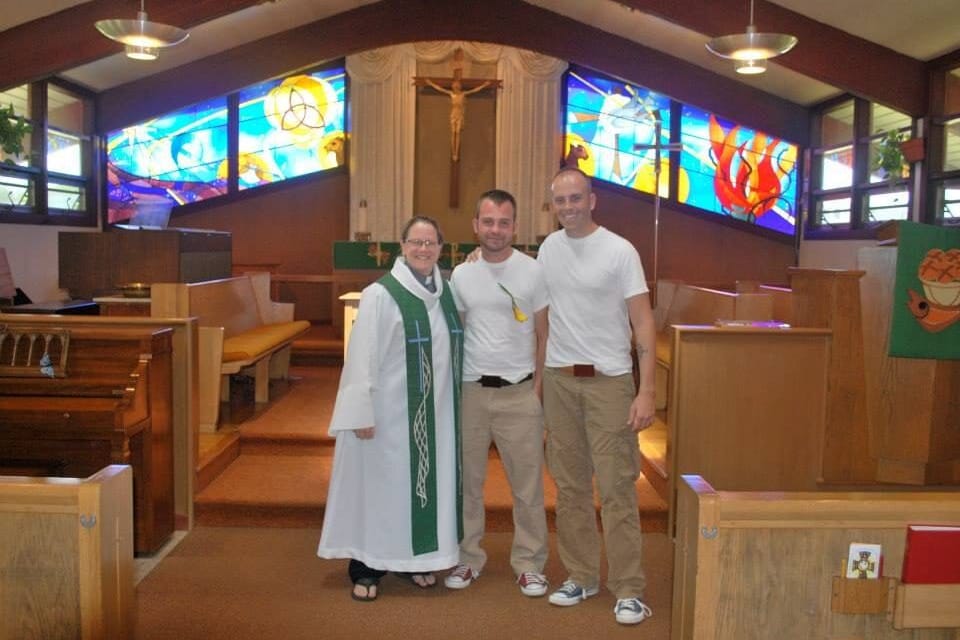
Same-sex couples can marry in many churches, including the ELCA, the Presbyterian Church (U.S.A.), the United Methodist Church, and the Episcopal Church. If you and the person you love hope to make your promises before God in a church, you may be carrying some fear about whether you will be welcome, especially if a church has turned you away before. Many congregations will be glad to see you. The churches that marry same-sex couples came to that decision through long prayer and study of Scripture, and they bless these marriages with the same hope they hold for every couple: that God will make the two of you a blessing to each other and to the world.
Which churches marry same-sex couples?
In the Evangelical Lutheran Church in America (ELCA), the 2009 Churchwide Assembly committed the church to “finding ways to allow congregations that choose to do so to recognize, support and hold publicly accountable lifelong, monogamous, same-gender relationships.” Since civil marriage became legal for same-sex couples across the United States in 2015, the ELCA has left the decision to celebrate such marriages to each congregation and its pastor.
In the Presbyterian Church (U.S.A.), Amendment 14-F, approved by the General Assembly in 2014 and ratified by a majority of presbyteries in March 2015, took effect on June 21, 2015. It describes marriage as “a unique commitment between two people, traditionally a man and a woman.”
The United Methodist Church removed its ban on clergy celebrating same-sex weddings at its General Conference in Charlotte, North Carolina, in May 2024, by a vote of 447 to 233. Its revised Social Principles describe marriage as “a sacred lifelong covenant that brings two people of faith” into union. Regional conferences outside the United States may set their own rules.
The Episcopal Church’s General Convention, the church’s governing body, rewrote its canon on marriage in 2015. The old canon had described marriage as “a physical and spiritual union of a man and a woman.” The same convention authorized marriage rites that same-sex couples can use. Since 2018 the rites have been available in every diocese, with the decision resting with the priest in charge of each congregation.
Outside the United States, the Church of Sweden decided in October 2009 to marry same-sex couples, beginning on November 1, 2009. The Scottish Episcopal Church, part of the worldwide Anglican Communion, changed its marriage canon on June 8, 2017, with a clause that no cleric must conduct a marriage against conscience.
Which churches do not?
The Church of England does not marry same-sex couples. Since December 17, 2023, its clergy may use the Prayers of Love and Faith, which ask God’s blessing on a same-sex couple, within a regular service. In January 2026 the House of Bishops confirmed that separate, standalone services of blessing would need full authorization under church law. It also said that letting clergy themselves enter same-sex marriages would require new legislation.
The Orthodox churches and most evangelical churches, including the Southern Baptist Convention, do not marry same-sex couples, and neither do most of the world’s other churches. They hold the traditional teaching that marriage unites a man and a woman, and they hold it out of a sincere reading of Scripture and of the church’s long practice. Many gay and lesbian Christians have family members and friends in those churches, and love across that disagreement is possible on both sides.
What does Scripture say about marriage?
Scripture’s first word about human companionship is about loneliness:
Then the Lord God said, “It is not good that the man should be alone; I will make him a helper as his partner.”
Genesis 2:18, NRSVUE
God sees the loneliness of the first human being and answers it with a companion. A few verses later the narrator explains why people leave home and marry: a man “will join with his wife, and they will be one flesh” (Genesis 2:24). Jesus quotes that verse and adds, “What therefore God has joined together, don’t let man tear apart” (Matthew 19:4–6).
Traditional Christians point out that Jesus also quotes Genesis 1:27, “male and female,” in the same passage, and they read it as defining marriage. Mainline churches note that Jesus was answering a question about divorce, and that the center of his answer is the permanence of the bond God makes. Many marriage services, such as the one in the Book of Common Prayer used by Anglicans, name the purposes of marriage: “mutual joy,” “the help and comfort given one another in prosperity and adversity,” and, “when it is God’s will,” children. Two people of the same sex can share mutual joy, help, and comfort, and many raise children together.
Paul’s description of love applies to every marriage: love “bears all things, believes all things, hopes all things, and endures all things” (1 Corinthians 13:7). See What does 1 Corinthians 13 mean? For how mainline churches read the verses often quoted against gay people, see What does the Bible say about homosexuality?
How do you get married in a mainline church?
Start by talking with the pastor or priest of the congregation where you hope to marry. Each church sets its own rules, and the same rules apply to every couple. Most congregations ask for:
- Notice. Get in touch well before the wedding, ideally several months ahead.
- Preparation. The pastor will meet with you to talk about the meaning of marriage, its promises, and practical matters.
- Civil law. The marriage must be legal under the laws of your state.
Some churches add requirements of their own, such as asking that at least one partner be baptized, or that both sign a declaration of what they understand Christian marriage to be.
Every one of these churches lets its clergy decline to perform a particular marriage. If one pastor declines, another congregation of the same church may welcome you. Many congregations also offer a service of blessing for a couple already married in a civil ceremony.
Why do these churches marry same-sex couples?
Mainline churches came to their decisions slowly, through decades of study of Scripture, prayer, and debate. They concluded that the passages usually cited against gay people address other things, and that faithful same-sex marriages bear the fruit of the Spirit. The ELCA reached its decision on clergy in 2009, the PC(USA) changed its definition of marriage in 2015, the Episcopal Church authorized marriage rites the same year, and the United Methodist Church lifted its ban in 2024. For the full reasoning, see Is it a sin to be gay?
The First Letter of John says, “If we love one another, God remains in us, and his love has been perfected in us” (1 John 4:12). Every faithful marriage is a place where that happens day by day, in the keeping of promises and the bearing of burdens. The Song of Songs, the Bible’s great poem of love, says of it: “Many waters can’t quench love, neither can floods drown it” (Song of Songs 8:7).
Common questions
Can same-sex couples marry in the Church of England?
The Church of England blesses same-sex couples but does not marry them. Since December 2023, its clergy may use the Prayers of Love and Faith to pray for God's blessing on a same-sex couple within a regular service. In January 2026 the bishops confirmed that separate services of blessing would need full authorization under church law, and the church's doctrine of marriage is unchanged.
Can a priest or pastor refuse to marry a same-sex couple?
Yes. The ELCA leaves the decision to each congregation and its pastor, the Presbyterian Church (U.S.A.) requires no minister to conduct a marriage against conscience, the United Methodist Church gives every pastor the right to decide which weddings to perform, and the Episcopal Church leaves every member of the clergy free to decline any marriage. The Scottish Episcopal Church has a similar conscience clause.
Is a same-sex marriage the same as any other marriage in these churches?
Yes, in the churches that celebrate them. The PC(USA)'s constitution describes marriage as “a unique commitment between two people,” and the United Methodist Social Principles describe it as “a sacred lifelong covenant that brings two people of faith” into union. Both definitions apply to every couple the church marries.
Sources
- Genesis 2:18–24 (WEB)
- Matthew 19:4–6 (WEB)
- Book of Common Prayer (1979), The Celebration and Blessing of a Marriage
- Episcopal General Convention 2015-A036: Amend Canon I.18
- Episcopal General Convention 2018-B012: Authorize Trial Liturgies for Same-Sex Marriage
- Presiding Bishop Eaton on the Supreme Court marriage decision (ELCA, 2015)
- Presbyterian Church (U.S.A.) approves marriage amendment (Presbyterian Outlook, 2015)
- United Methodist delegates repeal ban on clergy celebrating same-sex marriages (AP, 2024)
- Scottish Episcopalians revise canon law to permit gay marriage (Church Times, 2017)
- The Lutheran Church of Sweden's decision to allow same-sex marriages (RNS, 2009)
- Church of England: House of Bishops shares letter as Living in Love and Faith approaches conclusion (2026)