What Methodists believe
Methodists believe that God’s grace reaches every person before they know it, forgives sinners who trust in Christ, and then makes them holy in love of God and neighbor, as John Wesley taught in eighteenth-century England. They confess the Apostles’ and Nicene Creeds, treat Scripture as the primary source of doctrine, and celebrate Baptism and an open Communion table. The United Methodist Church ordains women and, since 2024, allows gay clergy and same-sex weddings.
Be perfect, therefore, as your heavenly Father is perfect.
Matthew 5:48, NRSVUE
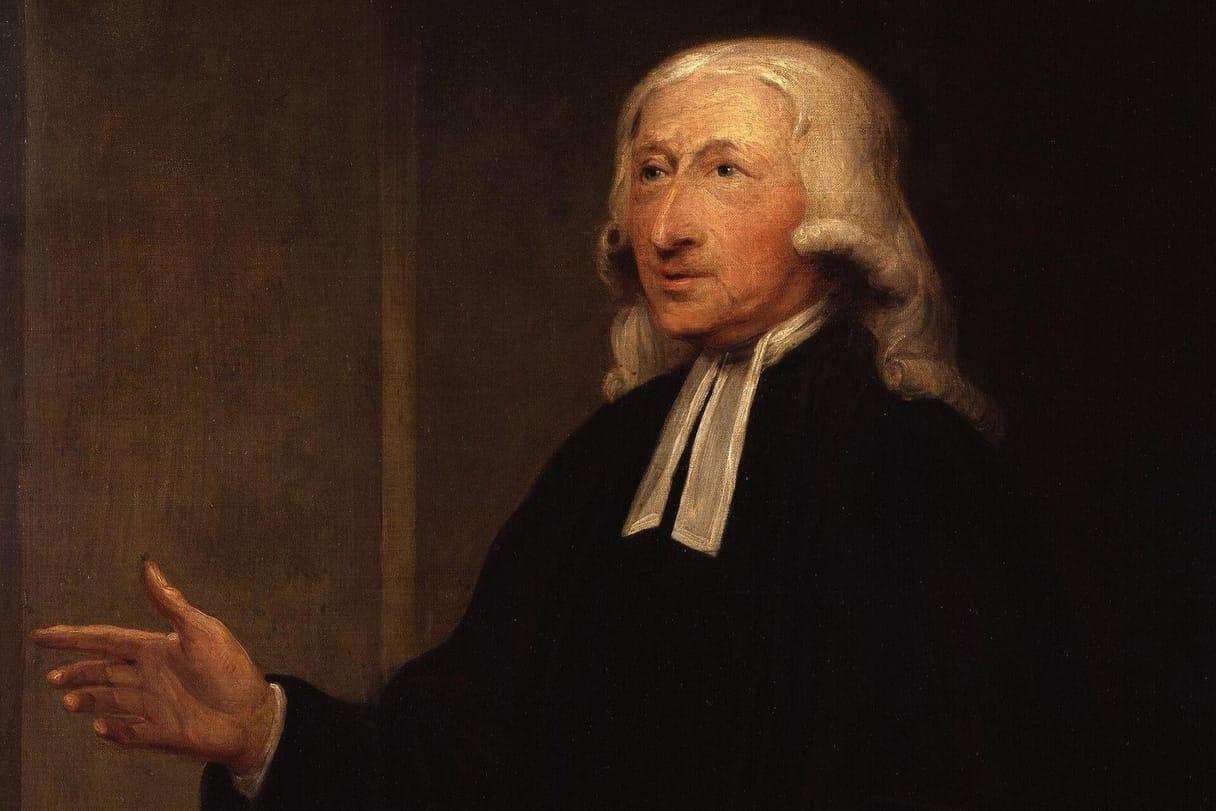
Methodism began with a young priest who longed to know in his heart that God had forgiven him. John Wesley, a priest of the Church of England, found that assurance one evening in London in 1738, and he spent the rest of his life telling ordinary people that God’s grace was meant for them too. Methodists follow his teaching and sing the hymns of his brother Charles. They believe that God’s grace reaches every person, forgives sinners who trust in Christ, and goes on to make them holy in love. The largest Methodist church in the United States is the United Methodist Church, a mainline church formed in 1968. Since 2022 some congregations that left it have formed the more conservative Global Methodist Church.
Who were John and Charles Wesley?
John Wesley (1703–1791) and his brother Charles (1707–1788) were sons of an Anglican rector in Epworth, Lincolnshire. At Oxford University they led a small group whose strict method of prayer, Bible study, frequent Communion, and visits to prisoners earned them the nickname “Methodists.”
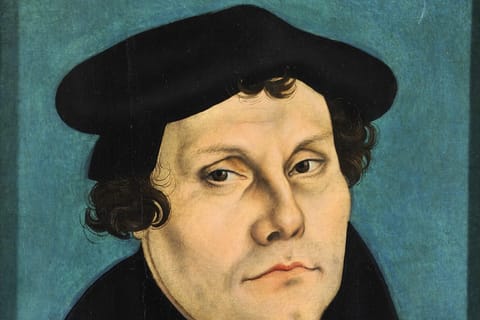
On May 24, 1738, John Wesley attended a meeting in Aldersgate Street, London, where someone was reading Martin Luther’s preface to Paul’s Letter to the Romans. He wrote in his journal:
About a quarter before nine, while he was describing the change which God works in the heart through faith in Christ, I felt my heart strangely warmed. I felt I did trust in Christ, Christ alone, for salvation.
Wesley spent the next fifty years preaching in fields, marketplaces, and mining towns across Britain, often on horseback. He gathered those who responded into small “classes” that met each week to pray and to hold one another accountable in love. Charles Wesley wrote thousands of hymns, among them “Hark! The Herald Angels Sing,” “Love Divine, All Loves Excelling,” and “And Can It Be.” John Wesley remained a priest of the Church of England all his life.
How did the Methodist Church begin in America?
After the American Revolution, Wesley sent the American Methodists an adapted Anglican prayer book and a shortened version of the Church of England’s Articles of Religion. American preachers met at the Lovely Lane Chapel in Baltimore at the Christmas Conference, which began on December 24, 1784, and organized the Methodist Episcopal Church. Thomas Coke and Francis Asbury became its first superintendents, later called bishops.
Methodism grew rapidly on the American frontier through traveling preachers called circuit riders. After nearly two centuries of divisions and reunions, the Methodist Church and the Evangelical United Brethren Church united in 1968 to form the United Methodist Church.
What do Methodists believe about grace?
United Methodists affirm the Apostles’ and Nicene Creeds and the historic faith in one God, Father, Son, and Holy Spirit. Their most distinctive teaching concerns grace, which the United Methodist Church, following Wesley, describes in three forms. Prevenient grace is God’s love at work in every person before that person is aware of it, drawing them toward God. Justifying grace is the grace by which God forgives and accepts the repentant sinner who trusts in Christ. Sanctifying grace is the grace by which the Holy Spirit makes a forgiven person holy over a lifetime. Together they describe one love that goes before you, welcomes you home, and keeps working in you for the rest of your life.
Wesley taught that Christians should expect to grow toward “Christian perfection,” which he defined as a heart filled with love for God and neighbor. He did not mean a life free of every mistake. He pointed to Jesus’s words in the Sermon on the Mount: “Be perfect, therefore, as your heavenly Father is perfect” (Matthew 5:48). Paul describes the same gift: “God’s love has been poured into our hearts through the Holy Spirit who was given to us” (Romans 5:5).
Wesley found this hope partly in the early Eastern Christian writers he read closely, such as the fourth-century homilies attributed to Macarius of Egypt, which he printed for his preachers in his Christian Library. The United Methodist scholar Albert Outler argued that Wesley’s idea of perfection as lifelong growth in love owes much to these Eastern teachers, who described salvation as being healed and made like God.
Because grace goes before everyone, Methodists have always taught that Christ died for all people and that anyone may respond to God. That conviction set Wesley apart from Calvinists of his day who taught that God had chosen only some for salvation. See are we saved by faith or works?
What is the Wesleyan quadrilateral?
The Wesleyan quadrilateral names four sources that guide Methodist thinking about faith: Scripture, tradition, reason, and experience. Wesley never used the term. The United Methodist scholar Albert Outler coined it in the twentieth century to describe how Wesley worked, adding personal experience to the Anglican trio of Scripture, tradition, and reason.
The four are not equal. The United Methodist Church calls Scripture “the primary source and standard for Christian doctrine,” and tradition, reason, and experience help Christians understand and live it. For a related Anglican idea, see what do Episcopalians believe?
What are Methodist sacraments and worship like?
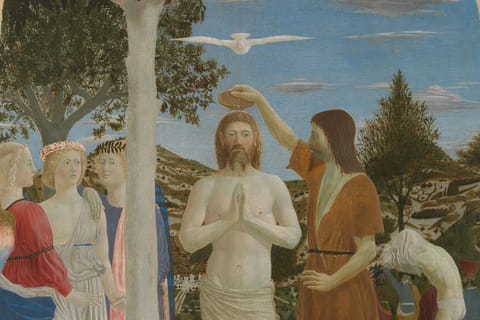
United Methodists celebrate two sacraments, Baptism and Holy Communion. They baptize infants as well as adults, because Baptism is a sign of God’s grace that comes before any human response. Their Communion table is open. The liturgy invites “all who love him, who earnestly repent of their sin, and seek to live in peace with one another,” and baptized Christians of any church are welcome. Many congregations receive by dipping the bread into a cup of grape juice. See what is Communion?
Methodist worship ranges from the formal liturgy of the United Methodist Hymnal to simpler services built around hymns, Scripture, prayer, and preaching. Singing has always been central to Methodist faith, and many congregations still sing Charles Wesley’s hymns every Sunday. For generations of Methodists, those hymns have been their first school of prayer.
What does the United Methodist Church teach today?
The Methodist Church granted women full clergy rights in 1956, and women have served as United Methodist pastors and bishops for decades. For many years the church’s Book of Discipline barred “self-avowed practicing” gay clergy and forbade clergy to officiate at same-sex weddings. Between 2019 and 2023, 7,659 congregations in the United States left the denomination, many of them over that question, and the parting brought grief to people on every side.
At its 2024 General Conference in Charlotte, North Carolina, the church removed both bans. Delegates also voted that clergy may not be required to perform, or barred from performing, any marriage, so every pastor decides which weddings to perform. In 2025 the annual conferences ratified amendments that let each region of the worldwide church adapt parts of the Book of Discipline to its own setting. See can same-sex couples get married in church?
The United Methodist Church has been in full communion with the Evangelical Lutheran Church in America since 2009. For the wider family of mainline churches, see what is mainline Protestantism?
How is the United Methodist Church different from the Global Methodist Church?
The Global Methodist Church launched on May 1, 2022. Its founders described their aim as preserving “the doctrinal integrity of the historic Christian faith—especially the authority of Scripture.” It ordains women, and it does not recognize same-sex marriage or ordain gay clergy in sexually active relationships. Global Methodists hold these positions out of conviction that Scripture reserves sex for marriage between a man and a woman, and they share with United Methodists the Wesleyan teaching on grace and holiness.
The United Methodist Church reads the same Scriptures and has concluded that gay and lesbian Christians may be ordained and married, while leaving room for pastors and congregations who disagree. Both churches still sing the hymns of Charles Wesley, and the best known of them is a prayer for the perfect love Wesley preached:
Love divine, all loves excelling,
Joy of Heav’n to Earth come down,
Fix in us thy humble dwelling,
All thy faithful mercies crown;
Jesus, thou art all compassion,
Pure, unbounded love thou art;
Visit us with thy salvation,
Enter ev’ry trembling heart.Charles Wesley, “Love Divine, All Loves Excelling” (1747), first stanza
Common questions
What is the difference between the United Methodist Church and the Global Methodist Church?
The two churches share John Wesley’s teaching on grace and holiness, and both ordain women. The Global Methodist Church, launched in 2022, was formed by congregations that opposed same-sex marriage and the ordination of gay clergy in sexually active relationships. The United Methodist Church removed its bans on gay clergy and same-sex weddings in 2024 and lets each pastor decide which weddings to perform.
Can anyone take Communion in a Methodist church?
The United Methodist liturgy invites “all who love him, who earnestly repent of their sin, and seek to live in peace with one another.” Baptized Christians from any church are welcome, and people who are not baptized are not turned away, though the church encourages them to be baptized. There is no minimum age.
Do Methodists baptize babies?
Yes. United Methodists baptize infants as well as adults, because they understand Baptism as a sign of God’s grace that comes before any human response. A person baptized as an infant later professes the faith personally at confirmation.
Why are they called Methodists?
The name began as a nickname at Oxford University for the small group around John and Charles Wesley, who kept a strict method of prayer, study, Communion, and visits to the poor and to prisoners. The Wesleys’ followers kept the name.
Sources
- Matthew 5:48 (WEB)
- John Wesley, Journal, May 24, 1738: “I felt my heart strangely warmed” (CCEL)
- UMC.org: What we believe
- UMC.org Glossary: Wesleyan Quadrilateral
- UMC.org: Our four theological guidelines
- UMC.org Glossary: Christmas Conference
- UMC.org Glossary: United Methodist Church, The
- UMC.org: An open table: How United Methodists understand communion
- General Commission on Archives and History: Maud Jensen
- United Methodists remove same-sex wedding ban (UM News, 2024)
- United Methodist Church split: total disaffiliations (Christianity Today, 2023)
- UMC bishops finish canvassing of amendments: all four ratified (2025)
- Global Methodist Church: Our formation
- Global Methodist Church (Wikipedia)
- Pseudo-Macarius (Wikipedia), on the Macarian homilies and their influence on John Wesley