What Episcopalians believe
Episcopalians believe the historic Christian faith summed up in the Apostles’ and Nicene Creeds: one God, Father, Son, and Holy Spirit, and Jesus Christ as Lord and Savior. They receive the Bible as the Word of God, read with the help of tradition and reason. Their beliefs are shaped by worship in the Book of Common Prayer. The Episcopal Church has bishops, celebrates baptism and Holy Communion as its two great sacraments, and ordains women and LGBTQ people.
They devoted themselves to the apostles’ teaching and fellowship, to the breaking of bread and the prayers.
Acts 2:42, NRSVUE
Episcopalians believe the historic Christian faith of the Apostles’ and Nicene Creeds, and they learn and express that faith above all in worship. If you have visited an Episcopal church on a Sunday morning, you may have noticed how much of the service is prayer said together from a book everyone holds. That book, the Book of Common Prayer, is the best place to begin if you want to understand what Episcopalians believe and how they hope to live with God.
What is the Book of Common Prayer?
The Book of Common Prayer is the Episcopal Church’s book of worship and the best guide to its faith. It contains the services for Sunday worship, Morning and Evening Prayer, baptism, marriage, burial, and ordination, along with the Psalms, a Catechism, and the church’s historical documents. The first Book of Common Prayer was issued in England in 1549, under Archbishop Thomas Cranmer. The first American Prayer Book followed in 1789, and its preface promised that the new church was “far from intending to depart from the Church of England in any essential point of doctrine, discipline, or worship.” The current book dates from 1979.
Anglicans have long held that the way the church prays shows what it believes. The Catechism, “An Outline of the Faith” (pp. 845–862), sets out that belief in questions and answers. It defines the creeds as “statements of our basic beliefs about God” and the Trinity as “one God: Father, Son, and Holy Spirit” (pp. 851–852). For the creed said every Sunday, see what is the Nicene Creed?
How do Episcopalians read the Bible?
The Episcopal Church receives the Old and New Testaments as the Word of God. The Catechism explains: “We call them the Word of God because God inspired their human authors and because God still speaks to us through the Bible” (p. 853). The Thirty-Nine Articles, the Church of England’s sixteenth-century statement of faith printed in the Prayer Book, teach that “Holy Scripture containeth all things necessary to salvation.” At every Sunday Eucharist the congregation hears one or two readings from Scripture, often followed by a psalm, and then stands for the reading of the Gospel.
Episcopalians read Scripture in the company of the church and with the minds God has given them. Richard Hooker, the great Elizabethan Anglican theologian, set out the order in his Laws of Ecclesiastical Polity (V.8.2): “what Scripture doth plainly deliver, to that the first place both of credit and obedience is due.” After Scripture comes what reason can “necessarily conclude,” and after these “the voice of the Church.” Episcopalians often speak of Scripture, tradition, and reason as a “three-legged stool,” a later image that is not Hooker’s own; Hooker gave Scripture the first place. The church welcomes modern biblical scholarship as part of reasoned reading; see should we read the Bible as literal fact?
What is the Baptismal Covenant?
At every baptism, the congregation renews the Baptismal Covenant (Book of Common Prayer, pp. 304–305). It begins with the Apostles’ Creed in question-and-answer form and then asks five questions. To each the people answer, “I will, with God’s help.” The promises are:
- to “continue in the apostles’ teaching and fellowship, in the breaking of the bread, and in the prayers,” taken from Acts 2:42;
- to “persevere in resisting evil, and, whenever you fall into sin, repent and return to the Lord”;
- to “proclaim by word and example the Good News of God in Christ”;
- to “seek and serve Christ in all persons, loving your neighbor as yourself”;
- to “strive for justice and peace among all people, and respect the dignity of every human being.”
The covenant shows the shape of the Christian life as Episcopalians understand it. Faith in the God of the creed comes first, and from it flow prayer and worship, repentance, witness, love of neighbor, and justice. The answer “I will, with God’s help” admits that no one keeps these promises alone. The whole covenant echoes Jesus’s summary of the law in the two great commandments to love God and neighbor (Matthew 22:37–40).
What do Episcopalians believe about the sacraments?
The Catechism defines the sacraments as “outward and visible signs of inward and spiritual grace, given by Christ as sure and certain means by which we receive that grace” (p. 857). Baptism and the Holy Eucharist are “the two great sacraments of the Gospel.” Five other sacramental rites, confirmation, ordination, holy matrimony, reconciliation of a penitent, and unction (anointing of the sick), are means of grace but are not necessary for all persons in the same way (p. 860).
The Eucharist, also called Holy Communion or the Lord’s Supper, is the principal service on Sundays. Episcopalians believe Christ is truly present in the sacrament: “The inward and spiritual grace in the Holy Communion is the Body and Blood of Christ given to his people, and received by faith” (p. 859). The church does not define exactly how Christ is present, and it leaves that mystery to God. All baptized Christians, of any denomination, are invited to receive. See what is Holy Communion?
How is the Episcopal Church governed?
The word episcopal comes from the Greek episkopos, “bishop.” The church is led by bishops, priests, and deacons, and the Catechism names lay people first among the ministers of the church (p. 855). Episcopalians hold to apostolic succession, “the belief that bishops are the successors to the apostles,” in an unbroken line of ordinations. The first American bishop, Samuel Seabury of Connecticut, was consecrated by bishops of the Scottish Episcopal Church after the American Revolution.
The church governs itself through its General Convention, which has met regularly since 1789 and has two houses, a House of Bishops and a House of Deputies of clergy and lay people. The Presiding Bishop is elected for a nine-year term; Sean Rowe became the 28th Presiding Bishop on November 1, 2024.
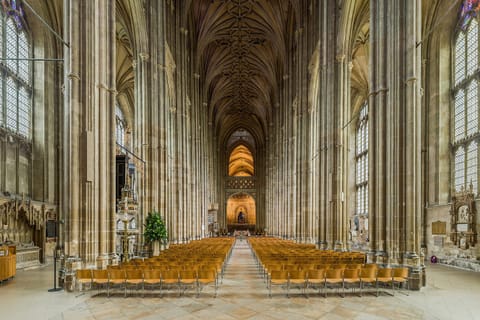
The Episcopal Church belongs to the Anglican Communion, which has 42 member churches and five extra-provincial areas in more than 165 countries. Its member churches are autonomous and govern themselves. Sarah Mullally was installed at Canterbury Cathedral on March 25, 2026, as the 106th Archbishop of Canterbury and the first woman to hold the office.
Anglicans state the essentials they bring to Christian unity in the Chicago-Lambeth Quadrilateral, adopted by the Episcopal bishops in 1886 and the Lambeth Conference in 1888 (pp. 876–878). It names the Holy Scriptures as “containing all things necessary to salvation,” the Apostles’ Creed and the Nicene Creed, the two sacraments of Baptism and the Supper of the Lord, and “the Historic Episcopate, locally adapted.”
What do Episcopalians believe about women and LGBTQ people?
In 1976 the General Convention declared that the church’s canons on ordination to the three orders of bishops, priests, and deacons “shall be equally applicable to men and women.” Barbara Harris became the Episcopal Church’s first woman bishop in 1989, and in 2006 Katharine Jefferts Schori became the first woman to lead an Anglican province.
The same 1976 Convention resolved that gay and lesbian people “are children of God who have a full and equal claim with all other persons upon the love, acceptance, and pastoral concern and care of the Church.” In 2012 the canons were amended so that no one may be denied access to the discernment process for ministry, lay or ordained, because of “sexual orientation, gender identity and expression.” In 2015 the General Convention opened the rite of marriage to same-sex couples, and in 2018 it required that couples in every diocese have access to the marriage rites in their own congregations, while allowing any member of the clergy to decline to officiate at any marriage. See can same-sex couples get married in church?
Not every Episcopalian agrees with these decisions, and the 2018 resolution committed the church to “honor theological diversity in regard to matters of human sexuality.” Some who could not accept the changes in conscience left in 2008 to form the Anglican Church in North America, and they remain brothers and sisters in Christ.
What do Episcopalians believe about salvation and eternal life?
The Catechism teaches that the mission of the church “is to restore all people to unity with God and each other in Christ” (p. 855). It describes heaven as “eternal life in our enjoyment of God” and hell as “eternal death in our rejection of God” (p. 862). Episcopalians pray for the dead, “because we still hold them in our love,” trusting that in God’s presence they “will grow in his love, until they see him as he is” (p. 862).
Many Episcopal clergy and theologians share the hope of Christian teachers from Gregory of Nyssa and Isaac the Syrian to Julian of Norwich that God’s love will have the last word and reach every person. They read the Bible’s images of fire and outer darkness as picture-language for God’s judgment on wrongdoing, which answers the cry of victims for justice in a world full of evil. Other Christians, out of seriousness about human freedom and God’s justice, believe that people who finally refuse God are separated from God forever; see do non-Christians go to hell? For how Episcopal belief compares with the Catholic Church, see the difference between Episcopal and Catholic.
Every celebration of the Holy Eucharist in the Prayer Book may begin with a short prayer that goes back to Cranmer’s first Prayer Book of 1549, the Collect for Purity. It gathers up much of what Episcopalians believe about God and about the life of prayer:
Almighty God, to you all hearts are open, all desires known, and from you no secrets are hid: Cleanse the thoughts of our hearts by the inspiration of your Holy Spirit, that we may perfectly love you, and worthily magnify your holy Name; through Christ our Lord. Amen.
Book of Common Prayer (1979), p. 355
Common questions
What is the difference between Episcopal and Anglican?
The Episcopal Church is the Anglican church of the United States and several other countries. Anglican churches descend from the Church of England, and the Anglican Communion is the worldwide family of those churches. Episcopal comes from the Greek word for bishop, and refers to the church’s government by bishops.
Can anyone take Communion in an Episcopal church?
The Episcopal Church invites all baptized Christians to receive Holy Communion, whatever their denomination. If you are not baptized, many Episcopal churches invite you to come forward for a blessing, and any priest will be glad to talk with you about baptism.
Do Episcopalians believe in the Trinity?
Yes. The Episcopal Catechism teaches that the Trinity is one God: Father, Son, and Holy Spirit. Episcopalians confess the Trinity in the Apostles’ and Nicene Creeds, and most of the Prayer Book’s collects end by naming the Father, the Son, and the Holy Spirit as one God.
Who leads the Episcopal Church?
The Presiding Bishop is the chief pastor of the Episcopal Church, elected for a nine-year term. Sean Rowe became the 28th Presiding Bishop on November 1, 2024. The church is governed by its General Convention, made up of a House of Bishops and a House of Deputies of clergy and lay people.
Sources
- Book of Common Prayer (1979), Catechism, pp. 845–862
- Book of Common Prayer (1979), Holy Baptism: the Baptismal Covenant, pp. 304–305
- Book of Common Prayer (1979), Historical Documents: Thirty-Nine Articles and Chicago-Lambeth Quadrilateral
- Book of Common Prayer (1979), Preface (1789)
- Richard Hooker, Laws of Ecclesiastical Polity V.8.2 (quoted at Anglican Way)
- An Episcopal Dictionary of the Church: Apostolic Succession
- An Episcopal Dictionary of the Church: Open Communion
- Anglican Communion, Member Churches
- General Convention Resolution 1976-B005 (ordination of women)
- General Convention Resolution 1976-A069 (homosexual persons are children of God)
- General Convention Resolution 2015-A036 (marriage canon)
- General Convention Resolution 2018-B012 (marriage rites in every diocese)
- Sean Rowe (Wikipedia)