Catholics and Protestants
Catholics and Protestants share faith in the Trinity, in Jesus Christ as Lord and Savior, in the ancient creeds, and in baptism. They differ on authority: Catholics receive Scripture and tradition as taught by the pope and bishops, while Protestants make Scripture the final authority. They also differ on the sacraments, the papacy, and prayer to Mary and the saints. Their sharpest old dispute, over justification by faith, was largely settled in 1999.
there is one body and one Spirit, just as you were called to the one hope of your calling, one Lord, one faith, one baptism, one God and Father of all, who is above all and through all and in all.
Ephesians 4:4–6, NRSVUE
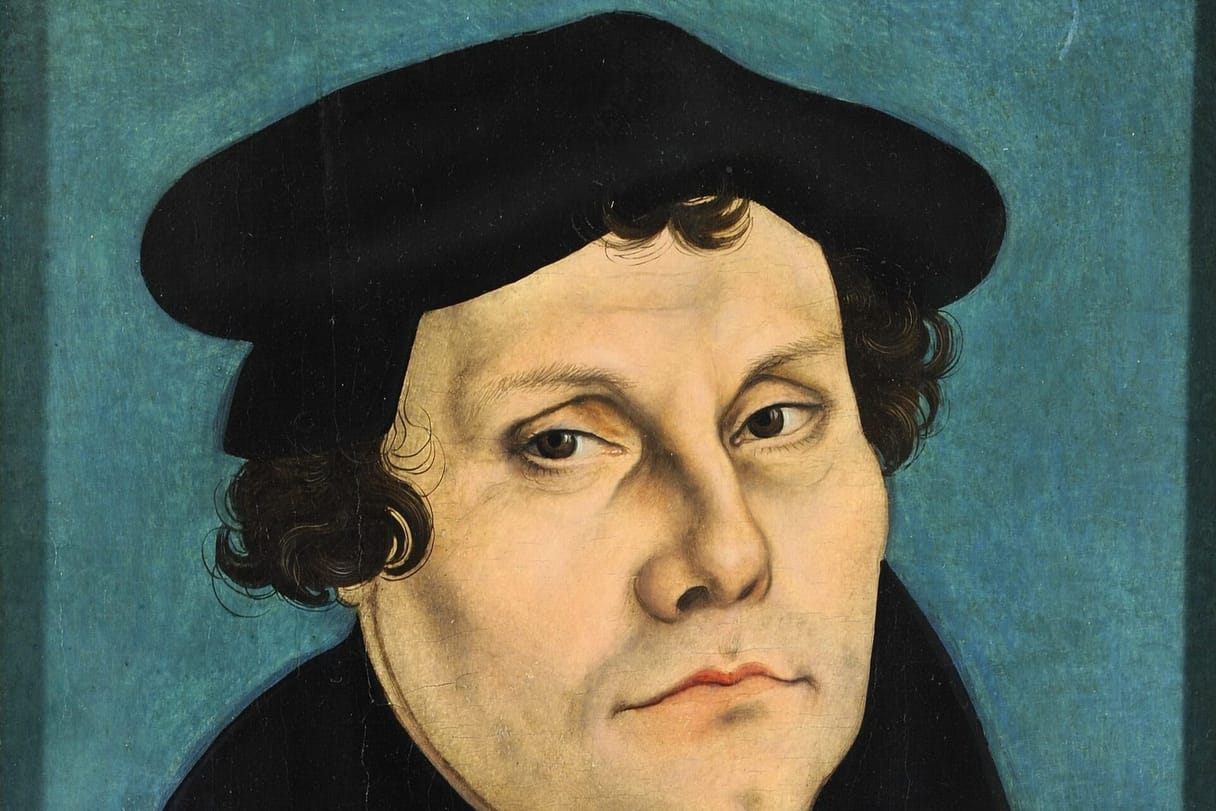
Catholics and Protestants share faith in one God, Father, Son, and Holy Spirit, and in Jesus Christ as Lord and Savior, and they differ on authority, the sacraments, the pope, and the saints. In the United States, the Pew Research Center’s 2023–24 Religious Landscape Study found that 40 percent of adults are Protestant and 19 percent are Catholic, so many families include both. Perhaps you are a Protestant marrying a Catholic, a Catholic whose children have joined another church, or someone who grew up hearing harsh words about the other side. The differences are real and worth understanding, and they rest on a much larger shared faith.
What do Catholics and Protestants agree on?
They agree on far more than they disagree on. Both believe in the Trinity, the full divinity and full humanity of Christ, his death for our sins and his resurrection, the gift of the Holy Spirit, and the hope of eternal life. Both baptize in the name of the Father, the Son, and the Holy Spirit, and most churches on both sides recognize each other’s baptisms. Both read the same New Testament.
The Letter to the Ephesians describes what Christians still share:
there is one body and one Spirit, just as you were called to the one hope of your calling, one Lord, one faith, one baptism, one God and Father of all, who is above all and through all and in all.
Ephesians 4:4–6, NRSVUE
How do they differ on the Bible and tradition?
The Reformers taught that Scripture is the final authority over every church teaching. The Church of England put it this way in Article VI of the Thirty-Nine Articles: “Holy Scripture containeth all things necessary to salvation,” so that nothing outside it may be required “as an article of the Faith.” Protestants often cite the words of 2 Timothy that “Every Scripture is God-breathed and profitable for teaching” (2 Timothy 3:16).
The Catholic Church teaches that God’s word comes to the church through both Scripture and tradition, the living teaching handed down from the apostles, and that the pope and bishops interpret both. Catholics point to the instruction in 2 Thessalonians to “stand firm and hold the traditions which you were taught by us, whether by word or by letter” (2 Thessalonians 2:15).
The two also have slightly different Bibles. The Catholic Old Testament includes books that Protestants call the Apocrypha. The Thirty-Nine Articles say the church reads those books “for example of life and instruction of manners” but does not use them “to establish any doctrine.” See why do Catholic Bibles have more books?
Are we saved by faith or by works?
This was the question that started the Reformation. Luther, reading Paul, taught that sinners are justified, made right with God, by grace through faith alone, as a gift that no good work can earn:
For by grace you have been saved through faith, and this is not your own doing; it is the gift of God— not the result of works, so that no one may boast. For we are what he has made us, created in Christ Jesus for good works, which God prepared beforehand so that we may walk in them.
Ephesians 2:8–10, NRSVUE
Paul writes that “a man is justified by faith apart from the works of the law” (Romans 3:28). The Letter of James says that “by works a man is justified, and not only by faith” (James 2:24). Catholics stressed that God’s grace truly changes the believer and bears fruit in love; Protestants stressed that salvation is God’s free gift that no one can earn. Article XI of the Thirty-Nine Articles calls justification “by Faith only” a “most wholesome Doctrine, and very full of comfort.”
After centuries of mutual condemnation, the Lutheran World Federation and the Catholic Church signed the Joint Declaration on the Doctrine of Justification in Augsburg, Germany, on October 31, 1999. Together they confessed: “By grace alone, in faith in Christ’s saving work and not because of any merit on our part, we are accepted by God and receive the Holy Spirit, who renews our hearts while equipping and calling us to good works.” The declaration states that the Lutheran teaching it presents “does not fall under the condemnations from the Council of Trent,” and that the Lutheran condemnations do not apply to the Catholic teaching it presents. The World Methodist Council affirmed the declaration in 2006, the Anglican Consultative Council in 2016, and the World Communion of Reformed Churches in 2017. See are we saved by faith or by works?
How many sacraments are there?
The Catholic Church counts seven sacraments: baptism, confirmation, the Eucharist, penance, anointing of the sick, holy orders, and matrimony. Most Protestants recognize two sacraments instituted by Christ in the Gospels. The Westminster Confession, part of the PC(USA)’s Book of Confessions, says, “There be only two sacraments ordained by Christ our Lord in the Gospel; that is to say, Baptism, and the Supper of the Lord” (27.4). Lutherans, Methodists, and Anglicans also count two, and Anglicans continue to practice the other five as sacramental rites.
Christians also understand the Lord’s Supper differently. The Catholic Church teaches that the bread and wine become the body and blood of Christ, a change it calls transubstantiation. Lutherans and Anglicans also believe Christ is truly present, without adopting the Catholic explanation. Many other Protestants understand the meal mainly as a memorial, following Jesus’s command, “Do this in memory of me” (1 Corinthians 11:24).
Do Protestants believe in the pope?
No. The Catholic Church teaches that the pope, the bishop of Rome, is the successor of Saint Peter and the visible head of the church on earth. It points to Jesus’ words to Peter in Matthew’s Gospel: on “this rock” Jesus will build his church, and he will give Peter “the keys of the Kingdom of Heaven” (Matthew 16:18–19).
The First Vatican Council in 1870 defined papal infallibility, the teaching that the pope cannot err when he solemnly defines a doctrine of faith or morals. Protestants honor Peter as an apostle but deny that Christ gave him or his successors authority over the whole church. Protestant churches are governed in many ways: by bishops, by elected assemblies of ministers and elders, or by individual congregations.
Protestant churches also allow their ministers to marry, and many ordain women. The Catholic Church requires celibacy of most priests and ordains only men.
What do Catholics and Protestants believe about Mary and the saints?
Catholics honor Mary as the Mother of God and ask her and the saints to pray for them. The Catholic Church holds as dogma Mary’s Immaculate Conception (1854) and her Assumption into heaven (1950), and it teaches purgatory, a final purification after death for those who die in God’s grace. Most Protestants do not pray to the saints, holding that Scripture does not teach it; Article XXII of the Thirty-Nine Articles calls the invocation of saints “grounded upon no warranty of Scripture,” and Protestants stress that there is “one mediator between God and men, the man Christ Jesus” (1 Timothy 2:5).
The gap has narrowed in some places. In 2005 the Anglican–Roman Catholic International Commission agreed that asking Mary and the saints to pray for us need not divide the churches. See what do Christians believe about Mary?
Where do Anglicans and Episcopalians fit?
Anglicans describe their church as both catholic and reformed. The Episcopal Church, the Anglican church in the United States, shares the Protestant convictions about Scripture, justification, married clergy, and the authority of the pope, and it keeps the Catholic pattern of bishops, liturgy, and sacramental worship. Lutherans, too, kept much of the old Western liturgy, and the ELCA has been in full communion with the Episcopal Church since 2001. Like the ELCA, the PC(USA), and the United Methodist Church, the Episcopal Church ordains women and welcomes LGBTQ people in all orders of ministry (see What is a mainline Protestant church?). For a closer comparison, see the difference between Episcopal and Catholic.
Five centuries after the Reformation, Catholics and Protestants pray together, read the same Scriptures, and share much of their work for the poor. Many a family gathers at one Christmas table with members of both churches, and each can thank God for the faith of the other. On the night before he died, Jesus prayed for all who would believe in him, “that they may all be one” (John 17:21). Christians on both sides can make that prayer their own, and trust God to answer it in God’s own time.
Common questions
Are Catholics Christians?
Yes. Catholics confess the Trinity, the divinity and resurrection of Jesus Christ, and the Apostles’ and Nicene Creeds, the same faith Protestants confess. Most churches on both sides recognize each other’s baptisms.
Can Protestants take Communion at a Catholic Mass?
Ordinarily not. Catholic churches ordinarily give Communion only to Catholics, with exceptions for the Orthodox and a few other churches. Protestants are welcome to attend Mass and to pray with the congregation.
Why did the Reformation happen?
The Reformation began in 1517, when Martin Luther challenged the sale of indulgences in his Ninety-five Theses. The dispute grew into a deeper argument about how sinners are made right with God, the authority of Scripture, and the authority of the pope. Within a few decades the Western church had divided into Catholic and several Protestant churches.
Do Catholics and Protestants have the same Bible?
They share the same New Testament. The Catholic Old Testament includes seven more books, such as Tobit, Judith, Wisdom, Sirach, and 1 and 2 Maccabees, which Protestants call the Apocrypha. Anglicans read these books in worship but, as the Thirty-Nine Articles say, do not use them to establish doctrine.
Sources
- Ephesians 2:8–10 (WEB)
- Romans 3:28 and James 2:24 (WEB)
- Matthew 16:18–19 (WEB)
- Vatican II, Dei Verbum (1965)
- Joint Declaration on the Doctrine of Justification (1999)
- The Living Church, The gift of consensus on justification
- The Thirty-Nine Articles, Book of Common Prayer (1979), Historical Documents
- PC(USA), The Book of Confessions (2016), Westminster Confession of Faith
- Pew Research Center, Religious Landscape Study: Executive Summary (2025)
- USCCB, Guidelines for the Reception of Communion
- Anglican–Roman Catholic International Commission, Mary: Grace and Hope in Christ (2005)
- ELCA: Full communion partners

.jpg)