The Apostles’ Creed
The Apostles’ Creed is the ancient baptismal creed of the Western church. It grew out of the three questions asked of people being baptized in Rome around 200 CE, about the Father, the Son, and the Holy Spirit. It was not written by the apostles themselves, and it sums up their teaching. Lutherans, Presbyterians, Methodists, and Episcopalians say it at baptisms, in Sunday worship, and in daily prayer.
If you will confess with your mouth that Jesus is Lord and believe in your heart that God raised him from the dead, you will be saved.
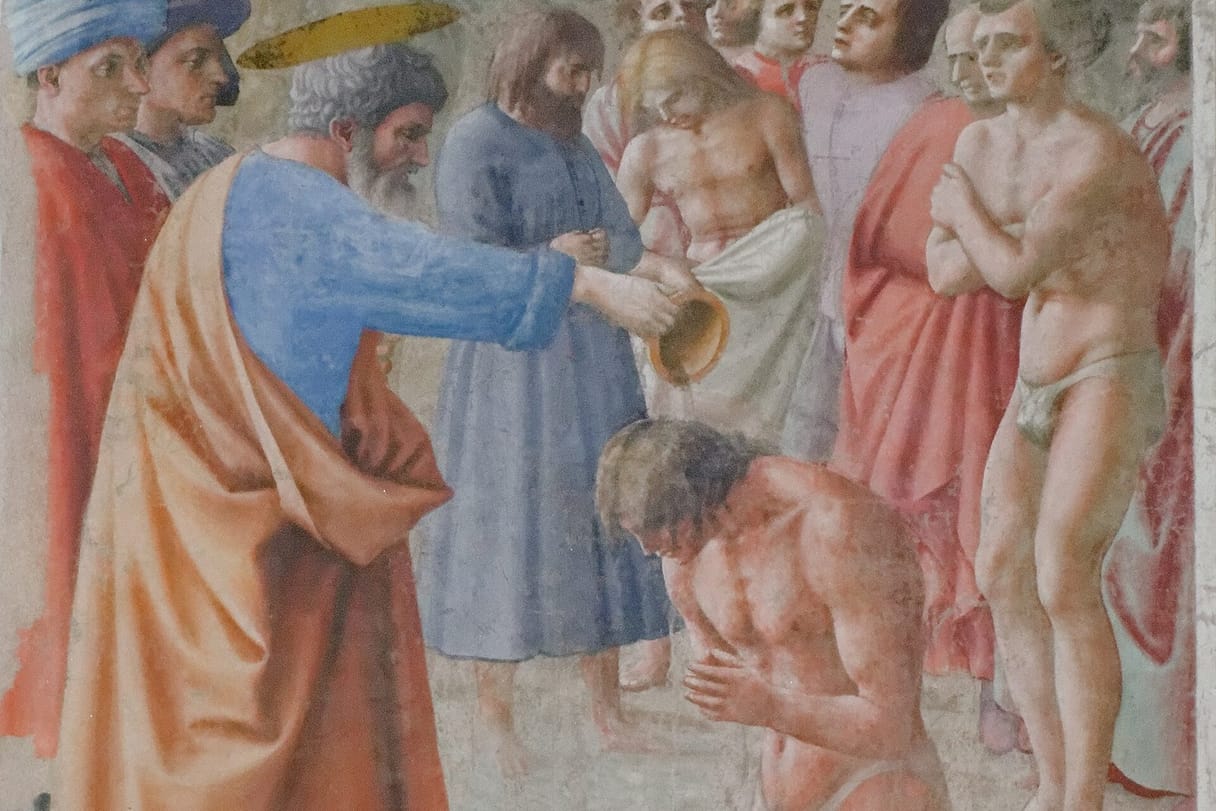
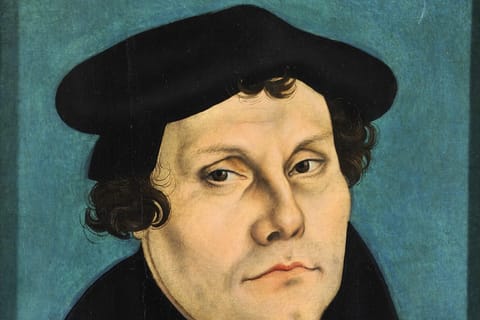
The Apostles’ Creed is the oldest summary of Christian belief still in common use in the Western church. Whether you have said it since childhood or are meeting it for the first time, it is a short way of telling the whole story of God’s love, from creation to the life everlasting. It began as the creed of baptism, and it is still the creed that new Christians confess when they are baptized in the Evangelical Lutheran Church in America (ELCA), the Presbyterian Church (U.S.A.), the United Methodist Church, and the Episcopal Church. Martin Luther made it one of the three pillars of his Small Catechism, alongside the Ten Commandments and the Lord’s Prayer.
What are the words of the Apostles’ Creed?
This is a modern English text of the Apostles’ Creed, as printed in the Book of Common Prayer. The versions in Lutheran, Presbyterian, and Methodist worship books differ from it only in small details of wording:
I believe in God, the Father almighty,
creator of heaven and earth;I believe in Jesus Christ, his only Son, our Lord.
He was conceived by the power of the Holy Spirit
and born of the Virgin Mary.
He suffered under Pontius Pilate,
was crucified, died, and was buried.
He descended to the dead.
On the third day he rose again.
He ascended into heaven,
and is seated at the right hand of the Father.
He will come again to judge the living and the dead.I believe in the Holy Spirit,
the holy catholic Church,
the communion of saints,
the forgiveness of sins,
the resurrection of the body,
and the life everlasting. Amen.The Book of Common Prayer (1979), p. 96
The traditional English text, still used in some churches, says “maker of heaven and earth,” “conceived by the Holy Ghost,” “He descended into hell,” and “to judge the quick and the dead,” where quick is the old English word for “living.” The meaning of the two versions is the same.
Did the apostles write the Apostles’ Creed?
The creed was not written by the apostles themselves, and it sums up what they taught. Around 400 CE, Rufinus of Aquileia recorded a legend that the twelve apostles composed it together before they left Jerusalem, “each contributing his several sentence to one common summary.” Historians treat Rufinus’s account as a legend, and it carries a true insight: the creed gathers up the faith the apostles handed on.
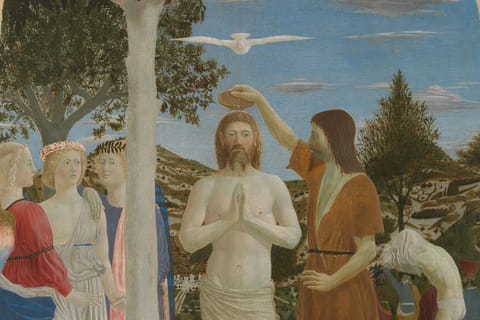
The creed grew out of baptism. Jesus told his disciples to baptize “in the name of the Father and of the Son and of the Holy Spirit” (Matthew 28:19), so the church in Rome asked each person being baptized three questions, one about each name. A church order from about 200 CE, traditionally credited to Hippolytus of Rome, describes the candidate standing in the water and answering “I believe” to each question, and being baptized after each answer. The second question already named the Virgin Mary, Pontius Pilate, the resurrection on the third day, and the return of Christ to judge.
The questions became a statement that new Christians learned by heart. Scholars call the form used in Rome in the third and fourth centuries the Old Roman Creed. It was shorter than the creed said today: it lacked “creator of heaven and earth,” “descended into hell,” “the communion of saints,” and “life everlasting.” Those phrases came in from other Western churches, and the present wording was settled by about the eighth century.
The Latin name for a creed, symbolum, comes from a Greek word for a token. Rufinus explained that the creed was a sign by which Christians could recognize one another.
How is the Apostles’ Creed different from the Nicene Creed?
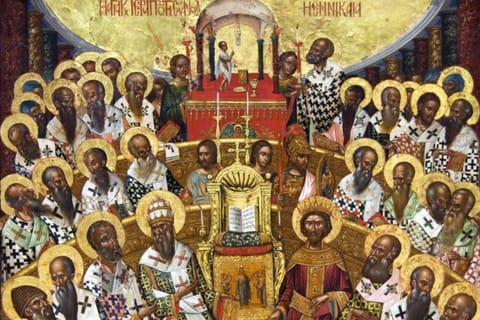
The Apostles’ Creed is shorter and older in its roots, and it speaks in the first person singular, “I believe,” because each person being baptized answers for himself or herself. The Nicene Creed comes from the councils of bishops at Nicaea in 325 and Constantinople in 381. It adds careful language about who Christ is, such as “of one Being with the Father,” written to answer arguments about the Trinity in the fourth century.
The two creeds also have different homes. In many Western churches the Apostles’ Creed is the creed of baptism and daily prayer, and the Nicene Creed, which the churches of East and West share, is said at Holy Communion on Sundays and feast days. The Apostles’ Creed belongs to the Western church alone: Britannica notes that it “is not officially recognized in the Eastern Orthodox churches,” which confess the Nicene Creed at every baptism and every Divine Liturgy.
What does the Apostles’ Creed mean?
The creed has three paragraphs, one for each person of the Trinity, and each one tells part of the story of God’s love; see What is the Trinity?
God the Father. “Creator of heaven and earth” confesses that everything that exists comes from God and depends on God, including you. Luther’s Small Catechism explains the line in personal terms: “I believe that God has made me and all creatures,” and that God does all this “out of pure, fatherly, divine goodness and mercy, without any merit or worthiness in me.”
Jesus Christ. “His only Son, our Lord” repeats the oldest Christian confession of all:
If you will confess with your mouth that Jesus is Lord and believe in your heart that God raised him from the dead, you will be saved.
The creed confesses that Jesus was conceived by the Holy Spirit and born of the Virgin Mary. Christians hold the virgin birth in different ways, some as a literal account of his conception and others as a confession that Jesus came from God; see Was Jesus born of a virgin?
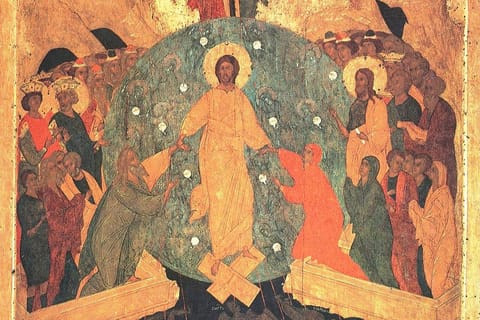
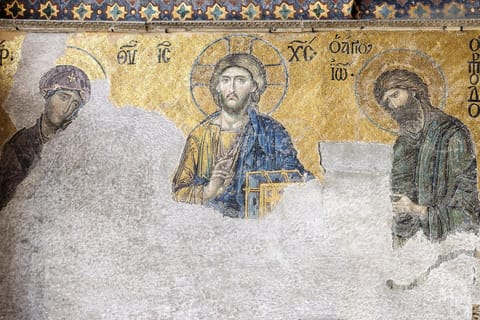
“Suffered under Pontius Pilate” fixes the story in history, under a Roman governor whose name is known. Rufinus wrote that the creed names the time “lest in any respect the tradition should falter, as though vague and uncertain.” “He descended to the dead” confesses that Jesus truly died and that his saving work reached the dead. The First Letter of Peter says that Christ “went and preached to the spirits in prison” (1 Peter 3:19) and that the good news “was preached even to the dead” (1 Peter 4:6). Eastern Orthodox Christians picture this in their icon of the Resurrection, called the Anastasis, in which the risen Christ stands on the broken gates of Hades and pulls Adam and Eve up out of their tombs by the wrists. See Did Jesus go to hell?
The lines about the resurrection follow the gospel Paul received and passed on:
For I delivered to you first of all that which I also received: that Christ died for our sins according to the Scriptures, that he was buried, that he was raised on the third day according to the Scriptures.
“Seated at the right hand of the Father” means that Jesus, who shared human life, now reigns with God and prays for his people. Paul writes that Christ “is at the right hand of God, who also makes intercession for us” (Romans 8:34).
“He will come again to judge the living and the dead” confesses that the wrongs of history will be set right, and that the judge will be Jesus, who died for the world. Some Christians believe that judgment will leave some people lost forever. Many others, in a line that runs from Gregory of Nyssa and Isaac the Syrian to modern theologians, hope that God’s judgment will heal, so that in the end God will be “all in all” (1 Corinthians 15:28).
The Holy Spirit and the church. The third paragraph names the Spirit and then what the Spirit does. Rufinus pointed out that Christians say they believe in the Father, the Son, and the Holy Spirit, and they do not say they believe in the church, because the church is the people God has gathered, and only God is God. “Catholic” means universal. The communion of saints is the whole family of God, the living and the dead, bound together in Christ; the Letter to the Hebrews pictures the faithful who have died as “so great a cloud of witnesses” (Hebrews 12:1). The creed ends with forgiveness, the resurrection of the body, and eternal life, which Jesus describes in John’s Gospel as knowing God: “This is eternal life, that they should know you, the only true God, and him whom you sent, Jesus Christ” (John 17:3).
When do churches say the Apostles’ Creed?
Mainline churches say the Apostles’ Creed at baptism. In the baptismal services of the ELCA, the PC(USA), the United Methodist Church, and the Episcopal Church, the minister asks whether the candidate believes in God the Father, in Jesus Christ, and in the Holy Spirit, and the answer to each question is a paragraph of the creed. The questions are the same three that Christians in Rome answered around 200 CE. See Do you have to be baptized to be saved?
Many congregations also say it in Sunday worship, and it belongs to the daily services of morning and evening prayer, so that Christians recall their baptism each day. Lutherans learn it through Martin Luther’s Small Catechism, which explains its three articles, and the Presbyterian Church (U.S.A.) includes it in its Book of Confessions. For more on the churches that share this creed, see What is mainline Protestantism?
You can say the creed with the church long before you understand every line or feel sure of each one. When a father in the Gospel of Mark brought his sick son to Jesus, he said, “I believe. Help my unbelief!” (Mark 9:24), and Jesus healed the boy. Every “I believe” in the creed can be prayed in that same spirit.
Common questions
Is the Apostles’ Creed in the Bible?
The Apostles’ Creed is not itself in the Bible, and nearly every phrase in it comes from the New Testament. Its three parts follow Jesus’ command to baptize “in the name of the Father and of the Son and of the Holy Spirit” (Matthew 28:19). Its account of Christ’s death, burial, and rising on the third day echoes Paul’s summary of the gospel in 1 Corinthians 15:3–4.
Why does the Apostles’ Creed say “holy catholic Church” if Protestants say it?
The word catholic comes from a Greek word meaning “throughout the whole” and in the creed means universal. The phrase “the holy catholic Church” confesses one church of Christ spread through the whole world and through every age. Lutherans, Presbyterians, Methodists, and Episcopalians say it with that meaning, and some Protestant churches print “holy Christian Church” instead.
Do Orthodox Christians say the Apostles’ Creed?
Eastern Orthodox churches do not use the Apostles’ Creed in their worship, because it grew up in the Latin-speaking West. Orthodox Christians confess the Nicene Creed instead, at every baptism and at every Divine Liturgy. The two creeds teach the same faith in the Father, the Son, and the Holy Spirit.
Why do some versions say “descended into hell”?
The older English wording, “He descended into hell,” used hell in its old sense of the place of the dead. Most modern texts used in mainline churches now say “He descended to the dead,” which is closer to the meaning of the phrase. The First Letter of Peter says that the good news “was preached even to the dead” (1 Peter 4:6).
Sources
- Book of Common Prayer (1979), Morning Prayer: Rite Two, The Apostles’ Creed, p. 96
- Rufinus, Commentary on the Apostles’ Creed (New Advent)
- Hippolytus’ account of the baptismal service (creeds.net)
- Apostles’ Creed (Catholic Encyclopedia, New Advent)
- Apostles’ Creed (Britannica)
- Matthew 28:19 (WEB)
- Romans 10:9 (WEB)
- 1 Corinthians 15:3–4 (WEB)
- 1 Peter 3:18–19 and 4:6 (WEB)
- 1 Corinthians 15:28 (WEB)
- Romans 8:34 (WEB)
- John 17:3 (WEB)
- Martin Luther, Small Catechism, The Creed (Triglot Concordia, BookOfConcord.org)