Orthodox and Catholic Christians
The Catholic and Orthodox churches were one church for about a thousand years and divided in the Great Schism of 1054. The biggest difference is the pope: Catholics accept his authority over the whole church, while the Orthodox are a family of self-governing churches led by their own patriarchs. They also differ over the filioque in the Nicene Creed, leavened bread, and married priests. Both keep seven sacraments, bishops, and deep devotion to Mary.
that they may all be one; even as you, Father, are in me, and I in you, that they also may be one in us; that the world may believe that you sent me.
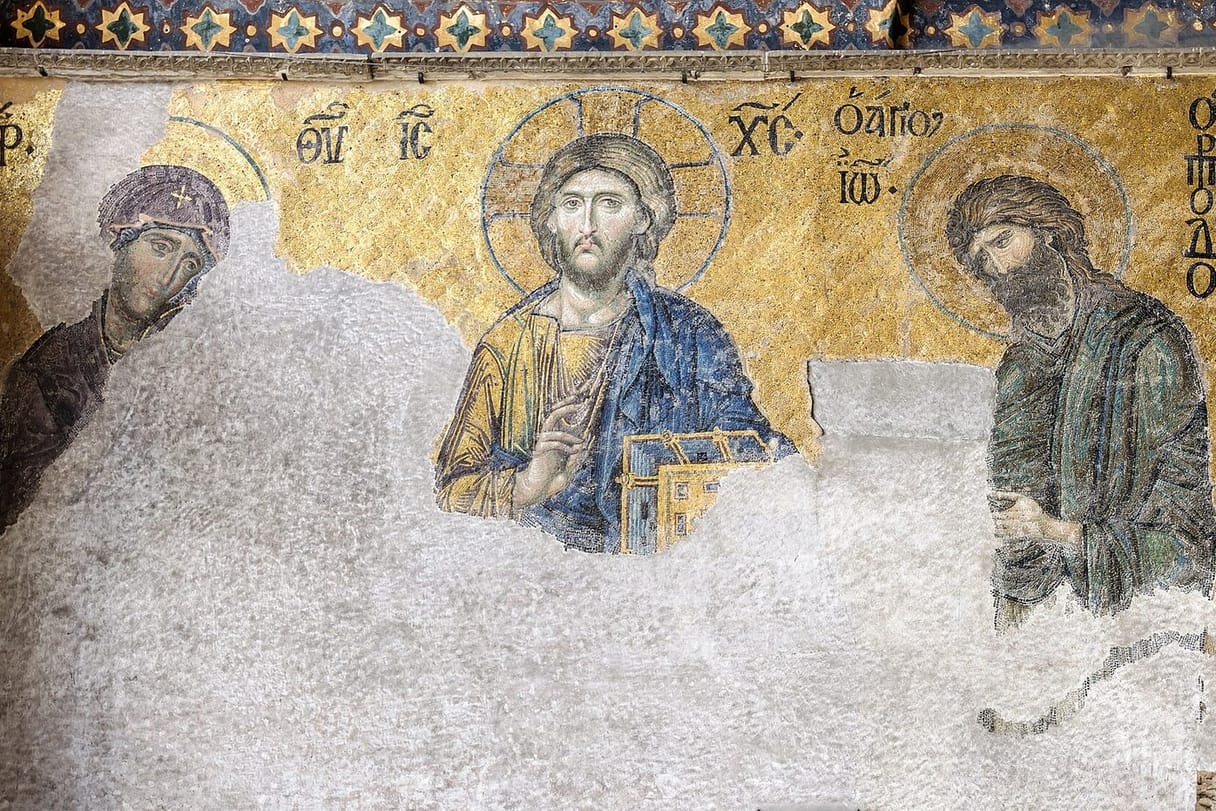
The Roman Catholic Church and the Eastern Orthodox churches are the two largest of the ancient churches, and for about a thousand years they were one church. They divided in stages, and the break is usually dated to 1054. Today the Catholic Church is united under the pope in Rome, while the Orthodox are a communion of self-governing national churches, such as the Greek, Russian, Serbian, and Romanian Orthodox churches, which honor the Ecumenical Patriarch of Constantinople as first among equals. The two churches still share most of their faith, and since 1965 their leaders have worked to heal the division.
People come to this question from many directions. You may be marrying into a Greek or Russian Orthodox family, visiting a Divine Liturgy for the first time, or noticing that your Catholic and Orthodox friends celebrate Easter on different Sundays. Behind the history lies a sorrow that both churches feel: two families of Christians who pray the same creed, love the same Mother of God, and still cannot share one Communion table. The story of their division is also a story of patient hope.
What caused the Great Schism of 1054?
By the eleventh century the Latin-speaking West and the Greek-speaking East had grown apart in language, culture, and church customs. The deepest dispute was over the authority of the pope. Popes claimed authority over the whole church as successors of Peter. Eastern bishops honored the bishop of Rome as the first among the great patriarchs, and they did not regard him as their ruler.
In 1054 Pope Leo IX sent Cardinal Humbert of Silva Candida to Constantinople to settle disputes with Patriarch Michael Cerularius. The talks failed. On July 16, 1054, Humbert laid a bull excommunicating the patriarch on the altar of Hagia Sophia, the great cathedral of Constantinople, and the patriarch and his synod excommunicated the legates in return. Leo IX had died three months earlier, so historians doubt that the legates still had authority to act.
At the time, few people thought the quarrel was final. The break hardened in 1204, when soldiers of the Fourth Crusade sacked Constantinople and installed a Latin patriarch there. A council at Florence agreed on reunion in 1439, but most Orthodox clergy and people rejected it.
What is the difference over the pope?
The Catholic Church teaches that Jesus made Peter the rock of the church: “you are Peter, and on this rock I will build my assembly” (Matthew 16:18). It holds that the bishop of Rome, as Peter’s successor, has authority over the whole church, and the First Vatican Council in 1870 defined that the pope teaches infallibly when he solemnly defines a doctrine of faith or morals.
The Orthodox honor Peter as chief of the apostles but read Matthew 16:18 differently, often as a promise about Peter’s confession that Jesus is the Christ, which every faithful bishop shares. The Orthodox churches govern themselves through councils of bishops. They would accept the bishop of Rome as first in honor in a reunited church, while keeping each church’s own self-government.
What is the filioque?
The original Nicene Creed of 381 says that the Holy Spirit “proceeds from the Father.” Western churches later added filioque, Latin for “and the Son,” so that the Spirit proceeds “from the Father and the Son.” Rome adopted the addition in the creed sung at Mass in the eleventh century. The Orthodox object that no council of the whole church approved the change and that the phrase blurs the Father’s role as the one source within the Trinity. They still say the creed without it. See The Nicene Creed.
How do their worship and priesthood differ?
Orthodox churches celebrate the Divine Liturgy, usually the liturgy of St. John Chrysostom, with leavened bread, as most Eastern churches did from early times. The Latin Catholic Church uses unleavened bread, recalling the unleavened bread of Passover. In the quarrels of 1054, each side accused the other of using the wrong kind of bread.
The Orthodox ordain married men as deacons and priests, though a priest may not marry after his ordination, and bishops are chosen from among unmarried monks. The Latin Catholic Church requires its priests to be celibate, with a few exceptions. The New Testament itself records that Peter had a wife (1 Corinthians 9:5).
The churches also differ on a few later doctrines. Orthodox theology speaks of “ancestral sin”: every human being inherits mortality and a wounded nature from Adam and Eve, without inheriting their guilt. Partly for that reason, the Orthodox do not accept the Catholic dogmas of Mary’s Immaculate Conception (defined in 1854) or purgatory, and they allow a second or third marriage after divorce, with a penitential service. The Catholic Church does not recognize divorce, though it can declare that a marriage was never valid.
What are Eastern Catholic churches?
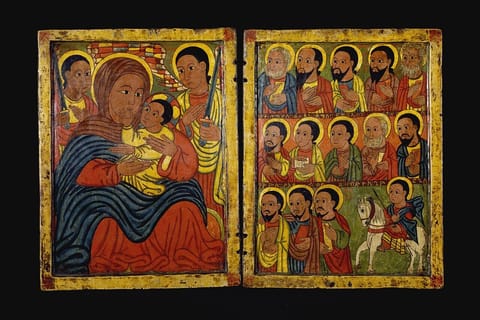
Eastern Catholic churches worship like the Orthodox but are in full communion with the pope. There are 23 of them. The largest is the Ukrainian Greek Catholic Church; others include the Maronite Church of Lebanon and the Melkite Greek Catholic Church. Most were formed when groups of Eastern Christians entered union with Rome, mainly from the sixteenth century on.
Eastern Catholics keep the Divine Liturgy, icons, leavened bread, and in many places married priests. Many Orthodox regard these churches as a painful result of the schism, because they were often formed out of Orthodox communities.
What do Catholics and Orthodox share?
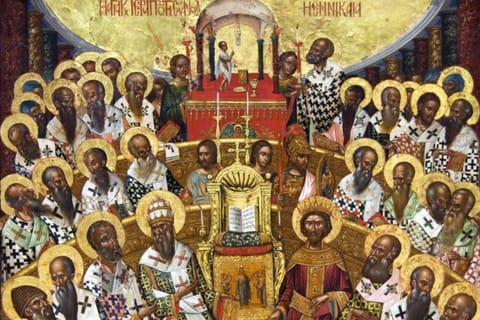
Catholics and Orthodox share far more than divides them. Both have bishops in succession from the apostles, both keep seven sacraments (the Orthodox call them the holy mysteries), and both accept the first seven ecumenical councils, held between 325 and 787. Both honor Mary as the Mother of God, a title confirmed at the Council of Ephesus in 431, and both pray with the saints and venerate icons. See What do Christians believe about Mary?
Pope Paul VI and Ecumenical Patriarch Athenagoras I met in Jerusalem in 1964. On December 7, 1965, in a declaration read at the same moment in Rome and in Istanbul, they agreed to “remove both from memory and from the midst of the Church the sentences of excommunication” of 1054. The declaration left the churches still separate. It ended nine centuries of mutual condemnation, and popes and patriarchs have met regularly since, often praying together.
Not for these only do I pray, but for those also who will believe in me through their word, that they may all be one; even as you, Father, are in me, and I in you, that they also may be one in us; that the world may believe that you sent me.
Where do Anglicans fit?
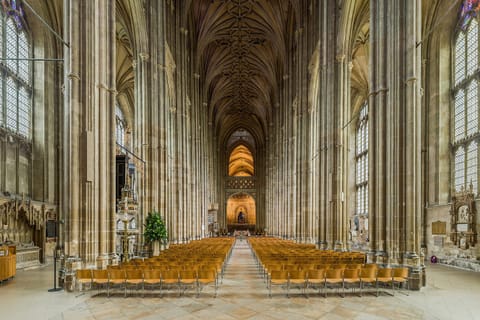
Anglicans are a Western church. The Church of England was part of the Catholic Church of the West until the Reformation of the sixteenth century, when it rejected the authority of the pope while keeping bishops, the creeds, and a liturgy rooted in the Latin tradition. In some ways Anglicans stand between Rome and the East: like the Orthodox, they do not accept the pope’s jurisdiction and they allow priests to marry; like Catholics, they worship in the Western forms. See Episcopalians and Catholics and Catholics and Protestants.
Anglicans have moved toward the Orthodox position on the creed. In 1976 the Anglican members of a joint commission with Orthodox theologians, meeting in Moscow, agreed that the words “and the Son” should be dropped from the Nicene Creed. Anglicans hold formal theological dialogues with both the Catholic and Orthodox churches, and the ordination of women by Anglican and other mainline churches remains a serious obstacle in both conversations.
The divisions of the church are old wounds, and no one alive today caused them. What every Christian can do is pray, as Jesus prayed, for the unity only God can give, and love the Christians of other churches as members of one family. Orthodox Christians begin many of their services with a prayer to the Holy Spirit that any Christian can pray:
O heavenly King, the Comforter, the Spirit of truth, who art everywhere present and fillest all things, the treasure of good things and giver of life; come and abide in us, and cleanse us from all stain, and save our souls, O good Lord.
“O Heavenly King,” from the Divine Liturgy of St. John Chrysostom (English translation of 1866)
Common questions
Can Catholics receive Communion in an Orthodox church?
The Orthodox churches ordinarily give Communion only to Orthodox Christians, so Catholics visiting an Orthodox Divine Liturgy usually do not receive. Many Orthodox parishes offer visitors blessed bread, called antidoron, at the end of the service.
Do the Orthodox believe in purgatory?
The Orthodox churches do not teach purgatory as the Catholic Church defines it, as a state of purification after death. They do pray for the dead, trusting that God’s mercy reaches them, but they do not define what happens to the dead before the final resurrection. Disagreement over purgatory was one of the issues debated at the Council of Florence in 1439.
Why is Orthodox Easter on a different date?
Most Orthodox churches calculate Easter by the older Julian calendar, while Catholics and Protestants use the Gregorian calendar introduced in 1582. Both use the same basic rule, the first Sunday after the spring full moon, but the calendars put the spring equinox on different days. As a result, Orthodox Easter often falls one or more weeks after Western Easter, though in some years the two coincide.
Is the Orthodox Church older than the Catholic Church?
Each church regards itself as the continuation of the one church founded by the apostles, so neither is older than the other. For their first thousand years they were the same church, sharing the first seven ecumenical councils held between 325 and 787. Their separation is usually dated to 1054, though it developed over centuries before and after.
Sources
- Common Declaration of Pope Paul VI and Ecumenical Patriarch Athenagoras I, December 7, 1965 (vatican.va)
- East–West Schism (Wikipedia)
- Schism of 1054 (Britannica)
- The 23 Eastern Catholic Churches (Catholic World Report, 2026)
- General Convention Resolution 1994-A028 (removing “and the Son” from the Nicene Creed)
- An Episcopal Dictionary of the Church, “Moscow Agreed Statement”
- John 17:20–21 (WEB)
- Matthew 16:18 (WEB)
- 1 Corinthians 9:5 (WEB)
- Liturgy of John Chrysostom (1866), Wikisource
- Ephesians 4:4–6 (WEB)