Praying with icons
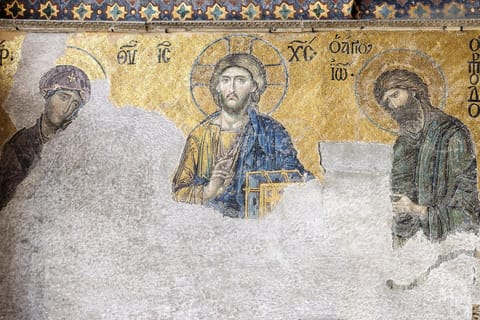
Orthodox Christians pray with icons because the invisible God became visible in Jesus Christ, “the image of the invisible God” (Colossians 1:15). An icon is a holy image of Christ, Mary, a saint, or a Gospel scene, painted for prayer. The Second Council of Nicaea in 787 taught that icons receive honor while worship belongs to God alone, and that the honor shown to an image passes to the person it depicts.
He is the image of the invisible God, the firstborn of all creation.
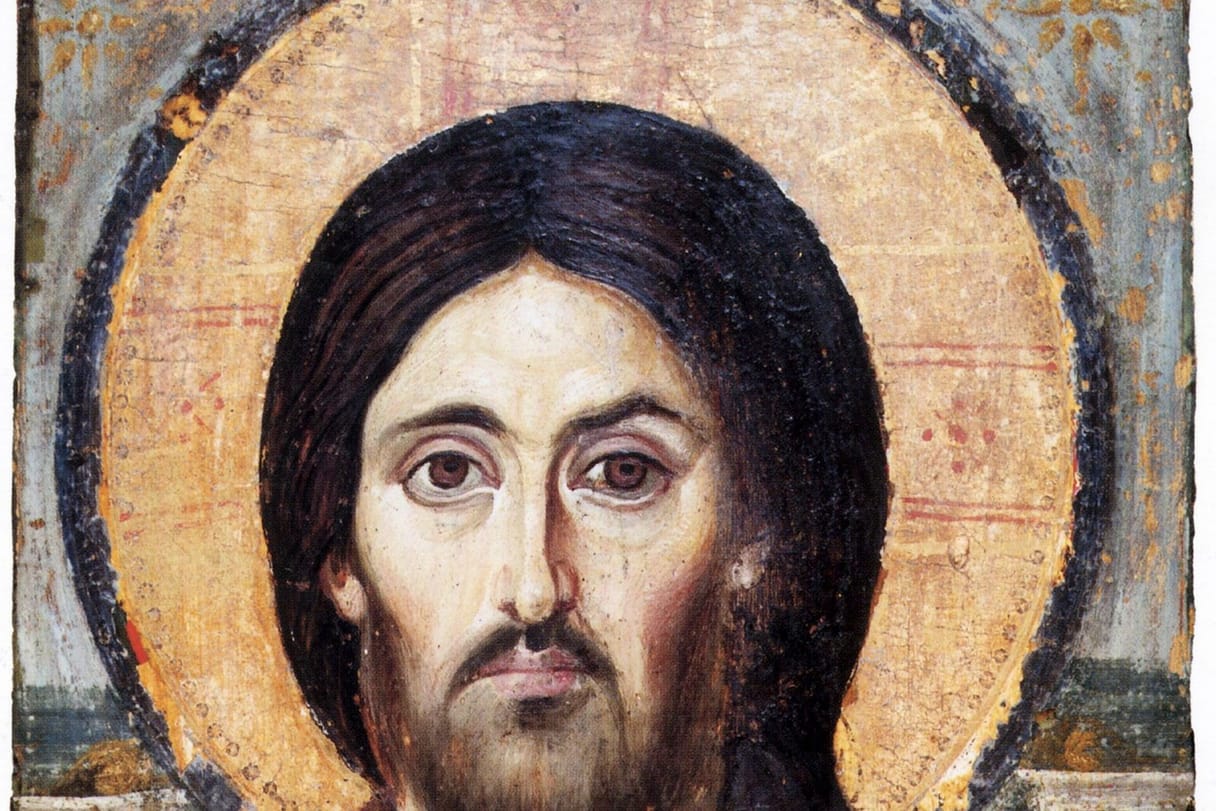
Step into an Orthodox church and faces greet you from every wall: Christ, his mother Mary, apostles, martyrs, and angels. Orthodox Christians pray with these icons because the invisible God became visible in Jesus Christ, and what has been seen can be painted. An icon is made for prayer, to bring you face to face with the one it shows.
If you have felt drawn to icons, or uneasy about them because of the commandment against images, both responses have a long history in the church. Orthodox Christians have thought about icons with great care for more than twelve centuries, and their answer begins with the Incarnation, the mystery Christians celebrate at Christmas.
What is an icon?
The word icon comes from the Greek eikōn, “image.” Paul uses the same word for Christ: “He is the image of the invisible God” (Colossians 1:15). An icon is a holy image of Christ, Mary, a saint, an angel, or a scene from the Bible, painted for prayer and blessed for use in church and home.
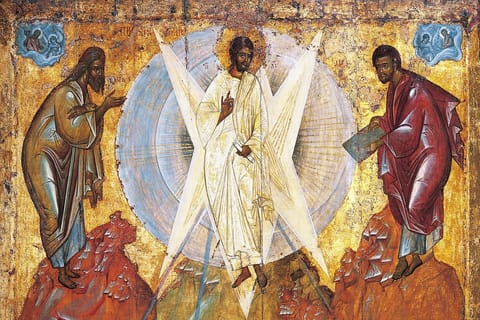
Icons are usually painted on wood in egg tempera, often with gold leaf. They avoid the illusion of depth: faces look straight at you, and gold backgrounds stand for the light of God’s kingdom. Traditionally, icon painters pray and fast as they work. Because the Greek verb graphein means both to write and to paint, many English speakers say an icon is “written.”
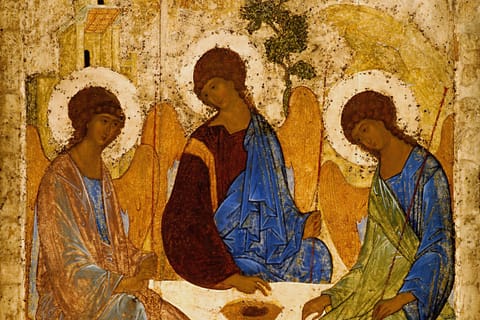
One of the oldest surviving icons, a sixth-century Christ painted in hot wax, still hangs at Saint Catherine’s Monastery at the foot of Mount Sinai. The best known may be Andrei Rublev’s Trinity, painted in Russia in the early fifteenth century. It shows the three visitors who came to Abraham by the oaks of Mamre (Genesis 18:1–2), and Christians have long seen in them an image of the Trinity seated at one table, with an open place for you (see what is the Trinity?).
Why do Orthodox Christians pray with icons?
The reason is the Incarnation, God becoming human in Jesus:
The Word became flesh and lived among us. We saw his glory, such glory as of the only born Son of the Father, full of grace and truth.
“No one has seen God at any time,” John writes, and the Son “has declared him” (John 1:18). Jesus told Philip, “He who has seen me has seen the Father” (John 14:9). The apostles had seen Jesus with their eyes and touched him with their hands (1 John 1:1). God took a face, and the church paints that face (see what does God look like?).
John of Damascus (about 675–749), a monk at the monastery of Mar Saba near Jerusalem, made this argument when the Byzantine emperors were destroying icons. Before the Incarnation, he reasoned, the invisible God could not be pictured; now God has been seen in the flesh. He wrote, “I do not worship matter, I worship the God of matter, who became matter for my sake.” Bread, wine, water, wood, and paint can all carry grace, because the Creator took on a body.
Orthodox Christians also trust that the honor given to an image reaches the person it represents. Basil the Great wrote in the fourth century, speaking of Christ as the image of the Father, that “the honour paid to the image passes on to the prototype” (On the Holy Spirit 18.45). The Second Council of Nicaea applied his words to icons in 787.
Is praying with icons idolatry?
The question deserves a careful answer, because the Ten Commandments forbid making an image to bow down to and serve (Exodus 20:4–5). The Reformed churches took that commandment as a reason to keep worship free of images. The Heidelberg Catechism of 1563, which the Presbyterian Church (U.S.A.) includes in its Book of Confessions, teaches that God wants his people instructed by the living preaching of his Word. Christians who keep their churches plain do so out of reverence for God.
The Orthodox answer points first to Scripture. The same God who gave the commandment told Moses to make two cherubim of hammered gold for the ark of the covenant (Exodus 25:18–20), and Solomon carved cherubim on the walls of the Temple (1 Kings 6:29). The commandment forbids making gods and serving them.
The Second Council of Nicaea, the seventh council the Orthodox count as ecumenical, set out the distinction in 787. Icons receive “due salutation and honourable reverence,” the council said, “not indeed that true worship of faith which pertains alone to the divine nature.” The quarrel over icons had begun in the 720s, and it flared again in 815. In 843 the Empress Theodora restored the icons for good, and Orthodox churches still celebrate the day on the first Sunday of Lent, the Sunday of Orthodoxy, by carrying icons in procession (see what is Lent?).
How do Orthodox Christians pray with icons?
Many Orthodox homes have an icon corner, often on an eastern wall, where icons of Christ, Mary, and favorite saints hang above a small oil lamp. The family gathers there for morning and evening prayers. Coming before an icon, a believer makes the sign of the cross, bows, and often kisses it, greeting Christ or the saint with love.
In church, a wall of icons called the iconostasis stands between the people and the altar, and an icon of the day’s feast rests on a stand for people to greet as they arrive. During the services the priest or deacon censes the icons and then censes the people, honoring the image of God in every person present (Genesis 1:27), the image God means to restore in full (see what is theosis?).
Icons are painted to look back at you. The faces turn toward the viewer, and prayer becomes an exchange of gazes. The psalmist heard God say, “Seek my face,” and answered, “I will seek your face, LORD” (Psalm 27:8).
Can Protestants pray with icons?
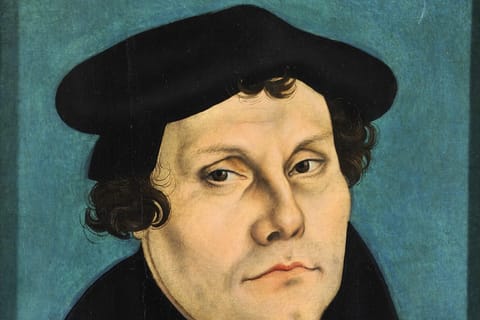
Martin Luther opposed tearing images out of churches by force when he preached his Invocavit sermons in Wittenberg in 1522, and Lutheran churches kept their altarpieces and crucifixes. Today many Protestants pray with icons, especially Rublev’s Trinity. Henri Nouwen’s Behold the Beauty of the Lord: Praying with Icons (1987), a short book of meditations on four Russian icons, has introduced many readers to the practice. Many hymnals also carry the Easter hymn “The Day of Resurrection,” which John of Damascus wrote and John Mason Neale translated. Within the mainline churches, praying with icons is a matter of freedom and conscience.
How can I start praying with an icon?
- Choose one icon. Christ holding the Gospel book, Mary holding the child Jesus, or Rublev’s Trinity are good places to begin. A printed card is enough.
- Give it a place. Set it where you pray each day, and light a candle if you can.
- Look slowly. Let your eyes rest on the face. Read the Gospel story behind the icon.
- Speak to the one you see. Pray the Lord’s Prayer, or the Jesus Prayer (see hesychasm and the Jesus Prayer).
- Bring others with you. Name before God the people you love and the people you find hard to love.
An icon is never a charm, and Orthodox teachers warn against treating one as magic. Its whole value lies in turning you toward God and toward your neighbor, who is also an image of God. For other ways of resting in God’s presence, see contemplative prayer.
Paul wrote that God “has shone in our hearts to give the light of the knowledge of the glory of God in the face of Jesus Christ” (2 Corinthians 4:6). Every icon points to that face. When you stand before one in prayer, you are invited to let the light in Christ’s face shine on yours, until you, too, become an image of his love.
Common questions
Do Orthodox Christians worship icons?
Orthodox teaching reserves worship for God alone. The Second Council of Nicaea in 787 distinguished the honor and reverence given to icons, in Greek proskynesis, from the worship, latreia, that belongs to God. When Orthodox Christians kiss an icon, they are greeting the person it shows, much as someone might kiss the photograph of a loved one far away.
Why do icons look flat?
Icon painters avoid the illusion of depth on purpose. Faces look straight at the viewer, gold backgrounds stand for the light of God’s kingdom, and lines often widen as they recede, a style scholars call reverse perspective. Icons show people transfigured by God, ready to be met in prayer.
What is an iconostasis?
An iconostasis is the wall of icons that stands between the nave and the altar in an Orthodox church. An icon of Christ stands to the right of the central doors and an icon of Mary holding the child Jesus to the left, with rows of feasts, apostles, and prophets above in larger churches.
Can Protestants pray with icons?
Many do. Lutheran churches kept religious images after the Reformation, and many Protestants pray today with icons such as Andrei Rublev’s Trinity. The Reformed tradition has been more cautious about images in worship, and Christians who prefer plain churches are following a serious and long-held conviction.
Sources
- Colossians 1:15 (WEB)
- John 1:14–18 (WEB)
- Exodus 20:4–5 (WEB)
- Exodus 25:18–20 (WEB)
- Genesis 18:1–2 (WEB)
- 2 Corinthians 4:6 (WEB)
- Basil the Great, On the Holy Spirit, 18.45 (New Advent)
- The Second Council of Nicaea (787), decree (New Advent)
- John of Damascus (Christianity Today, Christian History)
- Iconoclastic Controversy (Encyclopaedia Britannica)