The assurance of God’s grace
Churches disagree about whether you can lose your salvation. Reformed churches teach that true believers will persevere to the end. Lutheran, Anglican, Methodist, and Orthodox churches teach that a person can turn away from God’s grace, and that anyone who repents is welcomed back. The Bible gives strong assurance (John 10:28) and real warnings (Hebrews 6:4–6). If you fear you have fallen away, that fear is a sign that God is still drawing you, and the way home is open.
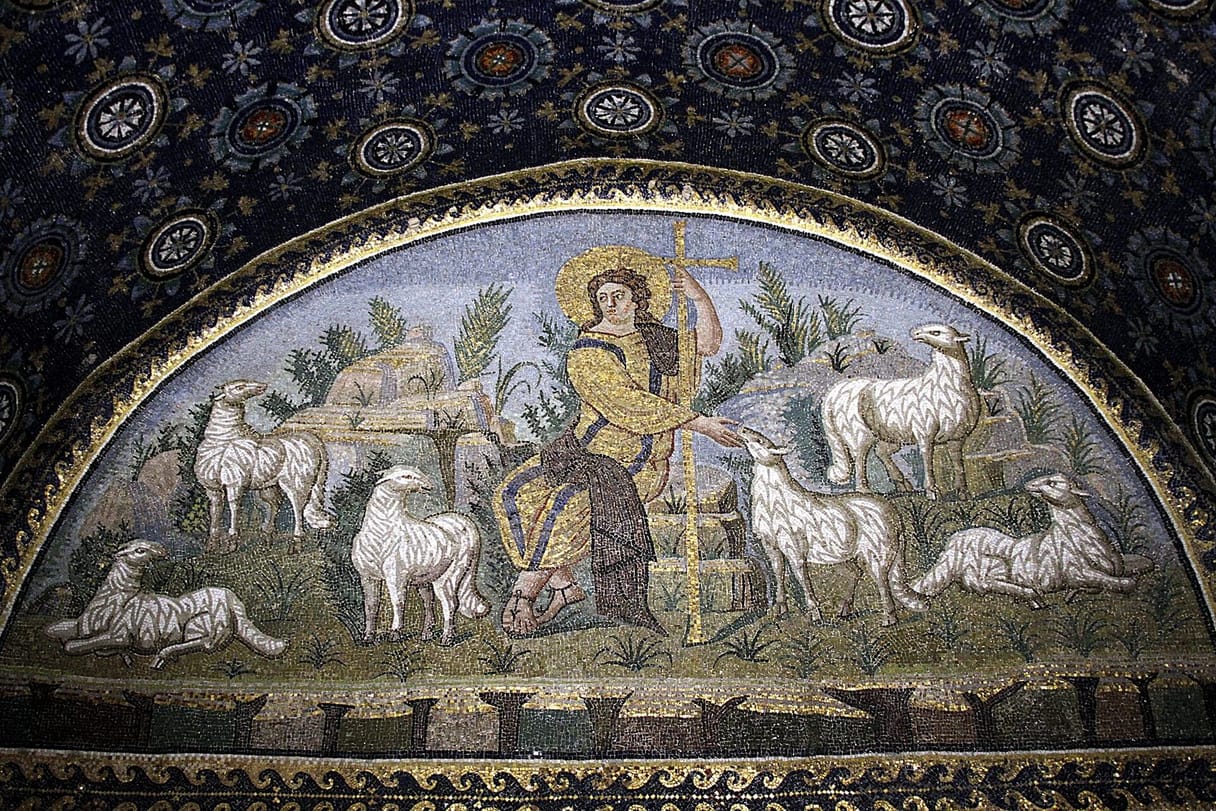
My sheep hear my voice. I know them, and they follow me. I give them eternal life, and they will never perish. No one will snatch them out of my hand.
John 10:27–28, NRSVUE
Churches disagree about whether a Christian can lose their salvation, and every one of them agrees that God welcomes anyone who comes back. People rarely ask this question out of idle curiosity. Usually it comes from fear: of a sin you cannot forget, of a season when you stopped praying, of doubts that will not go away, or of a warning verse that keeps returning to your mind at night. If that is you, begin here. The fact that you care about your relationship with God is itself a sign that God has not let go of you.
What does the Bible promise about assurance?
The New Testament gives believers strong promises that God will not let them go. Jesus says:
My sheep hear my voice. I know them, and they follow me. I give them eternal life, and they will never perish. No one will snatch them out of my hand. My Father, in regard to what he has given me, is greater than all, and no one can snatch them out of the Father’s hand.
John 10:27–29, NRSVUE
Paul writes that no created thing “will be able to separate us from God’s love which is in Christ Jesus our Lord” (Romans 8:39), and that “he who began a good work in you will complete it until the day of Jesus Christ” (Philippians 1:6). The Second Letter to Timothy says, “If we are faithless, he remains faithful; for he can’t deny himself” (2 Timothy 2:13).
What about the warnings in Hebrews and elsewhere?
The New Testament also warns believers not to fall away. The sharpest warning is in the Letter to the Hebrews, which says of people who were “once enlightened” and “made partakers of the Holy Spirit” and then fell away that “it is impossible to renew them again to repentance” (Hebrews 6:4–6).
Hebrews was written to a congregation that had already “endured a great struggle with sufferings” (Hebrews 10:32) and was tempted to give up on Christ under pressure. The warning describes people who abandon Christ entirely and “put him to open shame.” Many interpreters therefore read it as addressed to that kind of settled rejection, and they see no reason for ordinary Christians who sin, doubt, or struggle to find themselves in it. The author follows it immediately with reassurance: “But, beloved, we are persuaded of better things for you … even though we speak like this” (Hebrews 6:9).
Other warnings point the same way. Paul tells the Corinthians, “Therefore let him who thinks he stands be careful that he doesn’t fall” (1 Corinthians 10:12). Jesus says that branches that do not remain in the vine wither (John 15:6) and that “he who endures to the end will be saved” (Matthew 24:13).
Christians who hold to eternal security read these warnings as describing people whose faith was never real, or as the means God uses to keep believers faithful. Christians who believe salvation can be lost read the warnings at face value. Both readings take God’s faithfulness seriously, and both are held by devout believers who love Scripture.
What do the churches teach?
Reformed and Presbyterian churches teach what is called the perseverance of the saints. The Westminster Confession of Faith, part of the PC(USA)’s Book of Confessions, says that those whom God has effectually called “can neither totally nor finally fall away from the state of grace; but shall certainly persevere therein to the end, and be eternally saved” (6.094). For many Reformed Christians this teaching is a deep comfort, because it rests everything on God’s choice and God’s keeping.
Lutheran, Anglican, and Methodist churches teach that a believer can turn away, and they speak just as firmly about the way back. The Augsburg Confession of 1530 rejects those “who deny that those once justified can lose the Holy Ghost,” and in the same article insists that the church must absolve those who return in repentance (Article XII). The Thirty-Nine Articles, the historic Anglican statement of faith, say: “After we have received the Holy Ghost, we may depart from grace given, and fall into sin, and by the grace of God we may arise again, and amend our lives” (Article XVI). The United Methodist Church’s Articles of Religion use nearly the same words (Article XII).
The Orthodox East describes salvation as theosis, a lifelong healing in which a person grows into union with God; Athanasius put it this way: “He was made man that we might be made God” (On the Incarnation 54). Because salvation is a living relationship, Orthodox teachers speak of it in every tense: a Christian has been saved, is being saved, and hopes to be saved. A person can turn away, and the way back through repentance and confession stays open for life.
Baptism adds a strong word of assurance. In many churches the minister traces the sign of the cross on the forehead of the newly baptized and declares that they are sealed by the Holy Spirit and marked as Christ’s own. A baptized person can wander far from God, and God goes on claiming them.
Can I come back if I have walked away from God?
Yes. The New Testament expects Christians to fall and to come back, and coming back is a normal part of the Christian life. No one who turns toward God finds the door closed.
Peter denied Jesus three times on the night of his arrest, and he “went out, and wept bitterly” (Luke 22:62). In John’s Gospel, the risen Jesus asks Peter three times, “do you love me?” and three times gives him work to do: “Feed my sheep” (John 21:15–17). In the parable of the prodigal son, the father says, “this, my son, was dead and is alive again. He was lost and is found” (Luke 15:24).
The Easter sermon attributed to St. John Chrysostom, read at the Easter night service in Orthodox churches, says that the Lord “will accept the last even as the first,” and it tells the congregation: “Let no one weep for his iniquities, for pardon has shown forth from the grave.” For how to return, see Will God forgive me?
How can I have assurance?
Look to God’s faithfulness more than to your feelings. Feelings rise and fall from one day to the next, and God’s promises stay the same. The First Letter of John offers comfort for anxious believers:
And by this we will know that we are from the truth and will reassure our hearts before him whenever our hearts condemn us, for God is greater than our hearts, and he knows everything.
1 John 3:19–20, NRSVUE
Paul tells the Philippians to “work out your own salvation with fear and trembling. For it is God who works in you” (Philippians 2:12–13). Your effort matters, but it rests on God’s work, which comes first.
If fear about losing your salvation keeps returning no matter how often you pray or confess, talk to a priest or pastor, and consider talking to a counselor as well. Persistent religious fear can be a form of anxiety that responds to care. If fear of hell is behind the worry, see Hell and the mercy of God. See also Is anxiety a sin? and, if you fear you have committed a sin God will not forgive, What is the unforgivable sin? For how grace and good works fit together, see Are we saved by faith or by works?
Julian of Norwich, the fourteenth-century English writer, once grieved over sin and why God had allowed it. She heard Christ answer her: “All shall be well, and all shall be well, and all manner of thing shall be well.” She adds that “these words were said full tenderly, showing no manner of blame to me nor to any that shall be saved” (Revelations of Divine Love, chapter 27, translated by Grace Warrack). You can rest in those words tonight.
Common questions
Is “once saved, always saved” biblical?
Christians who hold this view point to promises such as John 10:28, where Jesus says no one will snatch his sheep out of his hand. Christians who reject it point to warnings such as Hebrews 6:4–6 and to Jesus’s saying that the one who endures to the end will be saved (Matthew 24:13). Both sides agree that God is faithful and that salvation is God’s gift.
What does Hebrews 6:4–6 mean?
Hebrews 6:4–6 warns a persecuted congregation against abandoning Christ altogether. Many interpreters read it as a description of deliberate, settled rejection of Christ, which differs from ordinary sin or doubt. The author adds in Hebrews 6:9 that he is “persuaded of better things” for his readers.
Can a backslidden Christian come back to God?
Yes. The Anglican Thirty-Nine Articles, echoed almost word for word in the United Methodist Articles of Religion, say that after falling into sin, “by the grace of God we may arise again, and amend our lives.” Jesus’s parable of the prodigal son shows a father running to meet a son who had wasted everything (Luke 15:20).
Does sin after baptism mean I was never saved?
Every Christian keeps sinning, and the New Testament meets that with a promise of forgiveness. The First Letter of John says, “If we confess our sins, he is faithful and righteous to forgive us the sins” (1 John 1:9).
Sources
- John 10:27–29 (WEB)
- Hebrews 6:4–9 (WEB)
- Romans 8:38–39 (WEB)
- 1 John 3:19–20 (WEB)
- Westminster Confession of Faith, chapter on the perseverance of the saints (PC(USA) Book of Confessions 6.094)
- Augsburg Confession (1530), Article XII
- The Thirty-Nine Articles of Religion (1571), Article XVI
- The United Methodist Church, Articles of Religion XII
- Book of Common Prayer (1979), Holy Baptism
- Athanasius, On the Incarnation of the Word, chapter 54
- Julian of Norwich, Revelations of Divine Love, trans. Grace Warrack (Project Gutenberg)
- John Chrysostom, The Paschal Sermon (Orthodox Church in America)