Salvation and people of other faiths
Most mainline theologians, and many Orthodox teachers, hold that the God revealed in Jesus Christ does not send people to hell for not being Christian. Scripture says God “desires all people to be saved” (1 Timothy 2:4). Christians confess that salvation comes through Christ, and many believe his saving love reaches far beyond the visible church. The World Council of Churches has said that Christians “cannot set limits to the saving power of God.”
I truly understand that God shows no partiality, but in every people anyone who fears him and practices righteousness is acceptable to him.
Acts 10:34–35, NRSVUE
Most mainline theologians, and many teachers of the Orthodox East, hold that Christ’s saving love reaches far beyond the visible church, to people of other faiths and to people who have never known his name. Scripture says that God “desires all people to be saved” (1 Timothy 2:4). Christians confess that all salvation comes through Christ, and many trust that the same Christ is at work wherever people seek the truth and love their neighbors. Many Christians also read hell itself as the Bible’s picture-language for judgment on wrongdoing; see Hell and the mercy of God.
Many people who ask this are thinking of someone in particular, such as a friend of another faith or a parent who never believed. You can bring that fear to the God whom Jesus called Father, who knows and loves that person more than you do.
What does the Bible say about people of other religions?
The clearest scene comes in the Book of Acts. The apostle Peter, a devout Jew, is sent to the house of Cornelius, a Roman officer, and realizes that God had already been at work there:
I truly understand that God shows no partiality, but in every people anyone who fears him and practices righteousness is acceptable to him.
Acts 10:34–35, NRSVUE
Paul teaches that people outside Israel’s covenant can still know God’s will through conscience:
When gentiles, who do not possess the law, by nature do what the law requires, these, though not having the law, are a law to themselves. They show that what the law requires is written on their hearts, as their own conscience also bears witness…
Romans 2:14–15, NRSVUE
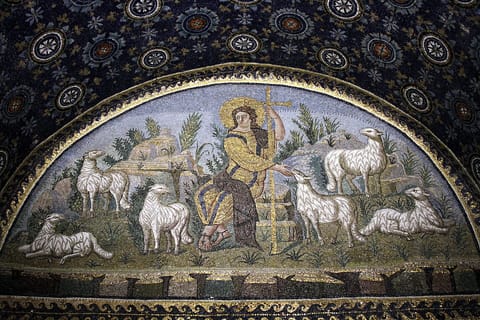
Preaching in Athens, Paul tells pagan listeners that God made all peoples “that they should seek the Lord, if perhaps they might reach out for him and find him, though he is not far from each one of us” (Acts 17:27). John’s Gospel calls Christ “the true light that enlightens everyone” (John 1:9), and Jesus says, “I have other sheep which are not of this fold” (John 10:16).
In Jesus’s parable of the last judgment, the people welcomed into the kingdom are surprised. They never knew they had served Christ:
And the king will answer them, ‘Truly I tell you, just as you did it to one of the least of these brothers and sisters of mine, you did it to me.’
Matthew 25:40, NRSVUE
What about verses that say only believers are saved?
Some verses sound exclusive, and they deserve a fair hearing. John’s Gospel says that “he who doesn’t believe has been judged already” (John 3:18). Jesus says, “No one comes to the Father, except through me” (John 14:6). Peter tells the council in Jerusalem that “there is no other name under heaven that is given among men, by which we must be saved” (Acts 4:12).
Many Christians have read these verses strictly, out of a deep desire to honor Christ as the only Savior. In the third century, Cyprian of Carthage wrote that “there is no salvation out of the Church” (Epistle 72). Many evangelical churches today teach that conscious faith in Christ before death is necessary for salvation, and that conviction moves many of them to share the gospel with great love and urgency.
Most mainline theologians read the same verses another way, a view often called inclusivism. Christ is the only Savior, and no one is saved apart from him; and Christ can save people who do not yet know his name. On this reading, John 3:18 describes people who have met Christ and refused him, which differs from people who never heard of him. For a closer reading of John 14:6 and Acts 4:12, see Is Jesus the only way to God?
What did the early church say?
The inclusive reading of Scripture is very old. Justin Martyr, writing in Rome around 155 CE, taught that Christ is the Word (in Greek, Logos) “of whom every race of men were partakers,” and that “those who lived reasonably are Christians, even though they have been thought atheists,” naming Socrates among them (First Apology 46). In his Second Apology (chapter 13), Justin said that the philosophers each “spoke well in proportion to the share he had of the spermatic word,” meaning the seeds of the divine Word planted in every human mind. Scholars call this idea the logos spermatikos, the “seed-bearing Word.”
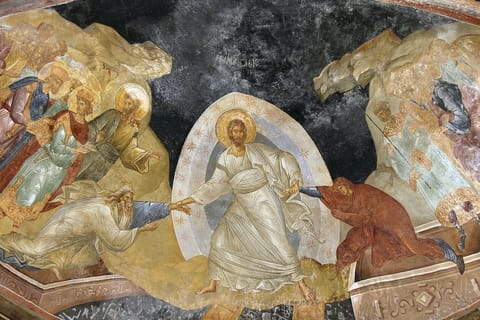
The church also confessed in the Apostles’ Creed that Christ “descended to the dead.” The First Letter of Peter says that “the Good News was preached even to the dead” (1 Peter 4:6). The Orthodox icon of Easter, the Anastasis, shows the risen Christ pulling Adam and Eve, the parents of the whole human race, out of their tombs; see Did Jesus go to hell? Gregory of Nyssa in the fourth century and Isaac the Syrian in the seventh, both honored as saints in the Orthodox Church, went further and taught that God would in the end restore every soul.
What do the churches teach today?
The ELCA, the Presbyterian Church (U.S.A.), the United Methodist Church, and the Episcopal Church all belong to the World Council of Churches, together with many Orthodox churches. At its world mission conference in San Antonio, Texas, in 1989, the council summed up a position its members could affirm together: “We cannot point to any other way of salvation than Jesus Christ; at the same time we cannot set limits to the saving power of God.” Many teachers in all four churches hold some form of the inclusive view.
Orthodox Christians often say that they know where the Church is but do not know where it is not, and they leave people outside the church to the mercy of God. When a hermit told St. Silouan of Mount Athos, a twentieth-century Russian monk, that God would burn all atheists in everlasting fire, Silouan answered, “Love could not bear that,” and added, “We must pray for all.”
C. S. Lewis gave the idea a memorable picture near the end of The Last Battle (1956). Emeth, a soldier who served the false god Tash all his life out of a love of truth, meets the lion Aslan, who tells him: “Child, all the service thou hast done to Tash, I account as service done to me.”
What about Jewish people?
The church owes the Jewish people special care, because Jesus, his mother, and his apostles were Jews. Paul, grieving that most of his people had not accepted Jesus as Messiah, still insisted that God had not abandoned them: “for the gifts and the calling of God are irrevocable” (Romans 11:29). He expected that “all Israel will be saved” (Romans 11:26), and a few verses later he widened the promise still further:
For God has bound all to disobedience, that he might have mercy on all.
Does it still matter whether people become Christians?
Yes. Christians believe that God has shown God’s own face in Jesus, and that knowing Christ is the greatest gift a person can receive. Jesus sent his followers to “make disciples of all nations” (Matthew 28:19), and Paul names the motive: “the love of Christ compels us” (2 Corinthians 5:14).
Christians share their faith because it is good news, and they can share it with joy, trusting their neighbors to the same mercy that holds them. If you are drawn to Christ yourself, see How do I become a Christian? and What does it mean to be saved?
If you are worried about someone you love, you can follow Silouan’s counsel, which is also Paul’s, and place that person in God’s hands:
I exhort therefore, first of all, that petitions, prayers, intercessions, and givings of thanks be made for all men … For this is good and acceptable in the sight of God our Savior, who desires all people to be saved and come to full knowledge of the truth.
Common questions
What happens to people who never heard of Jesus?
Paul writes that Gentiles who never received the law can still show that “what the law requires is written on their hearts” (Romans 2:15). The First Letter of Peter says that the gospel was preached even to the dead (1 Peter 4:6), and many Christians take this as a sign that no one is beyond Christ’s reach. Most mainline theologians entrust such people to the mercy of God, who knows every heart and whose love is the love shown in Christ.
Do Jewish people go to heaven?
Paul insists that God has not rejected the Jewish people, writing that “the gifts and the calling of God are irrevocable” (Romans 11:29). A few verses later he writes, “God has bound all to disobedience, that he might have mercy on all” (Romans 11:32). Most mainline churches have affirmed, with Paul, that God’s covenant with the Jewish people still stands.
Do atheists go to hell?
Many Christians trust that God, who sees every heart, meets sincere doubters with the same grace he shows to all. In Jesus’s parable of the last judgment, the people welcomed into the kingdom served Christ in the hungry and the stranger without knowing it was him (Matthew 25:37–40).
Is it wrong to share my faith if non-Christians can be saved?
Christians share the gospel because it is good news, and Jesus sent his disciples to make disciples of all nations (Matthew 28:19). Paul says that “the love of Christ compels us” (2 Corinthians 5:14), and faith shared in that love comes to a neighbor as an invitation to joy.
Sources
- Acts 10:34–35 (WEB)
- Romans 2:14–16 (WEB)
- Matthew 25:31–46 (WEB)
- 1 Timothy 2:1–6 (WEB)
- Romans 11:25–32 (WEB)
- 1 Peter 4:6 (WEB)
- World Council of Churches, Religious Plurality and Christian Self-Understanding (2005), on the San Antonio mission conference of 1989
- Justin Martyr, First Apology, chapter 46
- Justin Martyr, Second Apology, chapter 13
- Cyprian of Carthage, Epistle 72
- Kallistos Ware, “Dare We Hope for the Salvation of All?” (1998)