Sin
Sin is a turning away from God and from love: putting our own will in the place of God’s, which damages our relationships with God, with other people, and with all creation. The main biblical words for sin, Hebrew chata and Greek hamartia, come from verbs meaning to miss the mark. Scripture takes sin seriously, and it takes God’s forgiveness even more seriously.
If we confess our sins, he who is faithful and just will forgive us our sins and cleanse us from all unrighteousness.
1 John 1:9, NRSVUE
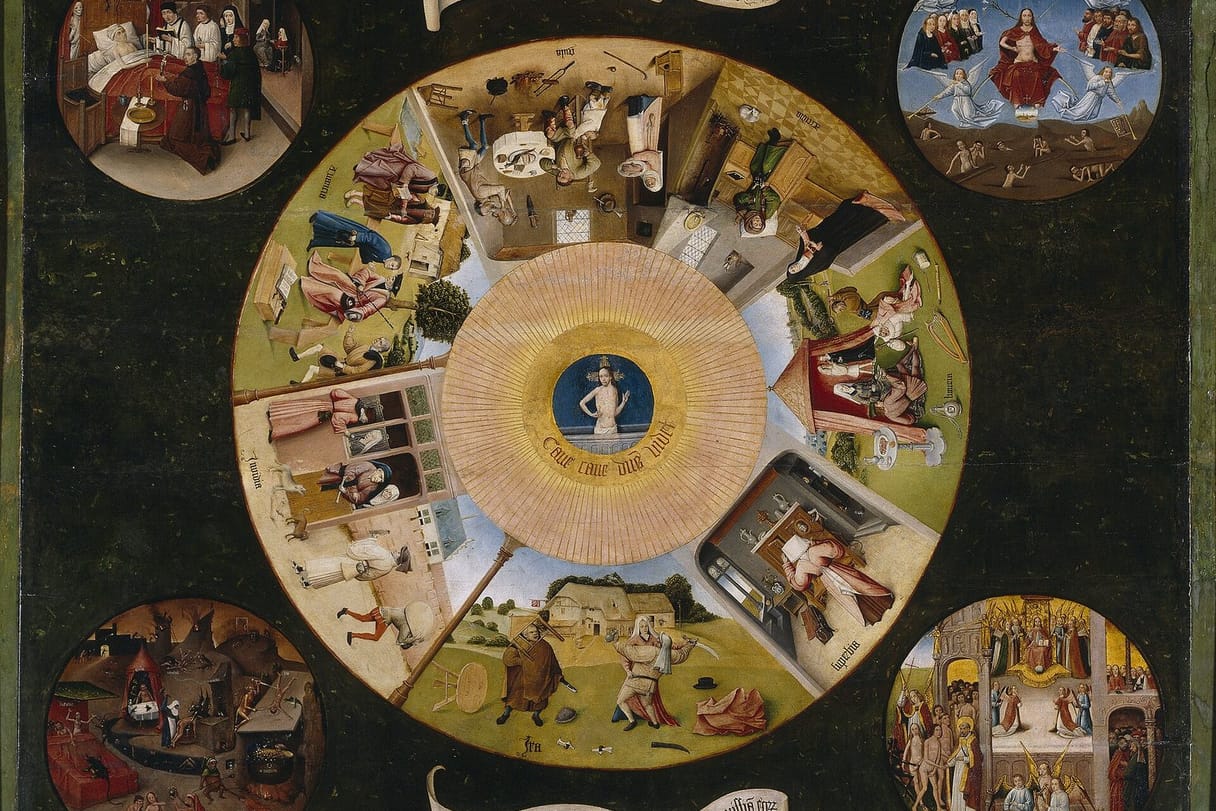
If you are asking what sin is, you may be carrying something you regret, or you may have grown up with a long list of rules and wonder what lies beneath them. The Christian answer begins with love. Sin is a turning away from God and from love, and it damages our relationships with God, with other people, and with the world God made. Christians take sin seriously because they take love seriously, and Scripture takes God’s forgiveness more seriously still.
Christian teaching sees sin at work in three places. It begins in the will, when people put themselves at the center in place of God. It wounds relationships, which is why it hurts other people as well as the one who sins. And it reaches beyond individuals into families, societies, and the natural world.
What does the word “sin” mean in the Bible?
The most common Hebrew verb for sin, chata, means to miss a target. The Book of Judges uses it in its ordinary sense when it describes seven hundred left-handed soldiers who “could sling a stone at a hair and not miss” (Judges 20:16). The word translated “miss” there is the same word translated “sin” elsewhere.
The main Greek word in the New Testament, hamartia (sin), comes from the verb hamartanō, which in ancient Greek meant to miss the mark, as when a spear thrown in battle misses its target. Paul uses it when he writes that “all have sinned and fall short of the glory of God” (Romans 3:23). To miss a mark implies that there is a mark to aim for, and the mark is the good life God intends for you.
Scripture uses other words too. Psalm 51 asks God to blot out “my transgressions,” meaning acts of rebellion, and to wash away “my iniquity,” meaning crookedness or guilt (Psalm 51:1–2). In the Lord’s Prayer as Matthew records it, Jesus teaches us to pray, “Forgive us our debts, as we also forgive our debtors” (Matthew 6:12). Missing the mark, rebelling, going crooked, falling into debt: each picture shows a different side of the same reality.
What counts as a sin?
Jesus summed up the whole law in two commandments:
Jesus answered, “The first is, ‘Hear, O Israel: the Lord our God, the Lord is one; you shall love the Lord your God with all your heart and with all your soul and with all your mind and with all your strength.’ The second is this, ‘You shall love your neighbor as yourself.’ There is no other commandment greater than these.”
Mark 12:29–31, NRSVUE
If those are the greatest commandments, then at its root sin is a failure to love God and neighbor. Paul says the same: “the whole law is fulfilled in one word,” the command “You shall love your neighbor as yourself” (Galatians 5:14). (See What is the greatest commandment?)
Sin includes what we fail to do. The Letter of James says, “To him therefore who knows to do good and doesn’t do it, to him it is sin” (James 4:17). The prayer of confession in the Book of Common Prayer, which Lutheran worship books echo closely, names both kinds: “we have sinned against you in thought, word, and deed, by what we have done, and by what we have left undone. We have not loved you with our whole heart; we have not loved our neighbors as ourselves.”
Sin is also social. The prophets called whole societies to account for injustice. Isaiah tells Israel, “Cease to do evil. Learn to do well. Seek justice. Relieve the oppressed. Defend the fatherless. Plead for the widow” (Isaiah 1:16–17).
Augustine described virtue as “the order of love” (The City of God 15.22), meaning love given to the right things in the right measure. In that light, sin is disordered love: loving money more than people, ourselves more than God, or comfort more than justice. Measuring by that same love, many mainline churches and theologians have come to welcome gay and transgender people fully, as God made them. Other Christians, out of reverence for Scripture as they read it, hold the traditional view. (See Is it a sin to be gay?)
Why do people sin?
Scripture describes sin as a power as well as a choice. When Cain is angry with his brother, God warns him, “sin crouches at the door. Its desire is for you, but you are to rule over it” (Genesis 4:7). Paul describes an inner conflict that most people will recognize in themselves:
I do not understand my own actions. For I do not do what I want, but I do the very thing I hate.
Romans 7:15, NRSVUE
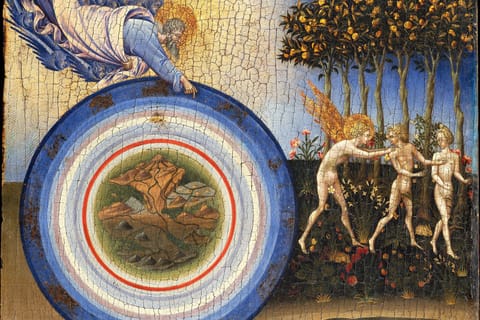
Paul traces this power back to the beginning: “sin entered into the world through one man, and death through sin” (Romans 5:12). Western Christians, following Augustine, call this shared human condition original sin. Eastern Orthodox Christians prefer to speak of “ancestral sin,” teaching that every human being inherits from Adam and Eve a mortal, wounded nature that leans toward sin, and does not inherit Adam’s personal guilt. (See What is original sin?)
The Orthodox picture also explains what the “mark” is that sin misses. Athanasius of Alexandria wrote that God “was made man that we might be made God” (On the Incarnation 54), and the Second Letter of Peter says that believers “become partakers of the divine nature” (2 Peter 1:4). Eastern Christians call this goal theosis, meaning union with God. Sin, in that light, is falling short of the life with God that every person was made for.
How is sin forgiven?
The Bible’s answer to sin is God’s forgiveness, freely given. Paul writes that all who have sinned are “justified freely by his grace through the redemption that is in Christ Jesus” (Romans 3:24), and that “God commends his own love toward us, in that while we were yet sinners, Christ died for us” (Romans 5:8). God did not wait for anyone to become good before loving them.
If we say that we have no sin, we deceive ourselves, and the truth is not in us. If we confess our sins, he who is faithful and just will forgive us our sins and cleanse us from all unrighteousness.
1 John 1:8–9, NRSVUE
Jesus’s parable of the prodigal son shows God’s response to a returning sinner. While the son “was still far off, his father saw him and was moved with compassion, and ran, fell on his neck, and kissed him” (Luke 15:20). The father runs to his son before the son can say a word of his apology.
Eastern Orthodox Christians often describe sin as a sickness and the church as a hospital. Jesus himself used the picture: “Those who are healthy have no need for a physician, but those who are sick” (Mark 2:17). In the Orthodox rite of confession, the priest reminds the penitent that they have come to a physician and should not leave unhealed. Forgiveness, on this view, is the beginning of a cure as well as a pardon.
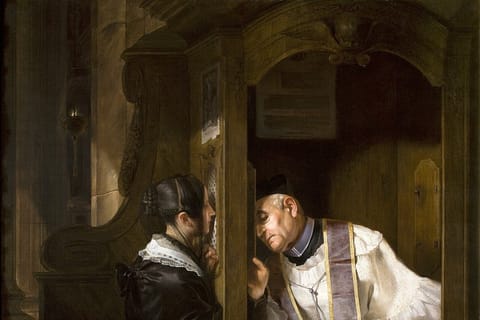
In mainline churches, the confession of sin in Sunday worship is followed by a declaration of God’s forgiveness, and anyone who wants to may also confess privately to a pastor or priest. (See Will God forgive me? and Do I have to confess my sins to a priest?)
What do the mainline churches teach about sin?
The Evangelical Lutheran Church in America (ELCA), the Presbyterian Church (U.S.A.), the United Methodist Church, and the Episcopal Church all teach that every person sins and that God forgives sinners freely through Christ. Their orders of Sunday worship all provide for a prayer of confession followed by a declaration of forgiveness, so that naming sin leads to grace.
Orthodox, Lutheran, Reformed, Methodist, and Anglican Christians agree on the core: sin is real, everyone sins, and God forgives through Christ. They differ on details, such as how sin is passed on, which sins are grave, and how confession should be practiced.
If you are carrying guilt, God’s love for you is older and stronger than anything you regret. (See Does God love me?) You can pray the words of Psalm 51, the psalm the church prays on Ash Wednesday, which ask for more than pardon. They ask for a new heart:
Create in me a clean heart, O God. Renew a right spirit within me. Don’t throw me from your presence, and don’t take your Holy Spirit from me. Restore to me the joy of your salvation. Uphold me with a willing spirit.
Common questions
Is being tempted a sin?
No. The Letter to the Hebrews says that Jesus “has been in all points tempted like we are, yet without sin” (Hebrews 4:15). Temptation is the pull toward wrongdoing, and sin is giving in to it. Feeling tempted is part of being human.
Are some sins worse than others?
Yes. The First Letter of John says, “All unrighteousness is sin, and there is sin not leading to death” (1 John 5:17), and Christians have long distinguished grave sins from lesser faults. Every sin matters because it harms love, but a cruel act done on purpose is more serious than a careless word.
Can a Christian stop sinning completely?
Not in this life, according to Scripture. “If we say that we have no sin, we deceive ourselves, and the truth is not in us” (1 John 1:8). Christians grow in holiness over a lifetime by God’s grace, and they keep confessing their sins and receiving God’s forgiveness along the way.
What is the difference between a sin and a mistake?
A mistake is an error of judgment or skill, like a wrong turn or a bad calculation. Sin involves the will: choosing what we know is wrong, or failing to do the good we know we should do. Paul also admits that sin can feel like a power we are caught in as well as a series of choices (Romans 7:15).
Sources
- Book of Common Prayer (1979), Holy Eucharist: Rite Two (Confession of Sin)
- Judges 20:16 (WEB)
- Mark 12:29–31 (WEB)
- Romans 7:15–19 (WEB)
- 1 John 1:8–9 (WEB)
- Psalm 51:1–4 (WEB)
- Romans 3:22–24 (WEB)
- Mark 2:17 (WEB)
- Orthodox Church in America, “Original sin”
- Athanasius, On the Incarnation of the Word, section 54 (New Advent)
- Augustine, The City of God, Book 15 (New Advent)
- Wiktionary, ἁμαρτάνω (Ancient Greek)