God’s love for you
God loves you. The Bible says that “God is love” and that God loved us first, before we did anything to deserve it. God knows you by name, made you, and holds you in being. Your sins do not cancel that love; Paul wrote that while we were still sinners Christ died for us. Your feelings may come and go, but Scripture promises that nothing in all creation can separate you from the love of God in Christ Jesus.
For I am convinced that neither death, nor life, nor angels, nor rulers, nor things present, nor things to come, nor powers, nor height, nor depth, nor anything else in all creation will be able to separate us from the love of God in Christ Jesus our Lord.
Romans 8:38–39, NRSVUE

God loves you. The first letter of John says it directly: “God is love, and he who remains in love remains in God, and God remains in him” (1 John 4:16). God’s love for you does not depend on how you feel, how good you have been, or how strong your faith is. It comes first. “We love him, because he first loved us” (1 John 4:19).
People often ask this question in a hard moment, after a failure, a loss, or a long silence in prayer. If that is where you are, the answer is still yes. Christians believe it most deeply because of Jesus. In him, the church proclaims, God came close enough to be touched, ate with outcasts, forgave sinners, and gave his life for the world.
What does the Bible say about God’s love for me?
The Bible speaks to whole peoples, but it also speaks to each person by name. Through the prophet Isaiah, God tells Israel in exile:
Do not fear, for I have redeemed you; I have called you by name; you are mine.
Isaiah 43:1, NRSVUE
A few verses later God adds, “you have been precious and honored in my sight, and I have loved you” (Isaiah 43:4). When Israel felt forgotten, God answered with the image of a nursing mother: “Yes, these may forget, yet I will not forget you! Behold, I have engraved you on the palms of my hands” (Isaiah 49:15–16). Jeremiah heard God say, “I have loved you with an everlasting love” (Jeremiah 31:3).
God’s love reaches into the details of each life. Psalm 139 begins, “LORD, you have searched me, and you know me,” and goes on, “you formed my inmost being. You knit me together in my mother’s womb” (Psalm 139:1, 13). Jesus said that not one sparrow falls “to the ground apart from your Father’s will,” that “the very hairs of your head are all numbered,” and so “don’t be afraid. You are of more value than many sparrows” (Matthew 10:29–31). The prophet Zephaniah even pictures God singing: “He will rejoice over you with joy … He will rejoice over you with singing” (Zephaniah 3:17).
Does God love me even when I sin?
Yes. God’s love was never a reward for good behavior. Paul wrote, “God commends his own love toward us, in that while we were yet sinners, Christ died for us” (Romans 5:8). The first letter of John says, “In this is love, not that we loved God, but that he loved us” (1 John 4:10).
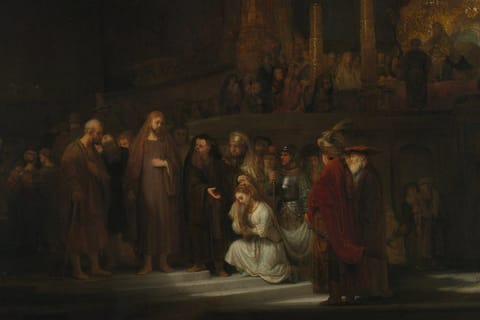
Jesus told the story of a son who demanded his inheritance, wasted it, and came home hoping only to be hired as a servant. The father did not wait for an apology:
So he set off and went to his father. But while he was still far off, his father saw him and was filled with compassion; he ran and put his arms around him and kissed him.
Luke 15:20, NRSVUE
Sin is serious because it damages us and others and turns us away from the one who loves us. Even so, Scripture insists that God’s mercy is larger than our failures: “He has not dealt with us according to our sins, nor repaid us for our iniquities. … Like a father has compassion on his children, so the LORD has compassion on those who fear him” (Psalm 103:10, 13). Isaac the Syrian, a seventh-century monk and bishop whose writings are treasured in the Orthodox churches, compared all the sins of humanity to a handful of sand thrown into the sea of God’s mercy. If guilt is what keeps you from believing God loves you, read Will God forgive me?
Does God love everyone?
Yes. The best-known verse in the Bible begins, “For God so loved the world” (John 3:16; see What does John 3:16 mean?). “The LORD is good to all. His tender mercies are over all his works” (Psalm 145:9). God “desires all people to be saved and come to full knowledge of the truth” (1 Timothy 2:4).
God’s love for everyone is never thin or general. Augustine, remembering how God had cared for his mother and for him, prayed to God as the one “who so carest for every one of us as if You cared for him only, and so for all as if they were but one” (Confessions 3.11.19). Thomas Aquinas pointed out a difference between human love and God’s. Human beings love things because they find them good, but “the love of God infuses and creates goodness” (Summa Theologiae I, question 20, article 2). God’s love is the reason you exist and the source of whatever is good in you.
That love embraces every part of who you are, including your sexuality and your gender. Gay, lesbian, bisexual, and transgender Christians are baptized, married, and ordained in the mainline churches, and they come to the same Communion table as everyone else, where Christ is the host (see Gay, lesbian, and bisexual Christians).
Why don’t I feel God’s love?
Many faithful people go through long seasons when God feels absent. The psalmists prayed through such times: “How long, LORD? Will you forget me forever? How long will you hide your face from me?” (Psalm 13:1). Feelings matter, but they do not measure God’s love. God promises through Isaiah, “the mountains may depart, and the hills be removed, but my loving kindness will not depart from you” (Isaiah 54:10).
Depression, grief, and exhaustion can make it very hard to feel loved by anyone, including God. Those conditions are not failures of faith, and medicine, counseling, and prayer can work together. If you feel so alone that you are thinking about ending your life, call or text 988 in the United States to reach the Suicide & Crisis Lifeline, or find a line in your country at findahelpline.com.
It can help to receive God’s love through the means God has given: the words of Scripture, the prayers of the church, the bread and wine of Holy Communion, and the care of other people. Paul prayed that his readers would “know Christ’s love which surpasses knowledge” (Ephesians 3:19). Some knowledge of love comes slowly. For a place to begin, see How do I pray?
What do the churches teach?
The mainline churches teach that God’s love comes before anything a person does. The Evangelical Lutheran Church in America (ELCA), following Martin Luther, teaches that God saves people by grace, received through faith, and not as a reward for merit. The United Methodist Church, following John Wesley, speaks of “prevenient grace,” the love of God that goes before every person and draws them toward God before they know it. The General Thanksgiving, a prayer from the Book of Common Prayer, thanks God “for our creation, preservation, and all the blessings of this life; but above all for your immeasurable love in the redemption of the world by our Lord Jesus Christ.”
The Orthodox churches say the same thing in their worship. In the Divine Liturgy of John Chrysostom, the service used most Sundays in Orthodox churches, prayer after prayer ends by calling God the one who loves humankind (in Greek, philanthropos).
Julian of Norwich spent fifteen years asking what her visions of Christ had meant. The answer she received was simple: “Love was His meaning.” She added that “ere God made us He loved us; which love was never slacked, nor ever shall be” (Revelations of Divine Love, chapter 86). Paul reached the same conclusion: nothing “in all creation will be able to separate us from the love of God in Christ Jesus our Lord” (Romans 8:39). Whatever you have done, and however far away God feels tonight, you were loved before you were made, and you are loved now.
Common questions
Does God love me if I am gay or transgender?
Yes. God made you and loves you as you are, and your sexuality and your gender are part of the person God made. The ELCA, the Presbyterian Church (U.S.A.), the United Methodist Church, and the Episcopal Church all ordain gay and lesbian people and permit their clergy to marry same-sex couples. In these churches gay, lesbian, bisexual, and transgender Christians are baptized, married, and ordained, and they share the same table as everyone else.
Does God love people who do not believe in God?
Yes. Jesus said that God “makes his sun to rise on the evil and the good,” and the first letter to Timothy says God “desires all people to be saved.” Psalm 145 says, “The LORD is good to all. His tender mercies are over all his works.” God’s love comes first and does not wait for our belief.
Can I lose God’s love?
No. Paul lists death, life, angels, powers, and “anything else in all creation” and says none of them can separate us from the love of God. Julian of Norwich wrote that God loved us before he made us, and that this love “was never slacked, nor ever shall be.” You can turn away from God, but God does not stop loving you.
How can God love billions of people individually?
Human love is limited because we have limited time and attention, but God is not limited in that way. Augustine prayed to God as the one “who so carest for every one of us as if You cared for him only, and so for all as if they were but one.” Jesus said that even the hairs of your head are counted.
Sources
- 1 John 4:8–10, 16, 19 (WEB)
- Isaiah 43:1–4 (WEB)
- Isaiah 49:15–16 (WEB)
- Romans 5:8 (WEB)
- Romans 8:38–39 (WEB)
- Luke 15:11–32 (WEB)
- Augustine, Confessions, Book 3
- Thomas Aquinas, Summa Theologiae I, q. 20, a. 2
- Julian of Norwich, Revelations of Divine Love, chapter 86
- Book of Common Prayer (1979), The General Thanksgiving
- ELCA: What Lutherans believe
- UMC.org: What we believe
- Isaac of Nineveh (Isaac the Syrian) (Wikipedia)