Becoming a Christian
You become a Christian by turning to Jesus Christ in trust and choosing to follow him. In practice, that means praying and telling God you want to follow Jesus, reading a Gospel such as Mark or Luke, finding a church, and being baptized. If you were baptized as a child, you can affirm that faith for yourself in confirmation. No special words or feelings are required, and you do not have to have every doubt settled first.
“The time is fulfilled, and the kingdom of God has come near; repent, and believe in the good news.”
Mark 1:15, NRSVUE
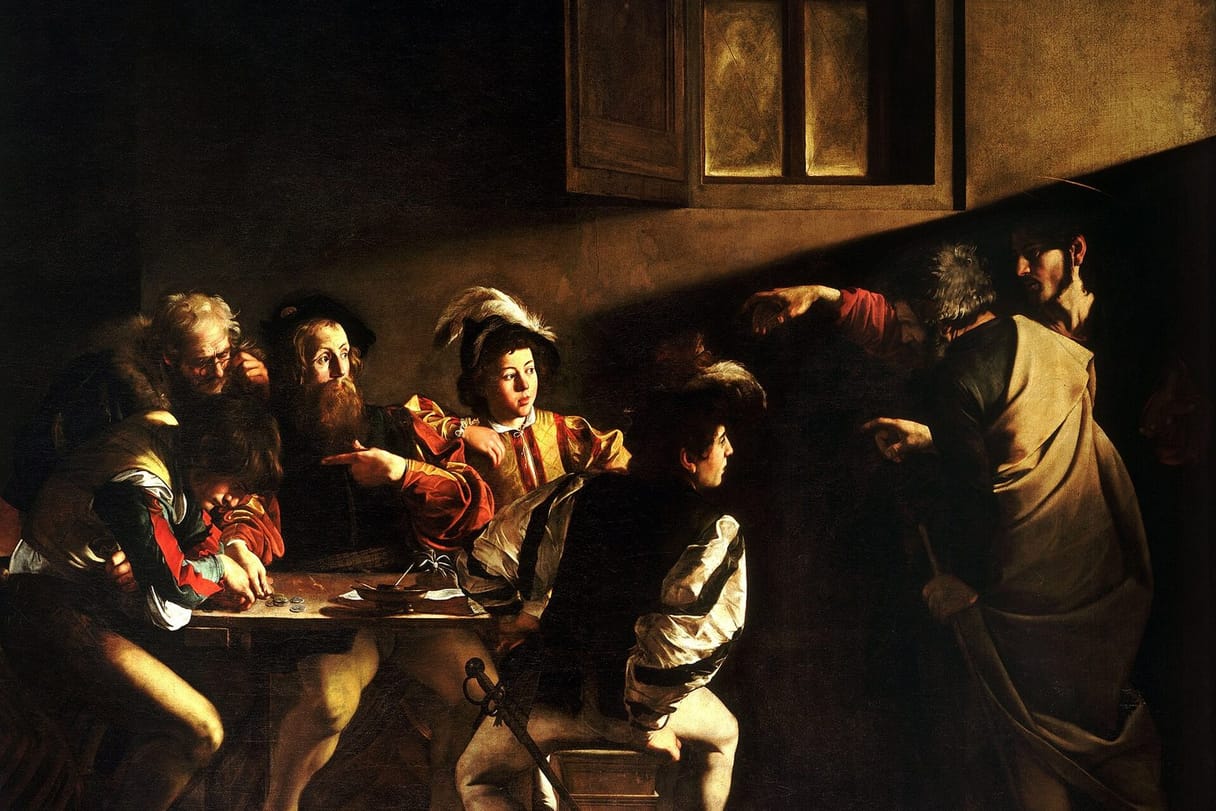
You become a Christian by turning to Jesus Christ in trust and choosing to follow him. In practice that means praying, reading the story of Jesus in the Gospels, finding a church, and being baptized. No special words or feelings are required, and you do not have to settle every doubt first.
If you are reading this, something has drawn you toward God. Christians believe that the drawing itself is God’s doing, and that God has already come looking for you, like the shepherd in Jesus’s parable who goes after the one lost sheep (Luke 15:4).
What does it mean to become a Christian?
A Christian is a follower of Jesus Christ who belongs to his Body, the church. The first Christians described it in the Book of Acts. After Peter preached on the day of Pentecost, the listeners asked what to do, and Peter said to them:
Repent and be baptized every one of you in the name of Jesus Christ so that your sins may be forgiven, and you will receive the gift of the Holy Spirit.
Acts 2:38, NRSVUE
The new believers then “continued steadfastly in the apostles’ teaching and fellowship, in the breaking of bread, and prayer” (Acts 2:42). That pattern still describes Christian life: turning to God, baptism, learning the faith, belonging to a congregation, sharing Holy Communion, and praying.
Becoming a Christian is a beginning. Athanasius, the fourth-century bishop of Alexandria, summed up the purpose of the Incarnation in a sentence the Eastern churches have treasured ever since: “He was made man that we might be made God” (On the Incarnation 54). Orthodox Christians call this lifelong process theosis: being healed and drawn, over a whole lifetime, into the life and love of God.
Becoming a Christian is a response to an invitation. Jesus said:
Come to me, all you who are weary and are carrying heavy burdens, and I will give you rest. Take my yoke upon you, and learn from me, for I am gentle and humble in heart, and you will find rest for your souls.
Matthew 11:28–29, NRSVUE
How do I start?
Start by praying. Prayer is talking with God, and no special words are required. In one of Jesus’s parables, a tax collector stood at the back of the temple and prayed only, “God, be merciful to me, a sinner!” (Luke 18:13), and Jesus said that man went home right with God.
If you want words to begin with, you might pray something like this: “Lord Jesus Christ, I want to know you and follow you. Forgive my sins, help my unbelief, and lead me to your people. Amen.” You can also pray the Lord’s Prayer, which Jesus taught his disciples and Christians have prayed every day for two thousand years. Pray again tomorrow, and the day after. For practical help, see How do I pray?
You do not need to feel anything dramatic. Some people have a vivid moment of conversion. Many others come to faith slowly, over months or years, and cannot name a single day. Both are real.
What should I read first?
Read a Gospel, one of the four books that tell the story of Jesus. Two good places to begin:
- The Gospel of Mark is the shortest and, according to most scholars, the earliest of the four. You can read it in one sitting. It opens, “The beginning of the Good News of Jesus Christ” (Mark 1:1).
- The Gospel of Luke tells the fullest story of Jesus’s birth and contains many of his best-loved parables, including the lost sheep and the prodigal son in chapter 15. Luke says he decided “to write to you in order” so that his reader “might know the certainty concerning the things in which you were instructed” (Luke 1:3–4).
Read slowly, a chapter a day, and pay attention to what Jesus does and whom he spends time with. A study Bible with notes, such as the New Oxford Annotated Bible, will help with names and places. See Where should I start reading the Bible?
Do I need to go to church?
Yes. Christianity has always been lived together, and you will grow faster with other Christians around you. Find a congregation near you; the ELCA, the Presbyterian Church (U.S.A.), the United Methodist Church, and the Episcopal Church all offer online church finders. Go on a Sunday morning, sit wherever you like, and follow along in the hymnal or the printed bulletin.
After the service, introduce yourself to the priest or pastor and say you are interested in becoming a Christian. Many congregations offer classes for newcomers and adults exploring faith. Most mainline churches invite all baptized Christians to receive Holy Communion, and the United Methodist Church invites all who love Christ. If you are not yet baptized, you are still welcome at the service, and many congregations invite people who are not receiving to come forward for a blessing. To learn more about these churches, see What is mainline Protestantism?
How do I get baptized?
Ask your priest or pastor. Adults are usually prepared over several weeks or months, and baptisms are often held at the great feasts, such as Easter and Pentecost, as they were in the early church.
At the service, you will be asked, in some form, whether you renounce evil and whether you turn to Jesus Christ and put your trust in him. The Orthodox baptismal service keeps the oldest form of these questions, described by Cyril of Jerusalem in the fourth century: the candidate faces west, the direction where the sun sets, to renounce Satan, then turns east, toward the rising sun, to join themselves to Christ. You and the congregation then confess the faith together in the Apostles’ Creed, which began as a baptismal creed.
In many mainline churches you then promise, with God’s help, to keep gathering for worship, prayer, and Holy Communion; to resist evil and return to God when you fall; to share the good news of Christ by word and example; to serve Christ in other people; and to work for justice and peace. Water is poured over you or you are immersed in the name of the Father, the Son, and the Holy Spirit, and the minister often marks your forehead with the sign of the cross.
If you were baptized as a child, even in another denomination, you do not need to be baptized again. The ELCA, the Presbyterian Church (U.S.A.), the United Methodist Church, and the Episcopal Church all recognize any baptism with water in the name of the Trinity. Instead, you can make a mature public affirmation of your faith, which most churches call confirmation or affirmation of baptism. For the deeper question of baptism and salvation, see Do you have to be baptized to be saved?
What if I still have doubts?
You can become a Christian with doubts. A father in Mark’s Gospel brought his sick son to Jesus and cried out, “I believe. Help my unbelief!” (Mark 9:24). Jesus healed his son. In John’s Gospel, the apostle Thomas doubts the resurrection until the risen Christ appears to him, and the church honors Thomas as a saint.
Faith in the Bible means trust, and trust grows as you practice it: praying, reading, worshiping, and serving your neighbors. Jesus promised, “He who comes to me I will in no way throw out” (John 6:37). For what Christians mean by being saved, see What does it mean to be saved?
Augustine of Hippo came to faith slowly, after years of searching, and was baptized at Easter in 387 at the age of thirty-two. Years later he wrote a prayer that anyone who comes to God late can make their own:
Too late did I love You, O Fairness, so ancient, and yet so new! Too late did I love You! For behold, You were within, and I without, and there did I seek You. … You called, and cried aloud, and forced open my deafness. … You touched me, and I burned for Your peace.
Augustine, Confessions 10.27.38 (trans. J. G. Pilkington)
Common questions
Is there a prayer I have to say to become a Christian?
No. The Bible gives no required formula, and God hears any prayer from the heart. The tax collector in Jesus’s parable prayed only, “God, be merciful to me, a sinner,” and Jesus said he went home right with God (Luke 18:13–14). Many new Christians begin with the Lord’s Prayer.
Do I have to be baptized to be a Christian?
Baptism is how the church welcomes a person into Christ’s Body, and Jesus told his followers to baptize (Matthew 28:19). A person who has turned to Christ but has not yet been baptized is already on the way, and God’s love does not wait for the ceremony. Ask a priest or pastor about being baptized when you are ready.
I was baptized as a baby but never practiced. Do I need to be baptized again?
No. The Nicene Creed confesses “one baptism,” and the mainline churches do not repeat baptism, because God’s promise in baptism stands even when a person has drifted away. You can make a mature public affirmation of your faith instead, which most churches call confirmation or affirmation of baptism.
Can I become a Christian if I still have doubts?
Yes. A father in Mark’s Gospel cried out to Jesus, “I believe. Help my unbelief!” and Jesus healed his son (Mark 9:24). Faith is trust, and trust grows by practice. Many lifelong Christians still have questions.
Sources
- Mark 1:14–15 (WEB)
- Matthew 11:28–30 (WEB)
- Acts 2:37–42 (WEB)
- Mark 9:24 (WEB)
- Augustine, Confessions, Book 10, chapter 27 (New Advent)
- Athanasius, On the Incarnation of the Word, 54 (New Advent)
- Cyril of Jerusalem, Mystagogical Lecture 1 (Catechetical Lecture 19) (New Advent)
- Evangelical Lutheran Church in America, Find a Congregation
- Presbyterian Church (U.S.A.), Congregation directory
- United Methodist Church, Find a Church
- The Episcopal Church, Find a Church


.jpg)