How to start reading the Bible
The best place to start reading the Bible is one of the Gospels, the four books about Jesus. Mark is the shortest and moves quickly; Luke is fuller and gentle with newcomers. Then read Acts, which tells how the church began, and pray a psalm or two each day alongside. After that, read Genesis and Exodus. Do not try to push straight through from Genesis, since many readers stall in Leviticus. Read a little each day, slowly and with prayer.
Your word is a lamp to my feet and a light to my path.
Psalm 119:105, NRSVUE
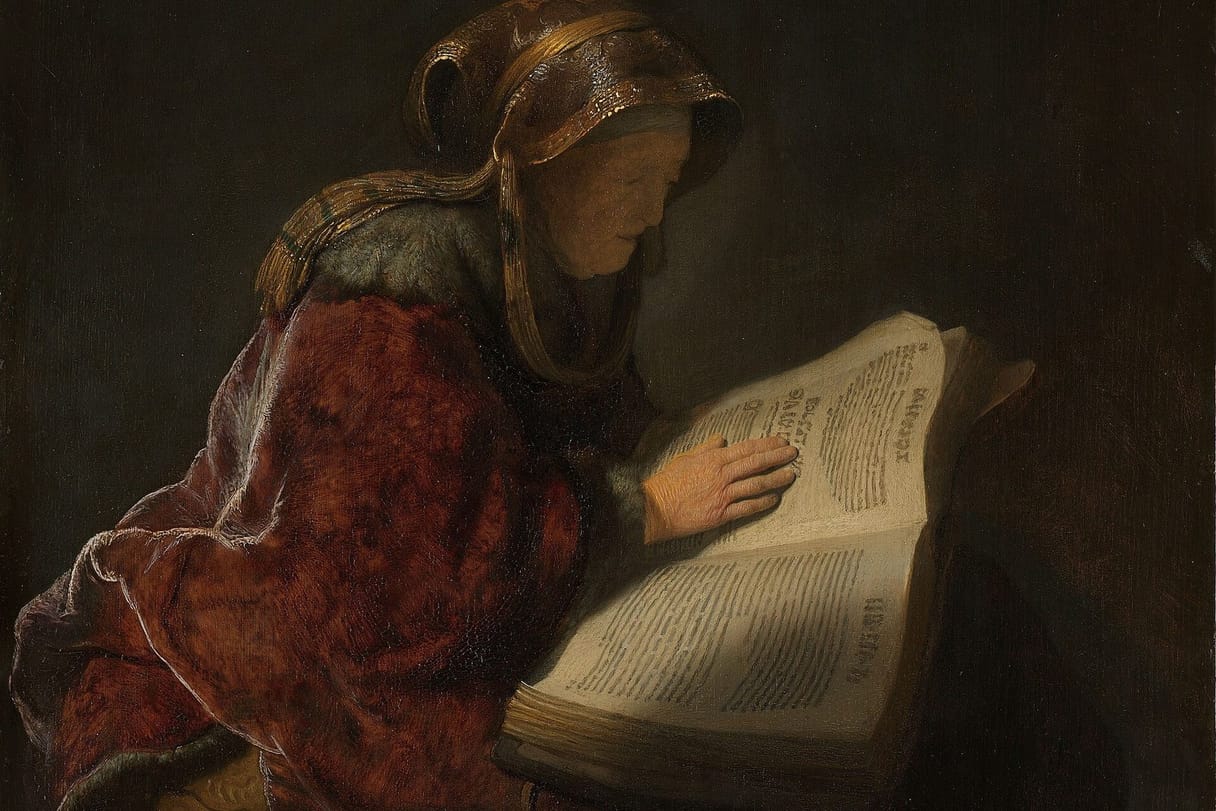
The best place to start reading the Bible is one of the Gospels, the four books about Jesus. You are taking up a book that has fed Jews and Christians in prayer for centuries, and you can come to it as a beginner without any embarrassment. The one plan to avoid is starting at Genesis and trying to read straight through, because many people who try it stall in the detailed laws of Leviticus. The Bible is a library of many kinds of books, and you do not have to read it in order.
Why start with a Gospel?
Christians read the whole Bible in the light of Jesus Christ, so it makes sense to meet him first. After his resurrection, Jesus walked with two disciples on the road to Emmaus, and “Beginning from Moses and from all the prophets, he explained to them in all the Scriptures the things concerning himself” (Luke 24:27). Afterward they said to each other, “Weren’t our hearts burning within us while he spoke to us along the way, and while he opened the Scriptures to us?” (Luke 24:32). You can begin with the same hope, that Christ will open the Scriptures to you as you read.
The Gospels were written so that you might come to faith. John says so near the end of his Gospel:
But these are written so that you may continue to believe that Jesus is the Messiah, the Son of God, and that through believing you may have life in his name.
John 20:31, NRSVUE
Mark begins with the words “The beginning of the Good News of Jesus Christ” (Mark 1:1), which is a good place for any reader to begin too. For background on the four Gospels, see Who wrote the Gospels?
What should I read after the Gospels?
Here is one gentle path for your first year with the Bible.
- A Gospel. Mark or Luke.
- The Acts of the Apostles. Written by the same author as Luke, it tells how the first Christians spread the good news from Jerusalem to Rome.
- The Psalms, alongside everything else. The Psalms are the prayer book of Israel and of the church. Read one each day. Start with Psalms 1, 23, 51, 103, and 139.
- Genesis and Exodus. The stories of creation, of Abraham and Sarah, and of Israel’s deliverance from Egypt are the foundation for everything that follows.
- A short letter of Paul. Philippians and Galatians are good places to start. Read them as letters to real churches.
- Another Gospel. Read John, which reflects at length on who Jesus is.
- A prophet. Try Amos, a short and fierce book about justice, or Isaiah 40–55, which speaks comfort to exiles.
Leave Leviticus, Numbers, Chronicles, and Revelation for later, when you have more of the whole Bible in view. For help with Revelation, see What is the Book of Revelation about?
How do the churches read the Bible every day?
You do not have to read alone. The churches give their members a ready-made pattern: a lectionary, a schedule of readings that appoints psalms and short passages from the Old Testament, the New Testament letters, and the Gospels. The Evangelical Lutheran Church in America (ELCA), the Presbyterian Church (U.S.A.), the United Methodist Church, and the Episcopal Church all follow the Revised Common Lectionary, a three-year cycle of Sunday readings shared by many churches, and it has a companion set of daily readings for the rest of the week. Following it means you read through much of the Bible with the whole church, a little at a time. If you go to church, reading the coming Sunday’s passages during the week is another good way to begin.
How should I read the Bible so I understand it?
Read slowly, and read with prayer. The Psalms describe the person whose “delight is in the LORD’s law. On his law he meditates day and night” (Psalm 1:2). Meditating, in the psalmist’s sense, means turning the words over again and again until they become your own.
One ancient method is lectio divina, Latin for “sacred reading.” Monks practiced it from the time of Benedict in the sixth century, and a Carthusian monk named Guigo II described four movements in the twelfth century:
- Reading (lectio): read a short passage slowly, perhaps twice.
- Meditation (meditatio): notice a word or phrase that stays with you, and turn it over in your mind.
- Prayer (oratio): speak to God about what you have noticed.
- Contemplation (contemplatio): rest in God’s presence without words.
You do not have to understand everything. When Philip, one of the first Christian evangelists, met an Ethiopian official reading Isaiah, he asked, “Do you understand what you are reading?” The man replied, “How can I, unless someone explains it to me?” (Acts 8:30–31). Look for guides of your own: a study Bible with notes, a Bible study group at a church, or a priest or pastor who will answer your questions.
Which Bible should I use?
Choose a translation you can read easily. The Common English Bible and the New Living Translation are clear and modern. The New Revised Standard Version Updated Edition is more precise. Most Bible quotations on these pages come from it or from the World English Bible, a translation in the public domain. A study Bible, such as The New Oxford Annotated Bible, adds introductions to each book and notes that explain history and hard passages. See Which Bible translation is best?
Why read the Bible at all?
Paul wrote that “whatever things were written before were written for our learning, that through perseverance and through encouragement of the Scriptures we might have hope” (Romans 15:4). The church reads Scripture because God still speaks through it, and because its words give hope. John Chrysostom, the fourth-century preacher whose sermons are still treasured in the Orthodox churches, told the working people of Antioch that Bible reading was meant for them as much as for monks: people busy with jobs and families, he said, need the Scriptures even more (Homilies on Matthew 2). For more, see Is the Bible true, and is it the Word of God? and How do I pray?
Thomas Cranmer, the archbishop who compiled the first Book of Common Prayer in 1549, built a prayer for readers on Paul’s words in Romans 15:4. The 1662 prayer book appoints it for the Second Sunday in Advent, and it makes a good prayer to say before you open the Bible:
Blessed Lord, who hast caused all holy Scriptures to be written for our learning: Grant that we may in such wise hear them, read, mark, learn, and inwardly digest them, that by patience and comfort of thy holy Word, we may embrace and ever hold fast the blessed hope of everlasting life, which thou hast given us in our Saviour Jesus Christ. Amen.
Collect for the Second Sunday in Advent, Book of Common Prayer (1662)
Common questions
Should I read the Bible from front to back?
You can, but most beginners find it hard going. The Bible is a library of many kinds of books, and you can read them in any order. Starting with a Gospel lets you meet Jesus first, and Christians read the rest of the Bible in his light.
How much of the Bible should I read each day?
A chapter or a short passage is plenty. Reading a little every day, slowly and with attention, does more good than reading a great deal once in a while. Many churches publish a daily lectionary, a schedule that appoints a few short readings for each day.
What if I do not understand what I am reading?
That is normal, and the Bible itself expects it. When Philip asked an Ethiopian official reading Isaiah whether he understood, the man answered, “How can I, unless someone explains it to me?” A study Bible, a Bible study group, or a priest or pastor can help.
Which Bible should I buy?
Choose a readable translation such as the Common English Bible or the New Revised Standard Version Updated Edition, ideally in a study edition with introductions and notes. Pick an edition with the Apocrypha, also called the deuterocanonical books, if you want the extra Old Testament books that the Orthodox churches and many others read in worship.
Sources
- Psalm 119:105 (WEB)
- Acts 8:30–31 (WEB)
- Luke 24:27, 32 (WEB)
- John 20:30–31 (WEB)
- Psalm 1:2 (WEB)
- Romans 15:4 (WEB)
- The Book of Common Prayer (1662), Collect for the Second Sunday in Advent (Church of England)
- Lectio Divina (Wikipedia)
- Revised Common Lectionary (Vanderbilt Divinity Library)
- John Chrysostom, Homilies on Matthew, Homily 2 (New Advent)