Jehovah’s Witnesses and the Christian faith
Jehovah’s Witnesses describe themselves as Christians who follow Jesus Christ, and they honor him as God’s Son, the Savior, and King. They reject the Trinity, teaching that Jesus is God’s first creation and that the holy spirit is God’s active force. Because the Nicene Creed confesses the Son as true God, of one Being with the Father, churches that hold the creed regard Witness teaching as outside the faith of the creeds.
He said to them, “But who do you say that I am?” Simon Peter answered, “You are the Christ, the Son of the living God.”
Jehovah’s Witnesses call themselves Christians, and they honor Jesus as God’s Son, the Savior who gave his life as a ransom, and the King of God’s Kingdom. They also reject the Trinity and the Nicene Creed’s confession that the Son is “true God from true God,” so the churches that hold the creed regard Witness teaching as outside the historic Christian faith. Both of these facts can be stated with respect for Witness neighbors, and the Ninth Commandment asks Christians to describe a neighbor’s faith accurately (Exodus 20:16).
You may be asking because two visitors left a magazine at your door, or because someone you love has joined the Witnesses or left them, and it helps to begin with what Witnesses themselves teach.
Who are Jehovah’s Witnesses?
Jehovah’s Witnesses grew out of the Bible Student movement led by Charles Taze Russell, who began publishing Zion’s Watch Tower in Pennsylvania in 1879. At a convention in Columbus, Ohio, in 1931, under Russell’s successor Joseph F. Rutherford, the Bible Students took the name Jehovah’s Witnesses from God’s words to Israel, “You are my witnesses” (Isaiah 43:10). Their world headquarters is in Warwick, New York, and a small council called the Governing Body leads the organization.
According to the Witnesses’ own report for 2024, more than nine million of them preached in 240 lands that year, and more than 21 million people attended their yearly Memorial of Christ’s death. Their own website describes them as “Christians who do our best to follow the example set by Jesus Christ and to live by his teachings.” Their patient door-to-door ministry is the most visible sign of that commitment.
What do Jehovah’s Witnesses believe about Jesus?
Witnesses believe that Jesus is God’s firstborn Son and the first thing God made. “God created Jesus and then used him to make everything else, including the angels,” explains one of their Bible articles. They teach that Michael the archangel is “evidently a name given to Jesus before and after his life on earth,” that Jesus died as a ransom for humanity, and that God raised him to heavenly life. Their Bible, the New World Translation, renders the first verse of John’s Gospel “the Word was a god.”
The churches read John 1:1 as most English Bibles print it:
In the beginning was the Word, and the Word was with God, and the Word was God.
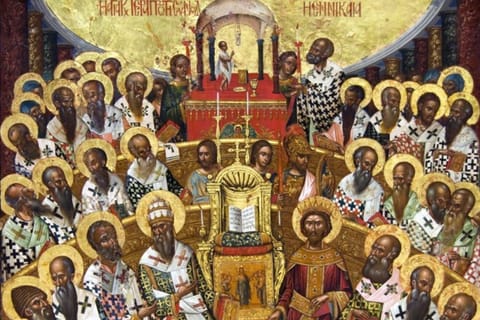
In the early fourth century Arius, a priest of Alexandria, taught that the Son was the first and greatest of God’s creatures. The Council of Nicaea rejected his teaching in 325, and the Nicene Creed confesses the Son as “begotten, not made, of one Being with the Father.” Witnesses often point to Colossians 1:15, which calls Christ “the firstborn of all creation,” and the church has read “firstborn” as a title of honor and inheritance, as when God says of David’s royal heir, “I will also appoint him my firstborn” (Psalm 89:27). When the risen Jesus showed Thomas his wounds, Thomas answered, “My Lord and my God!” (John 20:28). For the church’s teaching on Christ’s divinity, see Is Jesus God?
Why do Jehovah’s Witnesses reject the Trinity?
Witnesses teach that Jehovah alone is Almighty God, and they point out that the word “Trinity” does not appear in the Bible. They describe the holy spirit as “God’s active force that he uses to accomplish his will,” and they do not speak of the spirit as a person. They use the name Jehovah in prayer and throughout their Bible. On the divine name and where “Jehovah” comes from, see What is God’s name?
The church agrees that the word “Trinity” is absent from Scripture. Christians of the second to fourth centuries used it to name what they found in the New Testament: baptism “in the name of the Father and of the Son and of the Holy Spirit” (Matthew 28:19), prayer offered to Jesus, and the Spirit who teaches, intercedes, and can be grieved. For the doctrine and its history, see What is the Trinity?
Why do Jehovah’s Witnesses refuse blood transfusions?
Witnesses take the apostles’ instruction to Gentile believers to “abstain … from blood” (Acts 15:29) as a lasting command, together with the commands about blood in Genesis 9:4 and Leviticus 17. Since 1945 they have refused blood transfusions, and many Witnesses have accepted serious risk to their lives for the sake of conscience. Over the years the organization left more decisions to the individual, first about blood fractions and then about some uses of a patient’s own blood. On September 18, 2026, the Governing Body announced that accepting red cells, white cells, plasma, or platelets is now “a matter of personal conscience,” while “the long-standing refusal of whole-blood transfusions on religious grounds” is unchanged.
Bloodless medicine and surgery first arose in the 1970s, when the heart surgeon Denton Cooley operated on Witness patients whom many other doctors refused to treat. Its methods now help many patients who refuse or cannot receive transfusions. Many interpreters read the apostles’ rule as guidance that helped Jewish and Gentile believers share meals, and other churches regard giving and receiving blood as a medical decision that can express love for a neighbor.
What is the 1914 teaching?
Witnesses teach that “God’s Kingdom was established in heaven in 1914,” with Jesus as King, and that the world’s “last days” began then. Their calculation starts from the “seven times” in Daniel 4, which they count as 2,520 years running from 607 BCE, their date for Babylon’s destruction of Jerusalem, to October 1914. Most historians date the destruction of Jerusalem to 587 or 586 BCE. Russell had expected Armageddon to come around 1914, and the organization’s understanding of Jesus’ words “this generation will not pass away” (Matthew 24:34) has been revised several times, including in 1995, 2008, and 2010.
In the Book of Daniel, the “seven times” are the years of King Nebuchadnezzar’s madness, which last “until you know that the Most High rules in the kingdom of men” (Daniel 4:32). Jesus told his disciples that “no one knows of that day and hour” (Matthew 24:36), and the mainline churches confess his coming without a timetable.
How else do Witnesses differ from other churches?
Witnesses teach that 144,000 faithful Christians will reign with Christ in heaven and that a “great crowd” will live forever on a paradise earth. At the yearly Memorial, only those who believe they belong to the 144,000 eat the bread and drink the wine. Witnesses reject hellfire and teach that the dead are “in a state of nonexistence” until the resurrection. Many Christians in other churches also question eternal torment, though they describe the hope beyond death differently (see Is hell real?). They keep political neutrality, refuse military service, and do not celebrate Christmas or birthdays.
Their publications describe Babylon the Great in Revelation as “the world’s collective body of false religions,” and they baptize anyone who joins them, whatever church baptized that person before. Members removed from the congregation for serious sin are avoided by other Witnesses; in 2024 the organization began allowing brief greetings at meetings and invitations to attend. Witnesses have also suffered for their faith. In Nazi Germany many were sent to concentration camps, and on April 20, 2017, Russia’s Supreme Court banned the organization as “extremist.”
What do the mainline churches teach about Jehovah’s Witnesses?
The ELCA, the PC(USA), the United Methodist Church, and the Episcopal Church, with the Orthodox churches and most other Christian bodies, confess the Nicene Creed. Measured by the creed, Witness teaching about Christ and the Spirit stands outside the historic faith, and Witnesses themselves agree that they differ from the churches on these points. For a comparison with the Latter-day Saints, whose teaching about God also departs from the creed, see Are Mormons Christian? and What is the Nicene Creed?
A judgment about doctrine makes no claim about any person’s standing before God. Scripture says that God “desires all people to be saved and come to full knowledge of the truth” (1 Timothy 2:4). If someone you love has left the Witnesses and lost friends or family in the process, they will need patience and a place at your table. If a Witness knocks on your door, offer the hospitality Scripture asks of every Christian: “Don’t forget to show hospitality to strangers” (Hebrews 13:2).
Jesus once asked his disciples, “But who do you say that I am?” (Matthew 16:15). Witnesses and creedal Christians answer that question with the same Gospels open in front of them, and every Christian has to answer it for themselves. The church answers in the words Thomas spoke to the risen Christ, “My Lord and my God!”
Common questions
Do Jehovah’s Witnesses believe in Jesus?
Jehovah’s Witnesses believe that Jesus is God’s Son, that he died as a ransom for humanity, that God raised him, and that he now rules as King of God’s Kingdom. They teach that God created him before all other things, and they identify him with the archangel Michael. They do not worship him as God Almighty, a title they reserve for Jehovah.
Can Jehovah’s Witnesses accept blood transfusions now?
On September 18, 2026, the Governing Body of Jehovah’s Witnesses announced that accepting red cells, white cells, plasma, or platelets is now a matter of personal conscience for each Witness. The refusal of whole-blood transfusions remains unchanged. Earlier changes had already left blood fractions and some uses of a patient’s own blood to the individual conscience.
Do Jehovah’s Witnesses believe in hell?
Jehovah’s Witnesses teach that the Bible’s words translated “hell” refer to the common grave of humankind and that the dead are in a state of nonexistence until the resurrection. They reject eternal torment. Many Christians in other churches also doubt eternal torment, though they describe the life of the dead with Christ differently.
What is the New World Translation?
The New World Translation is the Bible translation published by the Watch Tower Society and used by Jehovah’s Witnesses. It uses the name Jehovah throughout, and it renders John 1:1 as “the Word was a god,” where most English Bibles read “the Word was God.”
How should I respond when Jehovah’s Witnesses come to my door?
With courtesy and kindness. Witnesses who knock on doors are acting on their faith, often in bad weather and after many refusals. You can thank them, say where you stand, and speak about Jesus with the gentleness that 1 Peter 3:15 asks of every Christian.
Sources
- Matthew 16:15–16 (WEB)
- Are Jehovah’s Witnesses a Cult? (jw.org, Frequently Asked Questions)
- 2024 Grand Totals, Service Year Report of Jehovah’s Witnesses Worldwide (jw.org)
- Bible Questions Answered, on when Jesus was created (The Watchtower, March 1, 2013, jw.org)
- Who Is the Archangel Michael? (jw.org)
- The Holy Spirit: God’s Active Force (jw.org, Should You Believe in the Trinity?)
- Jehovah’s Witnesses: Each Witness Now Decides Whether to Accept or Donate Main Blood Components (jw.org, September 18, 2026)
- Changing the game: bloodless medicine and surgery (Johns Hopkins Medicine, Biomedical Odyssey, March 2017)
- Daniel chapter 4, Bible chronology, and 1914 (jw.org, Bible Questions Answered)
- Is Hell Real? (jw.org)
- What Is Babylon the Great? (jw.org)
- Eschatology of Jehovah’s Witnesses (Wikipedia)
- History of Jehovah’s Witnesses (Wikipedia)
- Shunning (Wikipedia), section on Jehovah’s Witnesses
- Russia’s Supreme Court bans Jehovah’s Witnesses (Voice of America, April 20, 2017)