Jesus, fully God and fully human
Christians confess that Jesus is God: God the Son, fully divine and fully human in one person. The Gospel of John says the Word “was God” and “became flesh,” and Paul applies to Jesus words that Isaiah used of God alone. The Council of Nicaea in 325 confessed the Son “of one Being with the Father,” and the Council of Chalcedon in 451 confessed him “truly God and truly man.”
In the beginning was the Word, and the Word was with God, and the Word was God.
John 1:1, NRSVUE
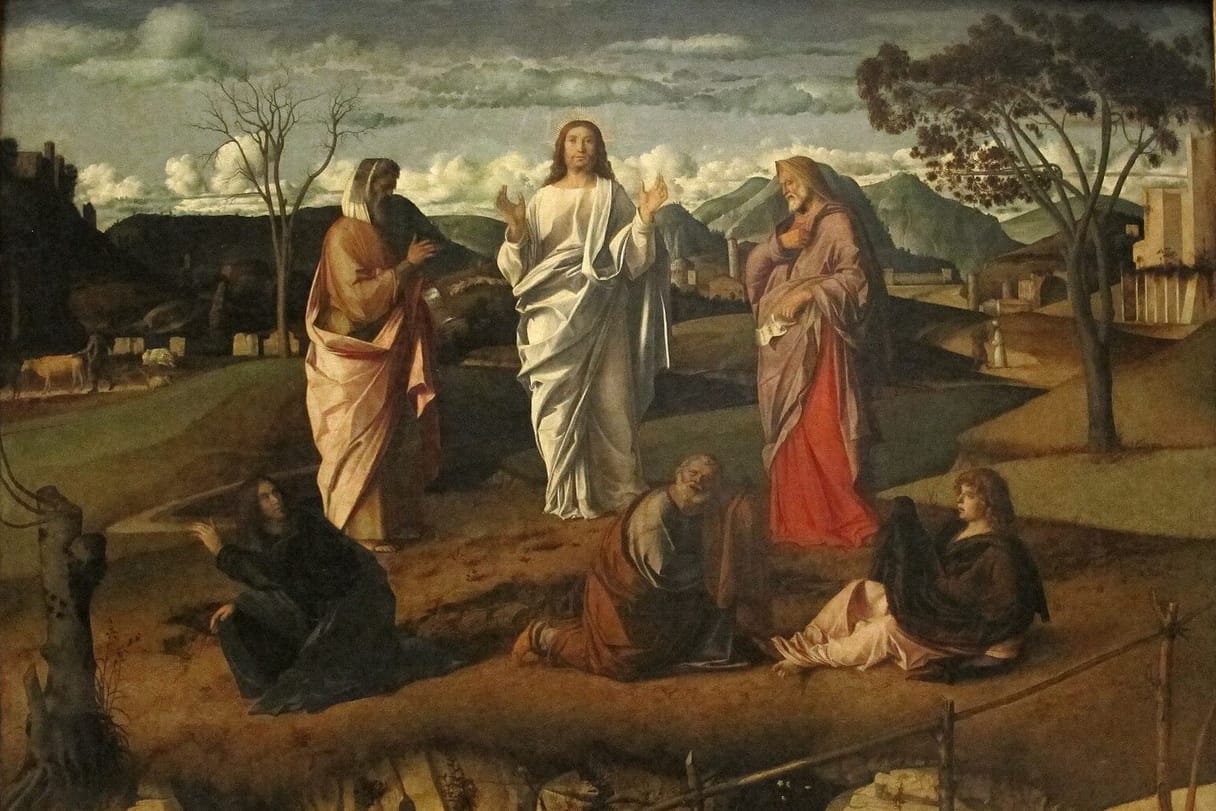
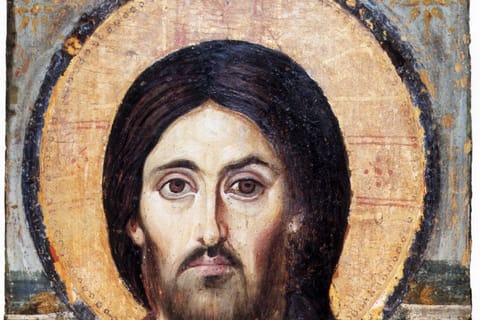
Asking whether Jesus is God comes down to asking what God is like. Christians confess that Jesus is God: God the Son, fully divine and fully human in one person. If that confession is true, then Jesus’s compassion for the sick, his welcome of outcasts and sinners, and his self-giving on the cross show you the very heart of God. Christians have held this faith since the first generation, and they have also wrestled with how to say it well.
What does the Bible say about Jesus being God?
The clearest statement opens the Gospel of John. John calls the Son “the Word,” God’s own self-expression:
In the beginning was the Word, and the Word was with God, and the Word was God. He was in the beginning with God. All things came into being through him, and without him not one thing came into being.
John 1:1–3, NRSVUE
Eleven verses later John says, “The Word became flesh and lived among us” (John 1:14). The same Gospel ends its main story with the apostle Thomas kneeling before the risen Jesus and saying, “My Lord and my God!” (John 20:28).
Paul’s letters are older than the Gospels, and they make the same claim in other words. In Philippians, Paul quotes or composes a poem about Christ:
who, though he existed in the form of God, did not regard equality with God as something to be grasped, but emptied himself, taking the form of a slave, assuming human likeness.
Philippians 2:6–7, NRSVUE
The poem ends with every knee bowing “at the name of Jesus” and every tongue confessing “that Jesus Christ is Lord, to the glory of God the Father” (Philippians 2:10–11). Those lines echo Isaiah 45, where God says, “I am God, and there is no other,” and “to me every knee shall bow, every tongue shall take an oath” (Isaiah 45:22–23). Paul, a Jew devoted to the one God of Israel, gives Jesus the honor that Isaiah reserves for God alone. Many scholars think Paul is quoting a hymn or creed already in use, which would make Philippians 2 one of the earliest Christian statements about Christ.
The Letter to the Colossians, which many scholars think was written by a follower of Paul, praises Christ in similar terms:
He is the image of the invisible God, the firstborn of all creation, for in him all things in heaven and on earth were created. … He himself is before all things, and in him all things hold together.
Colossians 1:15–17, NRSVUE
A few verses later the hymn says, “all the fullness was pleased to dwell in him” (Colossians 1:19), and the next chapter names that fullness: “in him all the fullness of the Deity dwells bodily” (Colossians 2:9).
Paul even rewrites the Shema, Israel’s confession “Hear, Israel: The LORD is our God. The LORD is one” (Deuteronomy 6:4), so that it includes Jesus: “to us there is one God, the Father, of whom are all things, and we for him; and one Lord, Jesus Christ, through whom are all things, and we live through him” (1 Corinthians 8:6).
Did Jesus claim to be God?
The answer depends partly on which Gospel you read. In Mark, Matthew, and Luke, Jesus speaks mostly about the kingdom of God and seldom about himself. He even deflects praise: “Why do you call me good? No one is good except one—God” (Mark 10:18). Yet in Mark he also forgives a paralyzed man’s sins, and the scribes who hear him object, “Who can forgive sins but God alone?” (Mark 2:7).
The Gospel of John, completed around 90 to 100 CE, puts the strongest claims on Jesus’ lips. There Jesus says, “I and the Father are one” (John 10:30), “before Abraham came into existence, I AM” (John 8:58), and “He who has seen me has seen the Father” (John 14:9). Most biblical scholars read John as the fruit of long reflection by a community that knew Jesus’ teaching and had prayed over it for decades. The church has always read the four Gospels together and found in John the deepest statement of what the others imply.
What did the Council of Nicaea decide?
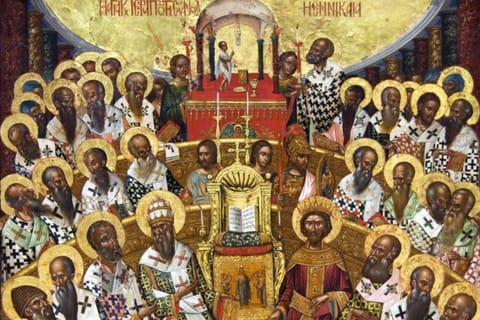
In the early fourth century, Arius, a priest in Alexandria, taught that the Son was the first and highest of God’s creatures. The Emperor Constantine called a council of bishops to Nicaea, in modern Turkey, in 325 to settle the dispute. The council rejected Arius’ view and condemned anyone who said “there was a time when the Son of God was not.”
The creed of Nicaea confessed the Son as “begotten, not made, being of one substance with the Father.” The Greek word for “of one substance” is homoousios, meaning that the Son shares the very being of the Father. The Council of Constantinople in 381 is traditionally credited with expanding the creed into the form churches use today. In the modern English translation used in most mainline churches, it reads:
We believe in one Lord, Jesus Christ, the only Son of God, eternally begotten of the Father, God from God, Light from Light, true God from true God, begotten, not made, of one Being with the Father.
Athanasius, the bishop of Alexandria who defended Nicaea for decades, explained why the question mattered. In On the Incarnation he wrote: “He was made man that we might be made God.” Athanasius meant that only God could bring human beings into God’s own life, so a Savior who was less than God could not save.
What did the Council of Chalcedon say?
After Nicaea the church still had to explain how one person could be both God and human. The Council of Chalcedon, held in 451 near Constantinople, gave the answer most churches still use. Its definition confesses “one and the same Son, our Lord Jesus Christ,” who is “truly God and truly man.” It says Christ is known “in two natures, without confusion, without change, without division, without separation.”
In plain words, Jesus is wholly God and wholly human, neither a mixture of the two nor God in a human disguise. He has everything that makes God God and everything that makes us human, except sin, and he is one person. The Oriental Orthodox churches did not accept Chalcedon’s wording, though they too confess Christ as fully divine and fully human. The Eastern Orthodox churches accept the definition, and so do most Western churches, Protestant ones included.
Gregory of Nazianzus, one of the fourth-century Cappadocian Fathers of the Greek-speaking East, gave the reason the church insisted on Christ’s full humanity: “that which He has not assumed He has not healed” (Letter 101). If the Son of God had taken on only part of human nature, only that part would be healed. Because he took on all of it, body, mind, and will, all of it can be joined to God.
Is Jesus the same person as God the Father?
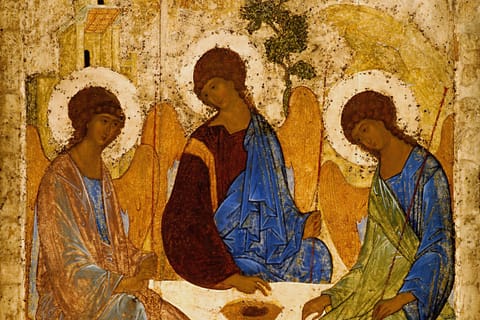
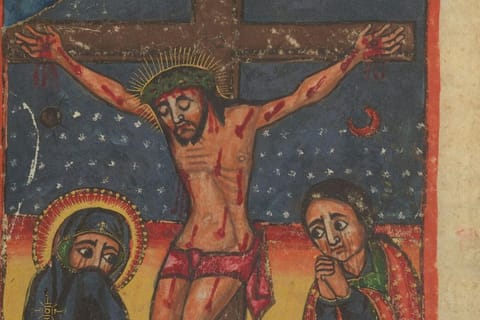
No. The Son and the Father are distinct persons who share one divine being. Jesus prays to the Father, and he says, “the Father is greater than I” (John 14:28). The church has read that saying as Jesus speaking from his humanity and as the Son honoring the Father from whom he is eternally begotten. The doctrine that holds these truths together is the Trinity; see What is the Trinity?
The Gospels also show Jesus’ human limits. He says that about the last day “no one knows—not even the angels in heaven, nor the Son, but only the Father” (Mark 13:32). Chalcedon’s two natures give the church a way to honor both kinds of verses without explaining either away.
What do the mainline churches teach?
The Evangelical Lutheran Church in America (ELCA), the Presbyterian Church (U.S.A.), the United Methodist Church, and the Episcopal Church all confess Jesus’ divinity in the Nicene Creed, and the Eastern Orthodox churches confess the same creed. The Lutheran Augsburg Confession of 1530 calls Christ “true God and true man,” and the Methodist Articles of Religion, which John Wesley adapted from the Church of England’s, call him “very God and very Man.” Jesus himself said, “He who has seen me has seen the Father” (John 14:9).
Christians hold the doctrine with different emphases. Some think mainly in the precise terms of Nicaea and Chalcedon. Others begin from the human Jesus of the Gospels and find in him, as Paul says, “the glory of God in the face of Jesus Christ” (2 Corinthians 4:6). Both start from the same faith: when we look at Jesus, we are looking at God. For more on the person behind the doctrine, see Who is Jesus?, and for the creed itself, What is the Nicene Creed?
The doctrine was never meant to stay on paper. It leads to prayer, and to the trust that the God you meet in Jesus is the God who holds you. Thomas’s words to the risen Christ, “My Lord and my God!” (John 20:28), can be your prayer too, said slowly before a cross, at the bread and cup of Holy Communion, or at the end of the day.
Common questions
Is Jesus God or the Son of God?
Christians say both. “Son of God” names Jesus’ relationship to the Father, and the Nicene Creed confesses that the Son is “true God from true God.” Christians believe in one God who is Father, Son, and Holy Spirit, so calling Jesus the Son of God does not make him a second god.
Did Jesus ever say “I am God”?
No Gospel records Jesus saying those exact words. In John’s Gospel he says, “I and the Father are one” and “before Abraham came into existence, I AM.” In Mark he forgives sins, which his critics said only God could do. The church’s confession rests on the whole witness of the New Testament, not on a single sentence.
If Jesus is God, who was he praying to?
Jesus prayed to the Father. The doctrine of the Trinity holds that the Father and the Son are distinct persons who share one divine being, so the Son can speak to the Father in love. Jesus prayed as a human being, because the church confesses that he was fully human as well as fully divine.
Why does it matter whether Jesus is God?
If Jesus is God the Son, then what we see in him is what God is like. Jesus told Philip, “He who has seen me has seen the Father,” and the First Letter of John names what is seen: “God is love.” His compassion, his welcome of sinners, and his self-giving on the cross show us the heart of God.
Sources
- John 1:1–3, 14 (WEB)
- Philippians 2:5–11 (WEB)
- Colossians 1:15–20 (WEB)
- Isaiah 45:22–23 (WEB)
- 1 Corinthians 8:6 (WEB)
- Creed of the First Council of Nicaea (325), New Advent
- Catholic Encyclopedia, The First Council of Nicaea
- Athanasius, On the Incarnation of the Word, ch. 54
- Book of Common Prayer (1979), The Nicene Creed
- Encyclopaedia Britannica, Council of Chalcedon
- Gregory of Nazianzus, Letter 101 (To Cledonius)
- Augsburg Confession (1530), Article III (Book of Concord)
- The Articles of Religion of the Methodist Church, Article II (United Methodist Church)
- John 14:9 (WEB)