Latter-day Saints and Jehovah’s Witnesses
Latter-day Saints, often called Mormons, honor Jesus Christ as the Son of God and their Savior, and their church describes its members as Christians. The United Methodist Church and the PC(USA)’s Presbytery of Utah do not count it within historic Christianity, because its teaching about God departs from the Nicene Creed and it adds scriptures such as the Book of Mormon. For that reason they baptize Latter-day Saints who join them, while still regarding them as neighbors to be loved.
Don’t forbid him, for he who is not against us is for us.
Members of The Church of Jesus Christ of Latter-day Saints, often called Mormons, honor Jesus Christ as the Son of God and their Savior, and their church teaches clearly that they are Christians. The United Methodist Church has concluded that the Latter-day Saint church stands outside the historic Christian faith confessed in the Nicene Creed, and it baptizes Latter-day Saints who join it. The Presbytery of Utah of the Presbyterian Church (U.S.A.) reached the same judgment in 1995.
Most people who ask this question are thinking of someone in particular: a friend from school, a coworker, a family member who has joined or left a church, or the two young missionaries who knocked on the door. Both of the facts above can be held with love and respect for that person. The Ninth Commandment, “You shall not give false testimony against your neighbor” (Exodus 20:16), asks Christians to describe their neighbors’ faith accurately and kindly.
What do Latter-day Saints believe about Jesus?
The church’s own essay on the question begins: “Members of The Church of Jesus Christ of Latter-day Saints unequivocally affirm themselves to be Christians.” The first of the church’s Articles of Faith reads, “We believe in God, the Eternal Father, and in His Son, Jesus Christ, and in the Holy Ghost.” Latter-day Saints believe that Jesus atoned for the sins of the world, rose bodily from the dead, and will come again.
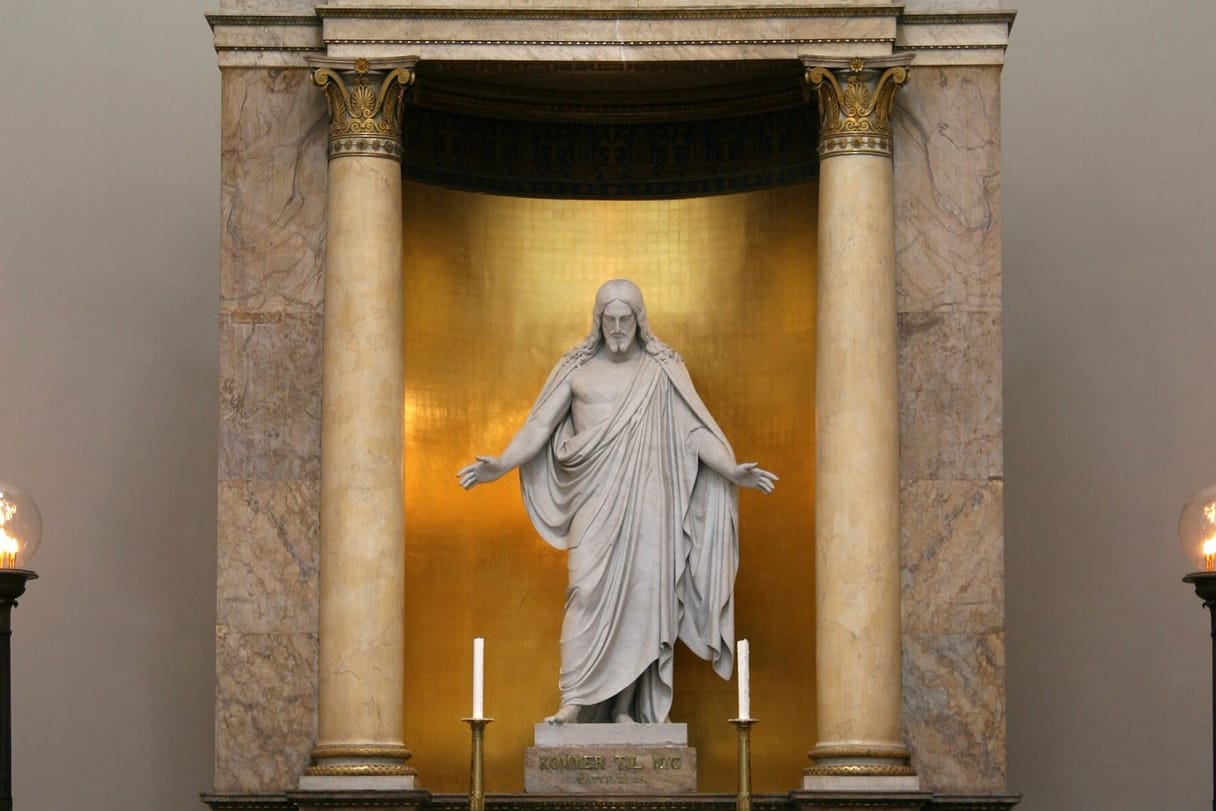
The church places Christ at the center of its public identity. It asks to be called by its full name, and it discourages “the Mormon Church.” On April 4, 2020, its president, Russell M. Nelson, introduced a new church symbol built around Bertel Thorvaldsen’s statue Christus. The original statue stands above the altar of the Lutheran cathedral in Copenhagen, so that Latter-day Saints and Danish Lutherans look to the same image of the risen Christ with outstretched arms.
How does Latter-day Saint teaching differ from the Nicene Creed?
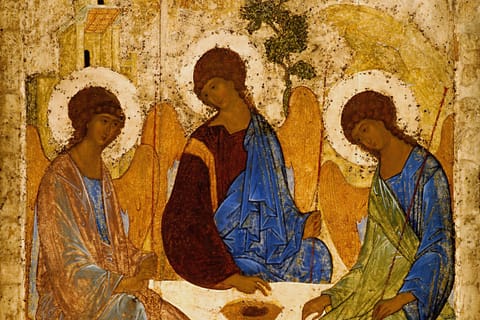
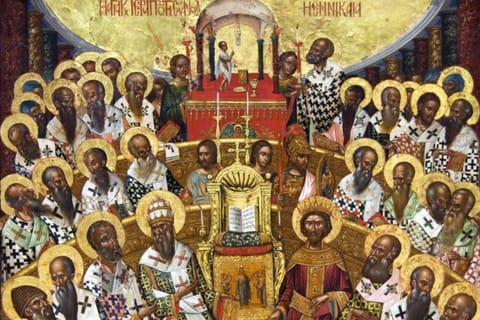
The differences concern who God is. The Nicene Creed, adopted at the councils of Nicaea (325) and Constantinople (381), confesses that the Son is “of one Being with the Father.” Christians who hold the creed believe in one God in three persons, Father, Son, and Holy Spirit (see What is the Trinity?). Gregory of Nyssa, one of the Cappadocian bishops whose teaching shaped the council of 381 and still guides Orthodox theology, wrote a short treatise, On “Not Three Gods,” to answer the worry that three persons must mean three gods. He argued that the Father, Son, and Spirit share one divine nature and act together in everything they do, so that they are one God.
Latter-day Saints understand God differently. A church article explains that they do not believe in “the traditional concept of the Trinity,” and describes the Father, Son, and Holy Ghost as “three separate beings who are one in purpose.” One of their scriptures, Doctrine and Covenants 130:22, teaches that “The Father has a body of flesh and bones as tangible as man’s.” The church’s essay states, “Latter-day Saints do not accept the post–New Testament creeds,” because they believe that the church fell away from the apostles’ teaching after the apostles died and that the gospel was restored through Joseph Smith, who organized the church in New York in 1830.
Latter-day Saints also “turn to living prophets and to additional books of scripture.” Alongside the Bible they read the Book of Mormon, subtitled “Another Testament of Jesus Christ,” the Doctrine and Covenants, and the Pearl of Great Price. Other churches hold that public revelation was completed in Christ and the apostles, and they do not receive these books as Scripture. For the creed itself, see What is the Nicene Creed?
Do other churches accept Latter-day Saint baptism?
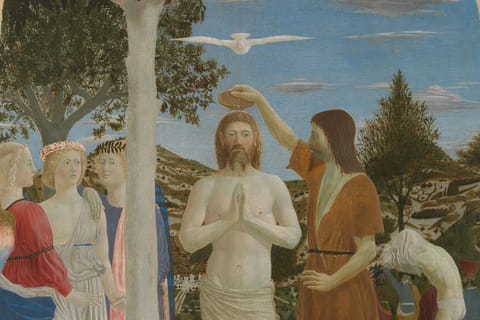
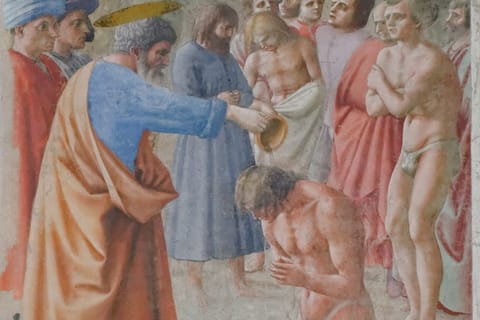
The ELCA, the PC(USA), the United Methodist Church, and the Episcopal Church accept the baptisms of nearly every other church, so long as the baptism uses water and the name of the Trinity. The words come from Jesus:
Go and make disciples of all nations, baptizing them in the name of the Father and of the Son and of the Holy Spirit,
Latter-day Saints baptize with water in those same words, and they understand the words to name three separate beings. For that reason two mainline bodies have concluded that the baptism is not Christian baptism in their sense. In May 2000 the United Methodist General Conference approved a report stating that the Latter-day Saint church “is not a part of the historic, apostolic tradition of Christian faith,” and recommending that converts receive Christian baptism. In 1995 the PC(USA)’s Presbytery of Utah, in a position paper sent to the General Assembly, concluded: “Whereas the baptisms of most other denominations that consider themselves Christian would be considered valid, Latter-day Saint baptism is not.”
The judgment runs both ways. The Church of Jesus Christ of Latter-day Saints does not accept the baptisms of any other church, and it baptizes converts from every other church. Each side is being faithful to what it believes about God. On the general question of baptism, see Do you have to be baptized to be saved?
Are Jehovah’s Witnesses Christian?
Jehovah’s Witnesses grew out of the Bible Student movement that Charles Taze Russell began in Pennsylvania in the 1870s, and they took their present name in 1931. They call themselves Christians, follow Jesus’ teaching closely, and are known for their door-to-door witness, which many of them carry out with great patience.
Jehovah’s Witnesses reject the Trinity as unscriptural. They teach that Jesus is God’s Son and God’s first creation, whom they identify with the archangel Michael before his human birth, and that the holy spirit is God’s “active force,” and they do not speak of it as a person. Their New World Translation renders John 1:1 as “the Word was a god.” Their teaching about Jesus resembles that of Arius, the priest of Alexandria whose claim that the Son was created was rejected at Nicaea in 325. Churches that confess the Nicene Creed therefore regard Jehovah’s Witness teaching, like Latter-day Saint teaching, as outside the faith of the creeds. For the church’s teaching on Christ’s divinity, see Is Jesus God?
How should Christians treat Latter-day Saint and Jehovah’s Witness neighbors?
Both communities have known persecution. In 1838 the governor of Missouri ordered that the Latter-day Saints be driven from the state, and in 1844 a mob killed Joseph Smith in Carthage, Illinois. Jehovah’s Witnesses were imprisoned in Nazi concentration camps for refusing military service and the Hitler salute. In the United States, Witness families won the Supreme Court case West Virginia State Board of Education v. Barnette (1943), which held that public schools could not force children to salute the flag, a ruling that protects the conscience of every American.
When the disciples tried to stop a man who was casting out demons in Jesus’ name “because he doesn’t follow with us,” Jesus corrected them:
Don’t forbid him, for he who is not against us is for us.
Christians can say clearly where they differ about the doctrine of God and still describe their neighbors’ beliefs as those neighbors describe them. Disagreement about the creed leaves plenty of room for friendship. The First Letter of Peter asks Christians to give a reason for their hope “with humility and fear” (1 Peter 3:15). Latter-day Saints often work beside other churches in disaster relief and care for the poor, and both communities have defended religious freedom in the courts.
If you love someone in one of these communities, you do not have to settle every question between you before you can share a meal, pray for one another, or serve your town together. Whatever either of you believes about the creeds, God knows and loves you both. “Beloved, let’s love one another, for love is of God; and everyone who loves has been born of God and knows God” (1 John 4:7).
Common questions
Do Mormons believe in Jesus?
Latter-day Saints believe that Jesus Christ is the Son of God, that he died for the sins of the world, and that he rose from the dead. The first of their Articles of Faith names God the Eternal Father, his Son Jesus Christ, and the Holy Ghost. They honor Jesus deeply; the difference from other churches lies in how they understand the relation between the Father and the Son.
Why does the church ask people not to say “Mormon”?
The Church of Jesus Christ of Latter-day Saints asks that it be called by its full name, or “the Church of Jesus Christ” for short, so that the name of Christ stands at the center. Its style guide asks writers not to use “Mormon Church” or “LDS Church” and prefers “Latter-day Saints” for its members. The word Mormon is still used in proper names such as the Book of Mormon.
What is the Book of Mormon?
The Book of Mormon is a book of scripture that Joseph Smith published in 1830. Latter-day Saints believe that he translated it by divine power from ancient records of peoples in the Americas, and its subtitle is “Another Testament of Jesus Christ.” Other churches do not receive it as Scripture, and historians outside the Latter-day Saint tradition do not regard it as an ancient record.
Do Jehovah’s Witnesses believe Jesus is God?
Jehovah’s Witnesses teach that Jesus is God’s Son and God’s first creation, and they do not identify him with God Almighty. They reject the Trinity as unscriptural and describe the holy spirit as God’s active force, without regarding it as a divine person. Their teaching about Jesus resembles that of Arius, the fourth-century priest whose views the Council of Nicaea rejected in 325.
Will Latter-day Saints and Jehovah’s Witnesses be saved?
A church’s decision about which baptisms it accepts is a judgment about doctrine and church order, and it makes no claim about anyone’s eternal destiny. The mainline churches teach that salvation is God’s gift in Jesus Christ and leave judgment to God, who “desires all people to be saved” (1 Timothy 2:4). Many Christian teachers, from Gregory of Nyssa to Isaac the Syrian, have hoped that God’s mercy will reach every person.
Sources
- Luke 9:49–50 (WEB)
- Matthew 28:19 (WEB)
- Exodus 20:16 (WEB)
- The Church of Jesus Christ of Latter-day Saints, Gospel Topics Essays: Are “Mormons” Christian?
- Do Latter-day Saints Believe in the Trinity? (Come unto Christ)
- Doctrine and Covenants 130
- Newsroom of The Church of Jesus Christ of Latter-day Saints, Style Guide
- President Nelson introduces new Church symbol (Church News, April 4, 2020)
- United Methodists say Mormons not Christian (Religion News Service, 2000)
- Gregory of Nyssa, On “Not Three Gods” (New Advent)
- Are Christians Christians? (Religious Studies Center, Brigham Young University), citing the Presbytery of Utah, PC(USA), 1995
- Jehovah’s Witnesses beliefs (Wikipedia)
- Book of Common Prayer (1979), the Nicene Creed
- 1 John 4:7 (WEB)