Jesus Christ
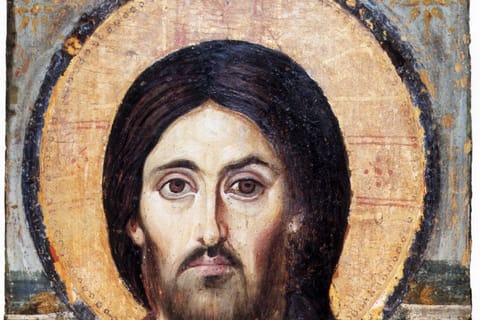
Jesus of Nazareth was a Jewish teacher and healer from Galilee who proclaimed the kingdom of God and was crucified by the Roman governor Pontius Pilate around 30 CE. Christians confess him as the Messiah, or Christ, and as the Son of God, fully human and fully divine, the one in whom the nature of God is most clearly seen. The church proclaims that God raised him from the dead.
He asked them, “But who do you say that I am?” Peter answered him, “You are the Messiah.”
Mark 8:29, NRSVUE
Jesus once asked his disciples who they said he was (Mark 8:29), and you may be asking the same question out of curiosity, doubt, or longing. Jesus of Nazareth was a Jewish teacher and healer from Galilee, crucified under Pontius Pilate around 30 CE. The church confesses him as the Christ, the Son of God, in whom the love of God took a human face.
What do historians know about Jesus?
Jesus was born around 6 to 4 BCE, near the end of the reign of Herod the Great, and grew up in Nazareth, a village in Galilee. His Hebrew name was Yeshua, a shorter form of Yehoshua (Joshua), which became Iēsous in Greek and “Jesus” in English. Matthew explains the name: “You shall name him Jesus, for it is he who shall save his people from their sins” (Matthew 1:21).
His neighbors knew him as a working man. In Nazareth they asked, “Isn’t this the carpenter, the son of Mary and brother of James, Joses, Judah, and Simon?” (Mark 6:3). Luke says that Jesus, “when he began to teach, was about thirty years old” (Luke 3:23), after he was baptized by John in the Jordan River.
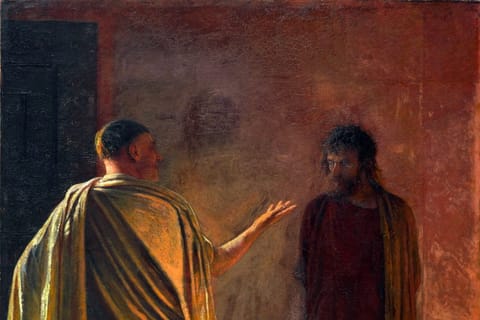
Jesus spent most of his public life in the towns around the Sea of Galilee, which Herod Antipas ruled under Rome. He then went up to Jerusalem at Passover, where he was arrested and crucified on the orders of Pontius Pilate, the Roman governor of Judea from 26 to 36 CE. Most historians, whatever their own beliefs, accept at least two facts about him as nearly certain: John baptized him, and Pilate had him crucified. The Roman historian Tacitus and the Jewish historian Josephus both mention him. For the evidence in detail, see Was Jesus a real person?
What did Jesus teach?
Jesus preached the kingdom of God, the reign of God breaking into the world. Mark gives the first summary of his message:
“The time is fulfilled, and the kingdom of God has come near; repent, and believe in the good news.”
Mark 1:15, NRSVUE
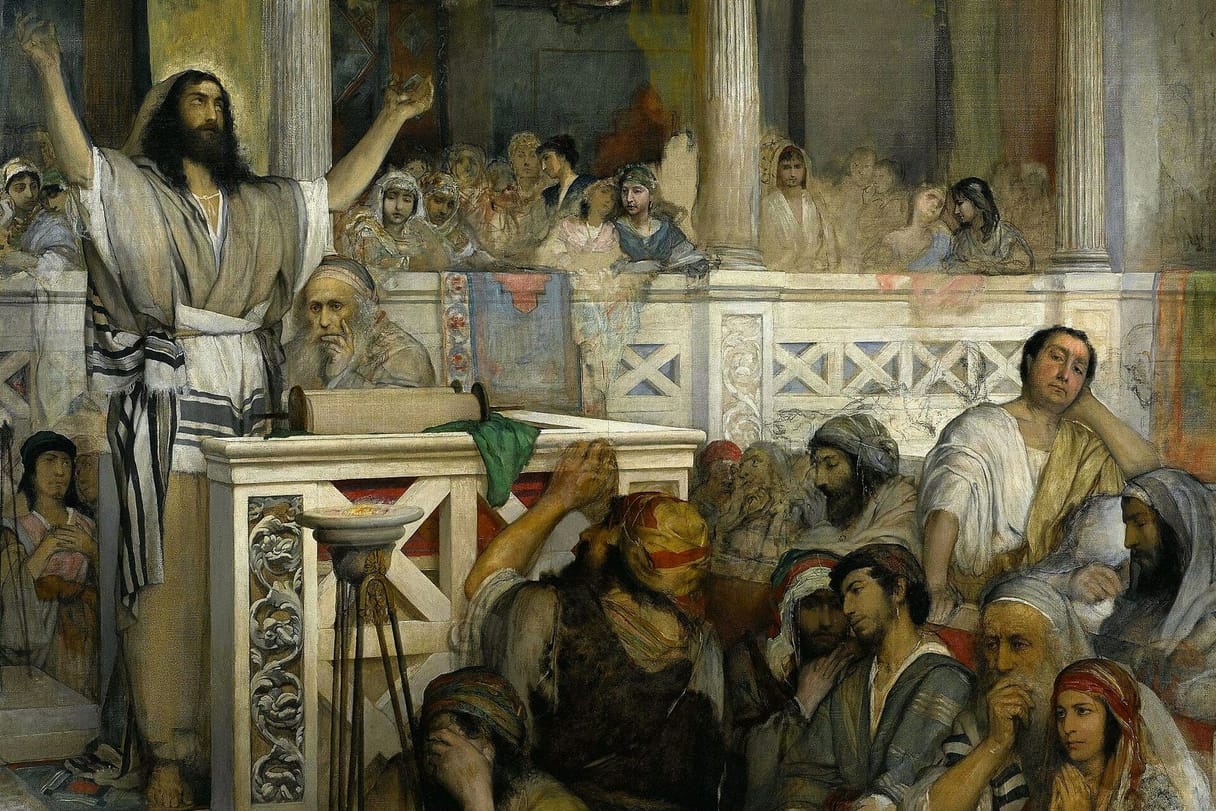
In his hometown synagogue, Jesus read from the scroll of Isaiah and claimed its promise for his own work:
“The Spirit of the Lord is upon me, because he has anointed me to bring good news to the poor. He has sent me to proclaim release to the captives and recovery of sight to the blind, to set free those who are oppressed, to proclaim the year of the Lord’s favor.”
Luke 4:18–19, NRSVUE
When a scribe asked which commandment was first, Jesus joined two verses from the Torah, the Shema of Deuteronomy 6 and the command of Leviticus 19:18 to love your neighbor as yourself (Mark 12:29–31). Everything else he taught about how to live grows from those two loves; see What is the greatest commandment?
Jesus taught in parables, short stories such as the prodigal son and the good Samaritan, and he healed the sick. Peter later summed up his ministry by saying that Jesus “went about doing good and healing all who were oppressed by the devil, for God was with him” (Acts 10:38). Jesus also ate with people whom respectable society shunned, and his critics complained, “This man welcomes sinners, and eats with them” (Luke 15:2). He answered, “Those who are healthy have no need for a physician, but those who are sick” (Mark 2:17). If you have ever felt yourself on the outside, this is the Jesus who makes room for you at his table.
Why is Jesus called the Christ?
“Christ” is a title. The Greek word christos means “anointed one” and translates the Hebrew mashiach, from which English gets “Messiah.” In Israel’s Scriptures, kings were anointed with oil, and many Jews of Jesus’ day hoped for an anointed king from David’s family who would restore Israel.
Jesus asked his disciples directly what they made of him:
He asked them, “But who do you say that I am?” Peter answered him, “You are the Messiah.”
Mark 8:29, NRSVUE
The first Christians kept calling Jesus the Messiah even after he was crucified, which no one had expected of Israel’s king. Paul admits how strange the claim sounded: “we preach Christ crucified, a stumbling block to Jews and foolishness to Greeks” (1 Corinthians 1:23).
Do Christians believe Jesus is God?
Christians confess that Jesus is the eternal Son of God who became a human being. The Gospel of John opens with that confession:
In the beginning was the Word, and the Word was with God, and the Word was God. … And the Word became flesh and lived among us, and we have seen his glory, the glory as of a father’s only son, full of grace and truth.
John 1:1, 14, NRSVUE
The Council of Nicaea in 325 confessed the Son as “of one Being with the Father,” and the Council of Chalcedon in 451 confessed him as “truly God and truly man.” Christians do not believe in two gods; they believe the one God is Father, Son, and Holy Spirit. See Is Jesus God? and What is the Trinity?
The Greek Fathers explained why both halves of that confession matter for salvation. Athanasius of Alexandria wrote that God the Word “was made man that we might be made God” (On the Incarnation 54). God shared human life so that human beings could share God’s life, which Eastern Orthodox Christians call theosis. Gregory of Nazianzus added that Christ had to take on every part of human nature, because “that which He has not assumed He has not healed” (Letter 101). Every part of you, including the parts you are ashamed of, is something Christ took on in order to heal.
The church insists just as firmly that Jesus was fully human. He grew up: “And Jesus increased in wisdom and stature, and in favor with God and men” (Luke 2:52). At the grave of his friend Lazarus, “Jesus wept” (John 11:35). The Letter to the Hebrews says he “has been in all points tempted like we are, yet without sin” (Hebrews 4:15).
Why did Jesus die, and what happened after?
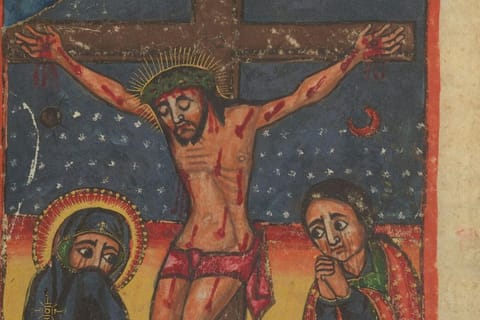
Jesus was crucified as a threat to Roman order, under a sign that read “The King of the Jews” (Mark 15:26). The New Testament also says he died “for our sins” and out of love, and Christians have explained the meaning of his death in several ways. See Why did Jesus die on the cross?
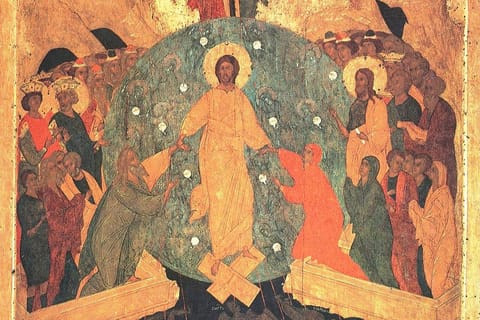
The church proclaims that on the third day God raised Jesus from the dead. Paul passes on that proclamation as a tradition he had himself received, “that Christ died for our sins according to the Scriptures, that he was buried, that he was raised on the third day” (1 Corinthians 15:3–4). Christians hold the resurrection in different ways, some literally and some as true in a deeper than literal sense; see Did Jesus really rise from the dead?
What do the mainline churches teach about Jesus?
The Evangelical Lutheran Church in America (ELCA), the Presbyterian Church (U.S.A.), the United Methodist Church, and the Episcopal Church all confess Jesus Christ in the words of the Nicene Creed, as “true God from true God” who became human “for us and for our salvation.” They also accept the Definition of Chalcedon’s teaching that Christ is fully God and fully human, which the Eastern Orthodox churches and most Western churches share.
The New Testament adds that in Jesus people see what God is like. Paul calls him “the image of the invisible God” (Colossians 1:15), and in John’s Gospel Jesus tells Philip, “He who has seen me has seen the Father” (John 14:9). What Jesus shows is summed up in three words from the First Letter of John: “God is love” (1 John 4:8).
How can I get to know Jesus?
The surest place to meet Jesus is the Gospels. Many readers start with Mark, the shortest and earliest of the four, and then read Luke and John; see Where should I start reading the Bible? Christians also meet Christ in prayer, in Holy Communion, and in the people he called “the least of these my brothers” (Matthew 25:40); the Greek word for brothers, adelphoi, includes sisters.
Jesus’ own invitation still stands:
“Come to me, all you who are weary and are carrying heavy burdens, and I will give you rest. Take my yoke upon you, and learn from me, for I am gentle and humble in heart, and you will find rest for your souls.”
Matthew 11:28–29, NRSVUE
If you want to take a next step, see How do I become a Christian?
You do not need a finished answer to Jesus’ question before you come to him. Peter answered rightly and moments later tried to talk Jesus out of the suffering he foretold, and Jesus rebuked him and kept him close (Mark 8:31–33). You can bring Jesus your questions too, and let him show you who he is.
Common questions
What does the word Christ mean?
Christ is a title that Christians give Jesus. It comes from the Greek christos, which means “anointed one” and translates the Hebrew word messiah. Calling Jesus “Christ” is a confession that he is the king God promised to Israel.
When was Jesus born and when did he die?
Jesus was born around 6 to 4 BCE, shortly before the death of Herod the Great, and he was crucified in Jerusalem around 30 CE. Pontius Pilate, who ordered his execution, governed Judea from 26 to 36 CE. Luke says Jesus was “about thirty years old” when he began his public work.
What was the main message of Jesus?
Jesus preached the kingdom of God above all. Mark sums up his message in one sentence: “The time is fulfilled, and the kingdom of God has come near; repent, and believe in the good news.” When asked for the greatest commandment, Jesus answered with the love of God and the love of neighbor.
Do you have to believe Jesus is God to be a Christian?
The church’s creeds confess that Jesus is “true God from true God,” and that confession has defined Christian faith since the Council of Nicaea in 325. Many people come to that faith slowly, beginning with the Jesus they meet in the Gospels. The church welcomes questions and baptizes people into the faith of the creeds.
Sources
- Mark 8:27–33 (WEB)
- Mark 1:14–15 (WEB)
- Luke 4:16–21 (WEB)
- Mark 12:28–31 (WEB)
- John 1:1–3, 14 (WEB)
- Colossians 1:15; John 14:9; 1 John 4:8 (WEB)
- Gregory of Nazianzus, Letter 101, to Cledonius (New Advent)
- Athanasius, On the Incarnation of the Word, section 54 (New Advent)
- Book of Common Prayer (1979), Historical Documents: the Definition of Chalcedon
- Encyclopaedia Britannica, Jesus
- Josephus, Antiquities of the Jews (Whiston translation)