Jesus the Jew
Jesus was a Jew, born to a Jewish mother and circumcised on the eighth day. He grew up in Galilee, worshiped in the synagogue on the Sabbath, went to Jerusalem for Passover, and taught from the Torah and the Prophets. He named the Shema as the first commandment. His disciples were Jews, and the Christian movement began within Judaism.
But when the fullness of time had come, God sent his Son, born of a woman, born under the law,
Galatians 4:4, NRSVUE
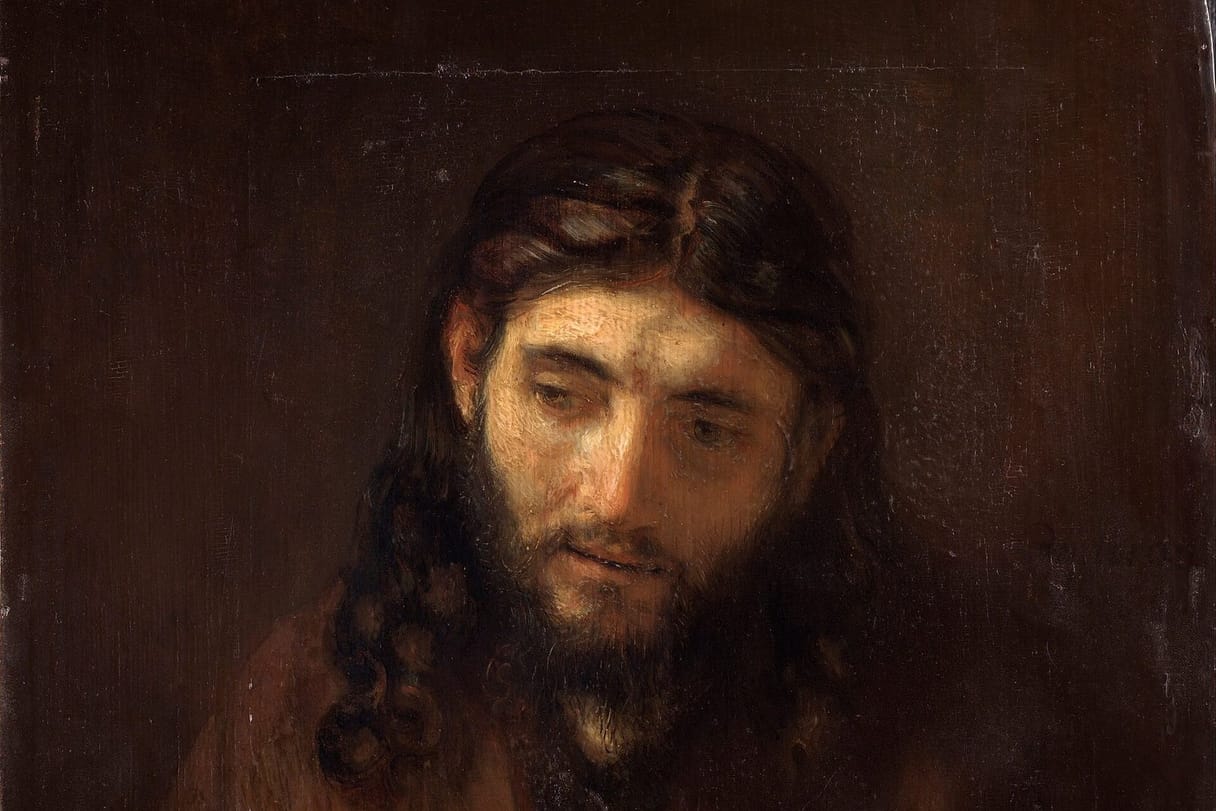
Jesus was a Jew. He was born to a Jewish mother and circumcised on the eighth day, he taught from the Torah and the Prophets, and every prayer he prayed was addressed to the God of Israel. Many Christians know this fact without feeling its weight, because their churches look so different from the synagogue in Nazareth where Jesus worshiped as a boy. Coming to know Jesus as a Jew brings you closer to the person the Gospels describe. It also lets you open the Old Testament as the Scriptures Jesus read aloud in the synagogue and prayed from the cross.
What does the Bible say about Jesus being Jewish?
Paul, himself a Jew, gathers up Jesus’ origins in one sentence:
But when the fullness of time had come, God sent his Son, born of a woman, born under the law,
Galatians 4:4, NRSVUE
“Born under the law” means born into the covenant people who live by the Torah, the Law of Moses. Luke shows Mary and Joseph keeping that law from the first days of their son’s life. “When eight days were fulfilled for the circumcision of the child, his name was called Jesus” (Luke 2:21). They then brought him to the temple in Jerusalem and offered the sacrifice the law required, “A pair of turtledoves, or two young pigeons” (Luke 2:24). The Torah allowed that offering to a family who could not afford a lamb (Leviticus 12:8), so the Son of God came into a poor household of Israel.
Matthew’s Gospel opens by calling Jesus “the son of David, the son of Abraham” (Matthew 1:1). In John’s Gospel a Samaritan woman recognizes him at once: “How is it that you, being a Jew, ask for a drink from me, a Samaritan woman?” (John 4:9). Jesus tells her that “salvation is from the Jews” (John 4:22).
Paul speaks of Jesus as Israel’s own gift to the world. Writing of his fellow Israelites, he calls them the people “of whom are the fathers, and from whom is Christ as concerning the flesh” (Romans 9:5).
How did Jesus practice his Jewish faith?
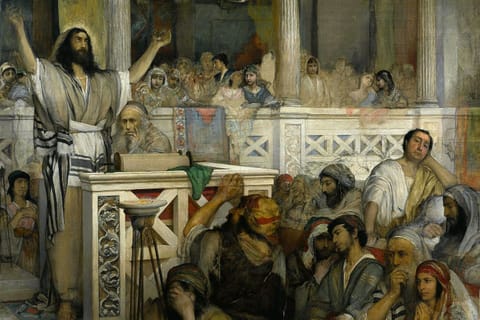
Jesus lived by the rhythm of the Jewish week and the Jewish year. Luke says that in Nazareth “he entered, as was his custom, into the synagogue on the Sabbath day,” and stood to read from the scroll of Isaiah (Luke 4:16). In Capernaum, “on the Sabbath day he entered into the synagogue and taught” (Mark 1:21).
He kept the festivals at the temple in Jerusalem. Luke says that “his parents went every year to Jerusalem at the feast of the Passover,” and that they took Jesus with them when he was twelve (Luke 2:41–42). John places Jesus in the temple at “the Feast of the Dedication,” which Jews today call Hanukkah (John 10:22–23). His last supper with his disciples took place at Passover (Mark 14:12), and Christians remember that Passover meal every time they gather for Holy Communion.
Jesus wore on his cloak the fringes the Torah commanded (Matthew 9:20; Numbers 15:38–39). His disciples called him “Rabbi” (Mark 9:5), and he spoke Aramaic, the everyday language of Jews in Galilee. On the cross he prayed from the prayer book of his own people, speaking the opening words of Psalm 22 in Aramaic: “Eloi, Eloi, lama sabachthani?” (Mark 15:34).
When a scribe asked which commandment came first, Jesus answered with the Shema, the daily confession of Jewish faith from Deuteronomy 6, and joined it to Leviticus 19:18:
Jesus answered, “The first is, ‘Hear, O Israel: the Lord our God, the Lord is one; you shall love the Lord your God with all your heart and with all your soul and with all your mind and with all your strength.’ The second is this, ‘You shall love your neighbor as yourself.’ There is no other commandment greater than these.”
Mark 12:29–31, NRSVUE
Jesus’ arguments with Pharisees and scribes were arguments among Jews about how best to keep God’s law, the kind of debate Jewish teachers have always held. The Talmud tells of the sage Hillel, who lived shortly before Jesus, summing up the Torah for an inquirer: “That which is hateful to you do not do to another; that is the entire Torah, and the rest is its interpretation. Go study.” Jesus said of his own teaching, “Don’t think that I came to destroy the law or the prophets. I didn’t come to destroy, but to fulfill” (Matthew 5:17). See What is the greatest commandment?
Did Jesus come to start a new religion?
Jesus gave his ministry to his own people. In Matthew he says, “I wasn’t sent to anyone but the lost sheep of the house of Israel” (Matthew 15:24). His twelve disciples were Jews, and the first church in Jerusalem was made up of Jews who worshiped at the temple and confessed Jesus as Israel’s Messiah.
Paul never stopped calling himself a Jew. “For I also am an Israelite, a descendant of Abraham, of the tribe of Benjamin,” he writes, and he insists that “God didn’t reject his people” (Romans 11:1–2). As more gentiles joined the church, and especially after the Romans destroyed the temple in 70 CE, the church and the synagogue gradually became separate communities. Historians debate how long that parting took. Christians and Jews still share the same Psalms, the same Ten Commandments, and the same hope in the faithfulness of God.
Why does it matter that Jesus was Jewish?
Remembering that Jesus was a Jew keeps Christians from reading the Gospels as a story of Christianity against Judaism. Paul asks gentile Christians to remember with humility where their faith came from: “remember that it is not you who support the root, but the root supports you” (Romans 11:18).
The church has often forgotten that warning, and Jewish people have suffered terribly for it. In 1543 Martin Luther wrote On the Jews and Their Lies, which urged that synagogues and Jewish schools be burned. In 1939, eleven German Protestant churches set up an institute in Eisenach to remove Jewish influence from German church life, and its scholars presented Jesus as a non-Jew. The historian Susannah Heschel tells that story in The Aryan Jesus (2008). Denying Jesus’ Jewishness has repeatedly gone hand in hand with contempt for Jews. That contempt is a sin against the God of Israel whom Jesus worshiped and against the neighbor he commanded his followers to love.
For Christians today, the better path is gratitude. Every time you pray a psalm, hear the Ten Commandments, or say “Amen,” you are speaking words that came to you through the Jewish people, the people of Jesus.
What do the mainline churches teach about Judaism?
The mainline churches have each spoken against the old Christian contempt for Jews, and several have affirmed God’s lasting faithfulness to the Jewish people. In its 1994 Declaration to the Jewish Community, the Evangelical Lutheran Church in America faced Luther’s anti-Jewish writings directly: “we reject this violent invective, and yet more do we express our deep and abiding sorrow over its tragic effects on subsequent generations.” In 1987 the Presbyterian Church (U.S.A.) called for “an acknowledgment by Christians that Jews are in covenant relationship with God” and for an end to “the teaching of contempt.”
The United Methodist Church’s guiding principles for Christian-Jewish relations say that “God is steadfastly faithful to the biblical covenant with the Jewish people.” The Episcopal Church’s General Convention adopted Guidelines for Christian-Jewish Relations in 1988, which call for careful teaching of New Testament passages that seem to cast all Jews in a bad light. All of these statements echo Paul, who wrote of his own people that “God didn’t reject his people, whom he foreknew” (Romans 11:2).
These churches teach Christians to honor Judaism as the living faith of the people from whom Jesus came. For the related question of responsibility for Jesus’ death, see Who killed Jesus?, and for what Jesus may have looked like as a Galilean Jew, see What did Jesus look like?
Many churches still close their worship with the blessing God gave to Aaron and his sons in the Torah, a blessing still spoken in synagogues. It is a fitting word to carry with you from this page:
The LORD bless you, and keep you. The LORD make his face to shine on you, and be gracious to you. The LORD lift up his face toward you, and give you peace.
Common questions
What religion was Jesus?
Jesus was a Jew who practiced the Judaism of first-century Galilee and Judea. He worshiped the God of Israel, read the Hebrew Scriptures, prayed in synagogues, and kept the festivals at the temple in Jerusalem. Christianity grew out of the movement of his Jewish followers after his death and resurrection.
What language did Jesus speak?
Jesus’ everyday language was Aramaic, a language closely related to Hebrew. Mark preserves some of his Aramaic words, such as “Talitha cumi,” meaning “Girl, I tell you, get up!” and his cry from the cross, “Eloi, Eloi, lama sabachthani?” He also read the Scriptures aloud in the synagogue.
Was Jesus a rabbi?
His disciples and others called him “Rabbi,” which John’s Gospel translates as “Teacher.” In the first century the word was a respectful title for a teacher of the Torah and did not yet mean the formally ordained office it later became. Jesus taught, debated the meaning of the law, and gathered students, as Jewish teachers did.
Did Jesus celebrate Hanukkah?
John’s Gospel says that Jesus was in the temple in Jerusalem during “the Feast of the Dedication” in winter. That festival is Hanukkah, which remembers the rededication of the temple in the second century BCE. John mentions Jesus at other Jewish festivals too, especially Passover.
Sources
- Galatians 4:4 (WEB)
- Luke 2:21–24, 41–42 (WEB)
- Luke 4:16–21 (WEB)
- Mark 12:28–31 (WEB)
- Romans 9:4–5 and 11:1–2, 18 (WEB)
- Babylonian Talmud, Shabbat 31a (William Davidson edition), Sefaria
- A Declaration of the ELCA to the Jewish Community (1994)
- The Episcopal Church, 1988 Guidelines for Christian-Jewish Relations
- Susannah Heschel, The Aryan Jesus (Princeton University Press, 2008)
- Presbyterian Church (U.S.A.), A Theological Understanding of the Relationship between Christians and Jews (1987)
- United Methodist Book of Resolutions, Guiding Principles for Christian-Jewish Relations
_-_Head_of_Christ_-_Google_Art_Project.jpg)