Faith, works, and grace
Christians are saved by God’s grace, received through faith, and real faith always shows itself in works of love. Ephesians says, “by grace you have been saved through faith… not the result of works,” and James says, “faith apart from works is dead.” The Joint Declaration on the Doctrine of Justification, now affirmed by Lutheran, Methodist, Anglican, and Reformed churches worldwide, confesses that sinners are accepted by God “by grace alone” and called to good works.
For in Christ Jesus neither circumcision nor uncircumcision counts for anything; the only thing that counts is faith working through love.
Galatians 5:6, NRSVUE
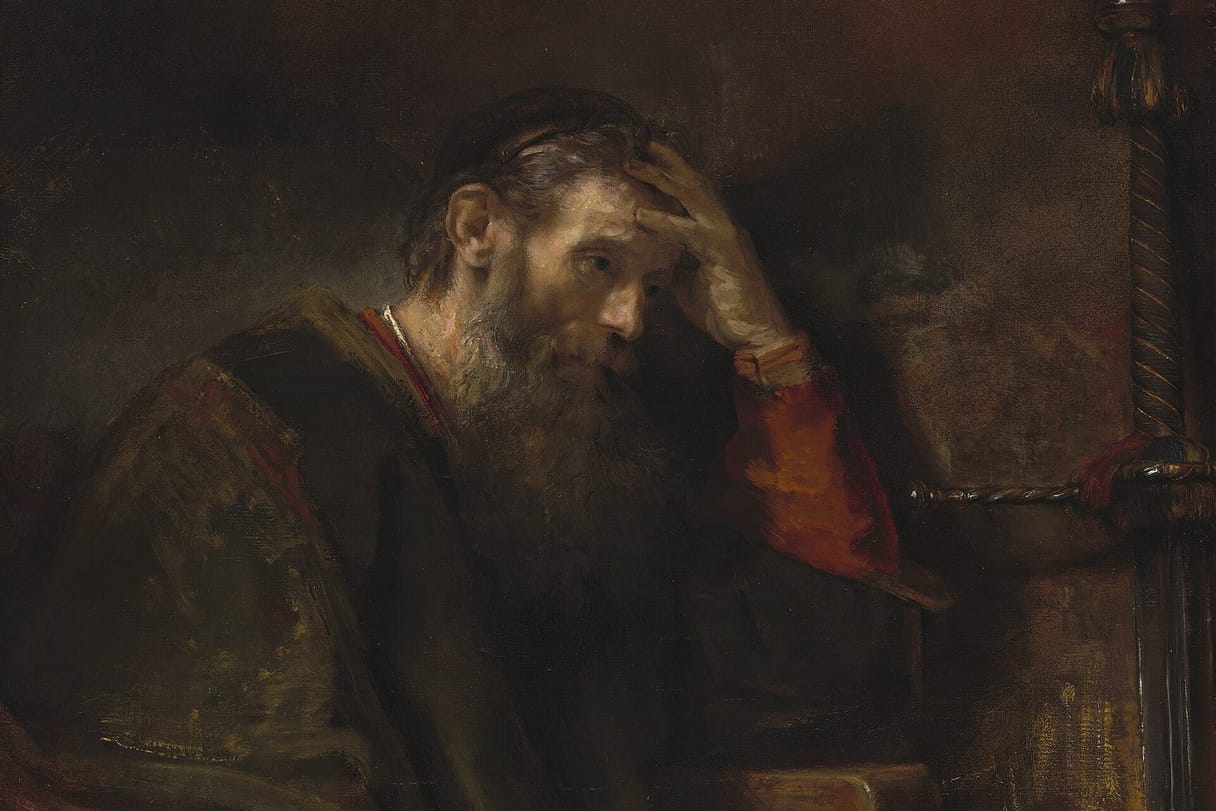
Christians are saved by God’s grace, received through faith, and real faith always shows itself in works of love. Many people ask this question because they are worried. They wonder whether they have prayed enough, believed enough, or done enough good for God to accept them, or they have been taught that one wrong step could undo everything. The New Testament answers that worry with good news: God’s love comes first. “We love him, because he first loved us” (1 John 4:19), and every good thing you do grows out of a love you have already been given.
What does the Bible say about grace and faith?
The best-loved text is in the Letter to the Ephesians:
For by grace you have been saved through faith, and this is not your own doing; it is the gift of God— not the result of works, so that no one may boast. For we are what he has made us, created in Christ Jesus for good works, which God prepared beforehand so that we may walk in them.
Ephesians 2:8–10, NRSVUE
The passage holds both truths together. Salvation is God’s gift, and no one earns it. And God saves people so that they can walk in the good works God has already prepared for them.
Paul makes the same argument in Romans: “We maintain therefore that a man is justified by faith apart from the works of the law” (Romans 3:28). To be “justified” means to be set right with God. Paul points to Abraham, who “believed God, and it was accounted to him for righteousness” (Romans 4:3).
Many scholars note that the “works of the law” Paul has in mind are especially the commandments that marked out the Jewish people, such as circumcision and the food laws. Paul’s fight in Romans and Galatians was over whether Gentile believers had to become Jews to belong to Christ. His answer was no. God welcomes Jews and Gentiles alike through faith, and no one has to earn a place at the table.
What does James say?
The Letter of James can sound like it says the opposite:
What good is it, my brothers and sisters, if someone claims to have faith but does not have works? Surely that faith cannot save, can it? If a brother or sister is naked and lacks daily food and one of you says to them, “Go in peace; keep warm and eat your fill,” and yet you do not supply their bodily needs, what is the good of that?
James 2:14–16, NRSVUE
James concludes, “You see then that by works a man is justified, and not only by faith” (James 2:24), and “as the body apart from the spirit is dead, even so faith apart from works is dead” (James 2:26).
James is warning against a faith that consists only of words. He notes that “the demons also believe—and shudder” (James 2:19). Both James and Paul have in mind something deeper than agreeing that God exists: a trust in God that changes how a person treats the hungry neighbor at the door.
Do Paul and James contradict each other?
Most Christian teachers through the centuries have said no, because the two writers use the same words for different things. When Paul says “works,” he means keeping the law as a way of earning or proving one’s place with God. When James says “works,” he means acts of love, such as feeding the hungry. When James denies that a person is justified “only by faith,” he means faith as bare belief; when Paul praises faith, he means a living trust in God.
Paul himself gathers it all into a single phrase: “the only thing that counts is faith working through love” (Galatians 5:6). Faith is the root, and love is the fruit.
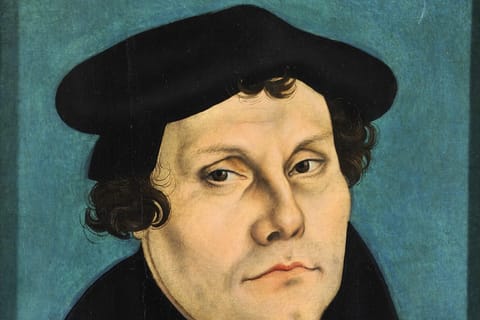
Martin Luther, who led the Reformation’s defense of justification by faith, had little patience with the Letter of James and once called it “an epistle of straw.” Yet Luther also wrote, in his 1522 preface to Romans, “What a living, creative, active powerful thing is faith! It is impossible that faith ever stop doing good.” In his German translation of Romans 3:28, Luther added the word allein, “alone,” which does not appear in the Greek.
What was the Reformation argument about?
In the sixteenth century, Luther and other reformers accused the late medieval church of teaching people to earn God’s favor through penances, indulgences, and pious works. They insisted that God accepts sinners freely, for Christ’s sake. The Augsburg Confession of 1530, which the ELCA holds, teaches that people cannot be justified by their own strength, merits, or works, and that they are justified freely for Christ’s sake through faith (Article IV). It adds that this faith is bound to bring forth good fruits (Article VI).
The Church of England’s Thirty-Nine Articles state that “we are justified by Faith only” and call this “a most wholesome Doctrine, and very full of comfort” (Article XI). The next article adds that good works “are the fruits of Faith” and “spring out necessarily of a true and lively Faith” (Article XII). The United Methodist Church’s Articles of Religion say the same (Articles IX and X), and the Heidelberg Catechism, part of the PC(USA)’s Book of Confessions, says that people grafted into Christ by true faith cannot fail to bear fruits of gratitude (Question 64).
Both sides of the Reformation issued formal condemnations of each other’s teaching. Centuries later, patient dialogue found that the two sides agreed on more than either had thought.
The Eastern Orthodox churches were never part of this Western argument, and they frame the question in their own way. Orthodox theology describes salvation above all as healing and union with God, which the Greek Fathers called theosis, sharing in God’s own life. Athanasius of Alexandria put it in one line: Christ “was made man that we might be made God” (On the Incarnation 54), echoing the promise that believers “may become partakers of the divine nature” (2 Peter 1:4). In that picture grace always comes first, and human beings respond by working with it, a cooperation Orthodox theology calls synergy, from Paul’s word for “fellow workers” (synergoi) in 1 Corinthians 3:9. Paul holds both sides together: “work out your own salvation with fear and trembling. For it is God who works in you” (Philippians 2:12–13).
What is the Joint Declaration on the Doctrine of Justification?
On October 31, 1999, Reformation Day, the Lutheran World Federation, to which the ELCA belongs, signed the Joint Declaration on the Doctrine of Justification with the Roman Catholic Church in Augsburg, Germany. Its central sentence reads:
“Together we confess: By grace alone, in faith in Christ’s saving work and not because of any merit on our part, we are accepted by God and receive the Holy Spirit, who renews our hearts while equipping and calling us to good works” (section 15).
On works, the declaration says: “We confess together that good works – a Christian life lived in faith, hope and love – follow justification and are its fruits” (section 37). The signers declared that the sixteenth-century condemnations on both sides do not apply to the teaching set out in the declaration (section 41). The World Methodist Council voted to adopt the declaration in 2006. The Anglican Consultative Council welcomed and affirmed its substance in 2016, and the World Communion of Reformed Churches formally associated itself with it in 2017. For more on the remaining differences, see What is the difference between Catholics and Protestants?
What does this mean for how I live?
You do not have to earn God’s love, and you cannot. Paul says that believers are “justified freely by his grace” (Romans 3:24), and grace means exactly that: God’s favor, given without being earned. If you have spent years trying to prove yourself to God, you can lay that burden down and rest in the gift. See What does it mean to be saved?
That same grace sends you out to love. Jesus said, “If you love me, keep my commandments” (John 14:15), and his commandments are to love God and to love your neighbor as yourself. In Jesus’s parable of the last judgment, the king says to those who fed the hungry and visited the prisoner, “because you did it to one of the least of these my brothers, you did it to me” (Matthew 25:40). Good works are how gratitude looks in practice, and they are also one of the places where you meet Christ. For the commandment that sums up the rest, see What is the greatest commandment?
Augustine of Hippo, whom the Western church remembers as a great teacher of grace, prayed in his Confessions for God to supply the very goodness God asks of us: “And my whole hope is only in Your exceeding great mercy. Give what You command, and command what You will” (Confessions 10.29.40). Faith begins there, in trusting God for everything, including the strength to love.
Common questions
What does “faith without works is dead” mean?
James 2:26 means that living faith shows itself in action. James gives the example of telling a hungry, poorly clothed person “Go in peace; keep warm and eat your fill” without helping (James 2:16). Faith that trusts God moves a person to love their neighbor.
What do Orthodox Christians believe about faith and works?
The Eastern Orthodox churches were never part of the Reformation argument. They describe salvation as healing and union with God, called theosis, which begins and ends in God’s grace, and they speak of human beings cooperating with that grace, which no one can earn. Paul’s words in Philippians 2:12–13, “work out your own salvation with fear and trembling. For it is God who works in you,” hold both sides together.
Did Martin Luther add the word “alone” to the Bible?
In his German translation of Romans 3:28, Luther added the word allein (“alone”), which is not in the Greek. He argued that German idiom and Paul’s meaning required it. The 2017 revision of the Luther Bible keeps the word but adds a footnote giving the literal wording.
If I am saved by grace, do good works matter?
Yes. Ephesians says that we are “created in Christ Jesus for good works” (Ephesians 2:10), and Jesus’s parable of the last judgment turns on whether people fed the hungry and welcomed the stranger (Matthew 25:31–46). God’s love comes first, and good works are the fruit it bears in believers.
Sources
- Ephesians 2:8–10 (WEB)
- James 2:14–26 (WEB)
- Galatians 5:6 (WEB)
- Romans 3:21–28 (WEB)
- Joint Declaration on the Doctrine of Justification (1999), sections 15–17
- Joint Declaration on the Doctrine of Justification (1999), sections 37–39
- Lutheran World Federation, “Churches mark JDDJ anniversary on Reformation Day” (2019)
- Martin Luther, Preface to the Letter of St. Paul to the Romans (1522), trans. Andrew Thornton
- Thirty-Nine Articles of Religion XI–XII (Book of Common Prayer, Historical Documents)
- The United Methodist Church, Articles of Religion IX–X
- Augsburg Confession, Article IV: Of Justification (BookOfConcord.org)
- PC(USA), The Book of Confessions (2016), Heidelberg Catechism
- Athanasius, On the Incarnation of the Word, section 54 (New Advent)
- Augustine, Confessions, Book X (New Advent)
- Philippians 2:12–13 and 2 Peter 1:4 (WEB)


,_The_Apostle_Paul,_c._1657,_NGA_1198.jpg)