Operation Reformation
Operation Reformation, first called Operation Reconquista, is an online movement founded in 2023 that urges young theological conservatives to join mainline churches and steer them back toward conservative teaching. The mainline churches welcome everyone who comes to worship, conservatives included, and they already confess the Resurrection and the divinity of Christ in the creeds every Sunday. New members can also expect a warm invitation to join the property committee.
Every few years someone announces a plan to save the mainline churches, and every few years the mainline churches respond the way they respond to everything: with coffee hour, a committee, and a three-year study process. The newest plan arrived in 2023, carried by a generation that grew up on Discord, and it took its first name from medieval Spain.
What is Operation Reformation?
Operation Reformation, first known as Operation Reconquista, is an online movement founded in 2023 by the YouTuber known as Redeemed Zoomer. Wikipedia describes it as “a Confessing Movement organization aimed at preserving theologically conservative congregations within mainline Protestant Christian denominations,” whose goal is “restoring them to theological conservatism, rather than founding more conservative splinter groups.” It gathers mostly on a Discord server, which had about 15,000 members in May 2026, according to the same article.
The first name came from the Reconquista, the centuries of war in which Christian kingdoms took the Iberian Peninsula from Muslim rulers, ending with the fall of Granada in 1492. Naming a church renewal campaign after a crusading war raised some eyebrows. The movement explained that its spirit was “more Ezra and Nehemiah and less Joshua,” as Baptist News Global reported. It now goes by Operation Reformation, a name with noticeably fewer cavalry charges in it.
What does the movement want?
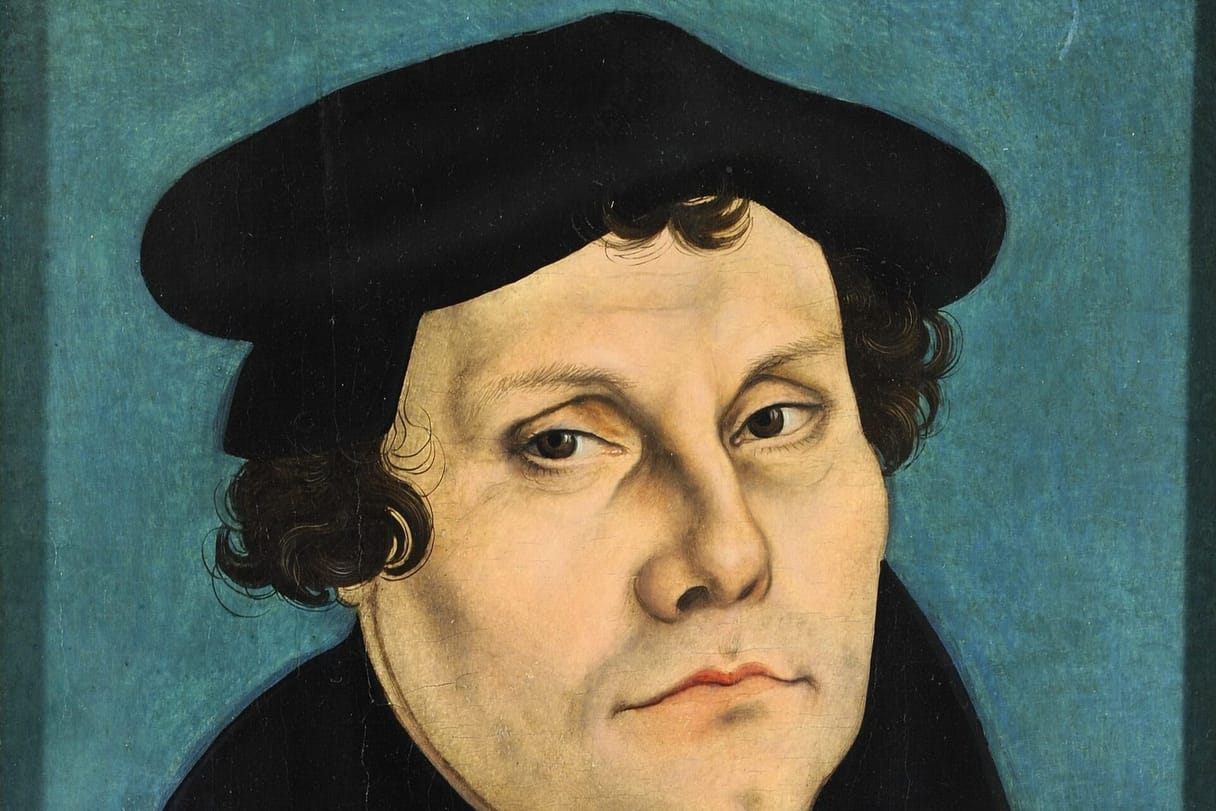
On Reformation Day in 2023, members published their own “95 theses” for seven mainline denominations, in honor of the ninety-five theses Martin Luther wrote in 1517. The American Baptist group, in a spirit of Baptist modesty, produced 9.5. Each denomination got an affiliated group with a name:
- Young Methodists for Tradition, in the United Methodist Church
- SOLA, in the Evangelical Lutheran Church in America
- Presbyterians for the Kingdom, in the Presbyterian Church (U.S.A.)
- American Baptists for Christ, in the American Baptist Churches USA
- Reformed Revivalists in America, in the Reformed Church in America
- an Episcopal group with its own 95 theses
- the Puritans of the UCC, in the United Church of Christ
The last name deserves a moment. The United Church of Christ descends in large part from the Congregational churches of New England, which is to say from the Puritans. Founding a group called Puritans of the UCC is a little like founding the Italians of Rome.
According to Christianity Today, the theses called on the churches to reaffirm the Resurrection, the divinity of Jesus, and the authority of Scripture. Members delivered them in person, by mail, and by email, and one young Episcopalian in Denver visited sixty churches on foot, in the snow, which is more parish visitation than some deans manage in a year. Presbyterians for the Kingdom later sent representatives to the 2024 General Assembly of the PC(USA).
Good news for the reformers
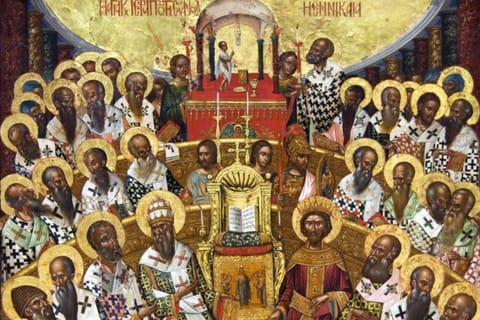
The movement asks the mainline churches to confess the Resurrection and the divinity of Christ. Those churches already do, out loud, nearly every Sunday. The Episcopal Book of Common Prayer, the ELCA’s Evangelical Lutheran Worship, the United Methodist Hymnal, and the Presbyterian Book of Confessions all contain the Nicene Creed and the Apostles’ Creed, which confess that Jesus is “God from God, Light from Light, true God from true God” and that “on the third day he rose again.” Part of the mission was accomplished in the fourth century.
Luther’s own theses were aimed at the sale of indulgences, payments that were said to shorten a soul’s time in purgatory. The mainline churches do not sell indulgences. Their nearest equivalent is the annual stewardship campaign, and no one in five hundred years has felt moved to nail anything to that.
There is a deeper irony too. The Reformation broke with the church authorities of its day, put the Bible into the common language, and let pastors marry. The mainline churches are its direct heirs, and they took one of its mottoes to heart: ecclesia semper reformanda, “the church always being reformed.” Reform is the family business. It just keeps happening.
A short guide to mainline church politics
Mainline churches change their teaching through elected assemblies that meet on a schedule set by their constitutions. The PC(USA) General Assembly meets every two years. The Episcopal General Convention and the ELCA Churchwide Assembly meet every three. The United Methodist General Conference meets every four. A would-be reformer has to join a congregation, get elected to its council or session, then to the synod, diocese, conference, or presbytery, then to the national assembly, and then win a majority there. In the PC(USA), a change to the constitution must also be ratified by a majority of the presbyteries.
The changes that Operation Reformation opposes were made this way, and they took a long time. The PC(USA) argued about ordaining gay and lesbian people from the late 1970s until the presbyteries ratified a change in 2011. So welcome to the long game. Bring snacks, and a folding chair.
The legal strategy
In a 2025 interview, one pastor allied with the movement suggested that some past donations to mainline churches “need to be clawed back,” and that sympathetic state attorneys general might take action against the churches. The editors of Juicy Ecumenism, the blog of the conservative Institute on Religion and Democracy, added a note that this was “very unlikely.” When the Institute on Religion and Democracy thinks a plan to take on the mainline is a long shot, it may be time to try the casserole strategy instead.
You are welcome here
Behind the jokes is a real gift. Mainline congregations have prayed for decades that young people would come through their doors, and some of the young people now coming love exactly what those churches have kept: the creeds, the sacraments, the hymns, the prayer book, the long memory of the church. They will find those things waiting for them. They will also find women priests, gay deacons, and a retired schoolteacher who has run the food pantry since 1979 and will have them stacking cans within the hour. A church is people who disagree, kneeling at the same rail and passing the same peace.
Augustine taught that any reading of Scripture that does not build up the love of God and neighbor has not yet understood it. The same test applies to church reform, whichever direction it comes from. Every reformer who comes in that spirit will be welcome, and the Spirit has a long habit of reforming the reformers too.
Common questions
Is Operation Reformation the same as Operation Reconquista?
Yes. The movement began in 2023 as Operation Reconquista and now calls itself Operation Reformation.
Who started Operation Reformation?
It was founded in 2023 by the YouTuber known as Redeemed Zoomer, who argues that conservatives should stay in the mainline denominations and work to change them instead of leaving.
Can theological conservatives join a mainline church?
Anyone can. Every mainline church receives new members through baptism or a profession or reaffirmation of faith, and members take part in the life and governance of the congregation according to each church's rules. The coffee is free, and the potluck sign-up sheet is already on the bulletin board.
Is Operation Reformation trying to split the churches?
Its stated aim is the opposite: to stay. Earlier conservative movements left to form new bodies, such as the Anglican Church in North America in 2009 and the Global Methodist Church in 2022. Operation Reformation asks young conservatives to remain in the mainline denominations and work within them.
Sources
- Patrick Miller, “Meet the Zoomers Who Want to Be Martin Luther,” Christianity Today (November 2023)
- Mark Wingfield, “Operation Reconquista aims to return mainline churches to ‘orthodoxy,’” Baptist News Global (November 13, 2023)
- Rafa Albolote, “Reconquista and a Subverted Mainline,” Juicy Ecumenism (November 5, 2025)
- “Redeemed Zoomer,” Wikipedia
.jpg)