What Methodists, Lutherans, Presbyterians, and Episcopalians believe about transgender people
The United Methodist Church, the ELCA, the Presbyterian Church (U.S.A.), and the Episcopal Church all oppose discrimination against transgender people, and transgender Christians have served as clergy in several of them. The Episcopal Church’s canons protect access to ordination regardless of gender identity, and it has approved a service for taking a new name. The PC(USA) added gender identity to its constitution in 2025, and the Methodists and Lutherans have affirmed equal rights regardless of gender identity.
Don’t be afraid, for I have redeemed you. I have called you by your name. You are mine.
People search for what a church teaches about transgender people for many reasons. You may be trans or nonbinary and wondering whether a church would welcome you by your name. You may be the parent of a child who has just come out, or a pastor looking for guidance. Behind every version of the question is the same hope: to know whether there is a place for you, or for someone you love, in the household of God.
The United Methodist, Lutheran, Presbyterian, and Episcopal churches have each opposed discrimination against transgender people. Their statements differ in how far they go, and on this subject several of them have said less than they have about marriage or ordination.
| Church | Position in brief | Key statement and year |
|---|---|---|
| United Methodist Church | Supports equal rights regardless of gender identity; a transgender pastor kept his appointment | Judicial Council ruling (2007); Social Principles (revised 2024) |
| Evangelical Lutheran Church in America | Opposes discrimination based on gender identity; members hold differing views | Churchwide Assembly resolution (2013); Faith, Sexism, and Justice (2019) |
| Presbyterian Church (U.S.A.) | Commits to “the full welcome, acceptance, and inclusion of transgender people” | General Assembly (2018); Amendment 24-A (2025) |
| Episcopal Church | Canons protect access to ministry regardless of gender identity; a service for a new name | General Convention resolutions 2012-D002, 2012-D019, 2018-A218, and 2018-C022 |
| United Church of Christ | Affirms the participation and ministry of transgender people | General Synod resolution (2003) |
| Christian Church (Disciples of Christ) | Affirms the gifts of all Christians regardless of gender identity | General Assembly resolution GA-1327 (2013) |
| American Baptist Churches USA | No churchwide statement | None |
What do Methodists believe about transgender people?
The United Methodist Church, the largest mainline Methodist church in the United States, addresses gender identity in its Social Principles, revised in 2024. Under the heading “Sexual Orientations and Gender Identities,” they say, “Because all people are of sacred worth and certain basic human rights are due to everyone, we are committed to supporting the equal rights, liberties and protections of all people, regardless of sexual orientation or gender identity.” Elsewhere they reject “within the church and wider society any act of discrimination, hatred or violence” based on gender identity, among other characteristics.
In 2007 the church’s Judicial Council, its highest court, ruled that the Rev. Drew Phoenix, a transgender pastor in Baltimore, could remain in his appointment after his transition. The council noted that “No law in the church’s Book of Discipline prohibits” people who have changed their gender from serving as clergy.
What do Lutherans believe about transgender people?
The Evangelical Lutheran Church in America, the largest Lutheran church in the United States, has no social statement devoted to gender identity. Its 2009 statement Human Sexuality: Gift and Trust says that “this church must work toward greater understanding of sexual orientation and gender identity.” In 2013 the Churchwide Assembly adopted a resolution on gender identity discrimination, which directs the presiding bishop to support public actions that prohibit “employment discrimination on the basis of actual or perceived sexual orientation or gender identity.”
The ELCA’s 2019 social statement Faith, Sexism, and Justice reads Galatians 3:28 to mean that “‘male and female’ do not limit the gender identity of those joined to and in Christ.” It acknowledges that “members may hold differing views on matters related to sexual orientation or gender identity,” and it says the church is nevertheless united in opposing discrimination. In 2021 the Sierra Pacific Synod elected Megan Rohrer as the first openly transgender bishop of a major American denomination. Rohrer resigned in 2022 at the request of the presiding bishop.
What do Presbyterians believe about transgender people?
The Presbyterian Church (U.S.A.), the largest Presbyterian church in the United States, acted at its 2018 General Assembly, which approved an overture committing the church to “the full welcome, acceptance, and inclusion of transgender people.” In 2025 a majority of presbyteries ratified Amendment 24-A, which added “sexual orientation” and “gender identity” to the section of the church’s constitution that rules out discrimination in the church’s life. The change took effect in July 2025, and it marks the first time the PC(USA) constitution has named LGBTQ people. See does God have a gender?
What do Episcopalians believe about transgender people?
The Episcopal Church, the American member of the worldwide Anglican Communion, has addressed gender identity in its church law, its worship, and its public witness. In 2009 its General Convention supported laws that prohibit discrimination based on “gender identity or the expression of one’s gender identity.” Since 2012 its canons have forbidden denying anyone an equal place in the church’s life, or access to the process of discernment for ordination, because of “gender identity and expression.”
In 2018 the Convention approved “A Service of Renaming” for use “when an event or experience leads a baptized person to take or to be given a new name,” with pronouns adapted “to the preference of the person receiving or claiming the new name.” It asked the church’s archives to write guidelines for changing names and gender in church records, and it resolved to oppose laws restricting restroom and locker room access for transgender people.
What do the United Church of Christ, the Disciples of Christ, and American Baptists believe?
The United Church of Christ adopted a General Synod resolution in 2003 titled “Affirming the Participation and Ministry of Transgender People within the United Church of Christ and Supporting their Civil and Human Rights.” In 2019 its General Synod asked for bylaws that include nonbinary gender language.
The Christian Church (Disciples of Christ) affirmed at its 2013 General Assembly “the faith, baptism and spiritual gifts of all Christians regardless of their sexual orientation or gender identity.”
American Baptist Churches USA has no policy statement or resolution about transgender people among its published statements, and its congregations govern themselves.
What Scripture and tradition do these churches draw on?
The verse most often quoted against transgender people is Genesis 1:27, which ends “male and female he created them.” Traditional Christians read it as fixing two sexes at birth, out of reverence for the created order. The verse’s first claim is that every human being is created in God’s image, and transgender people bear that image as fully as anyone. The ELCA’s 2019 statement points to Paul’s words about baptism:
For as many of you as were baptized into Christ have put on Christ. There is neither Jew nor Greek, there is neither slave nor free man, there is neither male nor female; for you are all one in Christ Jesus.
The Bible has no word for transgender people. Its nearest parallel is the eunuch, whose body did not fit what the ancient world expected of a man. The law of Moses shut eunuchs out of the assembly (Deuteronomy 23:1), and the prophet reversed that exclusion:
For the LORD says, “To the eunuchs who keep my Sabbaths, choose the things that please me, and hold fast to my covenant, I will give them in my house and within my walls a memorial and a name better than of sons and of daughters. I will give them an everlasting name that will not be cut off.
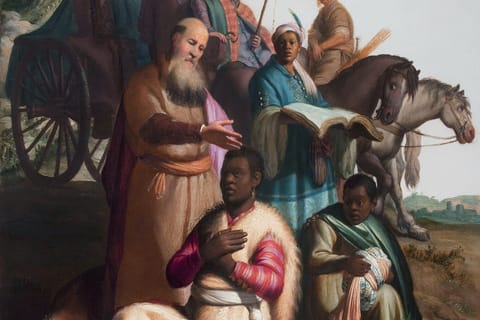
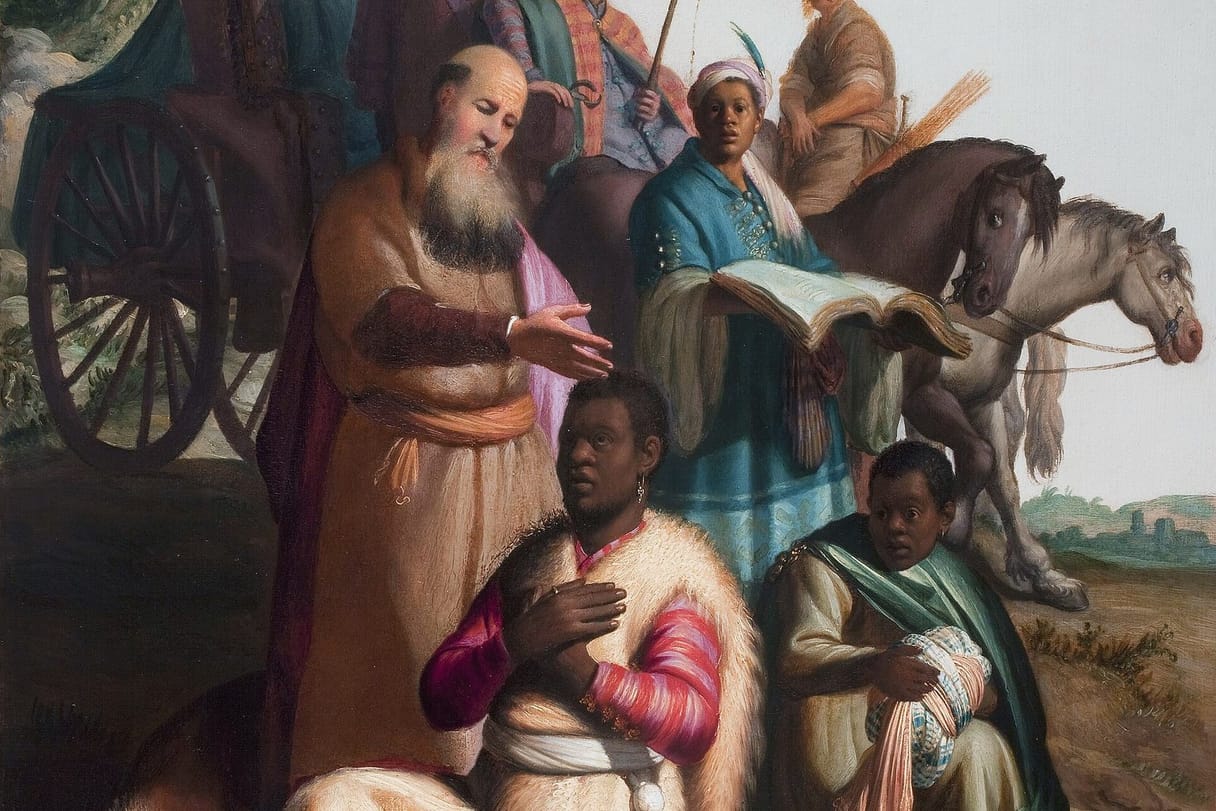
In Acts 8 an Ethiopian eunuch asks Philip, “What is keeping me from being baptized?” (Acts 8:36), and nothing does. For the full discussion, see is it a sin to be transgender?
Called by name
Scripture is full of new names: Abram becomes Abraham, Jacob becomes Israel, Simon becomes Peter. Through the prophet Isaiah, God says to his people, “Don’t be afraid, for I have redeemed you. I have called you by your name. You are mine” (Isaiah 43:1). If you are trans or nonbinary, God knows the name you answer to and loves the person who answers. See does God love me? If you are in crisis, call or text 988 in the United States.
Common questions
Can transgender people be pastors in the United Methodist Church?
In 2007 the United Methodist Judicial Council, the church’s highest court, ruled that the Rev. Drew Phoenix, a transgender pastor in Baltimore, could remain in his appointment. The council noted that no law in the Book of Discipline prohibits people who have changed their gender from serving as clergy. The 2024 Social Principles commit the church to equal rights regardless of gender identity.
Does the Episcopal Church accept transgender people?
Yes. Since 2012 the Episcopal Church’s canons have forbidden denying anyone an equal place in the church’s life, or access to the process for ordination, because of gender identity and expression. In 2018 the General Convention approved A Service of Renaming and asked the church’s archives to write guidelines for changing names and gender in church records.
Has there been a transgender bishop?
In 2021 the ELCA’s Sierra Pacific Synod elected Megan Rohrer as bishop, the first openly transgender person to lead a synod or diocese of a major American denomination. Rohrer resigned in 2022 at the request of the ELCA’s presiding bishop.
What do American Baptists teach about transgender people?
American Baptist Churches USA has no policy statement or resolution about transgender people among its published statements. Its congregations govern themselves, and their practice varies.
Sources
- Genesis 1:27 (WEB)
- Isaiah 56:4–5 (WEB)
- Acts 8:36 (WEB)
- Galatians 3:27–28 (WEB)
- Isaiah 43:1 (WEB)
- United Methodist Social Principles (2024): The Political Community, I. Sexual Orientations and Gender Identities
- Court says transgender UMC pastor may stay (Christian Century, 2007)
- ELCA social statement, Human Sexuality: Gift and Trust (2009)
- ELCA statement on gender identity discrimination (Living Lutheran, 2017)
- ELCA social statement, Faith, Sexism, and Justice: A Call to Action (2019)
- Megan Rohrer (Wikipedia)
- Our Christmas prayer for 2018 (PC(USA) Office of Public Witness), on General Assembly overture 11-12
- A new day for LGBTQIA people in the church: General Assembly unanimously approves overtures (Covenant Network, 2018)
- PC(USA) adds sexual orientation and gender identity to its constitution (Christian Century, 2025)
- Episcopal General Convention Resolution 2009-D012, Support Laws that Prohibit Discrimination Based on Gender Identity
- Episcopal General Convention Resolution 2012-D002, Amend Canon III.1.2
- Episcopal General Convention Resolution 2012-D019, Amend Canon I.17.5
- Episcopal General Convention Resolution 2018-A088, Develop Guidelines for Amending Name and Gender in Church Records
- Episcopal General Convention Resolution 2018-A218, Approve Services from the Proposed Book of Occasional Services
- TransEpiscopal: Renaming service
- Episcopal General Convention Resolution 2018-C022, Support End of Discrimination Against Transgender and Non-Binary People
- UCC: Social policy statements on LGBT concerns
- GA-1327, Becoming a People of Grace and Welcome to All (Disciples of Christ General Assembly, 2013)
- ABCUSA: Policy statements and resolutions