What Methodists, Lutherans, Presbyterians, and Episcopalians believe about divorce
The United Methodist Church, the Evangelical Lutheran Church in America, the Presbyterian Church (U.S.A.), and the Episcopal Church all teach that marriage is meant to last for life, and all allow divorced people to marry again in church. The Methodist and Lutheran statements describe divorce as a sad but sometimes necessary end to a marriage that cannot be saved. The churches differ mainly in procedure: an Episcopal priest, for example, needs the bishop’s consent.
He heals the broken in heart, and binds up their wounds.
If you are divorced, or your marriage is ending, you may wonder whether your church will still welcome you and whether you could ever marry again before God. The mainline churches answer with mercy. The United Methodist Church, the Evangelical Lutheran Church in America (ELCA), the Presbyterian Church (U.S.A.), and the Episcopal Church all teach that marriage is meant to last for life, and all of them allow divorced people to marry again in church.
Their teaching holds two convictions together. Jesus said that what God has joined, no one should separate, and these churches take his words seriously. They also know that some marriages die through betrayal, cruelty, abandonment, or a long loss of trust, and that a person whose marriage has ended still belongs to God.
| Church | Position in brief | Key statement and year |
|---|---|---|
| United Methodist Church | Divorce can be a “regrettable but necessary alternative”; remarriage is allowed; divorced people may serve as clergy | Social Principles, revised 2024 |
| Evangelical Lutheran Church in America | Divorce is never treated lightly but is sometimes necessary; those who remarry may do so “in joy and hope” | Human Sexuality: Gift and Trust (2009, revised 2025) |
| Presbyterian Church (U.S.A.) | The church may sanction the remarriage of divorced people; each minister decides about each wedding | Westminster Confession as revised, Book of Confessions; Book of Order W-4.06 (2025–2027) |
| Episcopal Church | Remarriage is allowed; the bishop must consent if a former spouse is living | Canon I.19, Constitution and Canons |
| United Church of Christ | Provides a worship service for the end of a marriage | Book of Worship (1986) |
| Christian Church (Disciples of Christ) | No churchwide statement on divorce | None |
| American Baptist Churches USA | Remarriage is “appropriate” when reconciliation is impossible | Policy Statement on Family Life (1984, last modified 2008) |
What do Methodists believe about divorce?
The United Methodist Church, the largest Methodist church in the United States, addresses divorce in its Social Principles, which its General Conference revised in 2024. The revised text calls marriage “a sacred, lifelong covenant.” It then speaks directly about marriages that fail: divorce “may become a regrettable but necessary alternative” when relationships “are strained beyond repair or become destructive,” or when spouses become “irrevocably estranged.”
The Social Principles urge couples in trouble to seek counseling and, if divorce becomes unavoidable, to carry it out in the way that does the least damage to every member of the family. They add that “fidelity to the marriage covenant does not require spouses to remain in a physically or mentally abusive relationship.”
On remarriage the statement is brief: “Divorce does not preclude remarriage.” The church also opposes efforts to withhold its ministries from divorced people or to deny them “opportunities for leadership in the church, whether clergy or lay.” As with every wedding, each United Methodist pastor decides whether to officiate.
What do Lutherans believe about divorce?
The Evangelical Lutheran Church in America (ELCA), the largest Lutheran church in the United States, speaks to divorce in its social statement Human Sexuality: Gift and Trust, adopted in 2009 and revised by its Churchwide Assembly in 2025. The statement recognizes that the trust on which a marriage rests can become “so deeply damaged or is so deeply flawed that the marriage itself must come to a legal end,” and it cites Jesus’ teaching on divorce in Matthew 19.
The ELCA says that it “does not treat divorce lightly, nor does it disregard the responsibilities of marriage.” It encourages people in troubled marriages to seek pastoral care, to be assured of God’s presence, forgiveness, and healing, and to remain in the communion of the church. It also calls the church to “find safe haven for all who are at risk within a marriage.”
For those who marry again, the statement offers a blessing. They “may be assured of the Gospel’s freedom, amid brokenness and forgiveness, to enter into their new responsibilities in joy and hope.”
What do Presbyterians believe about divorce?
The Presbyterian Church (U.S.A.), the largest Presbyterian church in the United States, keeps its teaching on divorce in the Westminster Confession, one of the twelve creeds and confessions in its Book of Confessions. The original confession of 1647 allowed divorce only for adultery or for desertion that could not be remedied. The two American Presbyterian churches that reunited in 1983 had each rewritten the chapter on marriage, and the PC(USA) prints both versions.
Both revisions take divorce seriously, and both open the way to a second marriage. One says that “the remarriage of divorced persons may be sanctioned by the church, in keeping with the redemptive gospel of Christ,” when “sufficient penitence for sin and failure is evident” and the couple shows a firm purpose of Christian marriage. The other allows remarriage after a divorce granted on grounds “explicitly stated in Scripture or implicit in the gospel of Christ.”
The church’s Book of Order describes marriage as a commitment “to love and support each other for the rest of their lives.” It leaves the decision about each wedding with the minister, who may agree to marry a couple only if they show “sufficient understanding of the nature of the marriage covenant.” No minister can be compelled to perform a marriage that he or she believes is contrary to the Word of God. For more on this church, see what do Presbyterians believe?
What do Episcopalians believe about divorce?
The Episcopal Church, the member of the worldwide Anglican Communion in the United States and several other countries, governs marriage through its canons, the church law passed by its General Convention. Under Canon I.19, a member whose earlier marriage has been legally ended may ask a priest to officiate at a new marriage. If a former spouse is still living, the priest must first receive the consent of the diocesan bishop.
The canon also asks the priest to make sure the couple understands that “continuing concern must be shown for the well-being of the former spouse, and of any children of the prior marriage.” The duties of love owed to a former family continue after a new marriage begins. As with every marriage, an Episcopal priest remains free to decline to officiate.
What do the United Church of Christ, the Disciples of Christ, and American Baptists believe?
American Baptist Churches USA addressed divorce in its Policy Statement on Family Life, adopted by its General Board in 1984 and last modified in 2008. The statement affirms that God intends marriage to be a “life-long” union and that God’s grace and forgiveness can heal those whose marriages end in divorce. It affirms that “in God’s grace remarriage for divorced Christians is appropriate where there is no possibility of reconciliation” and where the problems that ended the earlier marriage have been addressed.
The United Church of Christ’s Book of Worship (1986) includes a service called “Recognition of the End of a Marriage,” which one reviewer described as a service of confession. The Christian Church (Disciples of Christ) has not issued a churchwide statement on divorce.
What Scripture and tradition do these churches draw on?
Every one of these churches begins with Jesus’ answer to the Pharisees in Matthew 19, where he pointed back to creation:
So that they are no more two, but one flesh. What therefore God has joined together, don’t let man tear apart.
Jesus said that Moses allowed divorce “because of the hardness of your hearts” (Matthew 19:8), and that a man who divorces his wife and marries another “commits adultery against her” (Mark 10:11). Matthew’s Gospel records an exception for “sexual immorality” (Matthew 19:9). Some Christians read these sayings as a rule that forbids remarriage, and they hold that view out of reverence for Jesus’ words about the permanence of marriage.
The mainline churches read the same sayings as a defense of marriage and of wives, who in Jesus’ day could be sent away by their husbands. They also notice that Scripture itself applies Jesus’ teaching to new situations. Paul, after repeating the Lord’s command, gave a ruling for a believer whose unbelieving spouse leaves:
Yet if the unbeliever departs, let there be separation. The brother or the sister is not under bondage in such cases, but God has called us in peace.
The Law of Moses had already allowed a neglected wife to “go free without paying any money” (Exodus 21:10–11). The Methodist and Lutheran statements on abuse stand in that line, since neither requires anyone to stay in danger. For a fuller study of these passages, see is divorce a sin?
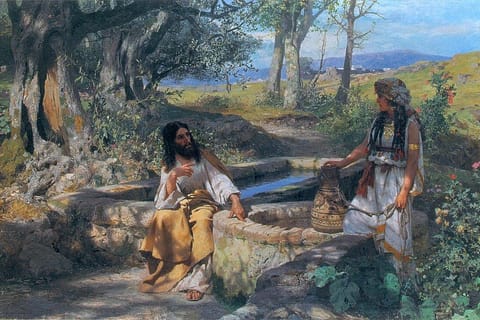
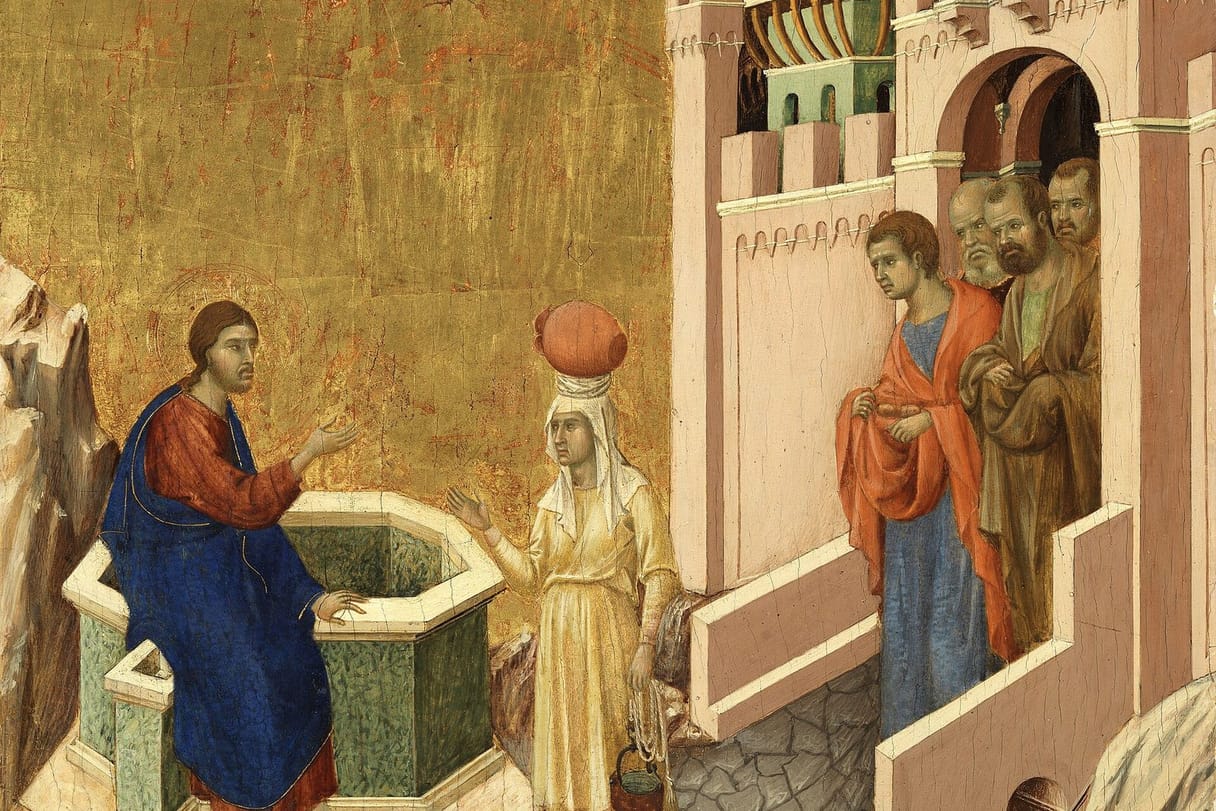
In the Gospel of John, Jesus meets a Samaritan woman at a well who has had five husbands (John 4:17–18). He speaks to her of living water, and many in her town come to believe in him “because of the word of the woman” (John 4:39). Her past did not keep her from becoming one of the first to bear witness to Christ.
Is there hope after divorce?
If your marriage has ended, bring all of it to God: the promises that were broken, the wrongs you did and the wrongs done to you, and the grief. God forgives what is confessed and heals what you cannot mend yourself. See will God forgive me?
He heals the broken in heart, and binds up their wounds.
Common questions
Can you get remarried in the Methodist church?
Yes. The United Methodist Church’s Social Principles, revised in 2024, say that “divorce does not preclude remarriage.” As with every wedding, each United Methodist pastor decides whether to officiate.
Can a divorced person be married in the Episcopal Church?
Yes. Under the Episcopal Church’s canons, a priest may officiate at the marriage of a divorced person, but if the former spouse is still living, the priest must first receive the diocesan bishop’s consent. The couple is also asked to show continuing concern for the former spouse and for any children of the earlier marriage.
Do Lutherans allow divorce?
The Evangelical Lutheran Church in America teaches that divorce must never be treated lightly, but that sometimes the trust on which a marriage rests is so badly damaged that the marriage must legally end. The ELCA promises pastoral care to people who are separated or divorced and says that those who remarry may begin their new marriage in joy and hope.
Do Presbyterians allow remarriage after divorce?
Yes. The Westminster Confession, as revised by the American Presbyterian churches and kept in the PC(USA)’s Book of Confessions, says the church may sanction the remarriage of divorced persons when there is real repentance and a firm purpose of Christian marriage. The minister decides whether to officiate at each wedding.
Can a divorced Methodist be a pastor?
Yes. The United Methodist Church’s 2024 Social Principles say the church does not support efforts to deny divorced people “opportunities for leadership in the church, whether clergy or lay.”
Sources
- Matthew 19:3–9 (WEB)
- Mark 10:2–12 (WEB)
- 1 Corinthians 7:15 (WEB)
- Exodus 21:10–11 (WEB)
- John 4:7–42 (WEB)
- Psalm 147:3 (WEB)
- United Methodist Church, Social Principles: The Social Community (Book of Discipline 2020/2024)
- ELCA, Human Sexuality: Gift and Trust (2009, revised 2025)
- ELCA: Human sexuality social statement and its 2025 reconsideration
- PC(USA), The Book of Confessions (2016), Westminster Confession 6.131–6.139
- PC(USA), Book of Order 2025–2027, Directory for Worship W-4.06
- Constitution and Canons of the Episcopal Church
- Episcopal Diocese of Massachusetts, Marriage and Remarriage Guidelines (2025), on Canon I.19.3
- American Baptist Policy Statement on Family Life (1984, modified 2008)
- Review of the United Church of Christ Book of Worship (1986), Reformed Worship