Jesus and the world’s religions
Christians confess that Jesus is the only way to God: he said, “No one comes to the Father except through me” (John 14:6), and all salvation comes through Christ. Most mainline theologians also believe that Christ’s saving reach is wider than the visible church, so that people who do not know his name can still be brought home to God through him.
Jesus said to him, “I am the way and the truth and the life. No one comes to the Father except through me.
John 14:6, NRSVUE
Christians confess that Jesus is the way to God, and that all salvation comes through him. If you are asking because someone you love follows another faith, or no faith, you may be carrying a real fear for them. Many Christians, including most mainline theologians, trust that the love of God made known in Jesus reaches further than the church has ever reached, so that people who never learned his name can still be brought home through him.
What does John 14:6 mean in context?
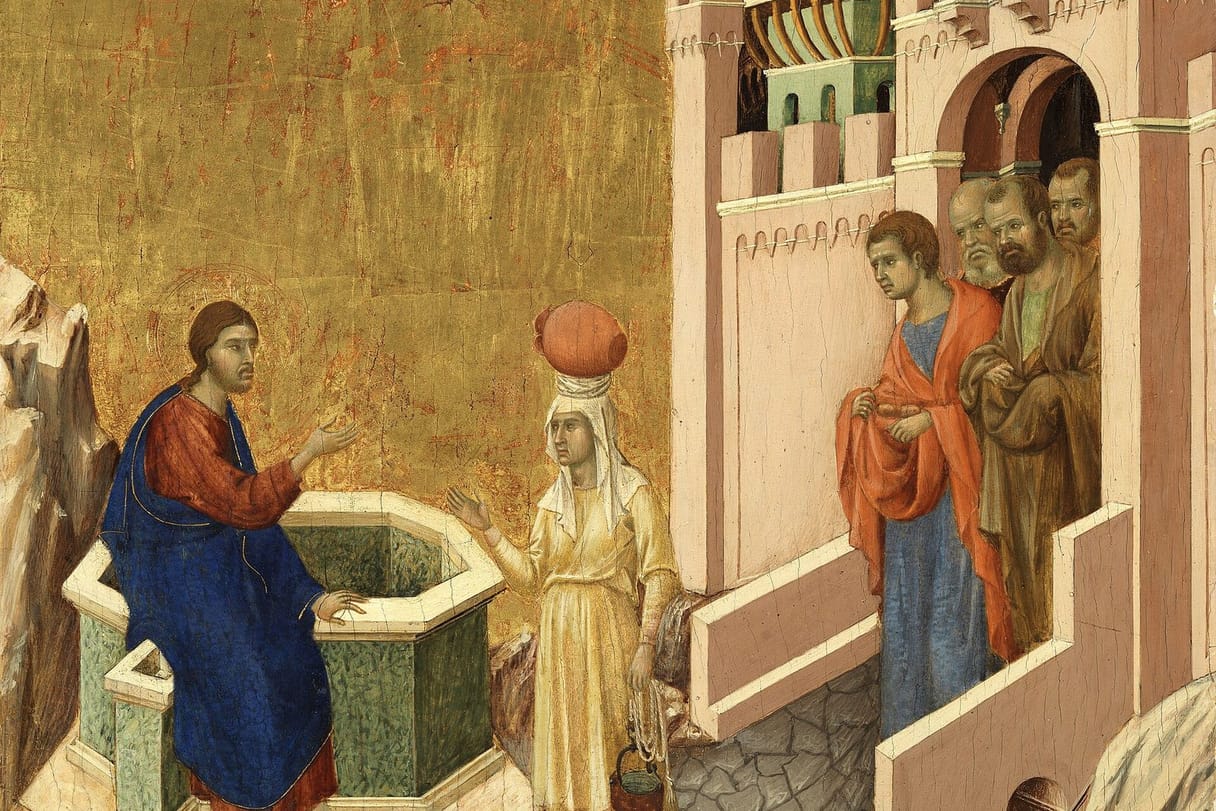
John 14:6 comes from the Last Supper, on the night before Jesus died. Jesus has just told Peter that Peter will deny him three times before morning (John 13:38). The disciples are frightened, and Jesus begins to comfort them:
“Do not let your hearts be troubled. Believe in God; believe also in me. In my Father’s house there are many dwelling places. If it were not so, would I have told you that I go to prepare a place for you?
John 14:1–2, NRSVUE
Jesus tells them they already know the way to where he is going. Thomas, puzzled and perhaps afraid, says that they do not:
Thomas said to him, “Lord, we do not know where you are going. How can we know the way?” Jesus said to him, “I am the way and the truth and the life. No one comes to the Father except through me. If you know me, you will know my Father also. From now on you do know him and have seen him.”
John 14:5–7, NRSVUE
Jesus answers a frightened friend by pointing to himself. The way to God is the life Jesus has lived in front of his disciples, the life he is about to lay down for them. A moment later he tells Philip, “He who has seen me has seen the Father” (John 14:9).
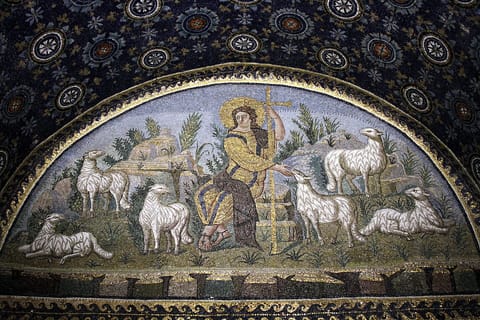
Read in its setting, John 14:6 makes a great claim about Jesus: God is truly known in him, and whoever comes to the Father comes through him. The verse does not say how much a person must know about Jesus for Christ to bring them home. The same Gospel calls Christ “the true light that enlightens everyone” (John 1:9), and Jesus says, “I have other sheep which are not of this fold” (John 10:16).
What does Acts 4:12 mean?
Acts 4:12 also has a setting. In Acts 3, Peter and John meet a man who has been unable to walk since birth, and Peter says, “In the name of Jesus Christ of Nazareth, get up and walk!” (Acts 3:6). Acts tells that the man rose, walking and leaping and praising God. The temple authorities arrest the apostles and ask by what power they did it. Peter answers:
if we are being questioned today because of a good deed done to someone who was sick and are being asked how this man has been healed… There is salvation in no one else, for there is no other name under heaven given among mortals by which we must be saved.
Acts 4:9, 12, NRSVUE
In Greek, “has been healed” in verse 9 and “be saved” in verse 12 come from the same verb, sōzō, which means to rescue, heal, or make whole. Peter is telling the leaders of his own people that the healing power at work in the man comes from Jesus, whom they rejected and God raised. Acts 4:12 proclaims Jesus as the source of all healing and rescue. Whether people of other faiths can receive that rescue without knowing its source is a question Acts 4 leaves open.
How can Jesus be the only way if others can be saved?
Christians have given three main answers, each out of a desire to honor Jesus.
Many evangelical churches teach that only those who consciously believe in Christ in this life can be saved, a view theologians call exclusivism. They hold it out of reverence for verses like John 14:6 and out of care for their neighbors. The view is old: in the third century, Cyprian of Carthage wrote that “there is no salvation out of the Church.”
A second answer, often called inclusivism, holds that Christ is the only Savior and that he can save people who do not know his name. Justin Martyr, writing around 155 CE, taught that every human being shares in Christ the Word (Logos), and that the Greek philosophers “spoke well in proportion to the share he had of the spermatic word” (Second Apology 13), meaning the seed of the divine Word planted in every mind. C. S. Lewis pictured the same hope in The Last Battle (1956), where the lion Aslan tells a lifelong servant of a false god, “all the service thou hast done to Tash, I account as service done to me.”
A third answer, pluralism, holds that all religions are equally valid paths to the same God. The historic churches have not taught pluralism, because it would set aside the confession that Jesus is Lord.
Most mainline theologians hold the inclusive view. They confess Christ as the only way, and they trust that his way is wide enough to reach people the church has never reached. On this view, the love of God revealed in Christ goes out to every person, whatever their religion, and can bring them home through him. For what this hope means for people of other religions, see Do non-Christians go to hell?
Are all religions the same?
Christians do not say that all religions teach the same thing, because their faith rests on something particular: that the eternal Son of God became human in Jesus of Nazareth, died, and was raised, and that through him God reconciles the world. The First Letter to Timothy says, “there is one God and one mediator between God and men, the man Christ Jesus, who gave himself as a ransom for all” (1 Timothy 2:5–6). The verse that names one mediator also says he gave himself for all.
Christians can honor other religions and still hold fast to Christ. Preaching in Athens, Paul began by noticing an altar inscribed “TO AN UNKNOWN GOD” and told his listeners that God “is not far from each one of us” (Acts 17:23, 27). You can follow Paul with the people you love, honoring their search for God and sharing your own hope with joy.
What do the churches teach?
The ELCA, the Presbyterian Church (U.S.A.), the United Methodist Church, and the Episcopal Church all confess in the Nicene Creed that Jesus Christ is “the only Son of God” and that “for us and for our salvation he came down from heaven.” All four belong to the World Council of Churches, together with many Orthodox churches. At its world mission conference in San Antonio, Texas, in 1989, the council summed up a position its members could affirm together: “We cannot point to any other way of salvation than Jesus Christ; at the same time we cannot set limits to the saving power of God.”
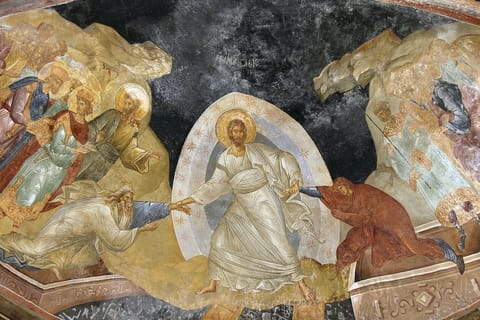
The Orthodox tradition helps explain why Christ’s reach is so wide. Athanasius of Alexandria wrote in the fourth century, “He was made man that we might be made God” (On the Incarnation 54), and Gregory of Nazianzus taught that “that which He has not assumed He has not healed” (Letter 101). In the Orthodox understanding, the Son of God took on the human nature that every person shares, so his saving work reaches human nature itself, in every person who shares it. The church also confesses that Christ “descended to the dead,” and the First Letter of Peter says “the Good News was preached even to the dead” (1 Peter 4:6).
For more on who Jesus is, see Who is Jesus? and Is Jesus God?, and for what Christians mean by salvation, see What does it mean to be saved?
For centuries Orthodox Christians have prayed the Jesus Prayer, which calls on the name Peter preached in Acts 4: “Lord Jesus Christ, Son of God, have mercy on me, a sinner.” Whatever you fear for the people you love, you can carry them into that prayer and leave them with the God who gave himself for all.
Common questions
What does “I am the way, the truth, and the life” mean?
Jesus spoke these words at the Last Supper to disciples who were afraid he was leaving them. He was comforting them with the news that they already knew the way to God, because they knew him. The next verses say that whoever has seen Jesus has seen the Father (John 14:9).
Do Christians believe all religions lead to God?
Christians believe that God is revealed fully in Jesus Christ and that all salvation comes through him, so they do not say that every religion is the same path. Many Christians also find much that is true and holy in other religions, and they trust that God can save people through Christ even when those people do not know him.
What is inclusivism?
Inclusivism is the view that Christ is the only Savior and that he can save people who do not consciously believe in him. Exclusivism holds that conscious faith in Christ is required, and pluralism holds that all religions are equally valid paths. Most mainline theologians hold an inclusive view.
What can I do if someone I love is not a Christian?
You can love them, pray for them, and share your faith with them gently and gladly. You can also entrust them to God, who, in the words of 1 Timothy 2:4, “desires all people to be saved.” Their life is held by a love greater than yours.
Sources
- John 13:36–14:9 (WEB)
- Acts 3:1–4:12 (WEB)
- Acts 4:9–12 (SBL Greek New Testament)
- John 1:9 (WEB)
- 1 Timothy 2:5–6 (WEB)
- Justin Martyr, Second Apology, chapter 13
- Acts 17:22–28 (WEB)
- Cyprian of Carthage, Epistle 72
- Athanasius, On the Incarnation of the Word, chapter 54
- Gregory of Nazianzus, Letter 101, to Cledonius
- World Council of Churches, Religious Plurality and Christian Self-Understanding (2005), on the San Antonio mission conference of 1989
- Jesus Prayer (Wikipedia)