Reunion with those we love
Christians hope to see their loved ones again in heaven. Paul comforted grieving Christians with the promise that they would be gathered “together with them” to be with the Lord forever (1 Thessalonians 4:17). In the creed Christians confess “the communion of saints,” one family of the living and the dead in Christ, and Orthodox and many mainline Christians pray for the dead by name. Scripture is sure of that hope and says little about the details.
He will wipe away every tear from their eyes. Death will be no more; neither will there be mourning, nor crying, nor pain any more.
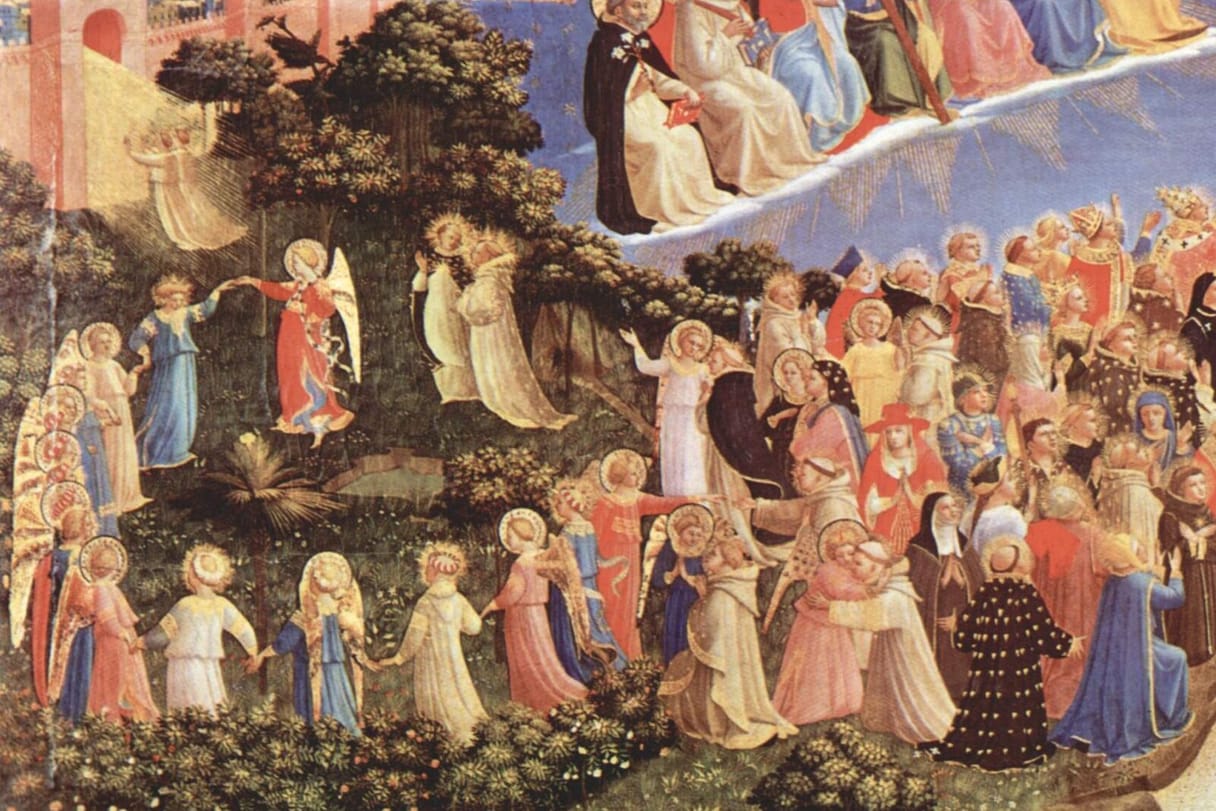
If you are grieving, this may be the question you carry with you everywhere. Christians hope to see their loved ones again in heaven. The church has always hoped that people who love one another in this life will know and love one another in the life to come, because the love of God that holds them both does not end at death. Paul comforted grieving Christians with that hope, and the creeds confess it as “the communion of saints.” Scripture is sure of that hope and says little about the details.
What does the Bible say about seeing loved ones again?
The clearest passage comes from Paul’s first letter to the Christians in Thessalonica, written around 50 CE, which makes it probably the oldest book in the New Testament. Some members of the young church had died, and the survivors feared they would never see them again. Paul answered:
But we don’t want you to be ignorant, brothers, concerning those who have fallen asleep, so that you don’t grieve like the rest, who have no hope.
Paul grounded that hope in the resurrection of Jesus: as God raised Jesus, “even so God will bring with him those who have fallen asleep in Jesus” (1 Thessalonians 4:14).
Paul’s comfort was a reunion. The living and the dead, he wrote, “will be caught up together with them in the clouds to meet the Lord in the air. So we will be with the Lord forever” (1 Thessalonians 4:17). Paul’s word for “meet” was the word for citizens going out to welcome a visiting king, and Christians read the picture in different ways. For grieving readers, the word “together” carries Paul’s promise. He ended, “Therefore comfort one another with these words” (1 Thessalonians 4:18).
The Old Testament gives a glimpse of the same hope. When King David’s infant son died, David said, “I will go to him, but he will not return to me” (2 Samuel 12:23).
Will we know each other in heaven?
The Gospels suggest that people remain recognizable beyond death. After the resurrection, Mary Magdalene knew Jesus the moment he said her name (John 20:16). At the Transfiguration, Peter, James, and John recognized Moses and Elijah, who had lived centuries earlier (Matthew 17:3–4).
Paul expected to be known more completely in the life to come than he was on earth:
For now we see in a mirror, dimly, but then face to face. Now I know in part, but then I will know fully, even as I was also fully known.
Cyprian, bishop of Carthage, wrote to Christians during a deadly epidemic in the 250s that in heaven “a great number of our dear ones is awaiting us, and a dense crowd of parents, brothers, children, is longing for us” (On the Mortality 26).
What is the communion of saints?
In the Apostles’ Creed, Christians confess their belief in “the communion of saints,” the one family of God’s people, living and dead, bound together in Christ. In Christian teaching, death does not remove anyone from that family.
The Letter to the Hebrews describes the faithful who have died as “so great a cloud of witnesses” surrounding the living (Hebrews 12:1). Christians express the bond in prayer. Mainline funeral services commend the dead to God’s keeping, and one prayer in the burial service of the Book of Common Prayer says: “Father of all, we pray to you for those we love, but see no longer: Grant them your peace; let light perpetual shine upon them.” Eastern Orthodox Christians name their dead before God at every Divine Liturgy and at memorial services, which end with the chant “Memory eternal,” a plea that God will hold the departed forever in his remembering. In the Holy Communion service, the congregation joins its praise “with Angels and Archangels and with all the company of heaven,” and many people find that they feel closest to those they have lost at the altar.
What will reunion in heaven be like?
The Book of Revelation describes God making a home with people in a renewed creation:
He will wipe away every tear from their eyes. Death will be no more; neither will there be mourning, nor crying, nor pain any more. The first things have passed away.
Scripture leaves a great deal unsaid. It does not say what age people will be, what they will remember, or how long the dead wait before the resurrection. Jesus said that those raised from the dead “neither marry nor are given in marriage, but are like angels in heaven” (Mark 12:25), which suggests to many interpreters that the life to come will fulfill earthly relationships in ways no one can yet picture.
Christians also hope that relationships broken in this life, by cruelty, estrangement, or death that came too soon, will be healed in God’s presence. For more on what Scripture says about the life to come, see What is heaven like? and What happens when you die?
Will I see a loved one who was not a Christian?
Many people who ask whether they will see their loved ones in heaven are thinking of a parent, spouse, or friend who did not share their faith. Scripture says that God “desires all people to be saved and come to full knowledge of the truth” (1 Timothy 2:4), and Paul wrote that God “has bound all to disobedience, that he might have mercy on all” (Romans 11:32).
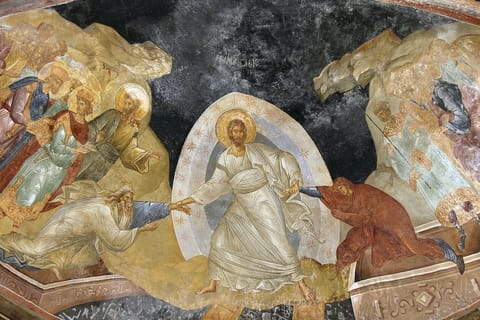
Paul looked ahead to the day when God will be “all in all” (1 Corinthians 15:28). The Christian East has kept that hope especially alive. Gregory of Nyssa, in the fourth century, hoped that every soul would at last be restored to God. Isaac the Syrian, a seventh-century bishop of Nineveh, taught that God’s love never stops reaching out even to those in Gehenna. On the feast of Pentecost, Orthodox churches kneel for prayers, traditionally ascribed to Basil the Great, that ask God’s mercy even for those held in Hades. The Orthodox Easter icon, the Anastasis, shows the risen Christ pulling Adam and Eve, the parents of every human being, out of their tombs.
Many Christians believe that only those who confess Christ in this life will be saved, and they hold that view out of reverence for Scripture. Many mainline theologians share the hope of the Christian East instead. They read hell as the Bible’s picture-language for judgment on wrongdoing, which answers the human need for justice, and they hope that God’s mercy will in the end reach every person God has made. You can entrust the people you love to that mercy and pray for them by name. For more, see Salvation and people of other faiths, and if you lost someone to suicide, see Suicide and the mercy of God.
How can I hold on to this hope while I grieve?
The hope of reunion does not take away the pain of loss, and the church does not ask it to. Jesus wept at the grave of his friend Lazarus (John 11:35), even though he had come to raise him.
You can keep the bond in ordinary ways: say the names of the people you have lost in your prayers, remember them on All Saints’ Day or on the anniversary of their death, as Orthodox Christians do, and tell their stories. For help with the weight of loss itself, see Grief and the Christian hope.
Orthodox Christians commend their departed to God in their services with this short prayer, and you can pray it with the names of those you love:
To the souls of thy servants, O Lord, give rest with thy Saints, where there is neither sickness nor sighing, but life everlasting.
Prayer for the departed, in Isabel F. Hapgood, Service Book of the Holy Orthodox-Catholic Apostolic Church (1906)
Common questions
Will we recognize each other in heaven?
Christians have always hoped so. After the resurrection, Mary Magdalene knew Jesus when he spoke her name (John 20:16), and at the Transfiguration Peter knew Moses and Elijah, whom he had never met (Matthew 17:3–4). Paul wrote that in the life to come “I will know fully, even as I was also fully known” (1 Corinthians 13:12).
Will my husband or wife still be my spouse in heaven?
Jesus said that people raised from the dead “neither marry nor are given in marriage” (Mark 12:25). Most interpreters take that to mean the life to come does not continue earthly institutions in the same form, and few think it means that love between spouses ends. Scripture does not describe how those relationships will be fulfilled, and Christians trust God with that.
Will I see my baby or child who died?
When King David’s infant son died, David said, “I will go to him, but he will not return to me” (2 Samuel 12:23). Jesus said of children that “God’s Kingdom belongs to such as these” (Mark 10:14). Christians entrust children who die to the love of God with confidence, and they hope to hold them again.
Are my loved ones watching over me?
Scripture does not describe the dead watching events on earth in detail. The Letter to the Hebrews says Christians are “surrounded by so great a cloud of witnesses” (Hebrews 12:1), and the church teaches that the living and the dead remain one family in Christ. Many Christians feel close to those they have lost when they pray and receive Holy Communion.
Sources
- 1 Thessalonians 4:13–18 (WEB)
- Revelation 21:3–4 (WEB)
- Mark 12:25 (WEB)
- 1 Corinthians 13:12 (WEB)
- Hebrews 12:1 (WEB)
- 1 Timothy 2:4 (WEB)
- Romans 11:32 and 1 Corinthians 15:28 (WEB)
- The Book of Common Prayer (1979), The Burial of the Dead: Rite Two
- Orthodox Church in America, The Orthodox Faith: Funeral
- Kneeling Prayers at Pentecost Vespers (3)
- Sebastian Brock, “Isaac the Syrian on universal salvation and the mystery of Gehenna”
- Cyprian of Carthage, On the Mortality 26 (New Advent)
- Isabel F. Hapgood, Service Book of the Holy Orthodox-Catholic Apostolic (Greco-Russian) Church (1906), Internet Archive