Purgatory and prayers for the dead
The word purgatory does not appear in the Bible. The Catholic Church teaches purgatory as a final purification after death and points to 2 Maccabees 12:43–45, and 1 Corinthians 3:15, where a person is “saved, but only as through fire.” The Eastern Orthodox churches never accepted the doctrine, and the Reformers rejected it, yet Orthodox, Anglican, and many other Christians still pray for the dead, trusting that God’s love goes on working in them.
If the work is burned up, the builder will suffer loss; the builder will be saved, but only as through fire.
1 Corinthians 3:15, NRSVUE
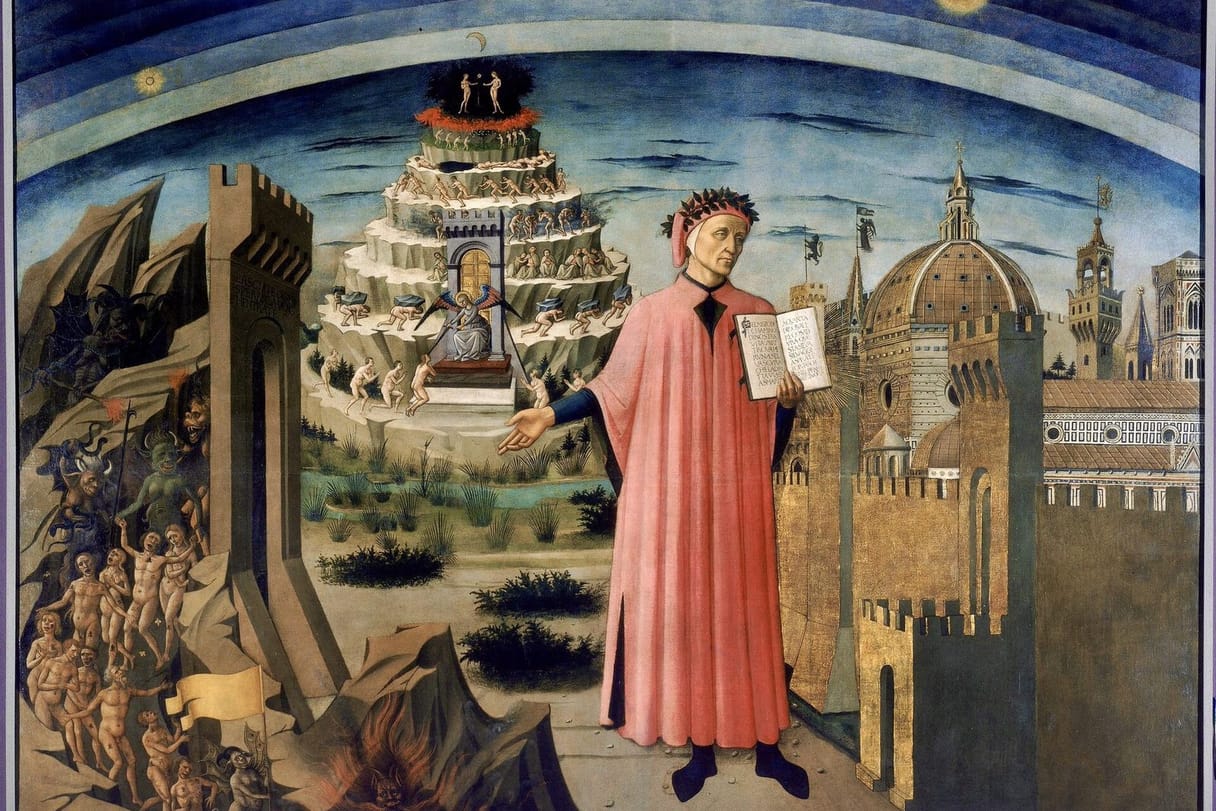
If you are asking about purgatory, you may be grieving someone and wondering whether you can still pray for them, or wondering what will become of the parts of yourself that are not yet whole. The word purgatory does not appear in the Bible. The Roman Catholic Church teaches purgatory as a final purification after death. The Eastern Orthodox churches never accepted the doctrine, and Anglicans and Lutherans rejected it at the Reformation. Yet the Orthodox, and many Anglicans and Lutherans, still pray for the dead, trusting that God’s love goes on working in them after death.
What is purgatory?
The Catechism of the Catholic Church defines it this way:
“All who die in God’s grace and friendship, but still imperfectly purified, are indeed assured of their eternal salvation; but after death they undergo purification, so as to achieve the holiness necessary to enter the joy of heaven” (paragraph 1030).
The Catholic Church defined its teaching at the Councils of Florence (in the 1430s and 1440s) and Trent (1545–1563). In Catholic teaching, then, purgatory is the last stage of being made holy, for people already on their way to heaven. Catholics who hold this teaching see it as a mercy, God’s way of finishing the work of love in people who die still unfinished.
What Bible verses are used to support purgatory?
The passage most often cited is from 2 Maccabees, where Judas Maccabeus takes up a collection for a sacrifice on behalf of Jewish soldiers who died in battle:
For if he were not expecting that those who had fallen would rise again, it would have been superfluous and foolish to pray for the dead. But if he was looking to the splendid reward that is laid up for those who fall asleep in godliness, it was a holy and pious thought. Therefore he made atonement for the dead, so that they might be delivered from their sin.
2 Maccabees 12:44–45, NRSVUE
Second Maccabees is part of the Old Testament in Catholic and Orthodox Bibles. Protestant Bibles place it among the Apocrypha, if they include it at all. The Thirty-Nine Articles say of these books that the church reads them “for example of life and instruction of manners; but yet doth it not apply them to establish any doctrine” (Article VI). (See Why do Catholic Bibles have more books?)
The second key text is Paul’s image of fire on the day of judgment:
the work of each builder will become visible, for the day will disclose it, because it will be revealed with fire, and the fire will test what sort of work each has done. If the work that someone has built on the foundation survives, the builder will receive a wage. If the work is burned up, the builder will suffer loss; the builder will be saved, but only as through fire.
1 Corinthians 3:13–15, NRSVUE
In context Paul is speaking about church leaders whose work will be tested on “the day,” the day of judgment. Many interpreters, including most Protestants, read the passage as a picture of that judgment, and they do not find in it a place or period after death. Catholic teaching sees in it a purifying fire that saves. Gregory of Nyssa, a fourth-century Eastern bishop, also read God’s fire as purifying, though he did not teach purgatory: in On the Soul and the Resurrection he compared the fire of judgment to the fire that melts gold to separate it from dross.
Other texts sometimes mentioned include Jesus’s saying that speaking against the Holy Spirit will not be forgiven “either in this age, or in that which is to come” (Matthew 12:32), which Gregory the Great read as implying that some sins can be forgiven after death. Some readers also cite Paul’s prayer for his friend Onesiphorus, “the Lord grant to him to find the Lord’s mercy in that day” (2 Timothy 1:18), since Onesiphorus may have died, though the letter does not say so.
Why did the Reformers reject purgatory?
By the sixteenth century, purgatory had become tied to the sale of pardons (indulgences) and to Masses paid for to shorten the time the dead spent there. Article XXII of the Church of England’s Thirty-Nine Articles answered in the sharp language of that age: “The Romish Doctrine concerning Purgatory, Pardons, Worshipping, and Adoration, as well of Images as of Reliques, and also invocation of Saints, is a fond thing vainly invented.” (“Fond” meant foolish.) The article adds that it is “grounded upon no warranty of Scripture.”
The Reformers’ deeper concern was that Christ’s death is enough. Article XXXI says that Christ’s offering “once made is that perfect redemption, propitiation, and satisfaction, for all the sins of the whole world.” The Reformers believed that a doctrine of paying off punishment after death took away from that gift.
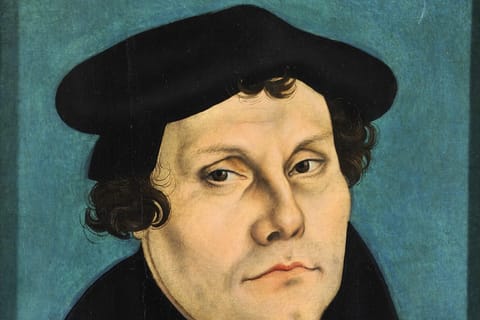
The Lutheran reformers drew the line in a similar place. Philip Melanchthon’s Apology of the Augsburg Confession says, “we know that the ancients speak of prayer for the dead, which we do not prohibit,” while rejecting the idea that a Mass offered for the dead works automatically (Article XXIV).
Do Orthodox Christians pray for the dead?
Yes, constantly. The Eastern Orthodox churches name the departed at every Divine Liturgy and hold memorial services for them on the third, ninth, and fortieth days after death and on its anniversaries, singing hymns that ask Christ to give them rest with the saints. The service ends with the chant “Memory eternal,” which the Orthodox Church in America explains as “the supplication that God would remember the dead.”
The Orthodox never accepted the Western doctrine of purgatory. When Greek and Latin bishops met at the Council of Ferrara–Florence in 1438–1439, Mark, the archbishop of Ephesus, argued against the Latin teaching of a purgatorial fire that purifies souls before they see God. Orthodox theologians object above all to the legal picture of punishment that must be paid off, and they leave the state of the dead before the resurrection largely undefined.
Orthodox prayer for the dead rests instead on love and on theosis, the Orthodox word for salvation as healing and union with God. Many Orthodox teachers hold that this growth does not stop at death. Gregory of Nyssa taught that the soul goes on forever “from glory to glory” (2 Corinthians 3:18). Orthodox prayer for the dead is prayer for people who are still growing into God, offered by people who still love them.
Anglicans and Lutherans have kept or recovered prayer for the dead in their own ways, and the practice is ancient in the West too. Augustine records that his dying mother, Monica, told her sons, “Lay this body anywhere, let not the care for it trouble you at all. This only I ask, that you will remember me at the Lord’s altar, wherever you be” (Confessions 9.11).
What did C. S. Lewis say about purgatory?
C. S. Lewis, a member of the Church of England, wrote about purgatory in Letters to Malcolm: Chiefly on Prayer, published in 1964, the year after his death. He said, “Of course I pray for the dead,” and, “I believe in Purgatory.” He also granted that “the Reformers had good reasons for throwing doubt on ‘the Romish doctrine concerning Purgatory’ as that Romish doctrine had then become.”
Lewis understood purgatory as healing, something a soul would want. He compared it to waking up after a tooth is pulled: “I hope that when the tooth of life is drawn and I am ‘coming round,’ a voice will say, ‘Rinse your mouth out with this.’ This will be Purgatory.”
What do the churches teach about purgatory today?
The Catholic Church teaches purgatory as defined doctrine. The Eastern Orthodox churches pray for the dead but reject the Western doctrine of purgatory. Anglican churches, including the Episcopal Church, pray for the dead and speak of growth in God’s love after death, without the medieval system of pardons; the Episcopal prayer book says Christians pray for the dead “because we still hold them in our love.” The ELCA, the Presbyterian Church (U.S.A.), and the United Methodist Church do not teach purgatory, and the United Methodist funeral service commends the person who has died into the hands of Christ, the “merciful Savior.”
The hope of growth after death, which Orthodox and Anglican Christians share, has deep roots in Scripture. Paul was “confident of this very thing, that he who began a good work in you will complete it until the day of Jesus Christ” (Philippians 1:6). Malachi pictures God as “a refiner’s fire” who will “purify” and “refine” his people (Malachi 3:2–3). Any purification after death is the work of God’s love, finishing what grace began, and it rests entirely on what Christ has already done. For the larger picture, see What happens when you die?, Is hell real?, and What is the difference between Catholic and Orthodox?
Whatever you believe about purgatory, you may commend the people you love to God’s mercy. The Orthodox burial service does it in one sentence, and you can pray it with a name in place of “thy servant”:
Give rest with the Saints, O Christ, to the soul of thy servant, where there is neither sickness, nor sorrow, nor sighing, but life everlasting.
Kontakion from the Orthodox burial service, trans. Isabel F. Hapgood, Service Book of the Holy Orthodox-Catholic Apostolic (Greco-Russian) Church (1906)
Common questions
What is the difference between purgatory and hell?
In Catholic teaching purgatory is a purification for people already on their way to heaven, and it is distinct from hell. Many Christians, especially in the East, have understood the fire of God’s judgment itself as purifying love: Gregory of Nyssa compared it to the fire that refines gold. On that reading, God’s judgment is love at work, and its goal is healing.
Do Protestants believe in purgatory?
Most Protestant churches do not teach purgatory. The Reformers rejected the late medieval doctrine, especially the sale of pardons and Masses offered to shorten time in purgatory. Some Anglicans and Lutherans still pray for the dead, and C. S. Lewis, an Anglican, wrote that he believed in purgatory understood as purification.
Can our prayers help the dead?
Orthodox, Catholic, and many Anglican and Lutheran Christians pray for the dead, as Christians have done since the early centuries. Orthodox churches hold memorial services on the third, ninth, and fortieth days after a death and on its anniversaries. Christians differ about how such prayer works, but they agree it is offered in love and in trust to God’s mercy.
Do Orthodox Christians believe in purgatory?
No. The Eastern Orthodox churches never accepted the Western doctrine of purgatory, and at the Council of Florence in 1438 Mark of Ephesus argued against the idea of a purifying fire that pays off punishment after death. Yet the Orthodox pray for the dead at every Divine Liturgy and at memorial services, trusting that the departed can still grow in God’s love.
Sources
- 2 Maccabees 12:43–45 (WEB)
- 1 Corinthians 3:11–15 (WEB)
- 2 Timothy 1:16–18 (WEB)
- Catechism of the Catholic Church, 1030–1031
- The Thirty-Nine Articles of Religion (Church of England)
- Apology of the Augsburg Confession, Article XXIV (Book of Concord)
- Book of Common Prayer (1979), An Outline of the Faith (Catechism), The Christian Hope
- Gregory of Nyssa, On the Soul and the Resurrection (New Advent)
- Mark of Ephesus (Wikipedia)
- Orthodox Church in America, The Orthodox Faith: Funeral
- United Methodist Book of Worship, A Service of Death and Resurrection
- Augustine, Confessions, Book 9 (New Advent)
- Christian History Institute, “Another stop on the glory train?” (on C. S. Lewis and purgatory)
- Isabel F. Hapgood, Service Book of the Holy Orthodox-Catholic Apostolic (Greco-Russian) Church (1906), Internet Archive