Heaven
Scripture describes heaven through pictures: a feast, a city where God lives among people, and a new heaven and a new earth where “death will be no more” (Revelation 21:4). Christians believe heaven is life with God and with one another, made whole, and Eastern Christian teachers describe it as endless growth into God. The Bible offers images, and Paul says the reality surpasses anything the human heart has conceived.
he will wipe every tear from their eyes. Death will be no more; mourning and crying and pain will be no more, for the first things have passed away.
Revelation 21:4, NRSVUE
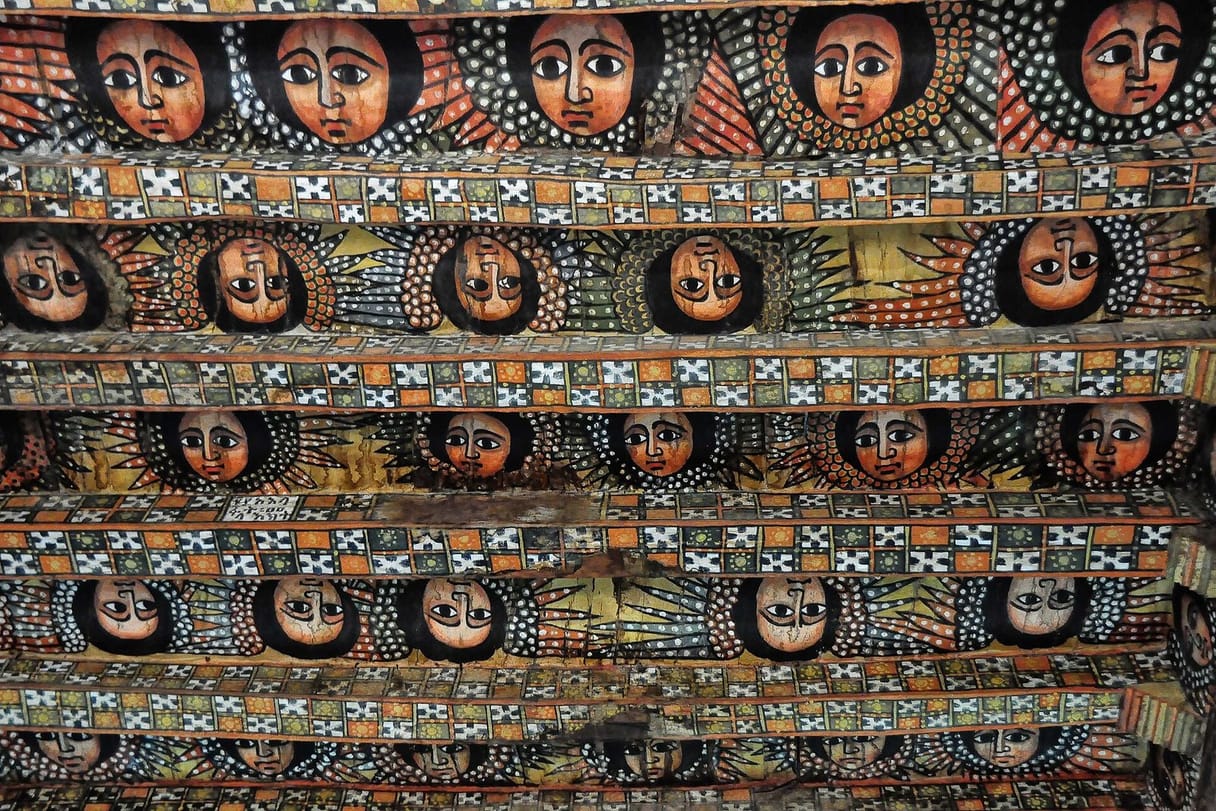
If you are wondering what heaven is like, you may be thinking of someone you have lost, or facing your own death, or longing for a world where nothing good is ever lost again. Christians believe that heaven is life with God, in God’s full presence, shared with all of God’s people and with a creation made new. Scripture describes it almost entirely through pictures: a wedding feast, a garden, a city with a river running through it, a world without death or tears. The pictures are meant to stir hope and longing, and Paul says that the reality is greater than any of them.
But, as it is written, “What no eye has seen, nor ear heard, nor the human heart conceived, what God has prepared for those who love him”—
1 Corinthians 2:9, NRSVUE
What does the Bible say heaven is like?
The fullest picture comes at the end of the Bible, in John’s vision of “a new heaven and a new earth” (Revelation 21:1):
And I heard a loud voice from the throne saying, “See, the home of God is among mortals. He will dwell with them; they will be his peoples, and God himself will be with them and be their God; he will wipe every tear from their eyes. Death will be no more; mourning and crying and pain will be no more, for the first things have passed away.”
Revelation 21:3–4, NRSVUE
The vision continues with “a river of water of life” and “the tree of life,” whose leaves “were for the healing of the nations,” and it says of God’s servants, “They will see his face” (Revelation 22:1–4). The tree of life, guarded after Adam and Eve leave Eden in Genesis 3, stands open again at the Bible’s end. What was lost at the beginning is given back.
The prophets and Jesus also describe a feast. Isaiah foretells that “the LORD of Armies will make all peoples a feast of choice meat” and declares, “He has swallowed up death forever!” (Isaiah 25:6–8). Jesus said that “many will come from the east and the west, and will sit down with Abraham, Isaac, and Jacob in the Kingdom of Heaven” (Matthew 8:11). The Greek verb for “sit down,” anaklinō, means to recline at table, as guests did at a banquet.
On the night before he died, Jesus comforted his friends with a promise of a home:
In my Father’s house there are many dwelling places. If it were not so, would I have told you that I go to prepare a place for you?
John 14:2, NRSVUE
Revelation is written in visionary symbols, and many readers take its gold streets and gates of pearl (Revelation 21:21) as pictures of a beauty and worth beyond words. (See What is the Book of Revelation about?) The same chapter says the city has no temple, “for the Lord God the Almighty and the Lamb are its temple,” and no need for the sun, “for the very glory of God illuminated it” (Revelation 21:22–23). Every image points to the same center: God fully present with God’s people.
Is heaven a place?
In the Bible, “heaven” means both the sky and the dwelling of God. Christians pray daily for God’s will to be done “on earth as in heaven,” which treats heaven as the realm where God’s will is already done.
The Bible’s last picture is of heaven coming to earth. John sees “the holy city, New Jerusalem, coming down out of heaven from God” (Revelation 21:2), and the one on the throne says, “Behold, I am making all things new” (Revelation 21:5). Second Peter says that “we look for new heavens and a new earth, in which righteousness dwells” (2 Peter 3:13). The final Christian hope is for this creation, the world God made and called good, healed and made new.
Christians hold these images in different ways. Some expect a literal renewed earth. Others read the new heaven and new earth as the church’s way of confessing that God will heal everything that is broken, without claiming to know what that will look like. Both readings rest on the same trust in God’s faithfulness.
What will we do in heaven?
At the center of heaven, in Christian teaching, is the sight of God. Paul wrote, “For now we see in a mirror, dimly, but then face to face” (1 Corinthians 13:12). John wrote, “we will be like him, for we will see him just as he is” (1 John 3:2). Medieval Western theologians called this the beatific vision, meaning the direct sight of God that makes the saints completely happy.
Augustine opened his Confessions by telling God, “You have made us for Yourself, and our hearts are restless until they rest in You.” He closed The City of God (Book 22, chapter 30) with a description of heaven: “There we shall rest and see, see and love, love and praise.” Augustine believed that the restlessness of the human heart is a longing for God, and that in heaven it finds its rest.
Eastern Orthodox teachers add that seeing God will never come to an end, because God has no end. Gregory of Nyssa, a fourth-century bishop in what is now Turkey, taught that the soul will grow into God forever, always receiving more of God’s goodness and always longing for more: “This truly is the vision of God: never to be satisfied in the desire to see him” (The Life of Moses 2.239). The Orthodox name for this growth is theosis, being made one with God by grace. Athanasius of Alexandria put it in one sentence: Christ “was made man that we might be made God” (On the Incarnation 54). The psalmist says it in a single line: “In your presence is fullness of joy” (Psalm 16:11).
Will we recognize each other in heaven?
Christians have always hoped so. After the resurrection, Jesus’s friends knew him; he showed them his hands and his side (John 20:19–20). The risen Christ was changed but recognizable, and Christians believe the same will be true of the people they love.
Paul comforted grieving Christians with the promise that they would be caught up “together with them” to be with the Lord forever (1 Thessalonians 4:17). If you are grieving someone you love, the church holds out that same promise to you. See Will I see my loved ones in heaven?
Who goes to heaven?
John saw “a great multitude which no man could count, out of every nation and of all tribes, peoples, and languages” standing before God (Revelation 7:9). He also says that the gates of the holy city “will in no way be shut by day (for there will be no night there)” (Revelation 21:25).
Christians believe heaven is God’s gift through Christ, given by grace to people who could never earn it. Many Christians have taught that only those who believe in Christ in this life will be saved, out of reverence for Jesus’s warnings. A long line of teachers, especially in the Christian East, from Gregory of Nyssa to Isaac the Syrian, has hoped that God’s mercy is wider than the boundaries people draw, and that in the end God will be “all in all” (1 Corinthians 15:28). Many mainline theologians share that hope. See Is hell real? and What does it mean to be saved?
What do the churches teach about heaven?
The ELCA, the Presbyterian Church (U.S.A.), the United Methodist Church, and the Episcopal Church all confess heaven in the words of the Apostles’ Creed: “the resurrection of the body, and the life everlasting.” None of them offers a map of heaven. All of them speak of it as life with God in Christ, shared with all of God’s people.
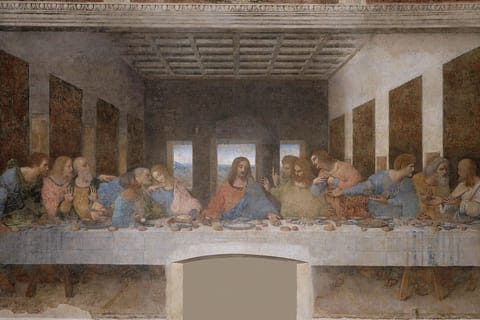
Christians have long called Holy Communion a foretaste of heaven. At the Last Supper Jesus said he would not drink wine again “until that day when I drink it anew with you in my Father’s Kingdom” (Matthew 26:29), so every Communion looks ahead to the feast to come. (See What is Holy Communion?)
The Eastern Orthodox churches make the same connection in their worship. The Orthodox priest and theologian Alexander Schmemann described the Divine Liturgy as the church’s entry into the kingdom of God. According to the Russian Primary Chronicle, when envoys of Prince Vladimir of Kyiv attended the liturgy in Hagia Sophia, the great church of Constantinople, in the 980s, they reported, “we knew not whether we were in heaven or on earth.”
Orthodox, Lutheran, Methodist, Presbyterian, and Episcopal Christians share this hope, grounded in the same creeds. They differ on side questions, such as prayer for the dead, and they agree that heaven is life with the God who “will wipe every tear from their eyes” (Revelation 21:4). For what happens at the moment of death, see What happens when you die?
Charles Wesley, the great hymn writer of early Methodism, ended one of his best-loved hymns with a prayer for that day:
Finish, then, thy new creation;
Pure and spotless let us be;
Let us see thy great salvation
Perfectly restored in thee;
Changed from glory into glory
Till in Heav’n we take our place,
Till we cast our crowns before thee,
Lost in wonder, love, and praise!Charles Wesley, “Love Divine, All Loves Excelling” (1747), last stanza
Common questions
Will there be marriage in heaven?
Jesus said that those raised from the dead “neither marry nor are given in marriage,” because “they can’t die any more” (Luke 20:35–36). Many Christians read this to mean that the life to come is no longer organized around marriage and the raising of children. Nothing in his words suggests that the love between spouses is forgotten.
Are the streets of heaven really made of gold?
Revelation 21:21 describes the street of the holy city as “pure gold, like transparent glass.” Some Christians picture the gold literally. Many others, ancient and modern, read Revelation as a book of visions written in symbols, in which the gold, pearls, and jewels describe a city of unimaginable worth and beauty. Either way, the vision promises a home of great beauty prepared by God.
Will heaven be boring?
Christian teachers have described heaven as the fulfillment of every good desire. Augustine ended The City of God by saying that there “we shall rest and see, see and love, love and praise.” Gregory of Nyssa taught that, because God has no limit, the soul will go on growing into God forever: “This truly is the vision of God: never to be satisfied in the desire to see him.”
Do babies and children go to heaven?
Yes, Christians trust that God receives children who die. Jesus said of children that “God’s Kingdom belongs to such as these” (Mark 10:14). When King David’s infant son died, David said, “I will go to him, but he will not return to me” (2 Samuel 12:23).
Sources
- Revelation 21:1–5 (WEB)
- Revelation 22:1–5 (WEB)
- John 14:1–3 (WEB)
- Isaiah 25:6–8 (WEB)
- 1 Corinthians 2:9 and 13:12 (WEB)
- Luke 20:34–36 (WEB)
- 1 Corinthians 15:28 (WEB)
- Gregory of Nyssa, The Life of Moses, trans. Abraham Malherbe and Everett Ferguson (Paulist Press, 1978)
- Athanasius, On the Incarnation of the Word 54 (New Advent)
- Christian History Institute, “A Taste of Glory” (on the conversion of Kievan Rus’)
- Augustine, The City of God, Book 22 (New Advent)
- Augustine, Confessions, Book 1 (New Advent)
- Charles Wesley, “Love Divine, All Loves Excelling” (1747), Hymnary.org

.jpg)