The Book of Revelation
Revelation is a Christian apocalypse, a book of symbolic visions, written by a prophet named John on the island of Patmos to seven churches in Asia Minor, probably in the 90s CE. Its beasts and its Babylon point to the Roman Empire and its claims to worship. Its message is that God and the slain Lamb, Jesus Christ, reign over history, and that God will wipe away every tear and make all things new.
And the one who was seated on the throne said, “See, I am making all things new.”
Revelation 21:5, NRSVUE
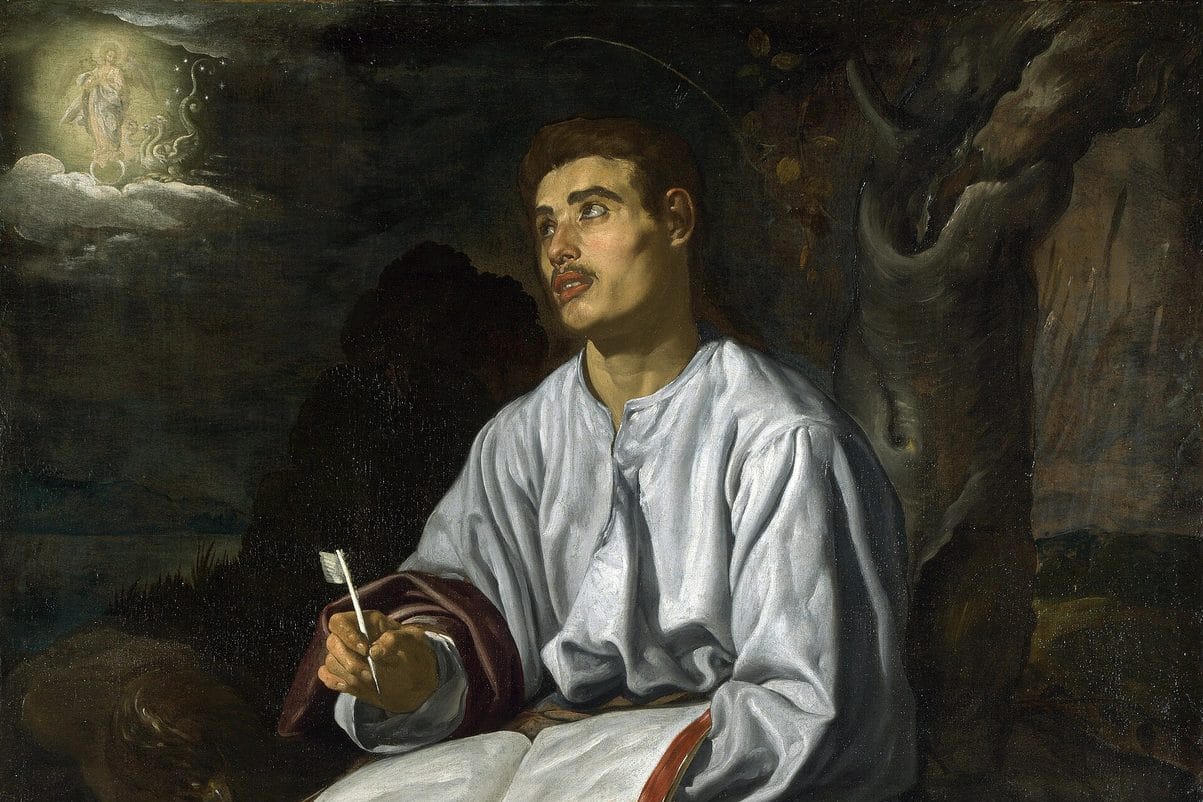
Many people come to the Book of Revelation afraid. They have heard it used to predict disasters, or they have read its beasts and plagues and wondered what God is like. Revelation was written to frightened people, and its purpose was to give them courage. Read in its own setting, it is a call to faithful worship and endurance in the present, and a promise that God will wipe away every tear.
What kind of book is Revelation?
Revelation is an apocalypse. The Greek word apokalypsis, its first word, means “unveiling” or “revelation.” An apocalypse is a kind of Jewish and Christian writing, common in the centuries around the time of Jesus, that uses visions, symbols, angels, and numbers to reveal the hidden meaning of present events. The second half of the Book of Daniel is an earlier example.
The book announces itself this way:
The revelation of Jesus Christ, which God gave him to show his servants what must soon take place, and he made it known by sending his angel to his servant John,
Revelation 1:1, NRSVUE
Revelation is also a letter. It is addressed from “John, to the seven assemblies that are in Asia” (Revelation 1:4), that is, to seven churches, and chapters 2–3 contain short messages to each congregation, in cities such as Ephesus, Smyrna, and Laodicea. The visions that follow were meant to be read aloud in those churches, to congregations who were small, tired, and sometimes in danger.
Who wrote Revelation, and when?
The author calls himself John and says he “was on the isle that is called Patmos because of God’s Word and the testimony of Jesus Christ” (Revelation 1:9). Early tradition identified him with the apostle John. Many modern scholars think he was a different John, a prophet known to the churches of Asia, because the book’s Greek differs greatly from that of the Gospel of John.
Irenaeus, bishop of Lyon around 180 CE, wrote that the vision was seen “towards the end of Domitian’s reign” (Against Heresies 5.30.3). Domitian was emperor from 81 to 96 CE. Most scholars accept a date in the 90s, though some argue for the late 60s. The Greek-speaking churches of the East were slow to accept Revelation into their Bible, and the Eastern Orthodox churches still do not read it aloud in the Divine Liturgy.
What do the beasts, Babylon, and 666 mean?
Revelation speaks in symbols, and most of them would have been clear to its first readers.
The beast and 666. Revelation 13 describes a beast that demands worship, and it ends with a riddle: “He who has understanding, let him calculate the number of the beast, for it is the number of a man. His number is six hundred sixty-six” (Revelation 13:18). In Hebrew and Greek, letters also served as numbers. There is a broad consensus among scholars that 666 points to the emperor Nero, who persecuted Christians in Rome in the 60s. Some ancient manuscripts give the number as 616, which fits a different spelling of Nero’s name.
Babylon. Babylon had destroyed Jerusalem in 586 BCE, and in Revelation the name stands for Rome, the new empire that ruled the world. The angel explains that “the seven heads are seven mountains on which the woman sits” (Revelation 17:9). Rome was famous as the city of seven hills.
The Lamb. The central figure of the book is “a Lamb standing, as though it had been slain” (Revelation 5:6). John is told that the Lion of the tribe of Judah has conquered, and when he looks, he sees a wounded lamb (Revelation 5:5–6). Christ conquers by his faithful death and resurrection, and the whole book turns on that surprise: the power that wins is the self-giving love of the cross.
What is the message of Revelation?
Revelation asks a question every generation faces: who is really Lord of the world? In John’s day, the empire claimed divine honors for its emperors and demanded loyalty. Revelation answers that worship belongs to God and to the Lamb alone.
The book does not flinch from evil. Its plagues, wars, and judgments show the destruction that human violence and idolatry bring. Yet its visions keep returning to worship around the throne of God, where John sees “a great multitude which no man could count, out of every nation and of all tribes, peoples, and languages” (Revelation 7:9). Heaven proclaims, “The kingdom of the world has become the Kingdom of our Lord and of his Christ. He will reign forever and ever!” (Revelation 11:15).
Revelation’s scenes of judgment, including its “lake of fire,” answer the cry of the martyrs under the altar: “How long, Master, the holy and true, until you judge and avenge our blood on those who dwell on the earth?” (Revelation 6:10). Many interpreters read them as picture-language for God’s judgment on the violence that destroys people, and they assure its victims that evil will not have the last word. Even “Death and Hades were thrown into the lake of fire” (Revelation 20:14). In the final vision, the gates of the holy city “will in no way be shut,” and “the kings of the earth,” who earlier gathered “to make war against” Christ (Revelation 19:19), now “bring the glory and honor of the nations into it” (Revelation 21:24–25). Many Christians read the lake of fire as a place of everlasting punishment, out of reverence for the book’s warnings. Others, in a line that runs from Gregory of Nyssa and Isaac the Syrian in the early church to many theologians today, read the book’s ending as a promise that God’s love will win over every enemy.
The final vision is of creation renewed:
Then I saw a new heaven and a new earth, for the first heaven and the first earth had passed away, and the sea was no more. And I saw the holy city, the new Jerusalem, coming down out of heaven from God, prepared as a bride adorned for her husband.
Revelation 21:1–2, NRSVUE
God comes to dwell with mortals and “will wipe away every tear from their eyes” (Revelation 21:3–4). The one on the throne says, “See, I am making all things new” (Revelation 21:5). In the heavenly city, the leaves of the tree of life “were for the healing of the nations” (Revelation 22:2). For more, see What is heaven like?
Is Revelation a prediction of the end times?
Christians read Revelation in several ways. Some read it mainly as a message to its first readers about Rome. Some read it as a picture of the church’s struggle in every age. Others read it as a forecast of events still to come.
The futurist reading is especially common in American evangelical churches. A version of it called dispensationalism was systematized by John Nelson Darby in the nineteenth century and spread widely through the Scofield Reference Bible in the twentieth. It includes the idea of a “rapture” that removes believers from the earth before a time of tribulation, an idea popularized by the Left Behind novels. Christians who hold this view take Revelation’s promises of Christ’s return seriously, as all Christians should, and many of them live with a joyful readiness to meet him.
Most Christian churches, including the Eastern Orthodox churches and the mainline churches (the ELCA, the Presbyterian Church (U.S.A.), the United Methodist Church, and the Episcopal Church), do not teach the rapture and do not read Revelation as a timeline of current events. The Nicene Creed confesses that Christ “will come again in glory to judge the living and the dead,” without setting a schedule. See Is the rapture in the Bible?
How should I read the Book of Revelation?
Read it as poetry and prophecy, slowly, the way you would read the Psalms. Notice how much of it is worship: hymns, songs, and acclamations that Christians still sing. Ask what it meant to a small church in Ephesus or Laodicea under the shadow of Rome, and then ask what powers today demand the loyalty that belongs to God.
Revelation’s fearsome images serve its hope. The book was written to strengthen frightened people, and if it has frightened you, you can let it do for you what it did for them. For how this book fits the Bible’s larger hope, see Is hell real? and Should we read the Bible as literal fact?
The Bible ends with Revelation’s last two verses, a prayer for Christ to come and a blessing on all God’s people:
Amen! Yes, come, Lord Jesus! The grace of the Lord Jesus Christ be with all the saints. Amen.
Common questions
Who wrote the Book of Revelation?
The author calls himself John and says he was on the island of Patmos because of the word of God and the testimony of Jesus. Early tradition identified him with the apostle John. Many scholars think he was a different John, a Christian prophet of Asia Minor, because the book's Greek and style differ greatly from the Gospel of John.
What does 666 mean?
Revelation says the number of the beast is the number of a person. In ancient Hebrew and Greek, letters also served as numbers, and there is a broad scholarly consensus that 666 points to the Roman emperor Nero, a notorious persecutor of Christians. Some ancient manuscripts read 616 instead.
Is the rapture in the Book of Revelation?
No. The word rapture does not appear in Revelation, and the idea of a secret rapture before a time of tribulation was developed in the nineteenth century. Most Christian churches, including the Eastern Orthodox churches and the mainline Protestant churches, do not teach it, though many evangelical Christians hold it sincerely.
Is the Book of Revelation about the end of the world?
Revelation looks forward to the end of evil, the judgment of the powers that oppress God's people, and a new heaven and a new earth. It speaks of these things in symbols and sets no schedule. Its last vision is of God dwelling with humanity in a renewed creation, where every tear is wiped away.
Sources
- Revelation 1:1–9 (WEB)
- Revelation 5:6; 7:9; 11:15 (WEB)
- Revelation 13:18; 17:9 (WEB)
- Revelation 6:10; 19:19; 20:14 (WEB)
- Revelation 21:1–5, 24–25; 22:2 (WEB)
- Irenaeus, Against Heresies 5.30 (New Advent)
- Book of Revelation (Wikipedia)
- Number of the beast (Wikipedia)
- Rapture (Wikipedia)
- Dispensationalism (Wikipedia)
- Revelation 5:5–6; 22:20–21 (WEB)
.jpg)