Raising children in the faith
Christian parents raise children in the faith mostly through everyday life: loving them, praying with them, telling them the stories of God, and bringing them to worship. Deuteronomy tells parents to speak of God’s words “when you sit in your house, and when you walk by the way” (Deuteronomy 6:7), and Jesus said, “Allow the little children to come to me!” (Mark 10:14). At baptism the whole congregation promises to help, and children learn God’s love first from the love they receive.
Allow the little children to come to me! Don’t forbid them, for God’s Kingdom belongs to such as these.
Children learn faith first by being loved, and then by watching how the people who love them live with God. If you are a parent, grandparent, godparent, or guardian wondering how to pass on the faith, you may feel unqualified, too busy, or unsure what you believe yourself. Scripture puts this work in ordinary hands, at kitchen tables and bedsides, and it promises that you will not do it alone. The whole church shares the task, and God loves your child more than you do.
What does the Bible say about raising children in the faith?
The great command of Israel’s faith comes with instructions for the home:
Hear, Israel: The LORD is our God. The LORD is one. You shall love the LORD your God with all your heart, with all your soul, and with all your might. These words, which I command you today, shall be on your heart; and you shall teach them diligently to your children, and shall talk of them when you sit in your house, and when you walk by the way, and when you lie down, and when you rise up.
Faith is learned in the rhythms of a day, at meals, on walks, at bedtime, and in the morning. Jewish families still pray these words, called the Shema, at waking and at lying down. The Bible also expects children to ask questions. At Passover, Moses said, children would ask, “What do you mean by this service?” (Exodus 12:26), and to this day the youngest child at a Passover meal asks why this night is different from all other nights. A child’s question is an opening for the story of God.
The New Testament remembers a family in which faith passed through the women of three generations. Paul wrote to Timothy of “the sincere faith that is in you, which lived first in your grandmother Lois and your mother Eunice” (2 Timothy 1:5). Grandparents, aunts, and godparents often carry the faith to a child as much as parents do.
What do parents and churches promise at baptism?
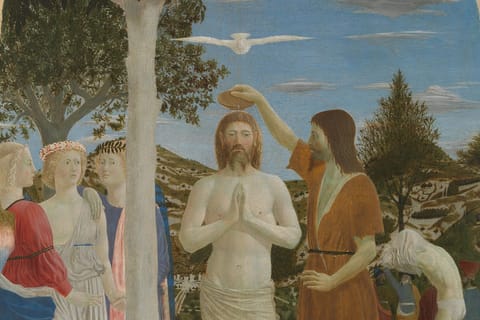
The ELCA, the PC(USA), the United Methodist Church, and the Episcopal Church all baptize infants, trusting that God’s grace comes before any human response (see Baptism). At an ELCA baptism, parents promise to “live with them among God’s faithful people,” to “bring them to the word of God and the holy supper,” to teach them “the Lord’s Prayer, the Creed and the Ten Commandments,” to “place in their hands the Holy Scriptures,” and to “nurture them in faith and prayer.”
The congregation promises too. In the United Methodist baptismal service the people say, “We will surround these persons with a community of love and forgiveness, that they may grow in their trust of God.” Sunday school teachers, choir directors, and the older members who learn a child’s name all keep that promise. The faith of a child is the work of a whole church.
Horace Bushnell, a Congregational pastor in Hartford, Connecticut, wrote a classic of American Protestant thought, Christian Nurture, on this hope. In an age of revivals, many churches expected children to wait outside the faith for a dramatic conversion. Bushnell argued instead “That the child is to grow up a Christian, and never know himself as being otherwise.”
How can faith be part of everyday family life?
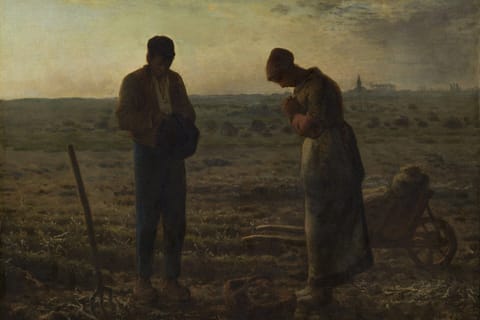
Most faith is passed on through small things done often. Say grace at meals, even a single sentence. Pray with your children at bedtime, and bless them before they sleep. Read them the stories of the Bible, and let them see you read it too. Keep the seasons of the church year at home, lighting an Advent wreath or keeping a simple Lenten practice (see The church year). Serve others together at a food pantry or a neighbor’s door.
Martin Luther wrote his Small Catechism in 1529 for this work. It first appeared as posters for the household wall, each explaining the Lord’s Prayer or the Creed “in a very simple way in which the head of a house is to present it to the household.” Susanna Wesley, mother of the Methodist founders John and Charles Wesley, bore nineteen children, nine of whom died as infants. She taught the rest at home and set aside an evening each week to talk alone with each child; Thursday was John’s night.
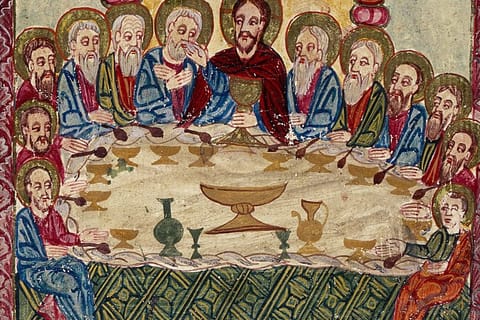
John Chrysostom told the parents of Antioch in the fourth century that “just as we see artists fashioning their paintings and statues with great precision, so we must care for these wondrous statues of ours.” Bring your children to worship, even when they wiggle. When the disciples turned children away, Jesus “was moved with indignation and said to them, ‘Allow the little children to come to me!’” and he took them in his arms and blessed them (Mark 10:14–16). Most mainline churches welcome children to Holy Communion as well (see What the mainline churches teach about Communion).
How do I teach children about God without fear?
Children learn what God is like first from the people who care for them. “We love him, because he first loved us” (1 John 4:19), and children love God most easily when they have been loved well. The Letter to the Colossians warns, “Fathers, don’t provoke your children, so that they won’t be discouraged” (Colossians 3:21). Many adults still carry fears planted by harsh religious teaching in childhood. Teach your children first that God made them, knows them, and loves them, for “There is no fear in love; but perfect love casts out fear” (1 John 4:18). See Does God love me?
Welcome their questions. When Jesus was twelve, his parents found him in the temple “sitting in the middle of the teachers, both listening to them and asking them questions” (Luke 2:46). Mary also told him, “your father and I were anxiously looking for you” (Luke 2:48), so even the holy family knew a parent’s worry. You can say “I don’t know” to a hard question and wonder about it together. Let your children see you pray, apologize, forgive, and keep going to church on hard days. Jesus said that adults must “become as little children” to enter the kingdom (Matthew 18:3), and children often teach their parents to trust again.
What if my child walks away from faith?
Many faithful parents watch a child drift from the church, and the grief is real. Monica, the mother of Augustine, prayed and wept for her son through years of unbelief. A bishop she pleaded with told her that the son of these tears could not perish, and Augustine later became one of the great teachers of the church, telling her story in his Confessions. Her story is no guarantee, and it is a witness that prayer for a child is never wasted.
Keep loving your child, and let them know that your love does not depend on what they believe. In Jesus’ parable, the father of the son who left home kept watching the road, and “while he was still far off, his father saw him and was moved with compassion” (Luke 15:20). Your child belongs to God, who has not stopped seeking them.
God gave Aaron and his sons a blessing for the people of Israel, and many parents trace the sign of the cross on a child’s forehead and say these words at bedtime:
The LORD bless you, and keep you. The LORD make his face to shine on you, and be gracious to you. The LORD lift up his face toward you, and give you peace.
Common questions
What does “Train up a child in the way he should go” mean?
Proverbs 22:6 is a proverb, a piece of wisdom about how life usually goes, and it encourages parents to form their children faithfully from the start. It is no guarantee. Many faithful parents have seen children wander, and Scripture leaves every child free to answer God for themselves, while God never stops loving them.
At what age can children receive Holy Communion?
Practices differ. The United Methodist Church welcomes children of all ages, the PC(USA) offers Communion to all who come regardless of age, and the Episcopal Church welcomes all the baptized, children included. In the ELCA, baptized children may begin to commune at a time agreed with their parents and pastor. Ask your pastor how your congregation prepares children for the table.
How do I teach my children about God when I have doubts?
Tell them the truth in words they can understand. Children can learn that faith includes questions, and they benefit from seeing a parent pray, wonder, and keep going to worship. The father who brought his son to Jesus prayed, “I believe. Help my unbelief!” (Mark 9:24), and Jesus answered him.
Should I make my teenager go to church?
Many parents ask teenagers to keep worshiping with the family while living at home, and they also listen carefully to their questions and objections. Forcing faith rarely works, and respect usually helps it grow. Keep the conversation open, and let them see that your love does not depend on what they decide.
Sources
- Deuteronomy 6:4–7 (WEB)
- Mark 10:13–16 (WEB)
- 2 Timothy 1:5 (WEB)
- Luke 2:41–52 (WEB)
- Numbers 6:24–26 (WEB)
- Women of the ELCA, “Promises” (ELCA baptismal promises)
- United Methodist Church, The Baptismal Covenant I (Book of Worship)
- Horace Bushnell, Christian Nurture (CCEL)
- Living Lutheran, on Luther’s Small Catechism as a household resource
- Susanna Wesley (Wikipedia)
- John Chrysostom, Address on Vainglory and the Right Way for Parents to Bring Up Their Children (DBTS)
- Augustine, Confessions, Book 3, chapter 12, on Monica’s prayers