What Methodists, Lutherans, Presbyterians, and Episcopalians believe about Holy Communion
The United Methodist Church, the Evangelical Lutheran Church in America, the Presbyterian Church (U.S.A.), and the Episcopal Church all teach that Christ is truly present in Holy Communion, though they describe that presence in different words. All welcome Christians from other churches to receive, and most welcome children. They differ on whether baptism must come first: the ELCA and the Episcopal Church require it, while Methodists and Presbyterians welcome all who come and invite the unbaptized to be baptized.
They related the things that happened along the way, and how he was recognized by them in the breaking of the bread.
Many people first ask what a church believes about Communion when they visit and the bread and cup come toward them. The mainline churches answer with a wide welcome. The United Methodist Church, the Evangelical Lutheran Church in America (ELCA), the Presbyterian Church (U.S.A.), and the Episcopal Church all teach that the risen Christ is truly present in Holy Communion, and all invite Christians from other churches to receive.
They describe Christ’s presence in different words, and they differ on whether a person must be baptized before receiving. Several of them have also entered full communion with one another, which means they share the Lord’s Table and recognize one another’s ministers.
| Church | Position in brief | Key statement and year |
|---|---|---|
| United Methodist Church | Christ “truly present”; all who respond in faith are welcome; children of all ages welcome; weekly celebration encouraged | This Holy Mystery (2004) |
| Evangelical Lutheran Church in America | Christ’s true body and blood present; all baptized are welcome; children may commune; every Sunday | The Use of the Means of Grace (1997) |
| Presbyterian Church (U.S.A.) | The Spirit draws us into Christ’s presence; offered to all who come, regardless of age; at least quarterly | Book of Order, W-3.0409–W-3.0410 (2025–2027) |
| Episcopal Church | Christ’s Body and Blood received by faith; all baptized Christians welcome; baptism required | Canon I.17.7; Resolution 2012-C029 |
| United Church of Christ | Christ’s presence experienced at the table; practice varies by congregation | ucc.org, “We Are One at Baptism and at the Table” |
| Christian Church (Disciples of Christ) | Open to all followers of Jesus; celebrated weekly | disciples.org, “Communion and Baptism” |
| American Baptist Churches USA | An ordinance in which bread and cup symbolize Christ’s body and blood | 10 Facts About American Baptists |
What do Methodists believe about Communion?
The United Methodist Church, the largest Methodist church in the United States, set out its teaching in This Holy Mystery, adopted by its General Conference in 2004. It says that Jesus Christ “is truly present in Holy Communion,” in the gathered people, the Word, and the bread and wine, and that this presence “is not a remembrance of the Last Supper and the Crucifixion only.”
The United Methodist liturgy invites “all who love him, who earnestly repent of their sin and seek to live in peace with one another.” This Holy Mystery says that “all who respond in faith to the invitation are to be welcomed.” Baptism normally comes first, and unbaptized people who receive are to be nurtured toward baptism. “Children of all ages are welcome to the Table.”
John Wesley urged his followers to “constant communion,” and This Holy Mystery encourages congregations to move toward weekly celebration. United Methodists customarily serve unfermented grape juice, a practice their predecessor churches adopted during the temperance movement of the late nineteenth century.
What do Lutherans believe about Communion?
The Evangelical Lutheran Church in America (ELCA), the largest Lutheran church in the United States, describes its practice in The Use of the Means of Grace, adopted in 1997. It teaches that “the crucified and risen Christ is present, giving his true body and blood as food and drink,” and adds, “This real presence is a mystery.” Following the Augsburg Confession of 1530, Lutherans confess that presence without trying to explain how it happens. See what do Lutherans believe?
The ELCA teaches that “Lutheran congregations celebrate the Holy Communion every Sunday and festival.” Admission is “by invitation of the Lord, presented through the Church to those who are baptized,” and “all baptized persons are welcomed to Communion” when they visit. Baptized children may begin to commune when they can eat and drink and respond to Christ’s gift, at a time agreed with their parents and pastor.
The ELCA is the hub of the mainline churches’ full-communion agreements. Through A Formula of Agreement (1997) it entered full communion with the PC(USA), the United Church of Christ, and the Reformed Church in America; through Called to Common Mission (1999), with the Episcopal Church; and through Confessing Our Faith Together (2009), with the United Methodist Church. It is also in full communion with the Moravian Church.
What do Presbyterians believe about Communion?
The Presbyterian Church (U.S.A.), the largest Presbyterian church in the United States, calls the Lord’s Supper “the sign and seal of our communion with the crucified and risen Lord.” Its Directory for Worship teaches that at the table “the Spirit draws us into Christ’s presence.” In A Formula of Agreement, Presbyterians and Lutherans affirmed together that “Christ himself is fully present and received in the Supper.”
The Directory says that eating and drinking with Christ “is not a right bestowed upon the worthy, but a privilege given to the undeserving who come in faith, repentance, and love.” All who come “are offered the bread and cup, regardless of their age or understanding,” and those not yet baptized are to be graciously invited to prepare for baptism. The Supper is to be part of regular Sunday worship, and a congregation may not celebrate it less often than quarterly.
What do Episcopalians believe about Communion?
The Episcopal Church, the member of the worldwide Anglican Communion in the United States and several other countries, celebrates the Holy Eucharist as one of the two great sacraments. Its prayer book catechism teaches:
“The inward and spiritual grace in the Holy Communion is the Body and Blood of Christ given to his people, and received by faith.”
All baptized Christians, of any denomination, are invited to receive. The 1979 prayer book dropped the old requirement that a person be confirmed before receiving, so baptized children may receive as well. The church’s canons state that “no unbaptized person shall be eligible to receive Holy Communion in this Church,” and in 2012 the General Convention reaffirmed baptism as “the ancient and normative entry point to receiving Holy Communion.” A 2024 proposal to review that canon was set aside in committee.
The Episcopal Church has been in full communion with the ELCA since the agreement Called to Common Mission. The United Methodist General Conference approved full communion with the Episcopal Church in 2024, and the proposal is expected to come before the Episcopal General Convention in 2027.
What do the United Church of Christ, the Disciples of Christ, and American Baptists believe?
The United Church of Christ recognizes two sacraments, Baptism and the Lord’s Supper. The UCC says that at the table “we experience the presence of Christ again.” Congregations decide who may receive: some reserve Communion for the baptized and confirmed, while others invite everyone, and children are increasingly welcome. Communion is most often celebrated monthly.
The Christian Church (Disciples of Christ) celebrates the Lord’s Supper in weekly worship, and its table “is open to all who are followers of Jesus Christ.” The Disciples are in full communion with the United Church of Christ.
American Baptist Churches USA observes the Lord’s Supper as one of two ordinances, in which “the bread and cup that symbolize the broken body and shed blood” of Christ recall God’s great love.
What Scripture and tradition do these churches draw on?
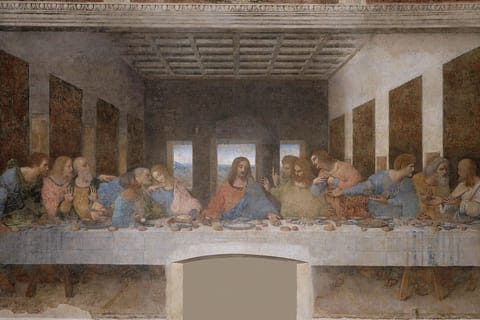
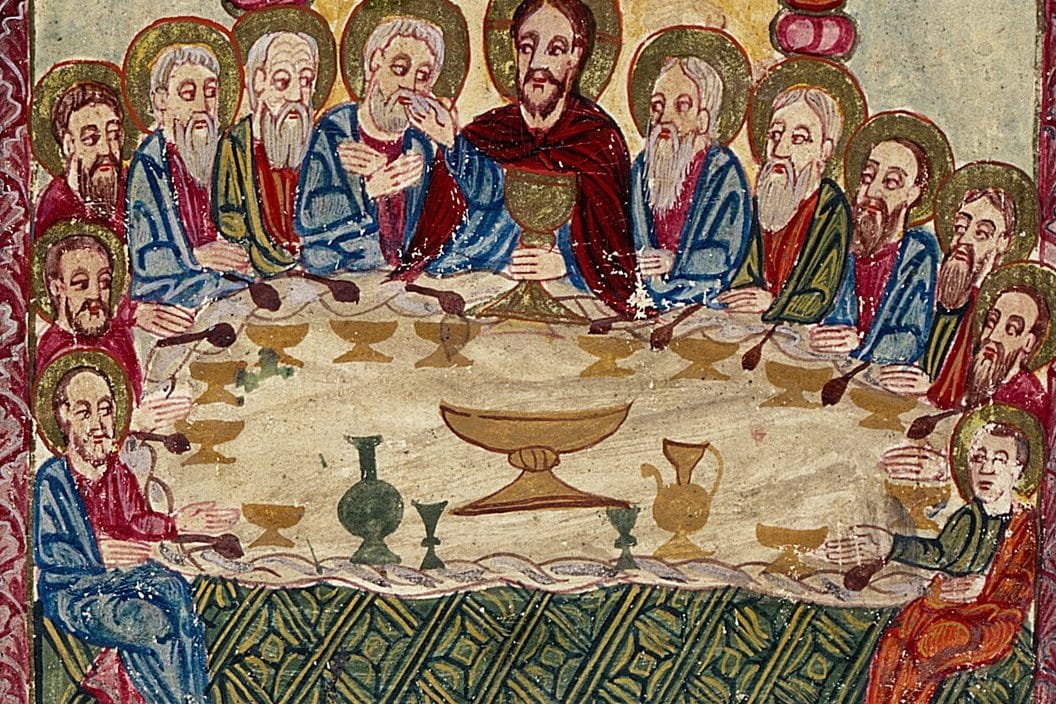
Every one of these churches celebrates the Supper because of what Jesus did on the night before he died:
For I received from the Lord that which also I delivered to you, that the Lord Jesus on the night in which he was betrayed took bread. When he had given thanks, he broke it and said, “Take, eat. This is my body, which is broken for you. Do this in memory of me.” In the same way he also took the cup after supper, saying, “This cup is the new covenant in my blood. Do this, as often as you drink, in memory of me.”
Jesus calls himself “the living bread which came down out of heaven” (John 6:51). After the resurrection, two disciples at Emmaus recognized him “in the breaking of the bread” (Luke 24:35). The name “Communion” comes from Paul’s word for sharing:
The cup of blessing which we bless, isn’t it a sharing of the blood of Christ? The bread which we break, isn’t it a sharing of the body of Christ? Because there is one loaf of bread, we, who are many, are one body; for we all partake of the one loaf of bread.
The Didache, a church manual from around the year 100, already says that only the baptized should receive, the ancient rule the ELCA and the Episcopal Church keep. Methodists and Presbyterians, who welcome all who come, remember that Jesus’ critics complained that he “welcomes sinners, and eats with them” (Luke 15:2). For more on the meal itself, see what is Holy Communion? and do you have to be baptized to be saved?
What does Communion offer you?
Whatever church you visit, the table is Christ’s, and he is the host. You come with your doubts and your sins, and he gives himself to you. One of the oldest Communion prayers outside the Bible, from the Didache, asks God to gather the scattered church into one:
Even as this broken bread was scattered over the hills, and was gathered together and became one, so let Your Church be gathered together from the ends of the earth into Your kingdom; for Yours is the glory and the power through Jesus Christ forever.
Didache 9
Common questions
Can I take Communion in a Methodist church if I am not a member?
Yes. The United Methodist liturgy invites “all who love him, who earnestly repent of their sin and seek to live in peace with one another,” and the church’s 2004 statement This Holy Mystery says that all who respond in faith to the invitation are to be welcomed. Membership is not required.
Do Lutherans believe in the real presence of Christ in Communion?
Yes. The ELCA teaches that in the sacrament “the crucified and risen Christ is present, giving his true body and blood as food and drink,” and it calls this real presence a mystery. Lutherans confess the presence without trying to explain how it happens.
Can children take Communion in the Presbyterian Church?
Yes. The PC(USA)’s Book of Order says that all who come to the table are offered the bread and cup “regardless of their age or understanding.”
Can someone who is not Episcopalian receive Communion in an Episcopal church?
Yes, if they are baptized. The Episcopal Church welcomes all baptized Christians to receive Holy Communion, whatever their denomination. Its canons say that no unbaptized person is eligible to receive, so a person who is not baptized should speak with the priest about baptism.
What does full communion mean?
In the words of the PC(USA)’s Book of Order, full communion includes “the mutual recognition of baptism and the orderly exchange of ministers.” Churches in full communion share the Lord’s Table and may call one another’s clergy. The ELCA is in full communion with the Episcopal Church, the Presbyterian Church (U.S.A.), the United Church of Christ, the Reformed Church in America, the Moravian Church, and the United Methodist Church.
Sources
- 1 Corinthians 10:16–17 (WEB)
- 1 Corinthians 11:23–26 (WEB)
- Luke 24:30–35 (WEB)
- John 6:51 (WEB)
- The Didache, ch. 9 (New Advent)
- United Methodist Church, This Holy Mystery: A United Methodist Understanding of Holy Communion (2004)
- ELCA, The Use of the Means of Grace (1997)
- ELCA: Full communion partners
- PC(USA), Book of Order 2025–2027, W-3.0409–W-3.0410, G-5.0202, and Appendix B: A Formula of Agreement
- Book of Common Prayer (1979), Catechism
- General Convention 2024-D002, Archives research report (quotes Canon I.17.7 and Resolution 2012-C029)
- US bishops block resolution on baptism before Holy Communion (Church Times, 2024)
- Episcopal-Methodist full communion update (Episcopal Diocese of Western New York, 2026)
- United Church of Christ, We Are One at Baptism and at the Table
- Christian Church (Disciples of Christ), Communion and Baptism
- Christian Church (Disciples of Christ), Ecumenical Partners in Ministry
- American Baptist Churches USA, 10 Facts About American Baptists