Swearing and cursing
Some kinds of cursing and swearing are sins. The commandment about God’s name mainly forbids false oaths and using God’s name for a lie or for harm. The New Testament also forbids cursing people, wishing them harm, and speech that tears others down. Crude words are a lesser matter, though the Letter to the Ephesians says that “filthiness” and “foolish talking” are “not appropriate” for Christians. The test is whether your words build others up.
Let no evil talk come out of your mouths but only what is good for building up, as there is need, so that your words may give grace to those who hear.
Ephesians 4:29, NRSVUE
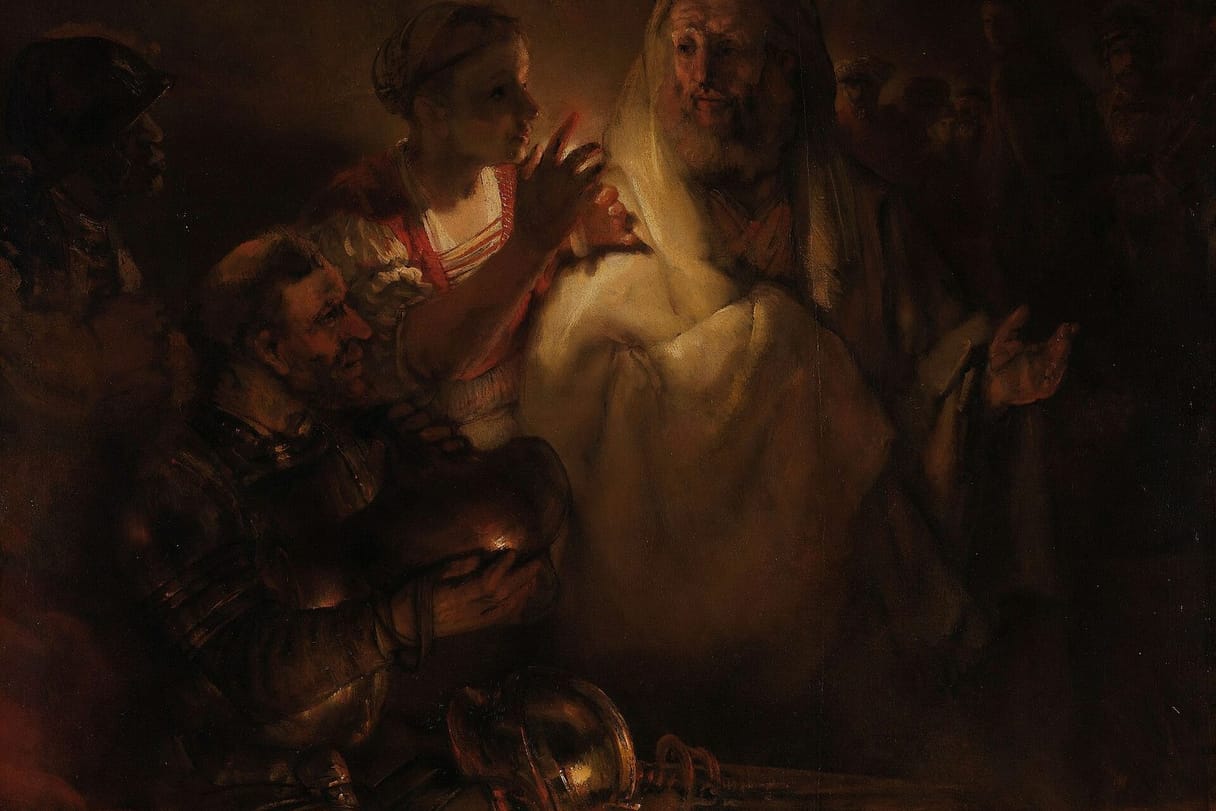
Some kinds of cursing are serious sins, and others are small faults. Perhaps you are trying to break a habit, or you feel bad about something you said in anger. Scripture cares most about what your words do to God’s name and to the person who hears them. The same tongue can bless or wound, and God’s hope for you is that your words will bless.
What does “taking the Lord’s name in vain” mean?
You shall not make wrongful use of the name of the Lord your God, for the Lord will not acquit anyone who misuses his name.
Exodus 20:7, NRSVUE
The King James Version renders the commandment “Thou shalt not take the name of the Lord thy God in vain.” In the numbering used by Reformed, Anglican, and Orthodox churches it is the third commandment; Lutherans, following Augustine, count it as the second. The Hebrew word behind “in vain” or “misuse,” shav, means emptiness or falsehood. In the ancient world people swore oaths by the name of their god to guarantee that they were telling the truth, so the commandment’s first target was swearing by God’s name to a lie. Leviticus spells that out: “You shall not swear by my name falsely, and profane the name of your God” (Leviticus 19:12).
Jewish tradition read the commandment the same way. The Mishnah, the code of Jewish law compiled around 200 CE, gives examples of an oath “taken in vain”: swearing that a stone pillar is made of gold, or that you saw a camel flying through the air (Shevuot 3:8). Calling on God to vouch for something false or absurd treats God’s name as empty.
The gravest misuse of God’s name today is the same as in the ancient world: invoking God to back a lie, to cover abuse, or to justify cruelty. Careless exclamations such as “Oh my God” are a smaller fault, but they still treat the name of God as filler. Martin Luther’s Small Catechism explains that the commandment forbids cursing, swearing, lying, or deceiving by God’s name, and calls Christians instead to use that name in every need to pray, praise, and give thanks. John Wesley’s General Rules for the early Methodists listed “the taking of the name of God in vain” among the evils to avoid.
What did Jesus say about swearing?
Jesus went further than the commandment. He hoped his followers would be so truthful that they would need no oaths at all:
But I say to you: Do not swear at all, either by heaven, for it is the throne of God, or by the earth, for it is his footstool, or by Jerusalem, for it is the city of the great King. … Let your word be ‘Yes, Yes’ or ‘No, No’; anything more than this comes from the evil one.
Matthew 5:34–35, 37, NRSVUE
The Letter of James repeats the teaching: “let your yes be yes, and your no, no” (James 5:12). Jesus and James are speaking about oaths. They want a Christian’s ordinary speech to be so truthful that it needs no guarantee. The Church of England’s Thirty-Nine Articles teach that “vain and rash Swearing is forbidden Christian men by our Lord Jesus Christ, and James his Apostle,” while allowing an oath in court when the law requires it (Article XXXIX).
Is it a sin to curse someone?
Yes. To curse a person, in the Bible’s sense, is to wish or call down harm on them, and the New Testament forbids it clearly. Paul wrote, “Bless those who persecute you; bless, and don’t curse” (Romans 12:14), echoing Jesus’ command to “bless those who curse you” (Luke 6:28). The Letter of James puts it most sharply:
With it we bless the Lord and Father, and with it we curse people, made in the likeness of God. From the same mouth comes a blessing and a curse. My brothers and sisters, this ought not to be so.
James 3:9–10, NRSVUE
James’s reason is that every person bears the image of God. Telling someone to go to hell, or wishing that they die, attacks someone God made and loves.
Insults belong in the same family. Jesus warned that “Whoever says to his brother, ‘Raca!’ will be in danger of the council. Whoever says, ‘You fool!’ will be in danger of the fire of Gehenna” (Matthew 5:22). Raca is an Aramaic insult, probably meaning “empty-head.” Gehenna, the name of a valley outside Jerusalem, is Jesus’ picture-language for God’s judgment, and he uses it here to show how seriously God takes contempt for another person. The sin Jesus names is contempt. A polite word said with contempt can do more damage than a swear word said in frustration, and slurs that demean people for their race, sex, disability, or sexuality are among the most serious sins of speech.
Is it a sin to use bad words?
The New Testament does speak to crude language, though it is far from the Bible’s main concern. The Letter to the Ephesians says:
Let no evil talk come out of your mouths but only what is good for building up, as there is need, so that your words may give grace to those who hear.
Ephesians 4:29, NRSVUE
The same letter lists “filthiness,” “foolish talking,” and “jesting” as things “which are not appropriate, but rather giving of thanks” (Ephesians 5:4); the Greek word behind “jesting,” eutrapelia, means coarse joking. The Letter to the Colossians tells Christians to put away “anger, wrath, malice, slander, and shameful speaking out of your mouth” (Colossians 3:8). The standard in these letters is positive: speech should give grace and build people up.
By that standard, a word that is merely coarse is a small fault, and one that depends a great deal on setting. A curse word muttered when you drop a hammer does not wound anyone. The same word shouted at a child does. Jesus taught that “that which proceeds out of the mouth, this defiles the man” (Matthew 15:11), because “out of the abundance of the heart, the mouth speaks” (Matthew 12:34). Habits of speech show and shape the heart, which is why many Christians work to clean up their language even when no one is hurt by it.
What do the churches teach about speech?
The Heidelberg Catechism, part of the Presbyterian Church (U.S.A.)’s Book of Confessions, teaches that the commandment forbids cursing and perjury and also careless swearing, and that Christians should use God’s name only with fear and reverence (Q&A 99). The serious sins of the tongue are lying, slander, cruelty, and contempt; crude words are a matter of courtesy and self-control. Wesley’s General Rules warned Methodists against “uncharitable or unprofitable conversation,” which covers both gossip and idle talk.
For more on how Scripture defines wrongdoing, see What is sin? For Jesus’ teaching on judging others, see What does “judge not” mean in Matthew 7:1?
How can I change the way I speak?
The love of neighbor that Jesus called one of the two greatest commandments applies to every word you say. If your speech has hurt someone, apologize to them and ask God’s forgiveness, which is freely given (see Will God forgive me?). Habits of speech change slowly, and God is patient with you while they do. The prophet Isaiah, when he saw the Lord, cried out that he was “a man of unclean lips,” and one of the seraphim touched his mouth with a live coal from the altar before God sent him to speak (Isaiah 6:5–8). Each morning you can ask for the same cleansing, and make the psalmist’s prayer your own:
Let the words of my mouth and the meditation of my heart be acceptable to you, O Lord, my rock and my redeemer.
Psalm 19:14, NRSVUE
Common questions
Is saying “Oh my God” a sin?
It is a careless use of God’s name, and Christians are right to break the habit. The commandment’s main target is more serious: swearing falsely by God’s name or using God’s name to back a lie or a cruelty. Scripture calls God’s name “holy and awesome” (Psalm 111:9), and speaking it with reverence is part of honoring God.
Will God forgive me for cursing?
Yes. Careless and angry words are among the most common sins, and God forgives them as readily as any other. The prophet Isaiah confessed, “I am a man of unclean lips,” and was cleansed and sent to speak for God (Isaiah 6:5–8). If your words have hurt someone, apologize to that person as well as to God.
What does “do not swear at all” mean?
In Matthew 5:33–37 Jesus is talking about oaths, the practice of calling on heaven or God to guarantee your words. He tells his followers to be so truthful that a plain yes or no is enough. The Church of England’s Thirty-Nine Articles teach that Christians may still take an oath in court when the law requires it, though some Christians, such as Quakers, decline all oaths.
Did anyone in the Bible use rough language?
Yes. In anger at teachers who demanded circumcision of Gentile converts, Paul wrote, “I wish that those who disturb you would cut themselves off” (Galatians 5:12); most scholars take the Greek verb, *apokoptō*, to refer here to castration. In Philippians 3:8 he called everything he had given up for Christ “refuse,” a word the King James Version translates as “dung.” Scripture does not hide strong feeling, but it never treats contempt for people as a virtue.
Is it a sin to curse when I hurt myself?
A word blurted out in pain is very different from a curse aimed at a person. It does not wound anyone, and God knows the difference. Still, many Christians try to train their reflexes toward gentler words, because habits of speech shape the heart over time.
Sources
- Exodus 20:7 (WEB)
- Leviticus 19:12 (WEB)
- Matthew 5:33–37 (WEB)
- James 3:9–10 (WEB)
- Ephesians 4:29 (WEB)
- Colossians 3:8 (WEB)
- Romans 12:14 (WEB)
- Matthew 5:22 (WEB)
- Mishnah Shevuot 3:8 (Sefaria)
- Martin Luther, Small Catechism, Part 1: The Ten Commandments (BookOfConcord.org)
- Heidelberg Catechism, Q&A 99–100
- The Thirty-Nine Articles of Religion, Article XXXIX (Church of England)
- The General Rules of the Methodist Church (umc.org)