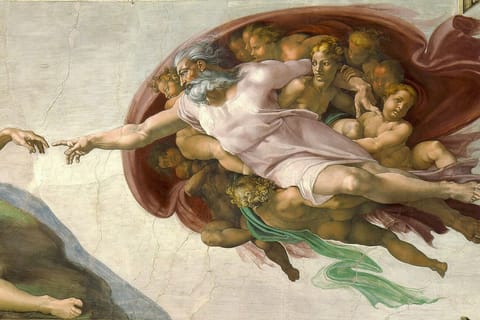
God beyond male and female
God does not have a gender: God is spirit, without a body, and is neither male nor female. Genesis says both male and female are made in God’s image. The Bible most often calls God “Father” and uses “he,” but it also compares God to a nursing mother, a woman in labor, and a mother hen. Christian teachers from Gregory of Nazianzus onward have taught that calling God “Father” does not make God male.
So God created humans in his image, in the image of God he created them; male and female he created them.
Genesis 1:27, NRSVUE
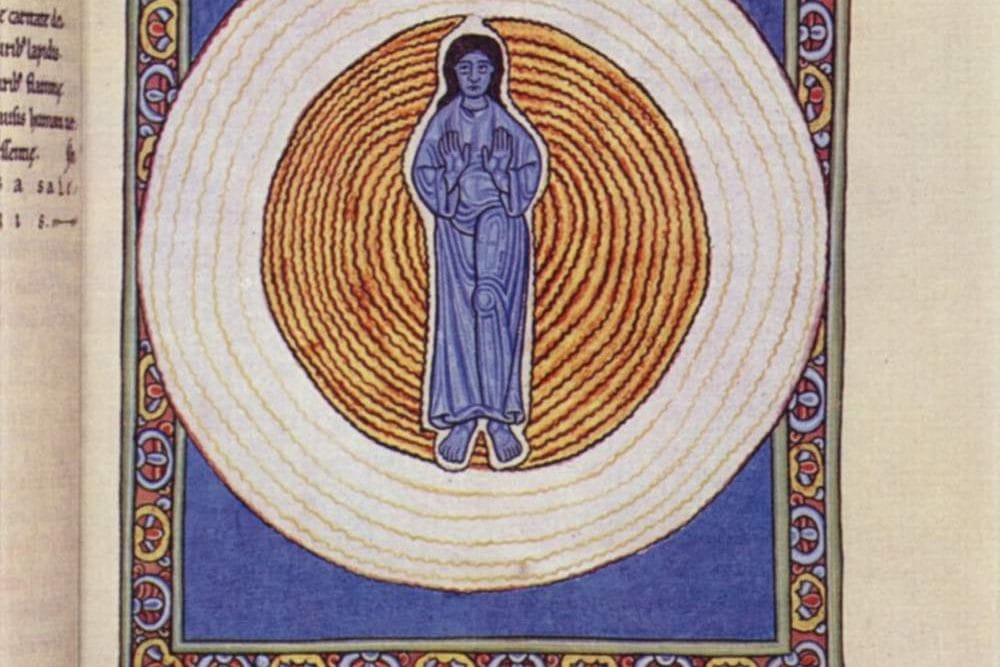
God has no body and is neither male nor female. The Bible most often speaks of God with masculine words, especially “Father,” “King,” and “he.” It also speaks of God as a mother who nurses, comforts, and gives birth. Christians hold both kinds of language together, knowing that every human word falls short of God.
The question can be tender. For some people “Father” is the dearest name they know for God; for others, a hard or absent father has made the word painful. Scripture has room for both, because it uses many names for one God whose love is greater than any name.
What does the Bible say about God and gender?
The first chapter of the Bible says that both sexes reflect God:
So God created humans in his image, in the image of God he created them; male and female he created them.
Genesis 1:27, NRSVUE
The Hebrew word translated “humans” is adam, which means humankind, the human race as a whole.1 If male and female together bear God’s image, God cannot be pictured as only one of them.
Israel was forbidden to make any image of God, and Moses gave the reason: “Be very careful, for you saw no kind of form on the day that the LORD spoke to you in Horeb out of the middle of the fire, lest you corrupt yourselves, and make yourself a carved image in the form of any figure, the likeness of male or female” (Deuteronomy 4:15–16). Scripture says “God is not a man” (Numbers 23:19), and Jesus said, “God is spirit” (John 4:24).
Does the Bible describe God as a mother?
Yes, several times. Isaiah compares God to a nursing mother and promises a love even stronger:
Can a woman forget her nursing child or show no compassion for the child of her womb? Even these might forget, yet I will not forget you.
Isaiah 49:15, NRSVUE
Later in the same book God says, “As one whom his mother comforts, so I will comfort you” (Isaiah 66:13). God also cries out “like a travailing woman,” a woman in labor (Isaiah 42:14), and Moses reminds Israel of the “God who gave you birth” (Deuteronomy 32:18).
In Hosea 11, God speaks as a parent remembering a child’s first steps: “I taught Ephraim to walk. I took them by their arms … I bent down to him and I fed him” (Hosea 11:3–4). The same chapter ends with God refusing to give up on Israel, “for I am God, and not man” (Hosea 11:9).
Jesus used a mother’s image for himself as he wept over Jerusalem:
Jerusalem, Jerusalem, the city that kills the prophets and stones those who are sent to it! How often have I desired to gather your children together as a hen gathers her brood under her wings, and you were not willing!
Matthew 23:37, NRSVUE
In Luke 15, Jesus pictures God as a shepherd searching for a lost sheep and, in the very next story, as a woman sweeping her house for a lost coin (Luke 15:8–10). In both stories God is the one who searches, and the story ends in joy when the lost is found.
Why do Christians call God “Father”?
Christians call God Father because Jesus did. He prayed “Abba, Father” in Gethsemane (Mark 14:36) and taught his disciples to pray “Our Father in heaven” (Matthew 6:9). The name speaks of closeness and trust. It also names the eternal relationship between the Father and the Son within the Trinity (see What is the Trinity?).
The Church Fathers of the East saw long ago that the name “Father” does not make God male. Gregory of Nazianzus, a fourth-century bishop and one of the Cappadocian Fathers, explained that “Father” names a relationship, the relation of the Father to the Son, and does not name God’s essence (Oration 29.16). In another sermon he mocked the idea that God must be male because God is called Father. By that logic, he said, the Godhead would be feminine because the word for “Deity” is grammatically feminine, and the Spirit would be neuter (Oration 31.7). Names drawn from human life tell us something true about God without making God a man or a woman.
What did Julian of Norwich mean by “Christ our Mother”?
Julian of Norwich, a fourteenth-century English mystic, wrote at length in her Revelations of Divine Love about the motherhood of God. In chapter 59 she says: “As verily as God is our Father, so verily God is our Mother.” She calls Jesus “our Very Mother” and compares the Eucharist to nursing: “The mother may give her child suck of her milk, but our precious Mother, Jesus, He may feed us with Himself” (chapter 60).
Julian never stopped calling God Father. She used both names because each says something true about how God gives life, protects, and feeds.
If God has no gender, why was Jesus a man?
The Nicene Creed confesses that the Son of God “became incarnate from the Virgin Mary, and was made man.” To become human is to become a particular person, and Jesus was a Jewish man of first-century Galilee. Christians hold that what matters for salvation is that the Son took on our whole human nature, which women share as fully as men. Paul wrote that in Christ “there is neither male nor female; for you are all one in Christ Jesus” (Galatians 3:28). That is one reason the ELCA, the Presbyterian Church (U.S.A.), the United Methodist Church, and the Episcopal Church ordain women as pastors, priests, and bishops (see Can women be pastors?).
What do the churches teach?
No major church teaches that God is male. The Augsburg Confession, the founding Lutheran confession of 1530, describes God as “without body, without parts,” and the United Methodist Articles of Religion say God is “without body or parts.” The Orthodox churches keep the names Father, Son, and Holy Spirit in their worship while insisting that no name captures what God is. John of Damascus, the eighth-century monk whose summary of the faith became a standard of Eastern theology, wrote that “God then is infinite and incomprehensible and all that is comprehensible about Him is His infinity and incomprehensibility.”
The Presbyterian Church (U.S.A.)’s Brief Statement of Faith uses both images in one line: “Like a mother who will not forsake her nursing child, like a father who runs to welcome the prodigal home, God is faithful still.” In 2018 the Episcopal Church’s General Convention directed that future revisions of its worship texts “utilize inclusive and expansive language and imagery for humanity and divinity” (Resolution 2018-A068).
Most Christian worship still uses “Father” and “he,” and baptism is still in the name of the Father, the Son, and the Holy Spirit. The churches add that these words are true and that none of them describes a body. Christians who keep the traditional names and Christians who add mothering images are both praying to the same God (see Does God love me?).
Whatever names you use when you pray, you are speaking to the God who made both men and women in the divine image and loves them equally. If “Father” is dear to you, pray it with joy. If it is hard for you, Scripture gives you other words too, and God will still hear you: “As one whom his mother comforts, so I will comfort you” (Isaiah 66:13).
Notes
-
Hebrew (Westminster Leningrad Codex): וַיִּבְרָ֨א אֱלֹהִ֤ים ׀ אֶת־הָֽאָדָם֙ בְּצַלְמ֔וֹ בְּצֶ֥לֶם אֱלֹהִ֖ים בָּרָ֣א אֹת֑וֹ זָכָ֥ר וּנְקֵבָ֖ה בָּרָ֥א אֹתָֽם׃ Ha-adam means “the human being” or “humankind”; oto, literally “him,” is singular and refers back to ha-adam; zakar u-neqevah means “male and female”; otam means “them.” ↩︎
Common questions
Is it wrong to call God “she”?
The Bible itself uses female images for God, such as a mother comforting her child in Isaiah 66:13 and a hen gathering her brood in Matthew 23:37. Julian of Norwich, a fourteenth-century English mystic, wrote that “as verily as God is our Father, so verily God is our Mother.” Most Christian worship still uses “he” and “Father,” and churches differ on how far to go, but neither word means God is male.
Why did Jesus call God Father?
Jesus prayed to God as “Abba,” an Aramaic word for Father, and taught his disciples to pray “Our Father.” The name expresses closeness, trust, and the relationship between the Father and the Son within the Trinity. Gregory of Nazianzus, a fourth-century bishop, explained that “Father” names a relationship, the Father’s relation to the Son, rather than a body or a sex.
Is the Holy Spirit female?
The Bible does not make the Holy Spirit either female or male. The Hebrew word for spirit, ruach, is grammatically feminine, the Greek pneuma is neuter, and the Latin spiritus is masculine. Early Syriac-speaking Christians often spoke of the Spirit with feminine words, and Gregory of Nazianzus pointed to the neuter Greek word to show that grammar tells us nothing about God’s sex.
If God has no gender, why was Jesus a man?
The church proclaims that the Son of God became a particular human being, a Jewish man of the first century. Becoming human meant becoming a specific person with a sex, a family, a language, and a homeland. Paul teaches that in Christ “there is neither male nor female; for you are all one in Christ Jesus” (Galatians 3:28).
Sources
- Genesis 1:26–27 (WEB)
- Isaiah 49:15 (WEB)
- Isaiah 66:13 (WEB)
- Hosea 11:1–4 (WEB)
- Matthew 23:37 (WEB)
- Julian of Norwich, Revelations of Divine Love, chapter 59
- Julian of Norwich, Revelations of Divine Love, chapter 60
- Gregory of Nazianzus, Third Theological Oration (Oration 29)
- Gregory of Nazianzus, Fifth Theological Oration (Oration 31)
- John of Damascus, An Exact Exposition of the Orthodox Faith, Book I, chapter 4 (New Advent)
- Augsburg Confession, Article I: Of God (BookOfConcord.org)
- PC(USA), The Book of Confessions (2016), A Brief Statement of Faith
- Episcopal General Convention Resolution 2018-A068