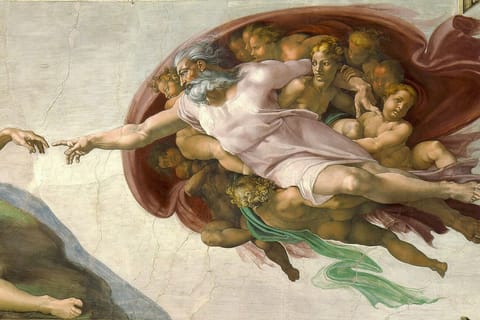
Belief in God
Christians confess that God exists: one God, maker of all that is, seen and unseen. Thomas Aquinas taught that God is being itself, the reason anything exists at all. Paul told the Athenians that in God “we live and move and have our being.” Philosophers have offered arguments for God, but most believers come to know God through Scripture, prayer, worship, and love, and doubt has a place in faith.
For ‘In him we live and move and have our being’; as even some of your own poets have said, ‘For we, too, are his offspring.’
Acts 17:28, NRSVUE
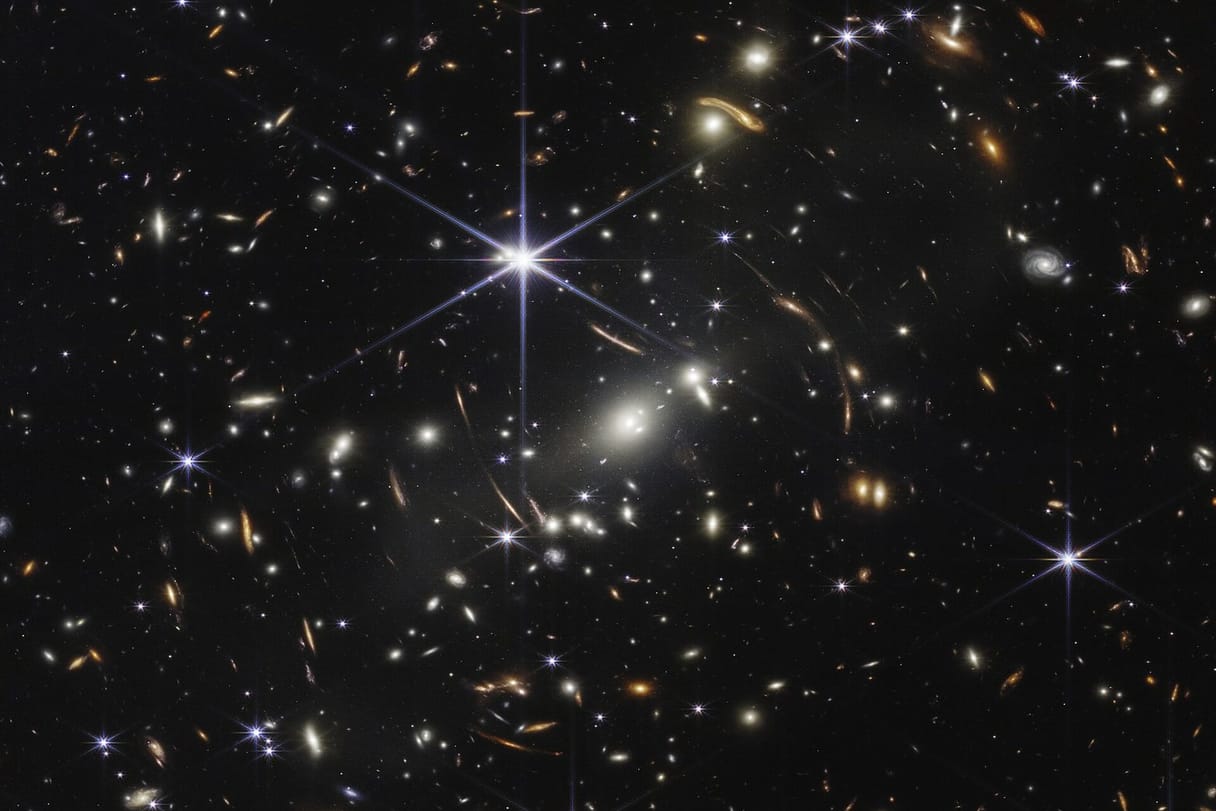
Christians believe that God exists. The Nicene Creed, the most widely shared statement of Christian faith, begins: “We believe in one God, the Father, the Almighty, maker of heaven and earth, of all that is, seen and unseen.” When Christians say God exists, they mean that everything that exists comes from God, depends on God at every moment, and is held in God’s love.
People ask this question in many moods: some are curious, some feel an old faith slipping away, and some want to believe and cannot yet. Christian thinkers have argued carefully for God’s existence for centuries. Most believers, though, come to know God through prayer, worship, Scripture, and love, often after a long season of searching.
What do Christians mean by “God”?
Thomas Aquinas, the thirteenth-century Dominican friar whose Summa Theologiae has shaped Christian theology for centuries, insisted that God is no single being among others, even the largest or oldest one. In the Summa (part I, question 3, article 4), he writes that God “is not only His own essence … but also His own existence.” On this view, God does not have existence the way a tree or a star has it. God is existence itself, and every other thing exists by sharing in what God is.
The Bible points the same way. When Moses asks God’s name, the answer is “I AM WHO I AM” (Exodus 3:14). When Paul preached to the philosophers of Athens, he described a God who is near to every person:
so that they would search for God and perhaps fumble about for him and find him—though indeed he is not far from each one of us. For ‘In him we live and move and have our being’; as even some of your own poets have said, ‘For we, too, are his offspring.’
Acts 17:27–28, NRSVUE
Aquinas drew the same conclusion: “God is in all things, and innermostly” (Summa I, question 8, article 1). Some modern theologians, including the New Testament scholar Marcus Borg, use the word panentheism (Greek for “all in God”) for this picture: everything exists within God, and God is more than everything. Classical theism and panentheism both set aside the image of God as a distant being who lives far away and occasionally intervenes.
Christians also say what this God is like. “God is love, and he who remains in love remains in God, and God remains in him” (1 John 4:16). Julian of Norwich, the fourteenth-century English mystic, saw in a vision something the size of a hazelnut in her hand and was told, “It is all that is made.” She wondered why it did not fall into nothing, and understood: “It lasteth, and ever shall [last] for that God loveth it” (Revelations of Divine Love, chapter 5).
What are the classical arguments for God’s existence?
The best-known arguments are the Five Ways of Thomas Aquinas (Summa I, question 2, article 3). Each one starts from something ordinary that anyone can observe and reasons back to its source.
- Change. Things in the world change. Whatever changes is changed by something else, and the chain of changers cannot run back forever with nothing at its start. So there is a first source of change that is not itself changed.
- Causes. Every cause we observe is itself caused. A series of causes with no first cause would have no later causes either, so there is a first cause.
- Contingency. Everything around us could have failed to exist. If everything were like that, Aquinas argues, nothing would exist now. So something exists necessarily, by its own nature.
- Degrees. We judge things to be more or less good, true, and noble. That comparison points to something that is the fullness of goodness and being.
- Order. Things without minds act regularly toward ends, “as the arrow is shot to its mark by the archer.” That order points to an intelligence that directs nature.
Aquinas ends each argument by naming what it reaches as God. The arguments aim at the source of all being, so no future discovery in physics could fill the place they point to.
Aquinas was fair to the other side. He opened his article with the two strongest objections he knew: that a good God would allow no evil, and that nature and human choice seem to explain everything without God. He also taught that a person “who cannot grasp a proof” may hold the same truth by faith (Summa I, question 2, article 2). Many philosophers since his time have disputed these arguments, and the debate continues. Most Christians treat them as reasons that make faith reasonable.
Scripture assumes something similar: “The heavens declare the glory of God. The expanse shows his handiwork” (Psalm 19:1). Paul writes that “the invisible things of him since the creation of the world are clearly seen, being perceived through the things that are made, even his everlasting power and divinity” (Romans 1:20). Christians who accept evolution and modern cosmology need see no conflict here, because the arguments ask why there is a universe at all, and science asks how it developed (see Can Christians believe in evolution?).
How do people come to know God?
Christians hold that God speaks through Scripture, nature, and history, and is known most clearly in Jesus: “No one has seen God at any time. The only born Son, who is in the bosom of the Father, has declared him” (John 1:18).
For most people, knowledge of God grows through practice. The Psalms invite it: “Oh taste and see that the LORD is good” (Psalm 34:8). People pray, sing, receive Holy Communion, read Scripture, and serve their neighbors, and over time they find that God has been there all along. The first letter of John ties knowing God directly to love:
Beloved, let us love one another, because love is from God; everyone who loves is born of God and knows God. Whoever does not love does not know God, for God is love.
1 John 4:7–8, NRSVUE
Augustine of Hippo, writing around 400 CE, began his Confessions with a prayer that names the longing many people feel before they can name God: “You have made us for Yourself, and our hearts are restless until they rest in You” (Confessions 1.1.1). Later in the same book he says God was “more inward to me than my most inward part; and higher than my highest” (3.6.11). If that restlessness is familiar to you, it may already be the beginning of prayer. Learning to pray is a good first step.
Why isn’t God’s existence more obvious?
The Bible admits that God is often hidden. When the prophet Elijah waited for God on Mount Horeb, the wind, the earthquake, and the fire passed by without God, and then came “a still small voice” (1 Kings 19:11–12). The Hebrew words, qol demamah daqqah, mean literally “a sound of thin silence.” If God is the ground of everything, God cannot be pointed at as one item among others.
The Christian East has made this hiddenness central. Exodus says that “Moses came near to the thick darkness where God was” (Exodus 20:21), and Gregory of Nyssa, a fourth-century bishop, read that verse in his Life of Moses to mean that the closer a person comes to God, the more clearly they see that God surpasses everything they can know. Orthodox theologians call this the apophatic way, from a Greek word for “denial”: saying what God is not, because God is beyond every concept. On this view, God’s hiddenness is what you would expect if God is real.
Suffering makes God harder to see for many people, and Aquinas listed it as the first objection to belief. The Bible does not hide from that problem (see Why does God allow suffering?).
Is it okay to doubt whether God exists?
Yes. A father who brought his sick son to Jesus cried out, “I believe. Help my unbelief!” (Mark 9:24), and Jesus healed the boy. Psalm 22 begins, “My God, my God, why have you forsaken me?” (Psalm 22:1), and in Mark’s Gospel Jesus prays those words from the cross. Faith in the Bible means trust, and trust can live alongside hard questions (see Is it wrong to question God?).
What do the mainline churches teach?
The Evangelical Lutheran Church in America (ELCA), the Presbyterian Church (U.S.A.), the United Methodist Church, and the Episcopal Church all confess the Nicene Creed, and so do the Orthodox churches. The first article of the Augsburg Confession of 1530, the founding Lutheran confession, teaches that there is one God, eternal, without body or parts, of infinite power, wisdom, and goodness, the maker and preserver of all things, visible and invisible. The United Methodist Articles of Religion, which John Wesley adapted from the Church of England’s articles, open with almost the same words.
None of these churches asks you to settle every philosophical question before you pray. They invite you to worship, to love your neighbor, and to look for the God in whom you already live, move, and have your being. Anselm of Canterbury, the eleventh-century monk who wrote one of the most famous arguments for God, began his work with a prayer that anyone who is searching can pray:
Teach me to seek thee, and reveal thyself to me, when I seek thee, for I cannot seek thee, except thou teach me, nor find thee, except thou reveal thyself. Let me seek thee in longing, let me long for thee in seeking; let me find thee in love, and love thee in finding.
Anselm, Proslogion, chapter 1 (trans. S. N. Deane, 1903)
Common questions
Can you prove that God exists?
Thomas Aquinas thought the existence of God could be shown by reasoning from the world back to its source, and he gave five such arguments. He also wrote that a person who cannot follow a proof can still hold the same truth by faith. Many philosophers dispute these arguments, so most Christians treat them as reasons that support faith rather than as proofs that compel it.
Does science disprove God?
No. Science studies how things in the universe behave and how they came to be as they are. The Christian claim about God concerns why there is a universe at all, which is a different kind of question. Many working scientists are Christians.
Do I have to be certain God exists to be a Christian?
No. A father in Mark’s Gospel says to Jesus, “I believe. Help my unbelief!” and Jesus does not turn him away. The Psalms are full of prayers from people who felt God was absent. Faith in the Bible means trust, and trust can live alongside questions.
What is panentheism?
Panentheism, from Greek words meaning “all in God,” is the belief that everything exists within God while God is more than the universe. It differs from pantheism, which says God and the universe are the same thing. Paul’s words in Acts 17:28, “In him we live and move and have our being,” are often cited in support of panentheism.
Sources
- Acts 17:24–28 (WEB)
- 1 John 4:7–12 (WEB)
- Psalm 19:1–2 (WEB)
- Mark 9:24 (WEB)
- Thomas Aquinas, Summa Theologiae I, q. 2: The existence of God
- Thomas Aquinas, Summa Theologiae I, q. 3: The simplicity of God
- Thomas Aquinas, Summa Theologiae I, q. 8: The existence of God in things
- Augustine, Confessions, Book 1
- Julian of Norwich, Revelations of Divine Love, chapter 5
- Book of Common Prayer (1979), The Nicene Creed
- Augsburg Confession, Article I: Of God (BookOfConcord.org)
- Exodus 20:21 (WEB)
- Anselm, Proslogium, chapter 1, trans. S. N. Deane (1903) (CCEL)