The Holy Spirit
The Holy Spirit is God present and active in the world, the third person of the Trinity alongside the Father and the Son. The Nicene Creed calls the Spirit “the Lord, the giver of life” who “has spoken through the Prophets.” In Scripture the Spirit is God’s breath, giving life at creation, inspiring prophets, resting on Jesus, and filling the church at Pentecost. Christians recognize the Spirit wherever people are drawn into love and harmony with God and neighbor.
and hope does not put us to shame, because God’s love has been poured into our hearts through the Holy Spirit that has been given to us.
Romans 5:5, NRSVUE
Many people find the Father and the Son easier to picture than the Spirit. Yet if God has ever seemed far away to you, the Holy Spirit is the Bible’s name for God close at hand: God present and at work in the world, in the church, and in your own heart. Christians confess the Spirit as the third person of the Trinity, “the Lord, the giver of life.” The Bible helps us picture the Spirit with images drawn from ordinary life: wind, breath, fire, water, a dove. Each image says something about how God gives life and draws near.
What does the Bible say about the Holy Spirit?
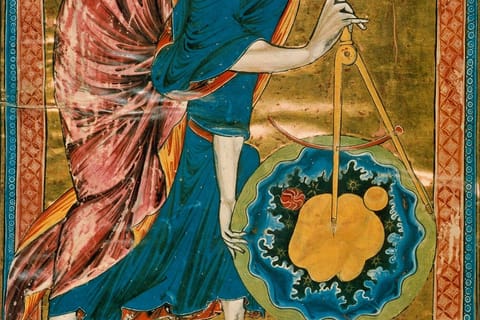
In both Hebrew (ruach) and Greek (pneuma), the word for spirit also means wind and breath. The Bible begins with that word. Genesis 1:2 says that “God’s Spirit was hovering over the surface of the waters” (Genesis 1:1–2). The Hebrew phrase, ruach elohim, can also be translated “a wind from God,” and some modern translations render it that way. In the next chapter God “breathed into his nostrils the breath of life” (Genesis 2:7).
The Psalms see the Spirit renewing all creation: “You send out your Spirit and they are created. You renew the face of the ground” (Psalm 104:30). In a vision, the prophet Ezekiel saw a valley of dry bones come to life when the breath entered them (Ezekiel 37:9–10). Psalm 51 prays, “Don’t throw me from your presence, and don’t take your Holy Spirit from me” (Psalm 51:11). The prophet Joel promised a day when the Spirit would rest on everyone, young and old, women and men:
Then afterward I will pour out my spirit on all flesh; your sons and your daughters shall prophesy, your old men shall dream dreams, and your young men shall see visions.
Joel 2:28, NRSVUE
The Nicene Creed sums up this Old Testament witness when it calls the Spirit “the Lord, the giver of life,” who “has spoken through the Prophets.”
What does the Holy Spirit do in the New Testament?
The Gospels show the Spirit resting on Jesus. At his baptism Jesus “saw the Spirit of God descending as a dove, and coming on him” (Matthew 3:16). In the synagogue at Nazareth he read from Isaiah: “The Spirit of the Lord is on me, because he has anointed me to preach good news to the poor” (Luke 4:18).
Before his death Jesus promised that the Spirit would come to his followers as “another Counselor” (John 14:16). The Greek word, paraklētos, means someone called to your side, such as a defender in court or a comforter. “But the Counselor, the Holy Spirit, whom the Father will send in my name, will teach you all things, and will remind you of all that I said to you” (John 14:26).
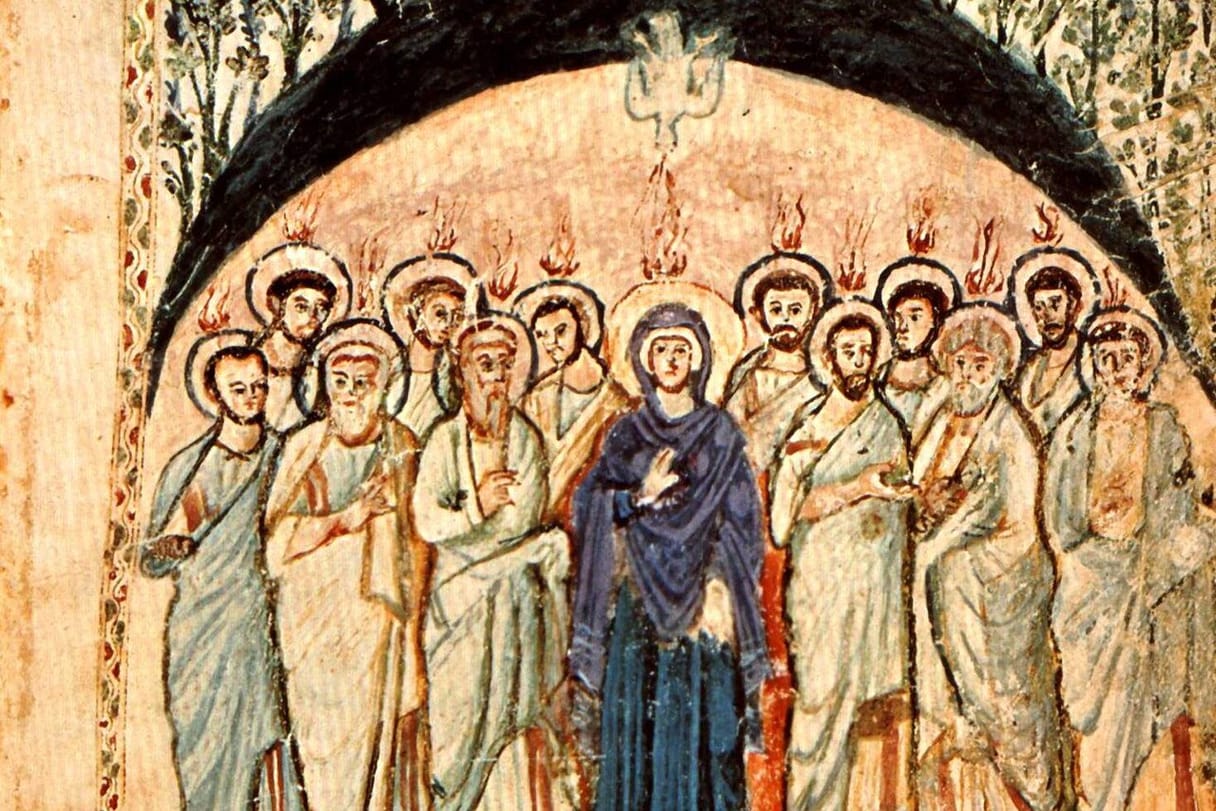
The Book of Acts tells how the Spirit came upon the disciples at the Jewish festival of Pentecost:
When the day of Pentecost had come, they were all together in one place. And suddenly from heaven there came a sound like the rush of a violent wind, and it filled the entire house where they were sitting. Divided tongues, as of fire, appeared among them, and a tongue rested on each of them. All of them were filled with the Holy Spirit and began to speak in other languages, as the Spirit gave them ability.
Acts 2:1–4, NRSVUE
Peter then announced that Joel’s promise had come true. The church celebrates Pentecost as the day the Spirit filled the church. Christians read the story in different ways, some as a literal account and others as a narrative whose truth lies in what it shows: the Spirit given to all, across every language.
Paul describes the Spirit as the one who makes us God’s children: “For as many as are led by the Spirit of God, these are children of God” (Romans 8:14). The Spirit teaches us to call God “Abba! Father!” (Romans 8:15) and even prays in us when we cannot find words: “the Spirit himself makes intercession for us with groanings which can’t be uttered” (Romans 8:26).
Is the Holy Spirit a person or a force?
The church teaches that the Spirit is a person in the same sense that the Father and the Son are persons, someone you can know and pray to. The Nicene Creed calls the Spirit “the Lord, the giver of life” and says that “with the Father and the Son he is worshiped and glorified.” Scripture speaks of the Spirit as one who teaches, guides “into all truth” (John 16:13), and can be grieved: “Don’t grieve the Holy Spirit of God” (Ephesians 4:30).
The church took time to say this clearly, and the Greek-speaking East did most of the work. Around 375 CE Basil of Caesarea wrote On the Holy Spirit to defend giving glory to the Spirit together with the Father and the Son. The Council of Constantinople in 381 CE confirmed the Nicene faith, and the creed associated with it added the lines about the Spirit that Christians still say. Gregory of Nazianzus, preaching in the same decade, explained the slow growth of understanding: “The New manifested the Son, and suggested the Deity of the Spirit. Now the Spirit Himself dwells among us, and supplies us with a clearer demonstration of Himself” (Oration 31.26).
Augustine offered a picture many Christians still use. Love involves “he that loves, and that which is loved, and love” (On the Trinity 8.10.14). In that picture, the Spirit is the love that joins the Father and the Son, and the same love that God pours into us. For more, see What is the Trinity?
How do I know the Holy Spirit is at work in my life?
Paul gives a first sign, and it is a gentle one: no one can say “Jesus is Lord” except “by the Holy Spirit” (1 Corinthians 12:3). If you trust Christ at all, even a little, the Spirit is already at work in you. Christians have also long tested any claim to the Spirit’s guidance against Scripture, since the same Spirit inspired both.
Paul names the signs to look for:
By contrast, the fruit of the Spirit is love, joy, peace, patience, kindness, generosity, faithfulness, gentleness, and self-control. There is no law against such things.
Galatians 5:22–23, NRSVUE
The Spirit also gives different abilities to different people: “Now there are various kinds of gifts, but the same Spirit. … But to each one is given the manifestation of the Spirit for the profit of all” (1 Corinthians 12:4, 7). The test Paul gives is growth in love, which matters more than any dramatic experience.
Jesus promised that the Father will “give the Holy Spirit to those who ask him” (Luke 11:13). Eastern Orthodox Christians ask for exactly that at the start of almost every service, with a prayer to the Spirit as the “heavenly King” and “Comforter,” quoted at the end of this article. Seraphim of Sarov, a Russian saint of the early nineteenth century, taught that the true aim of the Christian life is to acquire the Holy Spirit, and that prayer, fasting, and works of mercy are means to that end. For help beginning, see How do I pray?
How do Christians receive the Holy Spirit?
Christians believe the Spirit is given in baptism. On the day of Pentecost Peter told the crowd, “Repent and be baptized, every one of you, in the name of Jesus Christ for the forgiveness of sins, and you will receive the gift of the Holy Spirit” (Acts 2:38).
In the baptismal services of the mainline churches, the minister lays hands on the newly baptized and prays that the Holy Spirit will strengthen them. Many mainline services also mark the forehead with the sign of the cross and declare that the person has been sealed by the Holy Spirit. In the Eastern Orthodox churches, the priest anoints the newly baptized with holy oil right after baptism, a rite called chrismation, saying at each anointing, “The seal of the gift of the Holy Spirit.”
What do the mainline churches teach about the Holy Spirit?
The Evangelical Lutheran Church in America (ELCA), the Presbyterian Church (U.S.A.), the United Methodist Church, and the Episcopal Church all confess the Holy Spirit in the words of the Nicene Creed. Martin Luther’s Small Catechism teaches that no one can come to Christ by their own understanding or strength, and that it is the Holy Spirit who calls, gathers, and enlightens the whole church. John Wesley, the founder of Methodism, stressed the “witness of the Spirit,” drawing on Paul’s words that “the Spirit himself testifies with our spirit that we are children of God” (Romans 8:16). The Presbyterian Church (U.S.A.)’s Brief Statement of Faith says, “We trust in God the Holy Spirit, everywhere the giver and renewer of life,” and adds that the Spirit “calls women and men to all ministries of the church.”
Western and Eastern churches still differ over one phrase in the creed: whether the Spirit proceeds “from the Father” alone or “from the Father and the Son.” The words “and the Son” (in Latin, filioque) were added in the West centuries after 381, and Eastern Orthodox Christians object both to the addition and to the teaching behind it. Some Western churches and theologians have since proposed returning to the creed’s original wording. Christians who disagree on that point still agree that the Spirit is God, and that the Spirit is the reason God’s love can be “poured into our hearts” (Romans 5:5).
The Spirit who hovered over the waters at creation is the same Spirit who prays in you when you cannot find words. You can ask for the Spirit’s coming with the prayer that opens almost every Orthodox service:
O heavenly King, the Comforter, Spirit of Truth, who art in all places and fillest all things; Treasury of good things and Giver of life: Come and take up thine abode in us, and cleanse us from every stain; and save our souls, O Good One.
Orthodox prayer to the Holy Spirit, trans. Isabel F. Hapgood, Service Book of the Holy Orthodox-Catholic Apostolic (Greco-Russian) Church (1906)
Common questions
Is the Holy Spirit God?
Yes. The Nicene Creed says the Holy Spirit is “the Lord, the giver of life,” who “with the Father and the Son… is worshiped and glorified.” Jesus told his disciples to baptize “in the name of the Father and of the Son and of the Holy Spirit” (Matthew 28:19). Christians worship one God, Father, Son, and Holy Spirit.
Is the Holy Ghost the same as the Holy Spirit?
Yes. “Ghost” is the older English word for spirit, used in older English Bibles and in the Articles of Religion. Modern prayer books and Bible translations say “Holy Spirit.” Both names refer to the same third person of the Trinity.
What are the fruits of the Holy Spirit?
Paul lists them in Galatians 5:22–23: “love, joy, peace, patience, kindness, generosity, faithfulness, gentleness, and self-control.” These are the signs of the Spirit at work in a person’s character. Like fruit on a tree, they grow slowly, through prayer, worship, and the practice of loving others.
Do I have to speak in tongues to have the Holy Spirit?
No. Paul writes that “there are various kinds of gifts, but the same Spirit,” and that each gift is given “for the profit of all” (1 Corinthians 12:4, 7). The mainline churches teach that the Spirit is given to every baptized Christian. The clearest sign of the Spirit, according to Paul, is love.
Sources
- Genesis 1:1–2 (WEB)
- Acts 2:1–4 (WEB)
- John 14:16–17, 26 (WEB)
- Romans 8:14–16, 26–27 (WEB)
- Galatians 5:22–23 (WEB)
- Acts 2:38 (WEB)
- 1 Corinthians 12:3–7 (WEB)
- Basil of Caesarea, On the Holy Spirit (New Advent)
- Gregory of Nazianzus, Fifth Theological Oration: On the Holy Spirit (Oration 31)
- Augustine, On the Trinity, Book 8
- Isabel F. Hapgood, Service Book of the Holy Orthodox-Catholic Apostolic (Greco-Russian) Church (1906), Internet Archive