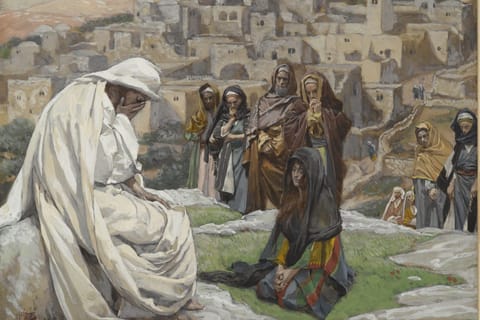
Doubt and questioning God
Questioning God is not wrong. The Bible is full of people who questioned God: Abraham argued with God over Sodom, the psalmists cried “How long, O Lord?”, Job demanded an answer, Habakkuk asked why God did not save, and Thomas refused to believe until he saw. God answered them and stayed with them, and at the end of Job, God said Job had spoken rightly. Questions brought to God in prayer are part of faith.
Immediately the father of the child cried out, “I believe; help my unbelief!”
Mark 9:24, NRSVUE
Questions brought to God are a form of prayer. If you have questions for God, or anger at God, you may be afraid that even asking them is a kind of betrayal. A question asked of God, even an angry one, is still addressed to God, and it trusts that someone is listening. Scripture is full of faithful people who argued, complained, and doubted, and God met them in their questions.
Do people in the Bible question God?
Yes, many of them. Abraham, when God told him that Sodom would be destroyed, argued with God on behalf of the innocent people in the city:
Far be it from you to do such a thing, to slay the righteous with the wicked, so that the righteous fare as the wicked! Far be that from you! Shall not the Judge of all the earth do what is just?
Genesis 18:25, NRSVUE
The psalms are full of questions. Psalm 13 asks “How long?” four times in two verses:
How long, O Lord? Will you forget me forever? How long will you hide your face from me? How long must I bear pain in my soul and have sorrow in my heart all day long?
Psalm 13:1–2, NRSVUE
The prophet Habakkuk opens his book with a complaint:
O Lord, how long shall I cry for help, and you will not listen? Or cry to you “Violence!” and you will not save?
Habakkuk 1:2, NRSVUE
Jeremiah puts it like a lawsuit: “You are righteous, LORD, when I contend with you; yet I would like to plead a case with you. Why does the way of the wicked prosper?” (Jeremiah 12:1). Psalm 44 even tells God to wake up: “Wake up! Why do you sleep, Lord?” (Psalm 44:23).
Jesus himself, dying on the cross, prayed the opening line of Psalm 22: “My God, my God, why have you forsaken me?” (Mark 15:34). If the Son of God could ask God “why,” you can too.
What does the Book of Job teach about questioning God?
Job lost his children, his property, and his health, and he refused to pretend that God had treated him fairly. “Behold, he will kill me. I have no hope. Nevertheless, I will maintain my ways before him,” he says (Job 13:15). The Hebrew can be read two ways. The written text has lo, “not” (“I have no hope”), but the traditional Jewish pronunciation reads it as lo, “in him,” which gives the reading older Bibles used: “Though he slay me, yet will I trust in him.” Both readings fit Job, who argues with God and holds on to God in the same breath.
Job’s three friends spend most of the book defending God, insisting that Job must have deserved his suffering. When God finally speaks, the rebuke falls on the friends. After speaking to Job, the LORD said to Eliphaz the Temanite:
My wrath is kindled against you and against your two friends, for you have not spoken of me what is right, as my servant Job has.
Job 42:7, NRSVUE
God does not give Job a full explanation, and Job admits there are “things too wonderful for me, which I didn’t know” (Job 42:3). But God takes Job’s side against the people who tried to silence his questions. For more on Job and suffering, see Why does God allow suffering?
What does Jacob wrestling with God mean?
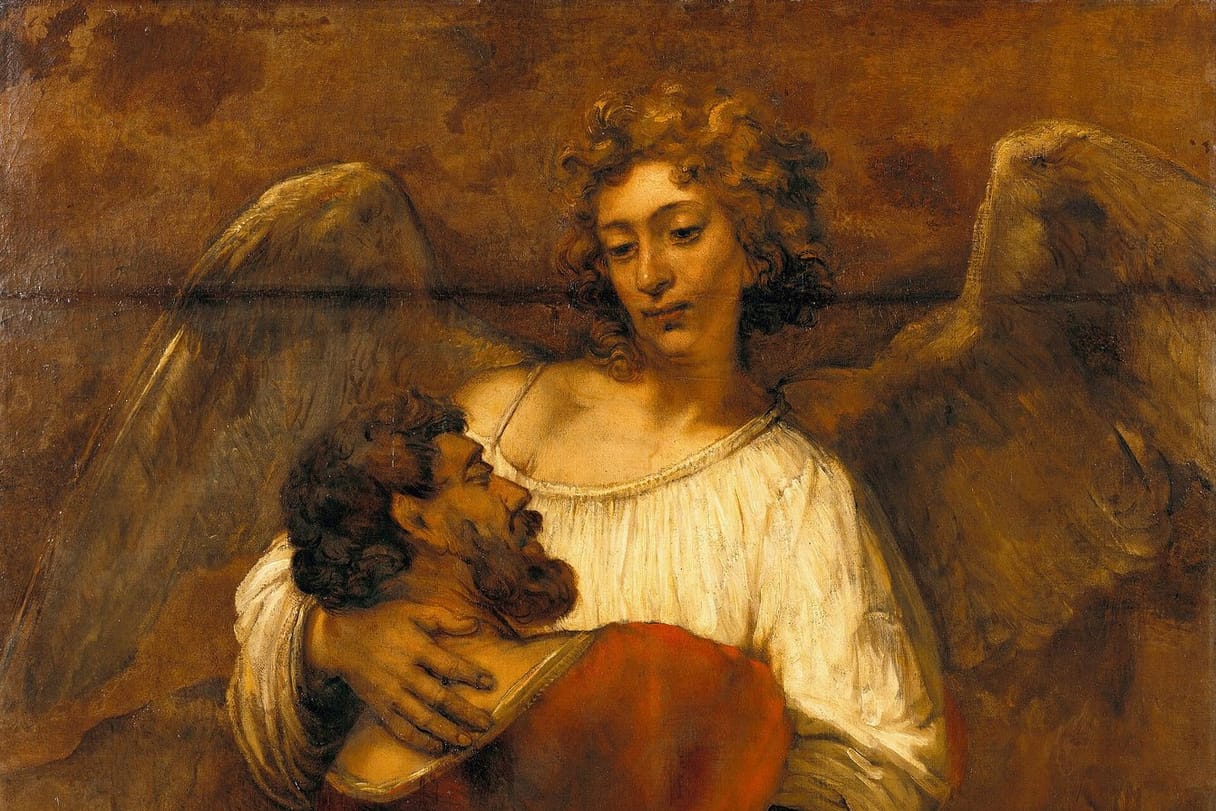
In Genesis 32, Jacob spends a night wrestling with a mysterious man who turns out to be God, or God’s messenger. Jacob will not let go:
Then he said, “Let me go, for the day is breaking.” But Jacob said, “I will not let you go, unless you bless me.” So he said to him, “What is your name?” And he said, “Jacob.” Then the man said, “You shall no longer be called Jacob, but Israel, for you have striven with God and with humans and have prevailed.”
Genesis 32:26–28, NRSVUE
The name Israel can mean “the one who strives with God” or “God strives.” God’s people carry a name that remembers a struggle with God. Jacob came away limping and blessed. He named the place Peniel, “the face of God,” and said, “I have seen God face to face, and my life is preserved” (Genesis 32:30).
What about doubting Thomas?
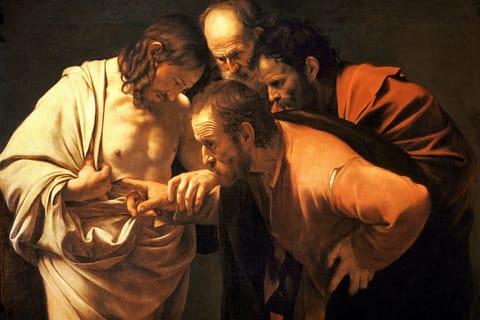
The apostle Thomas was not with the other disciples when the risen Jesus first appeared to them, and he refused to take their word for it:
But he said to them, “Unless I see the mark of the nails in his hands and put my finger in the mark of the nails and my hand in his side, I will not believe.”
John 20:25, NRSVUE
A week later Jesus came back, and he gave Thomas exactly what Thomas had asked for: “Reach here your finger, and see my hands” (John 20:27). Thomas then made one of the fullest confessions of faith in the Gospels: “My Lord and my God!” (John 20:28). Jesus blessed those who believe without seeing, but he did not send Thomas away for needing to see. The Eastern Orthodox Church calls the Sunday after Easter “Thomas Sunday,” and its hymns for that day praise the “good unbelief” of Thomas, because his questions led to that confession.
What does “I believe; help my unbelief!” mean?
In Mark 9, a father brings his suffering son to Jesus and asks for help “if you can do anything.” Jesus answers that all things can be done for one who believes, and the father cries out:
Immediately the father of the child cried out, “I believe; help my unbelief!”
Mark 9:24, NRSVUE
Some ancient manuscripts add that he said it “with tears.” The father’s faith was mixed with doubt, and he said so. Jesus healed his son. That prayer, five words in English, may be one of the truest prayers in the Bible, and you can pray it any time.
Is it a sin to be mad at God?
Anger at God is a common part of grief and suffering, and Scripture gives it a place in prayer. The prophet Jonah was so angry at God’s mercy to his enemies that he asked to die (Jonah 4:1–3). God answered him with a question: “Is it right for you to be angry?” (Jonah 4:4). God kept talking with Jonah until the end of the book.
Anger becomes a problem when it hardens into a refusal to speak to God at all, or when it is taken out on other people. Told to God, anger is a form of prayer. Psalm 13 shows the pattern: the psalmist complains, and then, without any explanation from God, says, “But I trust in your loving kindness” (Psalm 13:5). The complaint and the trust stand side by side in the same short prayer.
How can I bring my questions to God?
Pray the psalms of lament out loud: Psalms 13, 22, 44, and 88 are good places to start. Write your questions down and read them to God. Tell a priest, pastor, or trusted Christian friend what you are wondering; the church has heard these questions before and is not scandalized by them. Keep coming to worship if you can, even when the words of the creed feel hard to say, because the church says the creed together as the faith of the whole body, holding it for those who cannot hold it for themselves on a given day. Anselm of Canterbury, the eleventh-century monk, first gave his Proslogium the title Faith Seeking Understanding, a phrase that fits every Christian who prays with questions.
You may not get an answer quickly, or in the form you want. Read Why doesn’t God answer my prayers? and How do I pray? for more. If your question is whether God is there at all, see Does God exist? Whatever the question, the God who answered Job, wrestled with Jacob, and came back for Thomas welcomes your asking.
Habakkuk, who began his book by asking God “how long,” ended it with a song of trust that anyone with unanswered questions can pray:
For even though the fig tree doesn’t flourish, nor fruit be in the vines, the labor of the olive fails, the fields yield no food, the flocks are cut off from the fold, and there is no herd in the stalls, yet I will rejoice in the LORD. I will be joyful in the God of my salvation!
Common questions
Is it a sin to be mad at God?
Scripture makes room for it. Job, Jeremiah, Jonah, and the writers of the psalms all told God they were angry, and their prayers are in Scripture for Christians to pray. When Jonah was angry, God answered him with a question, “Is it right for you to be angry?” (Jonah 4:4). Anger told to God is still a way of talking to God.
Is doubt a sin?
Doubt is a normal part of faith, and the disciples doubted even after the resurrection. Thomas doubted, and Jesus came back for him. The father in Mark 9 prayed, “I believe; help my unbelief!”, and Jesus healed his son.
Will God punish me for asking why?
In the Bible, God meets people who ask why, sometimes with an explanation, often with presence. God rebuked Job’s friends, who defended God with easy answers, and said Job had spoken what was right (Job 42:7).
Can I still be a Christian if I have doubts?
Yes. Christians say the creed together as the faith of the whole church, and saying it makes no claim that each person is free of questions. Many saints went through long seasons of doubt and darkness while continuing to pray and to receive the sacraments.
Sources
- Psalm 13 (WEB)
- Psalm 22:1–2 (WEB)
- Habakkuk 1:2–3 (WEB)
- Habakkuk 3:17–18 (WEB)
- Job 13:15; 42:7 (WEB)
- Genesis 18:25 (WEB)
- Genesis 32:24–30 (WEB)
- John 20:24–29 (WEB)
- Mark 9:23–24 (WEB)
- Jonah 4:1–4 (WEB)
- Mark 15:34 (WEB)
- Anselm, Proslogium, chapter 1, translated by Sidney Norton Deane (1903, CCEL)
- Orthodox Christianity, “The Good Unbelief of Thomas”