Who made God?
Christian teaching holds that no one created God. The Bible and the creeds say that God has no beginning and depends on nothing else to exist: “from everlasting to everlasting, you are God” (Psalm 90:2). Thomas Aquinas taught that God is the uncreated source of everything that exists, and so does not need a cause the way created things do. Augustine added that time itself began with creation, so there was no “before” in which anyone could have made God.
Before the mountains were born, before you had formed the earth and the world, even from everlasting to everlasting, you are God.
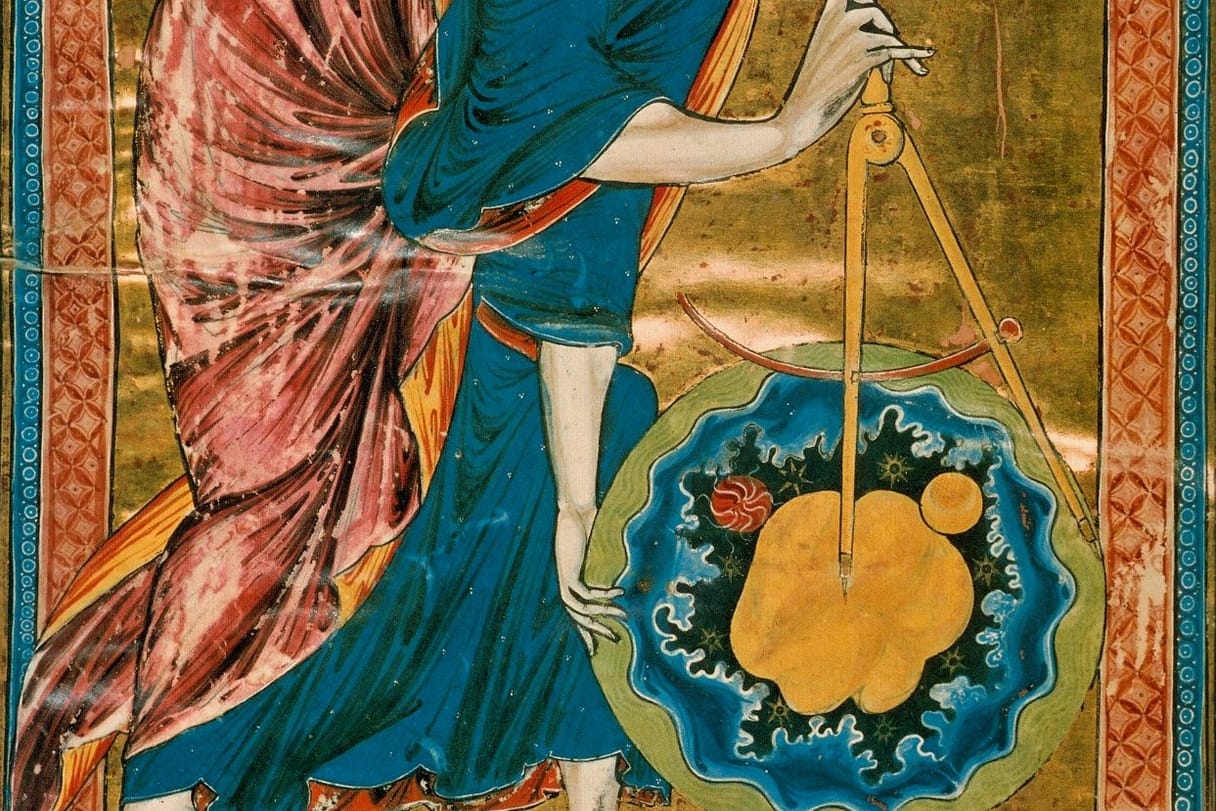
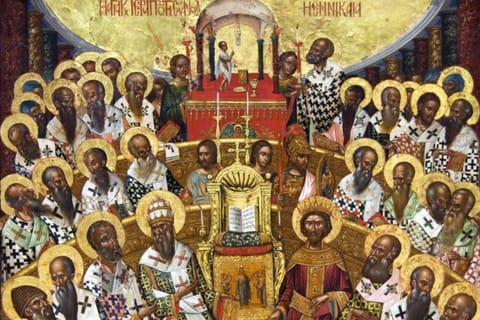
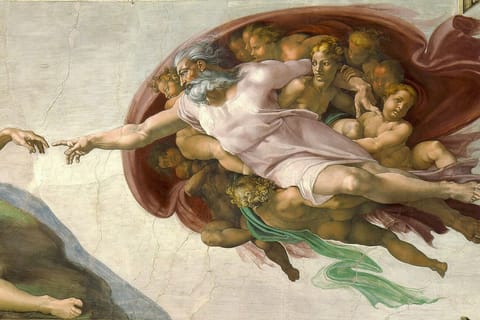
Children ask who made God, and so do thoughtful adults lying awake at night. The classical Christian answer is that no one did. The Evangelical Lutheran Church in America (ELCA), the Presbyterian Church (U.S.A.), the United Methodist Church, and the Episcopal Church all confess in the Nicene Creed that God is “maker of heaven and earth, of all that is, seen and unseen.” In that confession, everything that exists is either God or something God has made, and God does not belong among the made things. The God who has no beginning is the same God who made you and holds you in being today.
Is “Who made God?” a fair question?
The question is fair, and children and serious skeptics alike ask it. In a 1927 lecture at Battersea Town Hall in London, titled “Why I Am Not a Christian,” the philosopher Bertrand Russell said he had once accepted the argument that the world needs a first cause. He changed his mind at eighteen, after reading John Stuart Mill’s Autobiography, and in the lecture he gave Mill’s point this way: “My father taught me that the question, ‘Who made me?’ cannot be answered, since it immediately suggests the further question, ‘Who made God?’”
Russell drew the conclusion: “If everything must have a cause, then God must have a cause.” Russell’s conclusion follows from his premise. The classic Christian argument started from a narrower premise. It held that everything which receives its existence from something else must have a cause, and that the whole chain of receiving must rest on something that does not receive its existence from anything. Christians call that uncaused reality God.
What does the Bible say about where God came from?
The Bible never tells a story of God’s origin. Many ancient myths do: the Babylonian creation epic Enuma Elish, for example, begins with the birth of the gods out of the primeval waters. Genesis opens with God already there: “In the beginning, God created the heavens and the earth” (Genesis 1:1). The psalms make the same confession directly:
Before the mountains were born, before you had formed the earth and the world, even from everlasting to everlasting, you are God.
Psalm 90 is a prayer, and before it speaks of God’s eternity it calls God “our dwelling place for all generations” (Psalm 90:1). The psalm draws comfort from God’s eternity. A God who was there before the mountains can be a home for every generation of people who come and go.
When Moses asked God’s name at the burning bush, God answered, “I AM WHO I AM” (Exodus 3:14). The Hebrew can also be translated “I will be who I will be,” and scholars still discuss its exact sense. The Septuagint, the Greek translation of the Hebrew Scriptures made in the centuries before Christ, rendered it “I am the one who is,” and Christian teachers from the church fathers to Aquinas read the name as a sign that God’s very nature is to be (see The name of God). In Isaiah, God says, “I am the first, and I am the last” (Isaiah 44:6), and in Revelation, God is “the Alpha and the Omega … who is and who was and who is to come” (Revelation 1:8).
Paul, preaching in Athens, described a God who depends on nothing and on whom everything depends:
The God who made the world and all things in it, he, being Lord of heaven and earth, doesn’t dwell in temples made with hands. He isn’t served by men’s hands, as though he needed anything, seeing he himself gives to all life and breath and all things.
Why don’t Christians think God needs a cause?
Thomas Aquinas, the thirteenth-century Dominican friar whose Summa Theologiae became a standard textbook of Christian theology, gave the classic answer. In the second of his “five ways” of showing that God exists, Aquinas observed that nothing can cause itself, because it would have to exist before it existed. A chain of causes that each depend on something else cannot explain itself, however long it runs. Aquinas concluded: “Therefore it is necessary to admit a first efficient cause, to which everyone gives the name of God” (Summa Theologiae I, q. 2, a. 3). An efficient cause is whatever makes something happen or exist.
By “first,” Aquinas meant the source on which everything else depends, whether or not the world had a first moment in time. He held that reason alone cannot prove the world had a beginning: “By faith alone do we hold, and by no demonstration can it be proved, that the world did not always exist” (I, q. 46, a. 2). Even a world with no first moment would, in Aquinas’s view, depend on God for its existence at every moment. The Christian doctrine of creation speaks above all of that dependence. At every moment the world, and each person in it, receives its being from God.
Aquinas then explained why God does not need a cause. A tree, a star, or a person exists, yet none of them has to exist, and each received its existence from something else. God, Aquinas argued, is different, because God’s nature is to exist, and so God does not receive existence from anything. In Aquinas’s words, “His essence is His existence” (I, q. 3, a. 4). Aquinas also taught that God does not belong to any genus, or class of things (I, q. 3, a. 5). Asking who made God treats God as one more item in the universe, only larger and older. Classical Christian teaching holds that God is the reason there is a universe at all.
What was God doing before creating the world?
Augustine of Hippo (354–430) took up that question in Book XI of his Confessions. He reported a joke answer, that God “was preparing hell … for those who pry into mysteries,” and he refused to use it, because it mocked a serious question. His own answer was that time is part of creation. God did not wait through ages of empty time before making the world, because before the world there was no time to wait through: “For there was no ‘then’ when time was not” (Confessions XI.13). God is eternal, which in Augustine’s sense means living outside time altogether.
Augustine admitted that time is hard to think about: “What, then, is time? If no one ask of me, I know; if I wish to explain to him who asks, I know not” (XI.14). Many modern readers have noticed that his view resembles Einstein’s physics, in which time is bound up with space and matter.
Does belief in an uncreated God make sense?
Every explanation stops somewhere. Many people who do not believe in God stop at the universe itself, or at the laws of physics, and treat them as the place where explanation ends. Christians stop at God, whom they understand as the one reality that exists by its own nature. Thoughtful people disagree about whether the argument from a first cause proves that God exists (see Does God exist?). It does show that “Who made God?” does not, by itself, refute belief in God.
Christian teachers have also always said that God is beyond full human understanding. Through Isaiah, God says, “my thoughts are not your thoughts, and your ways are not my ways” (Isaiah 55:8). Asking where God came from can itself be a way of seeking God, and Scripture is full of people who brought hard questions to God (see Is it wrong to question God?).
What do the churches teach about God as creator?
The churches teach that God is uncreated and that everything else depends on God. The Thirty-Nine Articles of the Church of England begin: “There is but one living and true God, everlasting,” and call God “the Maker, and Preserver of all things both visible and invisible.” The Methodist Articles of Religion, which remain doctrinal standards of the United Methodist Church, open with almost the same words, and the first article of the Augsburg Confession of 1530, a founding Lutheran confession, also calls God “the Maker and Preserver of all things, visible and invisible.”
Eastern Orthodox teaching says the same thing with special care for the limits of human words. John of Damascus, an eighth-century monk whose Exposition of the Orthodox Faith summed up the teaching of the Greek Fathers, wrote that “God is without beginning, without end, eternal and everlasting, uncreate” (Book 1, chapter 2). He added that God is beyond human knowing. Orthodox theologians call this the apophatic way, from a Greek word for “denial”: because God is not one more thing among the things that exist, it is often truer to say what God is not than what God is.
The doctrine of creation also holds that the world is good: at the end of the first creation story, “God saw everything that he had made, and, behold, it was very good” (Genesis 1:31). God also keeps the world in being now. Paul told the Athenians, quoting a Greek poet, “For in him we live, move, and have our being” (Acts 17:28). The doctrine of creation answers why anything exists at all, so it does not compete with scientific accounts of how the universe has developed (see Can Christians believe in evolution?).
The Nicene Creed adds one more claim about God’s eternity. It says the Son of God is “eternally begotten of the Father” and “begotten, not made,” so the church confesses that the Father, the Son, and the Holy Spirit are all without beginning (see What is the Trinity?).
Christians confess that the God who needs nothing made the world freely, out of love, and that the same love holds you in being now. Augustine wrote his whole Confessions, hardest questions included, as a prayer to this God, and he began it this way: “You move us to delight in praising You; for You have made us for Yourself, and our hearts are restless until they rest in You” (Confessions I.1).
Common questions
Has God always existed?
Christian teaching holds that God has always existed and has no beginning or end. Psalm 90 says that “from everlasting to everlasting, you are God,” and in Revelation God is “the Alpha and the Omega.” Augustine and Aquinas understood God’s eternity as existence outside time altogether. For them, God’s life has no before or after, and every moment of our lives is present to God.
Did God create himself?
Christian theology does not say that God created himself. Thomas Aquinas pointed out that nothing can be the cause of itself, because it would have to exist before it existed. The traditional teaching is that God is uncaused: God exists by God’s own nature and was never brought into being at all.
If Jesus is the Son of God, who made Jesus?
The Nicene Creed says that the Son is “eternally begotten of the Father” and “begotten, not made,” so the church teaches that the Son, the Word of God, has no beginning. John’s Gospel says that all things were made through the Word, which places the Word on the side of the Creator. Jesus’ human life began when he was born of Mary.
What was God doing before he created the world?
Augustine answered in Book XI of his Confessions that the question has no answer in the way it is asked, because time itself is part of creation. Before God made the world there was no time, so there was no “before.” God’s life is eternal and does not pass from one moment to the next as ours does.
Sources
- Psalm 90:1–2 (WEB)
- Exodus 3:13–15 (WEB)
- Acts 17:24–28 (WEB)
- Revelation 1:8 (WEB)
- John 1:1–3 (WEB)
- Thomas Aquinas, Summa Theologiae I, q. 2, a. 3 (New Advent)
- Thomas Aquinas, Summa Theologiae I, q. 3, a. 4–5 (New Advent)
- Thomas Aquinas, Summa Theologiae I, q. 46, a. 2 (New Advent)
- Augustine, Confessions, Book XI (New Advent)
- Augustine, Confessions, Book I (New Advent)
- Bertrand Russell, Why I Am Not a Christian (1927)
- John of Damascus, An Exposition of the Orthodox Faith, Book 1 (New Advent)
- Augsburg Confession, Article I: Of God (BookOfConcord.org)
- The Methodist Articles of Religion (1784), Article I (CCEL)
- The Thirty-Nine Articles of Religion (Church of England)