Disability and the body of Christ
The Bible teaches that people with disabilities bear God’s image and belong fully to the body of Christ. Jesus rejected the idea that a man’s blindness was a punishment for sin (John 9:3), Paul wrote that the members of the body “which seem to be weaker are necessary” (1 Corinthians 12:22), and the risen Christ still bore his wounds (John 20:27). The mainline churches call congregations to remove barriers and to welcome the gifts of disabled people.
those members of the body which seem to be weaker are necessary.
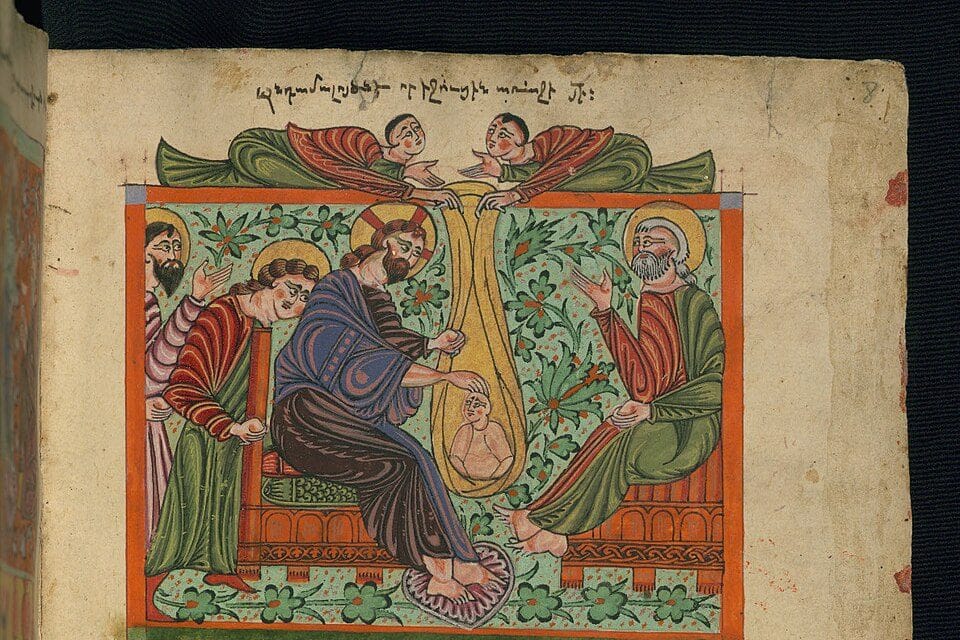
Scripture teaches that people with disabilities bear the image of God and belong fully to the body of Christ. Jesus refused to treat a man’s blindness as a punishment for sin. Paul taught that the members of the church who seem weakest are the ones the body cannot do without. And when the risen Christ appeared to his friends, he showed them the wounds in his hands and side.
If you live with a disability, or love someone who does, you may have wondered whether there is room for you in church, or you may have heard someone suggest that more faith would make you well. The gospel speaks a fuller word. You are made in God’s image (Genesis 1:27), you are loved as you are, and the church is incomplete without you.
Is disability a punishment from God?
The disciples asked Jesus this very question when they passed a man who had been blind from birth. Many in the ancient world assumed that suffering was a penalty for someone’s wrongdoing. Jesus answered directly:
As he passed by, he saw a man blind from birth. His disciples asked him, “Rabbi, who sinned, this man or his parents, that he was born blind?” Jesus answered, “This man didn’t sin, nor did his parents, but that the works of God might be revealed in him.
Jesus turned the conversation from blame to God’s work in this man’s life. In the rest of John 9, the man becomes the wisest person in the story. He answers the religious authorities with courage, and when he meets Jesus again, he says, “Lord, I believe!” and worships him (John 9:38).
The Old Testament also shows God calling people whose bodies or speech did not match the expectations of their day. Moses protested that he was “slow of speech, and of a slow tongue,” and God answered, “Who made man’s mouth?” and sent him to lead Israel (Exodus 4:10–12). Jacob walked away from his night of wrestling with God blessed and limping (Genesis 32:31). For the larger question of why there is pain in the world, see Why does God allow suffering?
What does Paul mean by the body of Christ?
Paul describes the church as one body with many members, each needed by the others. He saves his strongest words for the members others might overlook:
The eye can’t tell the hand, “I have no need for you,” or again the head to the feet, “I have no need for you.” No, much rather, those members of the body which seem to be weaker are necessary.
Paul adds that God has given “more abundant honor to the inferior part, that there should be no division in the body” (1 Corinthians 12:24–25). A congregation that welcomes people with disabilities is receiving members its life depends on. “When one member suffers, all the members suffer with it. When one member is honored, all the members rejoice with it” (1 Corinthians 12:26).
How did Jesus treat people with disabilities?
The Gospels tell many stories of healing, and Christians treasure them as signs of the kingdom of God. Those stories also show Jesus bringing people back into community. In Mark’s Gospel, four friends carried a paralyzed man to Jesus, and when the crowd blocked the door, “they removed the roof where he was” and lowered him down (Mark 2:4). Jesus saw their faith. The church can still take that kind of trouble to make a way in.
Jesus also taught his followers whom to invite. “When you make a feast, ask the poor, the maimed, the lame, or the blind” (Luke 14:13). In the parable that follows, a master whose first guests have refused his banquet tells his servant to “bring in the poor, maimed, blind, and lame” (Luke 14:21). In Jesus’s picture of God’s kingdom, the people the world leaves out are the honored guests at God’s table.
What does Mephibosheth teach about belonging?
Mephibosheth was the son of Jonathan, King David’s beloved friend. When news came that Saul and Jonathan had died, his nurse fled with the five-year-old boy, and “as she hurried to flee, he fell and became lame” (2 Samuel 4:4). Years later David searched for anyone left of Jonathan’s family, so that he might “show the kindness of God” to them (2 Samuel 9:3).
David restored the family’s land to Mephibosheth and told him, “You will eat bread at my table continually” (2 Samuel 9:7). The chapter ends with two facts side by side: “So Mephibosheth lived in Jerusalem, for he ate continually at the king’s table. He was lame in both his feet” (2 Samuel 9:13). Mephibosheth was never cured, and he had a lasting place at the king’s table. Christians see in his story a picture of the Lord’s table, where every baptized person has a place; see Holy Communion.
Did Jesus’s risen body have wounds?
The Gospels say it did. On the evening of Easter, Jesus told his frightened disciples, “See my hands and my feet, that it is truly me” (Luke 24:39). A week later he said to Thomas, “Reach here your finger, and see my hands. Reach here your hand, and put it into my side” (John 20:27). The church proclaims a risen Lord whose glorified body still carries the marks of the cross; see Did Jesus rise from the dead?
In 1994 Nancy Eiesland, a sociologist of religion who taught at Emory University’s Candler School of Theology and who was born with a congenital disability, published The Disabled God. She argued that the risen Christ, with his wounded hands, feet, and side, reveals a God who knows the life of an impaired body from the inside. Many disabled Christians have found in her book a new way to see themselves in the Easter story.
The idea has older roots. Augustine expected most bodily defects to be healed in the resurrection, yet he hoped to see on the martyrs “the marks of the wounds which they received for the name of Christ,” because “this will not be a deformity, but a mark of honor” (The City of God 22.19).
What do the mainline churches teach about disability?
The mainline churches call their congregations to full welcome. In its 2010 social message People Living with Disabilities, the Evangelical Lutheran Church in America commits itself to seek “full inclusion and equitable participation” for people with disabilities. A resolution of the United Methodist Church affirms that “the body of Christ is not complete without people of all areas of life, including people with all types of disabilities,” and it asks churches to “conduct an audit of their facilities to discover barriers.” Presbyterians for Disability Concerns, a ministry network of the Presbyterian Church (U.S.A.), offers congregations a similar audit, so that each church can become a “house of prayer” for all peoples (Isaiah 56:7).
The churches’ commitment matters because the law leaves this work to them. Religious organizations are exempt from Title III of the Americans with Disabilities Act, so ramps, accessible restrooms, hearing assistance, and large-print or audio resources in churches depend on the churches’ own conscience. The law of Moses already commanded, “You shall not curse the deaf, nor put a stumbling block before the blind” (Leviticus 19:14).
How can a church welcome people with disabilities?
Welcome begins with asking. Disabled people know what helps them, and a congregation can invite them to say what would make worship, fellowship, and leadership open to them. It might mean a ramp to the chancel as well as the front door, a sensory-friendly room, a sign-language interpreter, Communion brought to the pew or the home, or a worship service designed for people with sensory or intellectual disabilities. It also means expecting disabled members to read Scripture, serve on councils, teach, and lead, because the Spirit gives gifts to every member of the body. If illness or disability keeps you home on Sunday, the church can come to you; see Is it a sin to not go to church?
At the king’s table, Mephibosheth ate as one of the king’s own sons (2 Samuel 9:11). The risen Christ still bears his wounds, and he sets the same kind of table for his church, where every body is welcome and every member is needed.
Common questions
Is disability caused by sin?
Jesus rejected that idea. When his disciples asked whether a man had been born blind because of his own sin or his parents’, Jesus answered, “This man didn’t sin, nor did his parents” (John 9:3). Many Christians today understand disability as part of the variety of human life, and they look for God at work in the lives of disabled people as in anyone’s.
Who was Mephibosheth in the Bible?
Mephibosheth was the son of Jonathan and the grandson of King Saul. He became lame in both feet at age five, when his nurse dropped him as she fled after Saul and Jonathan died (2 Samuel 4:4). King David restored his family’s land to him and gave him a permanent place at the royal table for Jonathan’s sake (2 Samuel 9).
What is The Disabled God about?
The Disabled God, published by Abingdon Press in 1994, is a book by Nancy Eiesland, a sociologist of religion who taught at Emory University’s Candler School of Theology and was born with a congenital disability. She pointed to the risen Christ, who showed his disciples his wounded hands and side, as a sign that God shares the life of disabled people.
Do churches have to follow the Americans with Disabilities Act?
Religious organizations are exempt from Title III of the Americans with Disabilities Act, the part that covers public accommodations. Accessibility in churches therefore depends on the churches’ own commitment, and the mainline churches have urged their congregations to study their buildings and practices and remove barriers.
Sources
- John 9:1–38 (WEB)
- 1 Corinthians 12:21–26 (WEB)
- Luke 14:12–24 (WEB)
- 2 Samuel 4:4 and 9:1–13 (WEB)
- John 20:24–29 (WEB)
- Augustine, The City of God, Book 22, chapter 19 (New Advent)
- Books in Review: The Disabled God (Emory Report, January 1995)
- ELCA social message, People Living with Disabilities (2010)
- United Methodist Book of Resolutions, The Church and People with Intellectual, Physical, Psychological, and/or Neurological Disabilities
- Presbyterians for Disability Concerns, Congregational Audit of Disability Accessibility & Inclusion (PC(USA))
- Religious Entities Under the Americans with Disabilities Act (ADA National Network)