Mary Magdalene
Mary Magdalene was a Jewish woman from Magdala, a town on the Sea of Galilee, whom Jesus healed and who followed him and helped support his ministry. She stood near the cross, saw where he was buried, and in John’s Gospel was the first to see the risen Christ, who called her by name and sent her to tell the disciples. Church tradition calls her the apostle to the apostles. Nothing in the Bible says she was a prostitute.
Mary Magdalene went and announced to the disciples, “I have seen the Lord,” and she told them that he had said these things to her.
John 20:18, NRSVUE
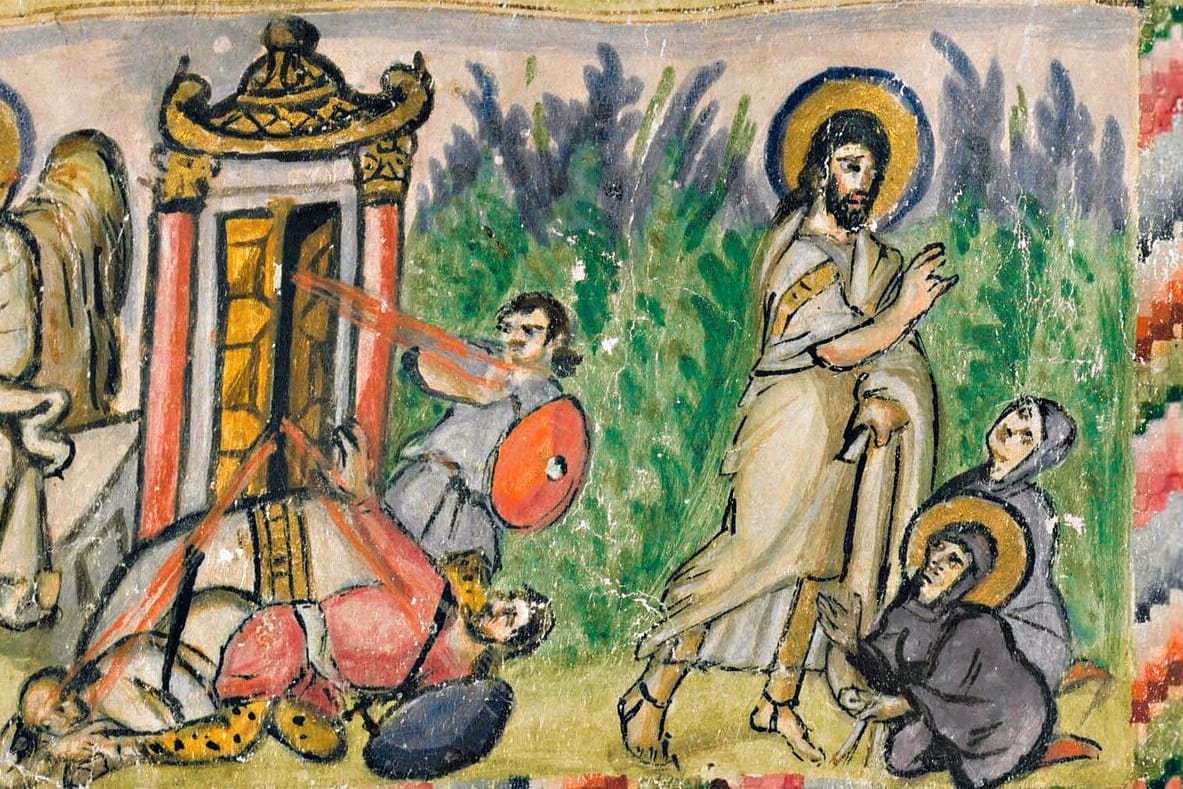
Mary Magdalene has been both honored and misunderstood for two thousand years. For centuries Western Christians honored her as a repentant sinner, and that picture inspired deep devotion and great art. The Gospels themselves remember her as a woman Jesus healed, who followed him from Galilee, stayed near him at the cross, and in John’s Gospel was the first to meet him risen from the dead.
What does the Bible say about Mary Magdalene?
Luke introduces Mary Magdalene early in Jesus’s ministry, among the women who traveled with him and the twelve:
as well as some women who had been cured of evil spirits and infirmities: Mary, called Magdalene, from whom seven demons had gone out, and Joanna, the wife of Herod’s steward Chuza, and Susanna, and many others, who ministered to them out of their own resources.
Luke 8:2–3, NRSVUE
“Magdalene” means “of Magdala,” a fishing town on the western shore of the Sea of Galilee. The name set her apart from the many other women called Mary. The “seven demons” describe a severe affliction that Jesus healed. The Gospels give no details, and nothing in the phrase points to sexual sin. Mary had known great suffering, and after Jesus healed her she gave him her loyalty and her means.
Mary Magdalene appears again at the end of the story. She watched the crucifixion “from afar” with other women (Mark 15:40; Matthew 27:55–56), and John places her “standing by Jesus’ cross” with his mother (John 19:25). She “saw where he was laid” (Mark 15:47). When the Sabbath ended she went to the tomb with spices to anoint him (Mark 16:1; Matthew 28:1; Luke 24:10; John 20:1). Where the first three Gospels list the women, she is usually named first.
What happened at the empty tomb?
John tells the story most fully. Mary stands weeping outside the tomb, sees two angels, and then turns and sees a man she takes to be the gardener. He speaks her name:
Jesus said to her, “Mary!” She turned and said to him in Hebrew, “Rabbouni!” (which means Teacher).
John 20:16, NRSVUE
Jesus then gives her a task:
Jesus said to her, “Do not touch me, because I have not yet ascended to the Father. But go to my brothers and say to them, ‘I am ascending to my Father and your Father, to my God and your God.’ ” Mary Magdalene went and announced to the disciples, “I have seen the Lord,” and she told them that he had said these things to her.
John 20:17–18, NRSVUE
In Matthew, the risen Jesus meets Mary Magdalene and “the other Mary” and tells them, “Go tell my brothers that they should go into Galilee” (Matthew 28:9–10). In Luke, the apostles at first dismiss the women’s report as “nonsense” (Luke 24:10–11). A later ending added to Mark says Jesus “appeared first to Mary Magdalene” (Mark 16:9). For what the church proclaims about that morning, see did Jesus rise from the dead?
Why is she called the apostle to the apostles?
The word apostle means “one who is sent.” In John 20, the risen Christ sends Mary Magdalene with the news of the resurrection to the very men who would become the church’s leaders.
The church noticed this early. A commentary on the Song of Songs attributed to Hippolytus of Rome (died about 235) calls the women at the tomb apostles. In the thirteenth century Thomas Aquinas, commenting on John 20, wrote that she had the office of an apostle and was “an apostle to the apostles” because her task was to announce the resurrection to the disciples. The Eastern Orthodox churches honor her as one of the Myrrh-bearing Women and give her the title “Equal to the Apostles.”
Her commission is one of the passages churches cite when they ordain women; see can women be pastors?
Was Mary Magdalene a prostitute?
No passage in the Bible says she was. The confusion grew from three different women in the Gospels. At a Pharisee’s dinner, “a woman in the city who was a sinner” washes Jesus’s feet with her tears and anoints them (Luke 7:37–38), and Luke does not name her or say what her sins were. Mary of Bethany, the sister of Martha and Lazarus, also anoints Jesus’s feet and wipes them with her hair (John 12:3). And in the very next chapter after the dinner, Luke introduces Mary Magdalene as someone new (Luke 8:2).
In a sermon preached around 591, Gregory the Great, bishop of Rome, merged the three into one person. He taught that the sinful woman of Luke and the Mary of John were “the Mary from whom seven devils were ejected” (Homilies on the Gospels 33). Gregory then read her past as one of sensual vice, and he held her up as a model of repentance and love. His reading shaped Western preaching and art for more than a thousand years. The Eastern churches never accepted it and have always honored Mary Magdalene, the woman of Luke 7, and Mary of Bethany as three different people.
Western churches have since returned to the reading of the Gospels themselves. Biblical scholars of every tradition now treat the three women as different people, and Western church calendars remember Mary of Bethany separately, with her sister Martha, on July 29.
Was Jesus married to Mary Magdalene?
There is no historical evidence that he was. The New Testament names Jesus’s mother, brothers, and sisters (did Jesus have brothers and sisters?) and never mentions a wife, and no early Christian writer claims he had one.
The idea draws on two kinds of sources. The first is a group of later writings found among the Nag Hammadi texts, such as the Gospel of Philip, which calls Mary Magdalene Jesus’s koinōnos (companion or partner). These books were written in the second and third centuries, long after the Gospels (who wrote the Gospels?), and historians do not treat them as reliable sources for her life. The second is modern fiction, especially Dan Brown’s 2003 novel The Da Vinci Code.
In 2012 Harvard scholar Karen King announced a small Coptic papyrus, quickly nicknamed the Gospel of Jesus’s Wife, in which Jesus says “My wife.” In June 2016, after the journalist Ariel Sabar traced the papyrus’s owner in The Atlantic, King acknowledged that the evidence “tips the balance toward forgery.” Scholars now regard it as a modern fake.
How do the churches honor Mary Magdalene today?
The Eastern Orthodox churches honor her on July 22 and on the Sunday of the Myrrh-bearing Women, two weeks after Easter, which remembers the women who brought spices to the tomb. An Eastern tradition tells that she later went to Rome and greeted the emperor Tiberius with the Easter words “Christ is risen,” holding out an egg. Orthodox icons often show her holding a red egg, and the story is one explanation Orthodox Christians give for their red Easter eggs.
In the West, Lutheran and Anglican churches keep July 22 as a festival of Mary Magdalene. The collect for her day in the Book of Common Prayer prays to “Almighty God, whose blessed Son restored Mary Magdalene to health of body and of mind, and called her to be a witness of his resurrection.”
In the garden, Mary did not know the risen Jesus until he spoke her name. Jesus said of himself that the good shepherd “calls his own sheep by name and leads them out” (John 10:3), and Christians trust that he knows each of them as he knew her. Like Mary, they are sent to tell others, “I have seen the Lord.”
Common questions
Where was Magdala?
Magdala was a town on the western shore of the Sea of Galilee, known in antiquity as a fishing town. Mary Magdalene’s name means Mary of Magdala. It set her apart from the other women named Mary in the Gospels, including Jesus’s mother and Mary of Bethany.
What were Mary Magdalene’s seven demons?
Luke 8:2 says seven demons had gone out of her, and Luke groups her with women “cured of evil spirits and infirmities.” The Gospels give no details. In the language of the time the phrase describes a severe affliction, perhaps of body or of mind, that Jesus healed, and nothing in it points to a sexual sin.
When is the feast of Mary Magdalene?
July 22. The Eastern Orthodox churches keep that day as her feast and honor her again on the Sunday of the Myrrh-bearing Women, two weeks after Easter. Many Western churches, among them the Lutheran and Anglican churches, also keep July 22 as her festival.
Is the Gospel of Mary in the Bible?
The Gospel of Mary is an early Christian writing, composed well after the four Gospels, that portrays Mary Magdalene as a visionary disciple. It was never part of any church’s Bible, and historians do not treat it as a reliable source for the life of the historical Mary Magdalene.
Sources
- Luke 8:1–3 (WEB)
- John 20:11–18 (WEB)
- Mark 15:40–16:1 (WEB)
- Luke 7:36–50 (WEB)
- Roger Pearse, A homily of Gregory the Great and Mary Magdalene
- Thomas Aquinas, Commentary on John 20, lecture 3 (Thomistica)
- Book of Common Prayer (1979), Collects for Holy Days: Saint Mary Magdalene
- Mary Magdalene (Wikipedia), on Hippolytus, Eastern Orthodox tradition, and church calendars
- Live Science, Gospel of Jesus’s Wife likely a fake (2016)
- John 10:3 (WEB)