The brothers and sisters of Jesus
The Gospels speak of Jesus’s brothers and sisters several times. Mark 6:3 names four brothers of Jesus, James, Joses, Judas, and Simon, and mentions sisters, and Paul met “James the Lord’s brother.” Christians disagree about the relationship. Most Protestants say they were children of Mary and Joseph; the Orthodox say they were Joseph’s children by an earlier marriage; Jerome argued that they were cousins. The mainline churches have never ruled on the question.
Is not this the carpenter, the son of Mary and brother of James and Joses and Judas and Simon, and are not his sisters here with us?
Mark 6:3, NRSVUE
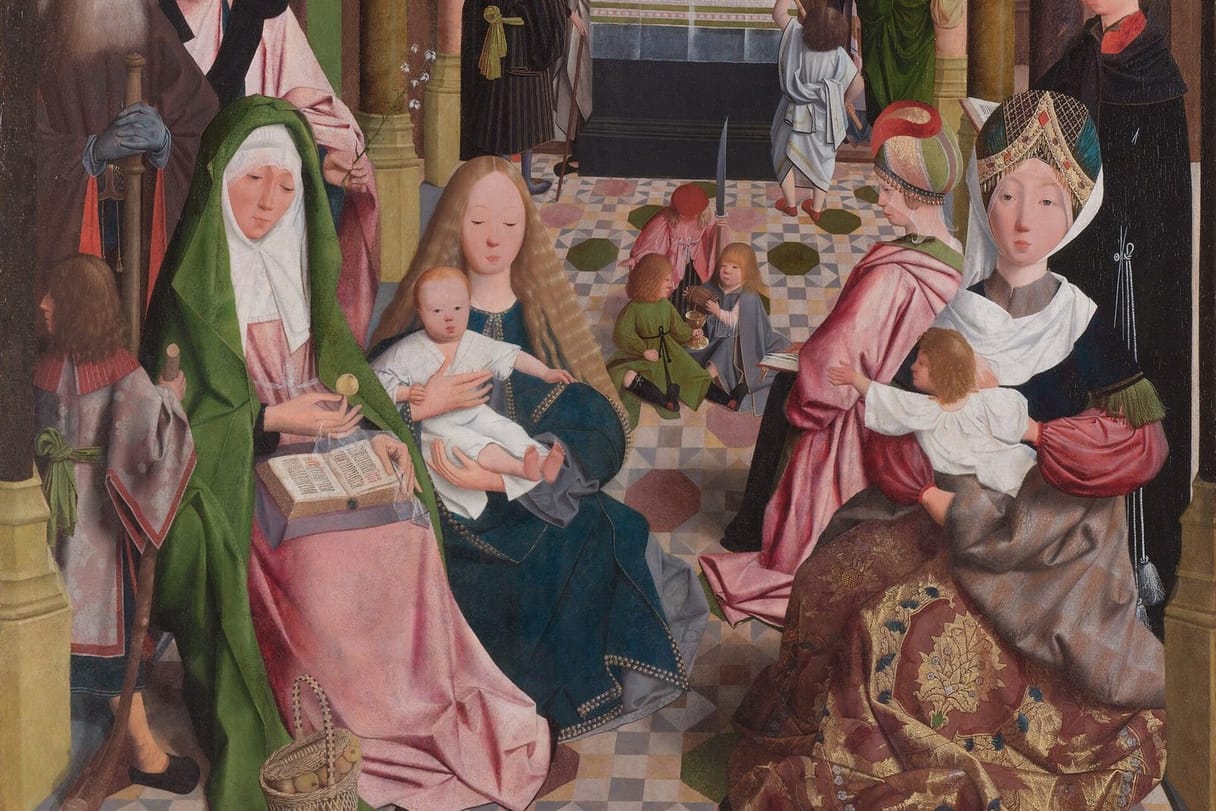
The Gospels speak of Jesus’s brothers and sisters more than once, and Mark names four brothers: James, Joses, Judas, and Simon. Christians have disagreed in good faith for sixteen centuries about how they were related to him. Many Protestants read them as younger children of Mary and Joseph, the Orthodox churches honor them as Joseph’s children by an earlier marriage, and a long Western tradition has called them cousins. Each view has been held by faithful Christians, and each shows the Son of God growing up inside a real family, with its love and its misunderstandings.
What does the Bible say about Jesus’s brothers and sisters?
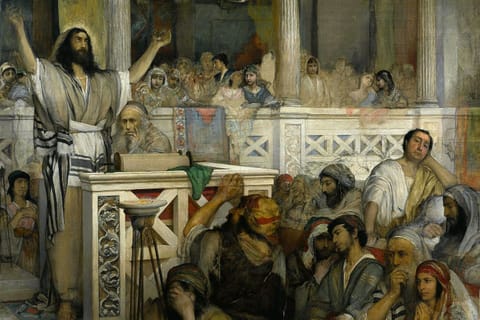
The clearest passage comes in Mark, the earliest of the four Gospels (who wrote the Gospels?). Jesus preaches in the synagogue of his hometown, Nazareth, and the neighbors who watched him grow up take offense:
Is not this the carpenter, the son of Mary and brother of James and Joses and Judas and Simon, and are not his sisters here with us?
Mark 6:3, NRSVUE
Matthew repeats the list and speaks of “all of his sisters” (Matthew 13:55–56). In the oldest manuscripts of Matthew, “Joseph” stands in place of “Joses,” a shorter form of the same name. The sisters are never named.
The brothers appear in several other places. Mark says Jesus’s own people once “went out to seize him” because people said he had lost his mind (Mark 3:21); the Greek phrase hoi par’ autou, “those from him,” most likely means his family, who arrive ten verses later. John reports that “even his brothers didn’t believe in him” (John 7:5). After the resurrection, Acts places “Mary the mother of Jesus” and “his brothers” among the believers praying in Jerusalem (Acts 1:14). Paul lists James among those to whom the risen Christ appeared (1 Corinthians 15:7) and mentions “the brothers of the Lord” traveling with their wives (1 Corinthians 9:5).
Paul’s letter to the Galatians, written about twenty years after the crucifixion, is the earliest witness. Describing his first visit to Jerusalem as a Christian, Paul writes:
but I did not see any other apostle except James the Lord’s brother.
Galatians 1:19, NRSVUE
The Jewish historian Josephus, writing near the end of the first century, records that the high priest Ananus brought before the Sanhedrin “the brother of Jesus, who was called Christ, whose name was James,” and had him stoned (Antiquities 20.200). James had become one of those “reputed to be pillars” of the Jerusalem church, alongside Peter and John (Galatians 2:9). The Letter of Jude opens with its author calling himself “a servant of Jesus Christ, and brother of James” (Jude 1).
Why do some Christians say they were not Mary’s children?
Christians who hold that Mary bore no other children give two main reasons, and the first is language. The Greek word adelphos (brother) usually means a sibling, but like the Hebrew word behind it, it can also mean a kinsman. In Genesis 29:12, Jacob tells Rachel that he is her father’s “kinsman,” though he was her father’s nephew, and the Septuagint (the ancient Greek translation of the Old Testament) uses adelphos there.
The second reason is the church’s ancient belief that Mary remained a virgin all her life. Two details in the Gospels are often cited in support. Among the women at the cross, Mark names “Mary the mother of James the less and of Joses” (Mark 15:40), the same names as two of the brothers in Mark 6:3. And from the cross, Jesus entrusts his mother to “the disciple whom he loved,” who “took her to his own home” (John 19:26–27). Some readers ask why Jesus would do that if Mary had other sons to care for her.
What are the three traditional explanations?
The Helvidian view is named for Helvidius, a Roman Christian who argued around 380 that the brothers and sisters were children born to Mary and Joseph after Jesus. He pointed to Matthew’s statement that Joseph “didn’t know her sexually until she had given birth” (Matthew 1:25) and to Luke’s description of Jesus as Mary’s “firstborn son” (Luke 2:7). Helvidius appealed to the earlier writers Tertullian and Victorinus. Most Protestants today hold this view.
The Epiphanian view treats them as Jesus’s stepbrothers and stepsisters. The Protevangelium of James, a second-century account of Mary’s birth and childhood that is not part of the Bible, presents Joseph as an older widower. When the priest chooses Joseph to take Mary into his keeping, Joseph objects: “I have children, and I am an old man.” Bishop Epiphanius of Salamis (died 403) taught that the brothers and sisters were Joseph’s children from that earlier marriage. The church historian Eusebius, writing in the early fourth century, had already said that James “was called the brother of the Lord because he was known as a son of Joseph.” This is the teaching of the Eastern Orthodox churches.
The Hieronymian view is named for Jerome (Hieronymus in Latin), the scholar who translated the Bible into Latin. Jerome answered Helvidius in a treatise written about 383. He argued that Scripture uses “brother” in four senses, “by nature, race, kindred, love,” and that the brothers of the Lord were cousins. He rejected the stepbrother explanation too and maintained that Joseph himself remained a virgin. Many Western Christians followed Jerome for centuries, and an early tradition points to a family connection of this kind. Eusebius, drawing on the second-century writer Hegesippus, says that after James died the Jerusalem church chose Symeon son of Clopas as its leader, “a cousin, as they say, of the Saviour,” because Clopas was Joseph’s brother.
What do historians think?
Many modern scholars, Catholic and Protestant, judge that the most natural reading of the evidence is that these were Jesus’s full brothers and sisters. The Roman Catholic New Testament scholar John P. Meier reached that conclusion in his study of the historical Jesus, A Marginal Jew. Scholars who agree with him note that Paul and Josephus, the earliest witnesses outside the Gospels, use the ordinary word for brother, and that Greek had a separate word for cousin, anepsios, which the Letter to the Colossians uses when it calls Mark “the cousin of Barnabas” (Colossians 4:10).
Other scholars answer that adelphos does allow a wider meaning, that the shared names in Mark 15:40 are suggestive, and that the second-century traditions about Joseph’s family deserve some weight. The New Testament evidence alone does not settle the matter for everyone, and readers on each side have serious reasons.
What do the churches teach?
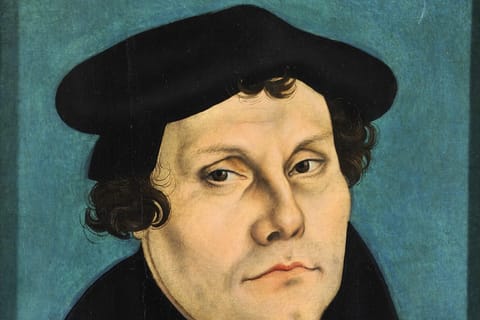
The Orthodox churches teach that Mary remained a virgin for life, and their worship calls her Aeiparthenos, “Ever-Virgin,” so they hold that she bore no other children. Many of the Protestant Reformers agreed. Martin Luther, Huldrych Zwingli, and later John Wesley held that Mary remained a virgin, and the English Reformers Thomas Cranmer, Hugh Latimer, and John Jewel accepted that Mary was “Ever Virgin,” as the Anglican–Roman Catholic International Commission noted in its 2005 statement Mary: Grace and Hope in Christ. Most Protestant churches today read the brothers and sisters as Mary’s children.
The mainline churches have never ruled on the question. The Nicene Creed confesses that Christ “became incarnate from the Virgin Mary,” and both the Church of England’s Thirty-Nine Articles and the United Methodist Articles of Religion say the Son took human nature “in the womb of the blessed Virgin.” None of these texts says anything about Mary’s later life. The Anglican–Roman Catholic commission observed that in the early church the brothers of Jesus were explained “as step-brothers or cousins.” Members of the mainline churches may hold any of the three views, and many leave the question open.
The creed’s confession concerns how Jesus came into the world; see whether Jesus was born of a virgin and what Christians believe about Mary. For the wider differences between the churches, see the difference between Catholics and Protestants.
Why does the question of Jesus’s family matter?
The Gospels show Jesus growing up in an ordinary household in Nazareth, with relatives who did not at first understand him. If your own family has misunderstood your faith, or if you have been slow to understand someone you love, the Gospels have room for you. The brothers who did not believe in him during his ministry (John 7:5) are found praying with the apostles after Easter (Acts 1:14), and James became a leader of the Jerusalem church. Whatever the exact relationship, the family of Jesus moved from doubt to faith.
Jesus himself widened the meaning of family. When told that his mother and brothers were outside asking for him, he looked at the crowd around him and said:
Here are my mother and my brothers! Whoever does the will of God is my brother and sister and mother.
Mark 3:34–35, NRSVUE
However the household in Nazareth was arranged, Jesus opened his family to everyone who seeks to do the will of God, and that includes you. Christians who disagree about Mary’s other children still pray together as brothers and sisters of the same Lord.
Common questions
Who was James, the brother of Jesus?
James was the best known of the brothers named in Mark 6:3. Paul met him in Jerusalem and called him “the Lord’s brother,” and he became a leader of the Jerusalem church. The historian Josephus records that the high priest Ananus had him stoned. Christians remember him as James the Just.
Did Mary stay a virgin after Jesus was born?
The Orthodox churches teach that she did and call her “Ever-Virgin” in their worship, and Luther, Zwingli, Wesley, and the English Reformers held the same view. Most Protestants today believe Mary and Joseph had other children after Jesus. The mainline churches have never made a ruling, and their members may hold either view.
What does “firstborn son” in Luke 2:7 mean?
Luke calls Jesus Mary’s firstborn son. Some readers take this to mean that younger children followed. Others note that “firstborn” was a legal and religious title for the first son whether or not other children came later, so the word alone does not settle the question.
Was Jude the brother of Jesus?
Mark 6:3 lists a brother named Judas, the same name as Jude. The Letter of Jude opens with its author calling himself “brother of James,” which most readers take as a claim to belong to the same family. Whether the brother of Jesus wrote the letter himself is debated by scholars.
Sources
- Mark 6:1–3 (WEB)
- Matthew 13:55–56 (WEB)
- Galatians 1:18–19 (WEB)
- Mark 3:31–35 (WEB)
- Jerome, Against Helvidius: The Perpetual Virginity of Blessed Mary (New Advent)
- The Protevangelium of James (New Advent)
- Eusebius, Church History, Book 2 (New Advent)
- Eusebius, Church History, Book 3 (New Advent)
- Josephus, Antiquities of the Jews 20.200 (Whiston translation)
- Anglican–Roman Catholic International Commission, Mary: Grace and Hope in Christ (2005)
- The Thirty-Nine Articles, Book of Common Prayer (1979), Historical Documents
- The United Methodist Church, Articles of Religion