Modern saints and witnesses
Modern saints and witnesses are Christians of the last century whose faith, courage, and love the churches hold up as examples, among them Dietrich Bonhoeffer, Martin Luther King Jr., Óscar Romero, Desmond Tutu, Pauli Murray, Dorothy Day, Fannie Lou Hamer, Mother Maria Skobtsova, and Thomas Merton. The ELCA and the Episcopal Church name several of them in their calendars, including Romero on March 24 and Bonhoeffer on April 9.
Therefore let’s also, seeing we are surrounded by so great a cloud of witnesses, lay aside every weight and the sin which so easily entangles us, and let’s run with perseverance the race that is set before us.
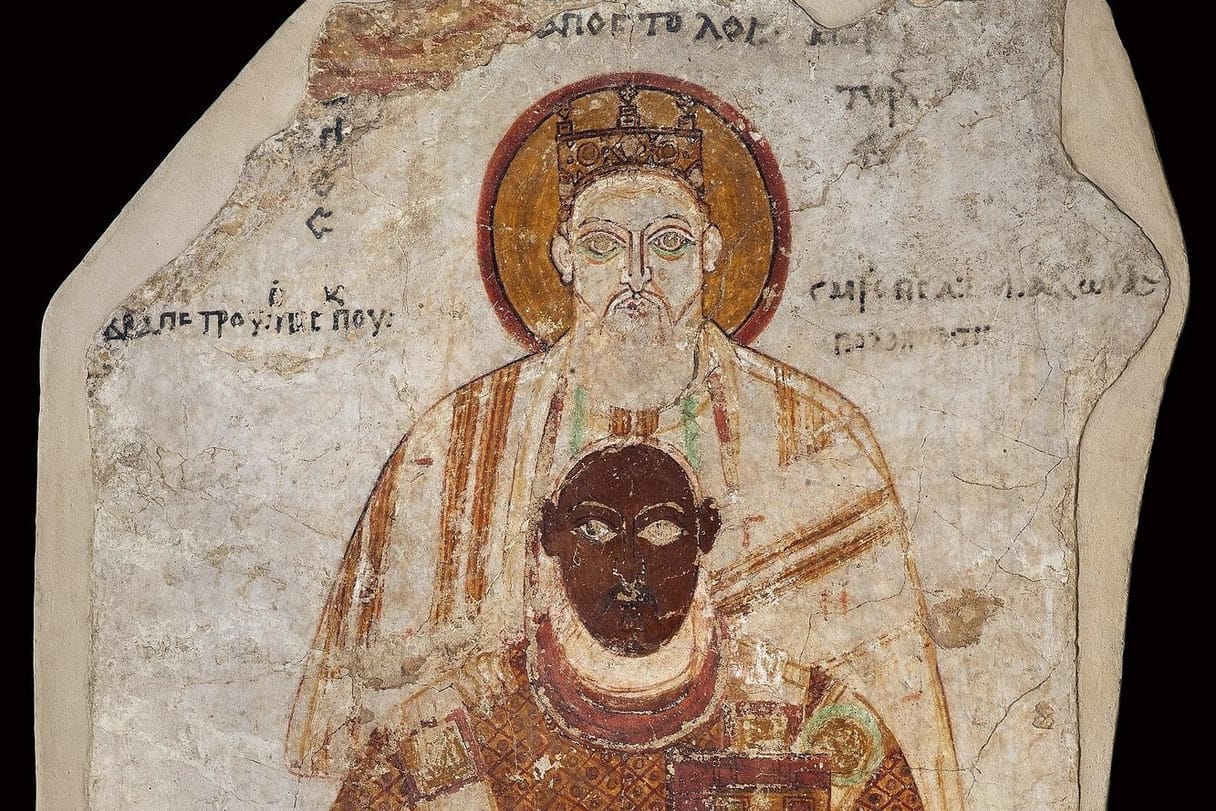
Modern saints and witnesses are Christians of the last century whose faith, courage, and love the churches hold up as examples for all who follow Christ. Some died for their faith; others spent long lives in prayer, service, and the struggle for justice. None of them was perfect, and the churches remember them as forgiven sinners through whom God’s grace shone. Their stories can help you see what holiness looks like in a world much like your own.
What makes someone a saint?
In the New Testament every Christian is a saint, a person made holy by God. Paul writes to the believers in Rome as those “called to be saints” (Romans 1:7), and the call to holiness belongs to all: “You shall be holy, for I am holy” (1 Peter 1:16). The church has also remembered particular Christians whose lives showed that holiness clearly, beginning with the martyrs. The Greek word martys means “witness.”
The Letter to the Hebrews pictures the faithful who have gone before as a crowd cheering on the living:
Therefore let’s also, seeing we are surrounded by so great a cloud of witnesses, lay aside every weight and the sin which so easily entangles us, and let’s run with perseverance the race that is set before us, looking to Jesus, the author and perfecter of faith.
The Lutheran Augsburg Confession of 1530 (Article XXI) teaches that Christians remember the saints so that their faith may be strengthened as they see the grace God gave them, and so that they may follow the saints’ faith and good works, each in their own calling. When Christians say in the Apostles’ Creed that they believe in “the communion of saints,” they confess that the living and the dead belong to one family in Christ (see the Apostles’ Creed).
Who were the modern Christian martyrs?
Dietrich Bonhoeffer (1906–1945) was a German Lutheran pastor and theologian who helped lead the Confessing Church, the Protestants who refused to let the Nazi state take over the church. He trained young pastors at an underground seminary in Finkenwalde and wrote Discipleship (1937), with its warning against “cheap grace,” grace that asks nothing of us, and Life Together (1939), a short book on Christian community. He joined the conspiracy against the Nazi regime, was arrested in 1943, and was hanged at the Flossenbürg concentration camp on April 9, 1945, weeks before the war in Europe ended.
Martin Luther King Jr. (1929–1968) was a Baptist pastor in Montgomery, Alabama, and Atlanta, Georgia, who led the struggle for civil rights by nonviolent resistance rooted in the Sermon on the Mount. From the Montgomery bus boycott to his “Letter from Birmingham Jail” in 1963, he called Christians to love their enemies and to seek justice without violence. He received the Nobel Peace Prize in 1964 and was killed in Memphis, Tennessee, on April 4, 1968, while supporting the city’s striking sanitation workers.
Óscar Romero (1917–1980) became Archbishop of San Salvador in 1977, during years of violence against the poor of El Salvador. In sermons broadcast across the country he named the killings and disappearances, and the day before he died he begged soldiers, in the name of God, to stop the repression. On March 24, 1980, he was shot while celebrating Mass in a hospital chapel.
Mother Maria Skobtsova (1891–1945) was a Russian poet and émigré who became an Orthodox nun in Paris in 1932. She opened a rented house to refugees, the poor, and the lonely, and after the fall of France in 1940 Jewish families came there seeking baptismal certificates, which the house’s priest, Father Dimitri Klepinin, gave them; many were hidden or helped to escape. She was arrested by the Gestapo with her son Yuri and Father Dimitri, and she died at the Ravensbrück concentration camp on Holy Saturday, March 31, 1945. In January 2004 the Holy Synod of the Ecumenical Patriarchate of Constantinople recognized her as a saint, together with her son and Father Dimitri.
Who are other modern Christian witnesses?
Pauli Murray (1910–1985) was a lawyer, poet, and priest. Murray’s study States’ Laws on Race and Color became what Thurgood Marshall called the “bible” of the civil rights movement. In 1977 Murray, whose sense of gender and sexuality did not fit the norms of the time, became the first African American woman ordained a priest in the Episcopal Church (see can women be pastors?).
Desmond Tutu (1931–2021), Anglican Archbishop of Cape Town, opposed apartheid in South Africa with prayer, preaching, and nonviolent protest, and received the Nobel Peace Prize in 1984. After apartheid ended he chaired the Truth and Reconciliation Commission, which heard the testimony of victims and offered amnesty to those who confessed their crimes in full. His book on that work is titled No Future Without Forgiveness (see how to forgive someone who hurt you).
Dorothy Day (1897–1980) was a journalist who became a Catholic and, with Peter Maurin, founded the Catholic Worker movement in New York in 1933. Its newspaper sold for a penny, and its houses of hospitality fed and sheltered the hungry and homeless. She prayed daily, lived among the poor, and went to jail more than once for her protests against war.
Fannie Lou Hamer (1917–1977), the daughter of a Baptist preacher, picked cotton from the age of six on a plantation near Ruleville, Mississippi. When she tried to register to vote in 1962, she was fired from the plantation where she had worked for years. In June 1963 she was beaten in a jail in Winona, Mississippi, and never fully recovered from her injuries. She led Bible study, sang hymns, and quoted Scripture when she spoke, and her gravestone reads, “I am sick and tired of being sick and tired.” See what the Bible says about racism.
Thomas Merton (1915–1968) entered the Trappist Abbey of Gethsemani in Kentucky in 1941. His autobiography, The Seven Storey Mountain (1948), drew many readers to faith, and his later books on prayer, nonviolence, racial justice, and friendship with Buddhist monks reached Christians of every church (see contemplative prayer). He died in Thailand on December 10, 1968.
Are Bonhoeffer and Martin Luther King Jr. saints?
The mainline churches that keep a calendar of commemorations remember several of these witnesses by name, without any formal canonization. In Evangelical Lutheran Worship (2006), the ELCA’s worship book, King is commemorated on January 15 as a “renewer of society, martyr,” Romero on March 24, and Bonhoeffer on April 9. The Episcopal Church’s Lesser Feasts and Fasts (2024) commemorates Romero and the martyrs of El Salvador on March 24, King on April 4, Bonhoeffer on April 9, Murray on July 1, and Maria Skobtsova on July 21. The Church of England remembers Romero on March 24 and Bonhoeffer on April 9, and Orthodox Christians keep Mother Maria’s feast on July 20.
In 1998 Westminster Abbey in London unveiled ten statues of twentieth-century martyrs above its Great West Door, among them King, Romero, and Bonhoeffer, to show that the twentieth century was “a century of Christian martyrdom.” In United Methodist and Presbyterian congregations, All Saints’ Day, on November 1 or the Sunday after it, is the usual time to give thanks for the saints (see the church year). Tutu, Day, Hamer, and Merton are not on these official calendars, and any congregation may remember them in its prayers.
What do their lives teach about holiness?
These witnesses show that holiness grows from prayer and shows itself in love of neighbor. Bonhoeffer wrote prayers for his fellow prisoners; Dorothy Day prayed daily and served soup to the hungry; Merton’s silence in a Kentucky monastery led him to speak against violence and racism. Their courage came from trust in God, and the churches honor them because they point beyond themselves to Christ. Each was called in a particular place, as you are called in yours.
The Book of Common Prayer of 1662 gives the church’s prayer on All Saints’ Day:
O Almighty God, who hast knit together thine elect in one communion and fellowship, in the mystical body of thy Son Christ our Lord: Grant us grace so to follow thy blessed Saints in all virtuous and godly living, that we may come to those unspeakable joys, which thou hast prepared for them that unfeignedly love thee; through Jesus Christ our Lord. Amen.
Collect for All Saints’ Day, Book of Common Prayer (1662)
Common questions
Do Protestants have saints?
Protestants use the word saint for all believers, as Paul did when he wrote to the Christians in Rome as those “called to be saints” (Romans 1:7). Lutherans, Episcopalians, and other Protestants also remember notable Christians on particular days. The Augsburg Confession of 1530 teaches that the saints are remembered so that believers may be strengthened in faith and follow their example.
Is Dietrich Bonhoeffer a saint?
Dietrich Bonhoeffer is commemorated on April 9, the day of his execution in 1945, in the calendars of the Evangelical Lutheran Church in America, the Episcopal Church, and the Church of England. His statue stands among the ten twentieth-century martyrs above the Great West Door of Westminster Abbey. Protestant churches do not canonize saints, so this commemoration is the form their honor takes.
When is Martin Luther King Jr. commemorated in church?
The Evangelical Lutheran Church in America commemorates Martin Luther King Jr. on January 15, his birthday, as a “renewer of society, martyr.” The Episcopal Church remembers him on April 4, the day he was killed in 1968. Many congregations also remember him around the national holiday in his honor each January.
What does martyr mean?
Martyr comes from the Greek word martys, which means witness. The early church used it for Christians who bore witness to Christ by dying for their faith. A martyr does not seek death; a martyr holds fast to Christ and to the neighbor when faithfulness becomes dangerous.
Sources
- Hebrews 12:1–2 (WEB)
- Romans 1:7 (WEB)
- 1 Peter 1:15–16 (WEB)
- Calendar of saints (Episcopal Church), from Lesser Feasts and Fasts 2024 (Wikipedia)
- Calendar of saints (Lutheran), from Evangelical Lutheran Worship (Wikipedia)
- Calendar of saints (Church of England) (Wikipedia)
- Modern martyrs (Westminster Abbey)
- Maria Skobtsova (Wikipedia)
- Pauli Murray (Wikipedia)
- Fannie Lou Hamer (Wikipedia)
- Augsburg Confession, Article XXI: Of the Worship of the Saints (Book of Concord)
- Book of Common Prayer (1662), Collect for All Saints’ Day (Church of England)