Taking an oath as a Christian
Christians may swear an oath in court, at a swearing-in, or with a hand on the Bible, and the Lutheran, Reformed, Methodist, and Anglican confessions all allow it when the law requires. Jesus said “don’t swear at all” (Matthew 5:34) to call his followers to such truthfulness that a plain yes or no is enough. Quakers and Mennonites decline every oath and make a solemn affirmation instead, which courts in the United States accept.
But let your ‘Yes’ be ‘Yes’ and your ‘No’ be ‘No.’ Whatever is more than these is of the evil one.
Christians are free to take an oath in court, at a swearing-in, or with a hand on the Bible, and most churches have taught so for centuries. You may be about to testify, serve on a jury, become a citizen, enlist, or take up a public office, and you remember that Jesus said “don’t swear at all.” His words deserve a careful reading. They call you to a truthfulness so steady that your ordinary word can be trusted without any oath, because every word you speak is spoken before God.
What did Jesus say about swearing oaths?
In the Sermon on the Mount, Jesus takes up the old command against false vows and goes further:
…I tell you, don’t swear at all: neither by heaven, for it is the throne of God; nor by the earth, for it is the footstool of his feet… But let your ‘Yes’ be ‘Yes’ and your ‘No’ be ‘No.’ Whatever is more than these is of the evil one.
In Jesus’ day many people swore by heaven, by the earth, or by their own heads, and some teachers ranked such oaths by how binding they were. Jesus challenged that ranking later in Matthew’s Gospel, quoting those who said, “Whoever swears by the temple, it is nothing; but whoever swears by the gold of the temple, he is obligated” (Matthew 23:16). Every oath, Jesus answers, is finally sworn before God.
What Jesus forbids, then, is a double standard of truth, with careful truthfulness for sworn words and looser speech for everything else. The Letter of James repeats the teaching, warning against oaths “so that you don’t fall into hypocrisy” (James 5:12). For the commandment about God’s name and everyday cursing, see Swearing and cursing.
Does the Bible ever allow oaths?
Scripture also contains faithful oaths. The Law of Moses told Israel that they “shall swear by his name” (Deuteronomy 6:13), calling the LORD himself as witness (see The name of God), and Jeremiah asked that people swear “in truth, in justice, and in righteousness” (Jeremiah 4:2). The Letter to the Hebrews says that God himself “interposed with an oath” to assure his people that his promise would stand (Hebrews 6:17). Paul writes, “For God is my witness” (Romans 1:9), and when the high priest said to Jesus, “I adjure you by the living God,” Jesus answered him (Matthew 26:63–64).
Augustine of Hippo noticed Paul’s oaths when he wrote on the Sermon on the Mount. He concluded that Jesus forbids swearing as a habit, so that his followers would not “by the constant use of oaths sink down through force of habit into perjury.” When a Christian must swear, Augustine said, the need comes from the weakness of those who will not believe a plain word (Our Lord’s Sermon on the Mount 1.17.51).
In the Christian East, John Chrysostom took up the same theme. In 387, while the people of Antioch feared the emperor’s punishment for throwing down his statues, Chrysostom, then a priest of the city, used sermon after sermon in his Homilies on the Statues to urge them to give up their habit of swearing oaths. He wanted a frightened city to begin its repentance with truthful speech.
Why do some Christians refuse to take any oath?
Some Christians read Jesus’ words as a rule for every setting. On February 24, 1527, Swiss Anabaptists led by Michael Sattler adopted the Schleitheim Articles, whose seventh article asks believers to give up oaths entirely, since God can keep every promise he swears and human beings cannot guarantee their own future. Mennonites and the Amish are heirs of that movement.
The Quakers, or Religious Society of Friends, have refused oaths since their beginnings in seventeenth-century England, holding that swearing implies a double standard of truth. Their refusal cost many of them dearly in the courts and kept them from public positions, and in 1695 Parliament first allowed Quakers to make a solemn affirmation in place of an oath. The United States Constitution of 1787 lets its officeholders take an “oath or affirmation.” Christians who take oaths can still learn from Friends and Mennonites that truthfulness belongs to every conversation.
Is it okay to swear on the Bible in court?
Placing your hand on a Bible is a custom that shows you speak as one who will answer to God for your words. The promise binds you whether or not a Bible is present. Federal Rule of Evidence 603 says that “a witness must give an oath or affirmation to testify truthfully,” and it prescribes no fixed wording, so that people of every conscience can make a binding promise. An affirmation carries the same legal duty as an oath, and lying under either is perjury.
If you can swear in good conscience, you may do so freely. If your conscience leads you to affirm, tell the clerk or the judge before you are sworn; courts routinely allow it. Whichever you choose, the prophet Zechariah’s word applies: “love no false oath” (Zechariah 8:17).
What do the mainline churches teach about oaths?
The historic confessions of the mainline churches agree that Christians may take oaths when the law requires them and that careless swearing is wrong. The Augsburg Confession of 1530, the chief Lutheran confession of the ELCA, counts the right “to make oath when required by the magistrates” among the civil duties Christians may rightly fulfill (Article XVI; see What Lutherans believe). The Heidelberg Catechism, part of the Presbyterian Church (U.S.A.)’s Book of Confessions, teaches that believers may swear by God’s name when the government requires it or when necessity calls for an oath to confirm truth, for God’s glory and the neighbor’s good (Q&A 101).
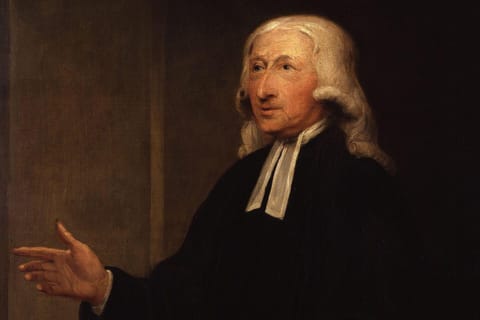
The United Methodist Church’s Articles of Religion, which John Wesley adapted from the Church of England’s Thirty-Nine Articles, say that “vain and rash swearing is forbidden Christian men by our Lord Jesus Christ and James His apostle,” yet that a Christian “may swear when the magistrate requireth,” so long as it is done “in justice, judgment, and truth” (Article XXV; see What Methodists believe). Those last words echo Jeremiah 4:2. The Thirty-Nine Articles, which the Episcopal Church keeps among the historical documents in its prayer book, teach the same (Article XXXIX).
These confessions also warn against rash oaths. King Herod had John the Baptist killed “for the sake of his oaths and of his dinner guests” (Mark 6:26), and the Westminster Confession teaches that an oath “cannot oblige to sin” (22.4). A promise to do wrong calls for repentance, and it should be left unkept.
How can I keep my word before God?
Christians make solemn promises at the great moments of life, at baptism or confirmation, at a wedding, at ordination, and when joining a congregation. Scripture asks you to take such promises to heart:
When you vow a vow to God, don’t defer to pay it; for he has no pleasure in fools. Pay that which you vow. It is better that you should not vow, than that you should vow and not pay.
The psalmist praises the one “who keeps an oath even when it hurts, and doesn’t change” (Psalm 15:4). Keeping faith is never a matter of willpower alone. Christians keep their promises by the grace of the God who keeps his. When you have broken your word, confess it, make amends where you can, and receive the forgiveness God freely gives (see God’s forgiveness).
The deepest reason for Christian truthfulness is God’s own faithfulness. Paul told the Corinthians that Christ himself is God’s Yes to every promise:
For the Son of God, Jesus Christ, who was preached among you by us—by me, Silvanus, and Timothy—was not “Yes and no,” but in him is “Yes.” For however many are the promises of God, in him is the “Yes.” Therefore also through him is the “Amen”, to the glory of God through us.
Every oath a Christian takes, and every plain yes, rests on that greater Yes. God has bound himself to you in Christ, and his faithfulness makes your small promises possible. You can begin each day with the psalmist’s prayer: “Set a watch, LORD, before my mouth. Keep the door of my lips” (Psalm 141:3).
Common questions
Can I affirm instead of swearing on the Bible in court?
Yes. Federal Rule of Evidence 603 allows a witness to give either an oath or an affirmation to testify truthfully, and the U.S. Constitution speaks of an “oath or affirmation” for public officials. An affirmation is a solemn promise without the words “I swear,” and it carries the same legal duty to tell the truth.
What does “let your yes be yes” mean?
In Matthew 5:37 and James 5:12, Christians are asked to speak so truthfully that their ordinary word can be trusted without an oath. In Jesus’ day some people swore by heaven or by the temple to make a promise sound weighty while leaving room to escape it. Jesus asks for one standard of truth in every conversation.
Is it wrong to say “I swear to God” in conversation?
Said casually, the phrase calls on God to make an everyday claim sound more certain, which is the habit Jesus warns against in Matthew 5:33–37. It is a common fault, and God forgives it readily. A plain “I promise,” backed by a life of keeping your word, serves better.
What if I made a vow to God that I cannot keep?
Talk it over with a pastor. Scripture takes vows seriously (Ecclesiastes 5:4–5), and the Westminster Confession teaches that an oath “cannot oblige to sin,” so a promise to do wrong should not be kept. For a vow made rashly or under pressure, confess it, receive God’s forgiveness, and ask what faithfulness looks like now.
Do you have to put your hand on a Bible to take an oath?
The federal rules of evidence prescribe no particular form of oath, and the presidential oath in the Constitution does not mention a Bible. Placing a hand on the Bible is a custom that shows the person speaks as one who will answer to God. Some people take the oath with no book at all, and the promise binds them all the same.
Sources
- Matthew 5:33–37 (WEB)
- Matthew 23:16–22 (WEB)
- James 5:12 (WEB)
- Ecclesiastes 5:4–5 (WEB)
- 2 Corinthians 1:18–20 (WEB)
- Augustine, Our Lord’s Sermon on the Mount 1.17.51 (Bibliothek der Kirchenväter)
- John Chrysostom, Homilies on the Statues (CCEL)
- The Schleitheim Articles, 1527 (German History in Documents and Images)
- Affirmation in law (Wikipedia)
- Federal Rules of Evidence, Rule 603: Oath or Affirmation to Testify Truthfully (Cornell LII)
- Augsburg Confession, Article XVI: Of Civil Affairs (BookOfConcord.org)
- Heidelberg Catechism, Lord’s Day 37, Q&A 101–102
- Westminster Confession of Faith, chapter 22: Of Lawful Oaths and Vows
- Methodist Articles of Religion, Article XXV: Of a Christian Man’s Oath
- The Thirty-Nine Articles of Religion, Article XXXIX (Church of England)