Gambling and the Bible
No verse of the Bible forbids gambling, and a small, affordable bet among friends is not a sin in itself. Gambling becomes sinful when it is driven by the love of money, when it takes money needed for your family or the poor, or when it becomes an addiction. Many churches, including the Presbyterian Church (U.S.A.), the United Methodist Church, and the Episcopal Church, oppose state-sponsored gambling, and some ask congregations not to raise money by games of chance.
Keep your lives free from the love of money, and be content with what you have, for he himself has said, “I will never leave you or forsake you.”
Hebrews 13:5, NRSVUE
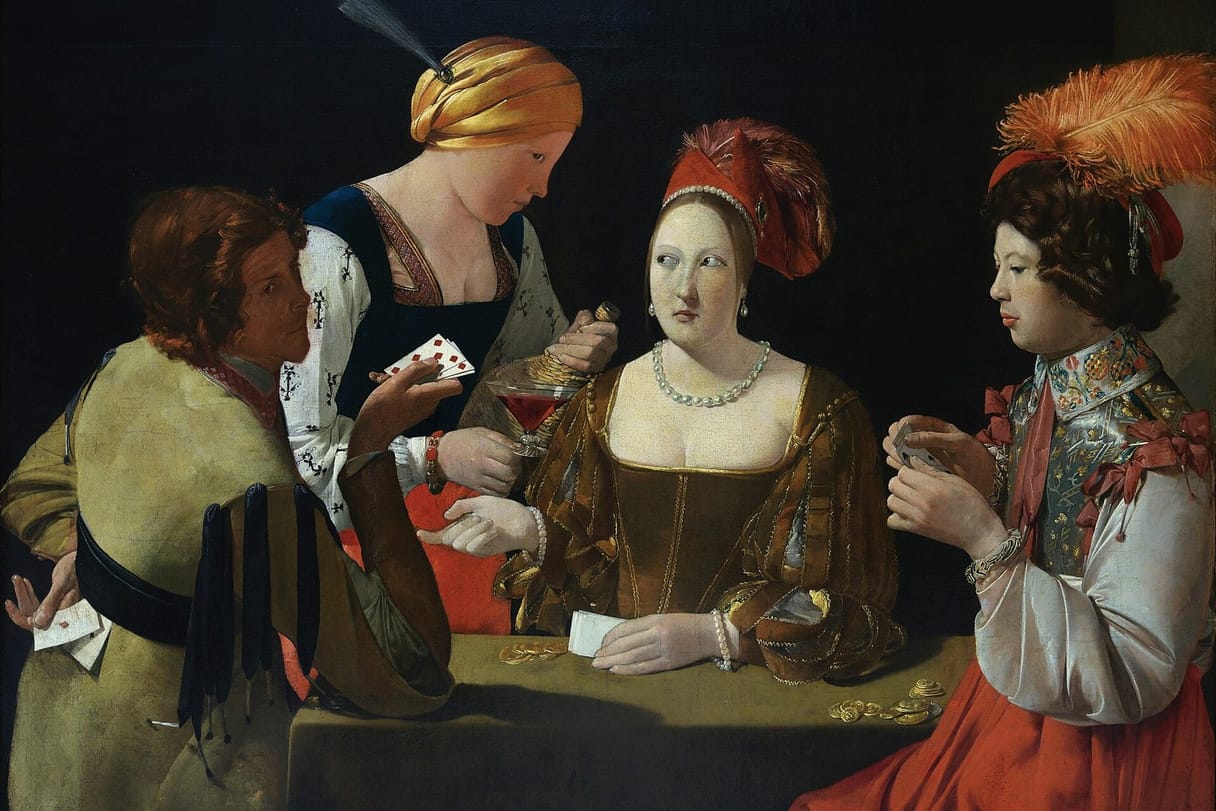
No verse of the Bible forbids gambling, and Christians are free to enjoy a small, affordable game among friends. You may enjoy an occasional game or lottery ticket and want to know where God stands, or you may be worried that betting has begun to take hold of you or someone you love. Scripture speaks often, though, about money and the heart. Gambling becomes sinful when greed drives it, when it takes money your family or the poor need, or when it becomes an addiction.
If gambling has become hard to stop, help is available: the National Problem Gambling Helpline is 1-800-MY-RESET (1-800-697-3738), by call, text, or chat.
Does the Bible say gambling is a sin?
No. The Bible never mentions betting money on games, races, or cards. Christians who say gambling is always wrong usually build the case from broader teaching, and that teaching deserves a hearing. The strongest passages are about money:
But those who want to be rich fall into temptation and are trapped by many senseless and harmful desires that plunge people into ruin and destruction. For the love of money is a root of all kinds of evil, and in their eagerness to be rich some have wandered away from the faith and pierced themselves with many pains.
1 Timothy 6:9–10, NRSVUE
The letter’s warning is aimed at loving money and at the “eagerness to be rich,” which is exactly what lottery advertising sells. The Letter to the Hebrews gives the remedy:
Keep your lives free from the love of money, and be content with what you have, for he himself has said, “I will never leave you or forsake you.”
Hebrews 13:5, NRSVUE
The letter grounds contentment in God’s promise to stay with you, a treasure that no loss can take away.
Proverbs adds practical wisdom: “Wealth gained dishonestly dwindles away, but he who gathers by hand makes it grow” (Proverbs 13:11). The Hebrew word behind “gained dishonestly,” mehevel, means literally “from vapor,” wealth that comes from nothing. Proverbs also warns that “one who is eager to be rich will not go unpunished” (Proverbs 28:20). Jesus warned, “Beware! Keep yourselves from covetousness, for a man’s life doesn’t consist of the abundance of the things which he possesses” (Luke 12:15). The commandment against coveting your neighbor’s goods (Exodus 20:17) also bears on any game in which one person’s gain is another person’s loss.
What about casting lots in the Bible?
The Bible mentions casting lots many times, and some people ask whether that counts as gambling. It does not. Lots were small stones or marked objects thrown to reach a decision, and Israel used them to ask God’s will. The high priest cast lots over the two goats on the Day of Atonement (Leviticus 16:8), and Proverbs teaches, “The lot is cast into the lap, but its every decision is from the LORD” (Proverbs 16:33).
The apostles used lots to choose a replacement for Judas:
Then they prayed and said, “Lord, you know everyone’s heart. Show us which one of these two you have chosen to take the place in this ministry and apostleship from which Judas turned aside to go to his own place.” And they cast lots for them, and the lot fell on Matthias, and he was added to the eleven apostles.
Acts 1:24–26, NRSVUE
No money changed hands, and the lots followed prayer. The one scene in the Gospels where lots were cast for gain is the crucifixion, where the soldiers “divided his clothing among them, casting lots” (Matthew 27:35). The Bible’s use of lots neither condemns nor approves gambling for money.
When does gambling become a sin?
Scripture’s concern is with the heart and with the neighbor. A small wager among friends, paid from money you can spare, is a game like any other. Gambling turns into sin when it takes what you or other people need, or when it begins to rule you.
The first sign is money that belongs to others. Rent, food, a child’s needs, and debts you owe come first, and Christians are also called to give generously; money lost at a casino cannot feed anyone (see Do Christians have to tithe?). A second sign is greed or discontent. If you gamble because you cannot be content with what you have, Hebrews 13:5 speaks to you directly. Gambling can also take the place of steady work, and Paul told the Thessalonians “that they work with quietness and eat their own bread” (2 Thessalonians 3:12).
The most dangerous sign is compulsion. Paul wrote, “All things are lawful for me,” but “I will not be brought under the power of anything” (1 Corinthians 6:12). If you cannot stop, gambling has become your master. And gambling always becomes sin when it harms others: cheating, betting with money entrusted to you, or drawing someone vulnerable into gambling wrongs your neighbor.
What do the churches teach about gambling and lotteries?
The mainline churches that have spoken on gambling share a concern for the people it harms. The Presbyterian Church (U.S.A.)’s General Assembly has opposed legalized gambling for decades; in 1992 it urged civic and government leaders to resist state-sanctioned gambling, and in 1994 it reaffirmed that opposition. The Episcopal Church’s General Convention in 2000 encouraged parishes to recognize “the inappropriateness of using gambling for fundraising purposes,” urged Episcopalians “to work to end state-sponsored gambling and gaming,” and asked congregations to minister to people employed in the gambling industry. In 2024 it encouraged congregations to raise awareness of help for gambling disorders.
The United Methodist Church takes the strongest line. Its Book of Resolutions calls gambling “a menace to society, deadly to the best interests of moral, social, economic, and spiritual life.” It deplores state lotteries as a means of raising public revenue and asks United Methodist churches to abstain from “raffles, lotteries, bingo, door prizes, other drawing schemes, and games of chance for fundraising purposes.” It also calls the church to “reach out with love” to people addicted to gambling and to support their recovery.
Christians disagree about small stakes, and they agree about greed, addiction, and the harm gambling can do to families.
Many Christians treat the occasional small wager as a matter of Christian freedom and still see good reason in the churches’ opposition to commercial gambling, since lotteries and casinos draw their profits from the people who lose. Concern for the poor is part of the gospel.
What if gambling has become a problem?
Problem gambling can be treated, and you can bring it to God just as it is. If you are chasing losses, lying about how much you bet, borrowing to gamble, or cannot stop, call or text the National Problem Gambling Helpline at 1-800-MY-RESET (1-800-697-3738). The older national number, 1-800-522-4700, also still works. Gamblers Anonymous holds meetings in many cities and online.
Tell someone you trust, and tell your priest or pastor. Debts can be faced, and families can heal. Whatever you have lost, God’s forgiveness and the church’s care remain yours.
Scripture holds a short prayer for anyone who wants a heart at peace with money. It asks God for enough, and no more:
Remove far from me falsehood and lies. Give me neither poverty nor riches. Feed me with the food that is needful for me, lest I be full, deny you, and say, ‘Who is the LORD?’ or lest I be poor, and steal, and so dishonor the name of my God.
Common questions
Is playing the lottery a sin?
An occasional ticket bought with money you can spare is a small pleasure that Scripture does not forbid. It becomes wrong when it takes money needed for rent, food, or your family, or when it feeds a hope of getting rich that crowds out contentment and trust in God. The Presbyterian Church (U.S.A.), the United Methodist Church, and the Episcopal Church have all opposed state-sponsored gambling, lotteries included, as a way of raising public money.
Is sports betting a sin?
The Bible does not address sports betting directly. The same tests apply as to any gambling: whether you can afford the loss, whether greed is driving you, and whether you can stop. Because betting apps make it easy to gamble constantly and alone, watch for the signs of addiction and ask for help early.
Did the disciples gamble when they cast lots?
No. When the apostles cast lots to choose Matthias in Acts 1:26, they were asking God to show a decision after praying, and no money was at stake. Proverbs 16:33 says, “The lot is cast into the lap, but its every decision is from the LORD.” The only people in the Gospels who cast lots for gain were the soldiers who divided Jesus’ clothes at the cross.
Is a church raffle gambling?
A raffle is a game of chance, and churches disagree about using one to raise money. The United Methodist Church asks its congregations to abstain from raffles, lotteries, bingo, and games of chance for fundraising, and the Episcopal General Convention in 2000 encouraged parishes to recognize the inappropriateness of using gambling for fundraising.
Can a Christian work in a casino?
Yes. Christians serve God in many kinds of work, and the call to honesty, fairness, and care for neighbors who struggle goes with them into a casino as into any other workplace. Some churches that oppose commercial gambling have asked their congregations to welcome and minister to people employed in the industry.
Sources
- Acts 1:23–26 (WEB)
- Proverbs 16:33 (WEB)
- 1 Timothy 6:9–10 (WEB)
- Hebrews 13:5 (WEB)
- Proverbs 13:11 (WEB)
- Proverbs 30:8–9 (WEB)
- Luke 12:15 (WEB)
- General Convention 2000-C044, Increase Awareness of the Impact of Gambling and Gaming on Society
- General Convention 2024-D068, Address the Increase in Gambling Disorders
- Presbyterian Church (U.S.A.), Gambling: Summary of Resources, 1935–1996
- Book of Resolutions: Gambling (umc.org)
- National Council on Problem Gambling: 1-800-MY-RESET announcement (2026)